
On a December evening in Kaunakakai, the glow comes from the back door of a bakery, where hot bread is passed out after dark, and from a few strings of Christmas lights along the old wharf. The palms rustle in the trade winds, and the smell of salt and wood smoke drifts down Ala Malama Street.
Molokai in December is a quiet, unhurried island in its winter mood, with big surf on the north and west shores, humpback whales offshore and a slow holiday rhythm. It suits travelers who want empty beaches, red dirt trails and small-town hospitality.
What is the weather like in Molokai in December?
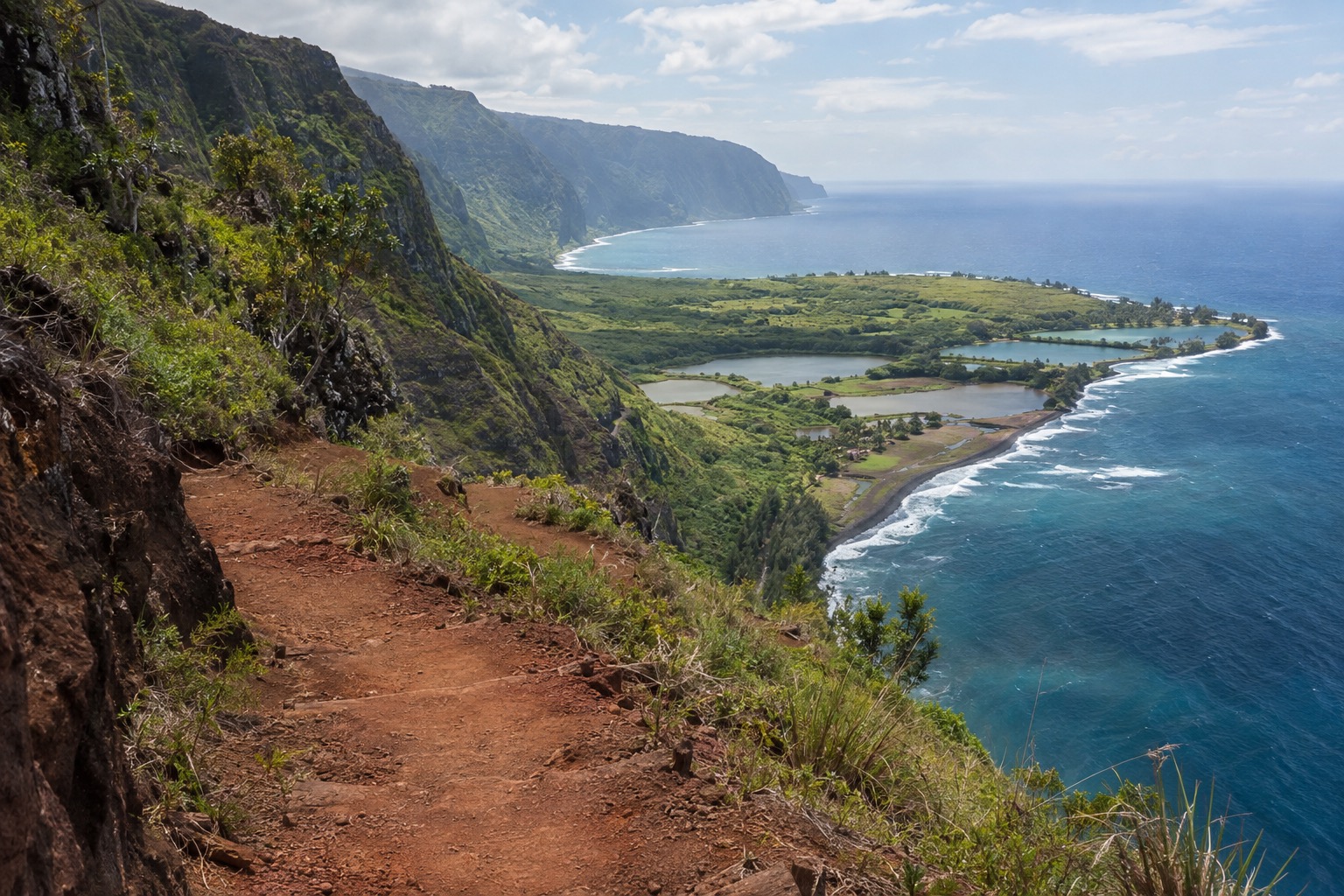
December on Molokai is warm and mostly sunny, a little cooler than the autumn months, with short showers passing through on the trade winds. If you stay near the airport on the dry central plain, December feels like warm sun and passing showers, while the wet valleys of the east feel much different.
| Month | Average high (°F) | Average low (°F) | Rain days | Sea (°F) |
|---|---|---|---|---|
| November | 82.8 | 69.6 | 4.3 | 79.2 |
| December | 80.2 | 66.9 | 5.1 | 78.3 |
| January | 78.8 | 64.3 | 5.0 | 77.5 |
Mornings arrive gentle and balmy, nice enough to enjoy coffee on a lanai wearing a T-shirt, while afternoons bring warmth in the sun minus the oppressive heat that comes with late summer. As the evening chill settles in, a light layer becomes welcome for outdoor dining, particularly by the shore where the breeze strengthens. Daylight is short, just under eleven hours in mid-month, so the best light for beaches and drives comes from mid-morning to mid-afternoon.
Brief showers pass through, usually at night or early in the day, and Molokai stays much drier than the Big Island’s windward side, where Hilo gets rain in sheets. Within Molokai the pattern still matters.
The central plain and the south shore see the most sunshine, while clouds build up more frequently above the tall, tree-covered uplands and the east end close to Halawa, where conditions can turn muddy and slick. Trails in those areas are best after a few dry days, and a thin rain jacket is more useful than an umbrella.
Can you swim in Molokai in December?
The water is certainly warm enough for a long, comfortable swim, but where you enter depends on the surf. The sea sits only a few degrees below its autumn warmth, so most people will be fine in swimwear and snorkelers may want a thin rash guard for longer sessions.
Winter is the season of big swells on north and west shores, and that includes the long sweep of Papohaku Beach on the west end. It is a wonderful place to walk, watch the waves and see the sunset, but the shore break and currents can be strong in this season, so treat it as a beach for looking unless the water is obviously gentle.
The south shore, sheltered by the island’s bulk, is usually the calmer side, with shallow, murky water near Kaunakakai and the fringing reef beyond. Even there, conditions change from day to day.
With so few lifeguards on Molokai, check whatever posted signs you find, study the water for a few minutes ahead of your swim, and ask people at the shop or the harbor how the ocean looks that day. Nervous swimmers and young children will do best in the calmest sheltered spots, and strong swimmers should stay near shore and off the reef. Bring reef-free habits: stay off the coral and keep your distance from turtles and monk seals if you meet them on the sand.
What to do in Molokai in December
December is the month when humpback whales return to Hawaiian waters, and the calmer south shore is a good place to look for spouts and breaches from the shoreline, from a boat or from a roadside pullout. You may see them, but nothing is guaranteed, and the best habit is to scan the horizon for a minute or two and give it patience. Meanwhile the north and west shores earn their reputation, with the biggest swells of the year rolling in and crashing against the cliffs and points.
The holiday mood on Molokai is small and personal. Churches hold Christmas services and gatherings, houses along the highway light up with simple strings of bulbs, and the community shows up for school events, potlucks and ohana get-togethers rather than big commercial shows. Visitors are welcome to browse a craft stall or sit down in a local café, but the island does not stage spectacles for tourists, and that is much of its charm.
The food is part of the season. Look for plate lunches, fresh fish, poke from a small market counter and sweet bread rolls from the bakeries in Kaunakakai, the island’s one real town.
The hot bread that comes out of the back door of a bakery in the evening is an island ritual, usually eaten warm with butter, jam or cream cheese. Fruit stands along the highway sell what is in season, and a cold coconut or a shave ice is welcome after a morning outdoors.
Kalaupapa Overlook and Palaau State Park
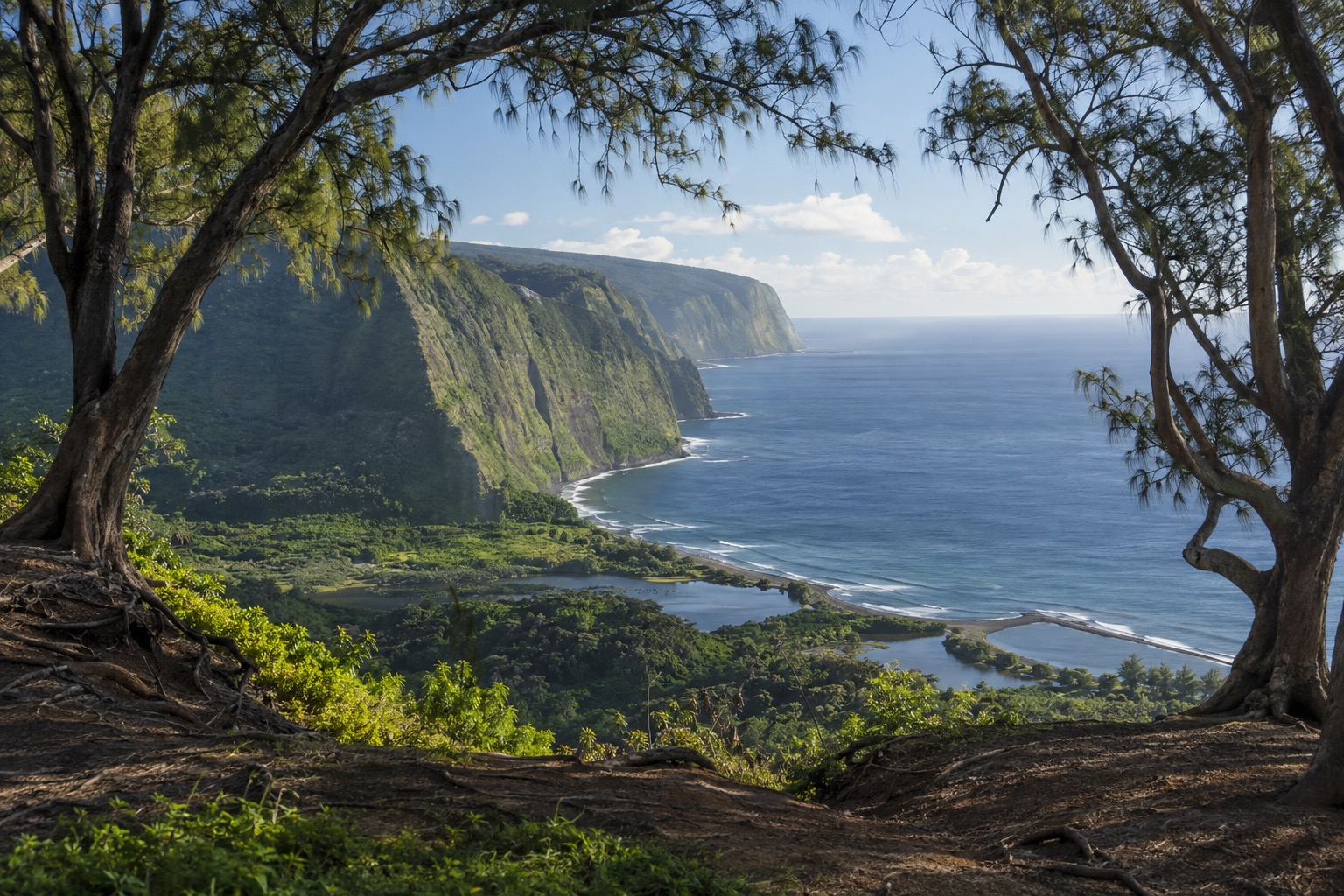
The overlook at Palaau State Park, up on the cool forested plateau above the north shore, is the easiest way to take in the scale of Molokai’s sea cliffs. Looking down from the rail, you see the Kalaupapa peninsula, a flat strip of land that holds the old leprosy settlement, set off by sea cliffs among the tallest on earth. In December the cliffs are green, the sea below is often dark blue and flecked with white, and the sky can switch from sun to cloud in minutes.
It is a short drive from Kaunakakai across the island, passing pastures, ironwood groves and then the park’s forest, and it fits well into a morning. Bring a light jacket, since the plateau is cooler and breezier than the coast. The overlook suits almost anyone, including older travelers and families, and it asks for quiet and respect, since the peninsula is a place of memory and the land below is sacred to many.
Halawa Valley
At the far east end of the island, the road narrows and curves along the coast to Halawa Valley, one of the oldest settled places on Molokai. Taro patches, stone walls and a river lead back toward a waterfall, and the valley is the island’s deepest cultural landscape. Visits are usually made with a local family or guide who can share the history and explain where to walk and where not to, and that is how most people experience it.
This is a wet corner of the island, so expect mud, stream crossings and a chance of rain, especially after a stretch of wet weather. The coast road to get there is long and winding, and the views along it, with the sea on one side and rainforest on the other, are part of the day. The trip suits people who like walking and listening more than ticking off sights, and it should be treated as a visit to a living community rather than a theme park.
Kaunakakai, the wharf and the west end
Kaunakakai is a town you can walk end to end in an hour or two, with a long wooden wharf, a few small shops, a grocery, a coffee spot and a couple of plate-lunch counters. Walking out to the end of the wharf at sunset gives you a view across the water toward Lanai, with fishermen casting lines and kids jumping about. Nearby, the Kapuaiwa Coconut Grove is a stand of tall palms planted long ago for a king, and it is a peaceful place to sit in the shade.
At Papohaku Beach, a west-side spot counted among Hawaii’s longest stretches of white sand, December typically puts the surf front and center, and it is perfect for strolling, driftwood and sunsets. Farther along, the dunes and rocky shoreline of Moomomi on the north side are fragile, so stay on the paths. Keep these west-side stops for a clear, dry afternoon, when the light on the water is warm and the long shadows make the drive worth it.
A two-day itinerary for Molokai in December
Day 1 starts in Kaunakakai during the cool early morning, with coffee and a pastry, followed by a walk along the wharf while the harbor stays quiet and the light remains soft. By mid-morning, drive up through the pastures to Palaau State Park for the Kalaupapa overlook, when the plateau has warmed a little but the clouds have not yet built up. Come back down for a plate lunch at a small local counter.
In the afternoon, head to the south shore for a short walk, a cold drink and a look at the sea, which is usually the gentlest side in this season. As the day shortens, drive back toward town for the sunset from the wharf, then have dinner at one of the few sit-down restaurants and finish with hot bread when the bakery door opens after dark. If rain moves in, turn the afternoon into a slow visit to local shops, a museum or a long lunch.
Day 2 heads west, since the big surf makes the north and west coasts the show of the season. Leave in the morning, drive across the central plain and stop at Papohaku Beach for a long walk and a look at the waves from the sand, keeping a good distance from the water’s edge. A picnic from a market in Kaunakakai makes a good lunch under the trees at the park behind the beach.
In the afternoon, drive back with a stop at a roadside fruit stand or a craft shop, then spend the last light on the south shore, where whales may be visible from the coast. For a rainy day, swap the beach for the east-end drive only if the weather allows, or stay in town with a long meal and conversation, which is how Molokai tends to do things anyway. Dinner can be fish or a simple burger and a drink on the harbor side.
Is Molokai busy in December?
No, Molokai stays quiet even in December, though the holiday weeks bring more visitors than the weeks before them. With so few hotels and condos, no large resorts, and no crowds at the beaches or around town, that busy feeling comes more from scarce rooms than from people.
What fills up is lodging, especially small vacation rentals and the handful of hotels, and rental cars, since the island has a limited fleet and almost everyone needs one to get around. The habit that works is to book rooms and a car early if you are coming for Christmas or New Year, and a little later for the quieter weeks of early and mid-December. Dining spots on Molokai are limited and modest in size, with certain ones shutting early or staying closed on particular days, so planning meals ahead and checking with where you are staying is a smart move.
Most of the island’s attractions do not rely on timed entries, but a few places, such as Halawa Valley or Kalaupapa, depend on local guides, permits and community arrangements, and that means contacting the operator ahead of time instead of showing up. Flights from Honolulu or Maui are small and fill during the holidays, so the same habit applies there. Outside the holiday weeks, the island feels almost empty, and a morning on a beach may mean you share it with a few locals and the birds.
What to pack for Molokai in December
Bring sturdy shoes for trails of red dirt, plus a layer for the plateau and the shoreline breeze, along with clothes for balmy days, chilly nights and the stray shower now and then.
- A light rain jacket, since showers pass quickly but can soak the east side and the trails.
- Closed shoes or trail sandals with grip for muddy paths and rocky shores.
- A sweater or thin fleece for evenings and the cooler Palaau plateau.
- Pack mineral sunscreen and a hat, since winter sun still burns bright.
- Binoculars for whale spotting along the south shore.
- A reusable water bottle and a small cooler for beach picnics, since shops are few.
Good to know before you go
December falls outside the official hurricane season, which runs from June 1 to November 30, but winter brings its own surf and rain, so check the sea and the forecast each morning. With limited services on this compact island, top off your gas whenever possible, pick up food supplies in Kaunakakai, and count on having a rental car.
Some shops and restaurants close or shorten hours around Christmas and New Year, so ask your host before counting on a meal. Lodging bills carry state and county taxes, so expect to pay a little more than the room rate.
| Fee | Amount | Who pays |
|---|---|---|
| State Transient Accommodations Tax | 11.00% | Guests, on lodging stays |
| Maui County surcharge on the General Excise Tax | 0.5% | Added to sales in Maui County, which includes Molokai |
Molokai in December vs November and January
Going four weeks earlier, in November, gets you slightly warmer air and sea, a touch less rain and a quieter island before the holiday weeks. The big winter surf is just beginning, so the west and north shores are often calmer than in December, and the whales are only starting to arrive. Hurricane season ends at the end of that month, so a late-November trip sits at the edge of it.
Going four weeks later, in January, brings the coolest water and air of the three, with the whale season in full swing and the surf often at its biggest. The holiday visitors are gone, rooms are easier to find and the island returns to its calm routine. Rain is similar to December, though the wet spells can feel longer on the cooler days.
Choose November if you want the warmest sea and easy beaches, December if you want the holiday atmosphere with the whales and surf arriving, and January if you want the winter drama and a quieter island. Travelers who care most about swimming should lean earlier, while those chasing waves and whale watching should lean later.
Is December a good time to visit Molokai?
Yes, December is a good time for travelers who like a slow, local, outdoorsy island, with warm days, whales offshore and almost no crowds. It suits walkers, photographers, whale watchers and anyone who wants to spend a holiday week talking to neighbors at a fruit stand rather than lining up at a luau.
Travelers seeking assured calm water at every beach, lively evenings or plenty of resorts and tours will find it suits them less. The west and north coasts can be rough, restaurants are few and the weather brings showers. Those who want beach-hopping with a drink in hand may prefer another island or another month.
Once you get there, grab your rental car, load up on food and water in Kaunakakai, and check the ocean and the weather report before you settle on a beach. Then take an easy first evening at the wharf, with hot bread and a quiet sky. December on Molokai is the month when the island turns inward, with surf thundering on the far shores, whales moving through the channel and the whole community settling in for the holidays.
Sources
- NOAA NCEI, monthly normals 1991-2020, station USW00022534, checked September 8, 2026
- Open-Meteo Marine API, average 2015-2024, checked September 8, 2026
- sunrise-sunset.org, sunrise and sunset calculated for the 15th of the month, checked September 8, 2026
- Hawaii Department of Taxation, Tax Announcement No. 2025-03 (Transient Accommodations Tax Law Changes from 2025 Legislative Session), files.hawaii.gov/tax/news/announce/ann25-03.pdf, checked September 24, 2026
- Hawaii Department of Taxation, County Surcharge on General Excise and Use Tax page, tax.hawaii.gov/geninfo/countysurcharge/, checked September 25, 2026
- NOAA NCEI, monthly normals 1991-2020, station USW00021504
- NWS Honolulu / Central Pacific Hurricane Center, « 2026 Central Pacific Hurricane Season Outlook », weather.gov/hfo/hurricaneOutlook2026, checked September 24, 2026
To plan your stay
- Best Time to Visit Molokai: Weather by Month, Crowds, Swimming and Events
- Molokai in January: Weather, Winter Surf and What to Do on the Friendly Isle
- Molokai in November: Weather, Beaches, Slow Island Days and a Two-Day Plan
- Molokai in February: Weather, Winter Seas and What to Do on the Friendly Isle