
On a February morning in Kaunakakai, the only sound on Ala Malama Street is a screen door and a rooster somewhere behind the old wooden storefronts. Down at the wharf, fishermen mend lines while the light turns the long, shallow reef the color of milky jade.
Molokai in winter is slow, green and unhurried, with no high-rises and no traffic lights. Travelers who want that quiet island pace and a sense of what the month looks like on the ground will find it on Molokai in February.
What is the weather like in Molokai in February?
February is warm and mostly pleasant on Molokai, with sunny stretches broken by short, passing showers. Days are comfortable for walking, cycling and beach time, and the nights cool off just enough to want a light layer.
| Month | Average high (°F) | Average low (°F) | Rain days | Sea (°F) |
|---|---|---|---|---|
| January | 78.8 | 64.3 | 5.0 | 77.5 |
| February | 78.8 | 64.6 | 4.6 | 76.4 |
| March | 79.2 | 65.8 | 5.2 | 76.2 |
Molokai Airport sits on the dry central plain, and that is the Molokai most visitors live in. Rain here comes as brief squalls pushed along by the trade winds, often a quick burst while the sun stays out, and a day that rains from dawn to dusk is rare.
A full inch in a single day happens only now and then. The wet side is the east end and the mountain slopes, where the valleys stay lush and cloud hangs on the ridges, so the drive toward Halawa can be greener and damper than the town you left.
Mornings are soft and a little fresh, good for coffee outside and an early walk. By afternoon the sun is strong enough for sunscreen and a hat, but the breeze keeps it from feeling heavy. Evenings are comfortable in a T-shirt for most people, though a light sweater helps once the wind picks up after dark.
Daylight lasts about eleven and a half hours, so the sun sets in the early evening and dinner plans start early. The sea stays warm enough for most swimmers, which we take up next.
Can you swim in Molokai in February?
Yes, the water is warm enough for a proper swim, though winter is the season when waves decide where you get in. The sea off the island averages in the mid-70s, which most people find refreshing rather than cold, and a thin rash guard is plenty if you stay in a while.
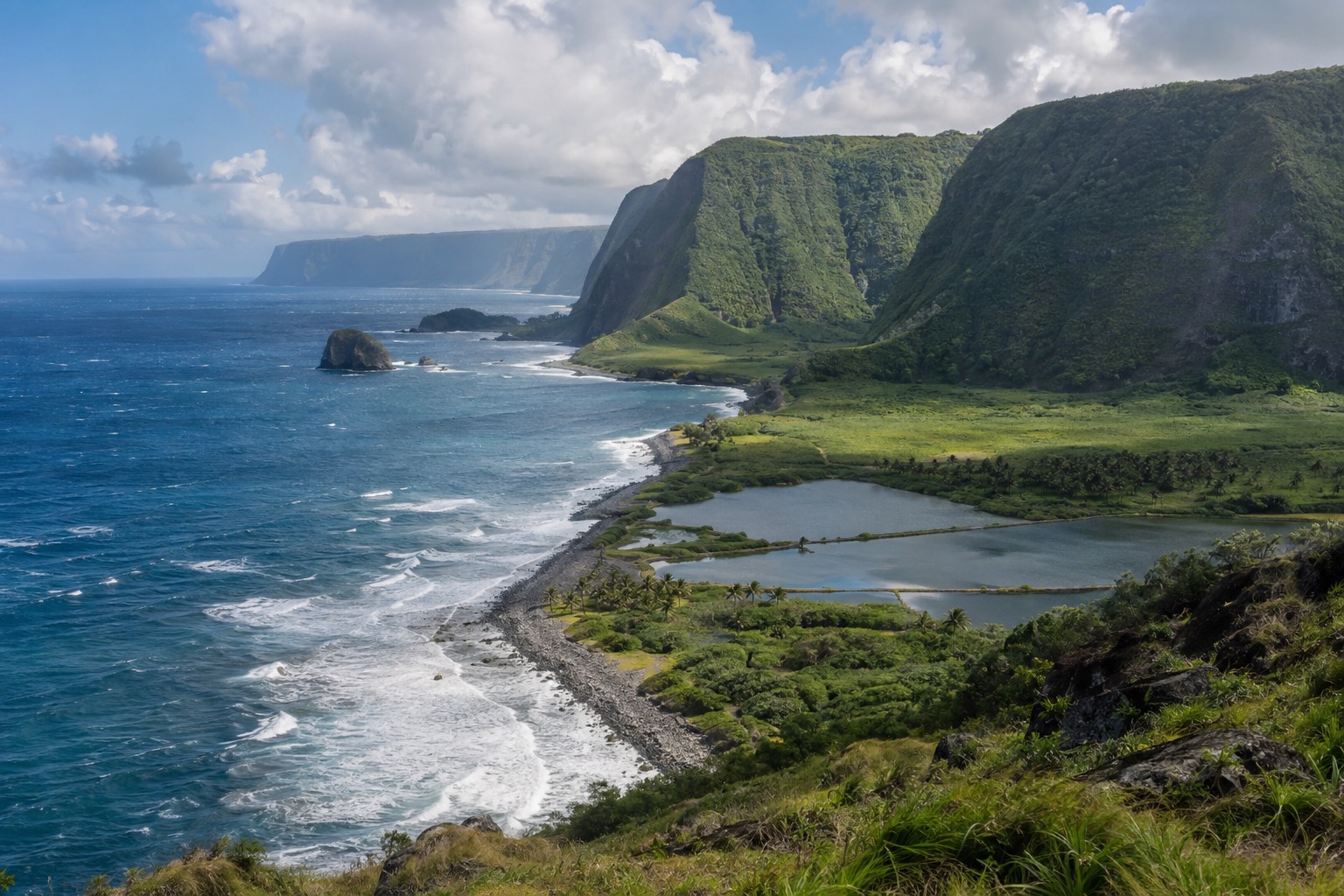
In winter the big northern swells hit the island’s north shore, and that coast, with its towering sea cliffs, is for looking at rather than swimming. The south shore, sheltered by the reef off Kaunakakai, is usually the gentler side, with flat, shallow, sometimes murky water that suits wading and paddling. Papohaku and other beaches facing west are vast and frequently deserted, yet strong shore break and currents can occur, so regard them as spots for strolling and observing unless the conditions seem calm.
Molokai has very few lifeguards, so read the signs at each beach, watch the water for a few minutes before getting in, and stay out if the surf looks heavy. Bring your own mask and fins, because rental options are limited. Families with small children and nervous swimmers will do best on the quieter south-shore stretches, and surfers should come with respect for local breaks and local knowledge.
What to do in Molokai in February
February on Molokai is about slowing down and doing a few things well. The island has no resort strip, so the days are made of drives, short walks, a beach with nobody on it and long lunches. Winter swells make the north shore dramatic, and the green hills behind town are at their freshest after the winter rains.
Humpback whales spend the winter in Hawaiian waters, and the calm side of Molokai, facing Maui and Lanai across the channel, is a good place to watch for spouts and tail slaps from shore. You may see them from the wharf or from the road along the south coast, and sometimes whole groups cruise just beyond the reef. Bring binoculars and patience, since sightings are a chance rather than a promise.
Kaunakakai and the south coast
Kaunakakai is a single main street of low wooden buildings, and it is the island’s living room. Start at a bakery counter, where hot bread with sweet fillings is a local ritual that sells out early, then browse the small shops and the grocery stores where islanders stock up. A walk to the end of the wharf gives you views across the channel toward Maui and a feel for the working harbor.
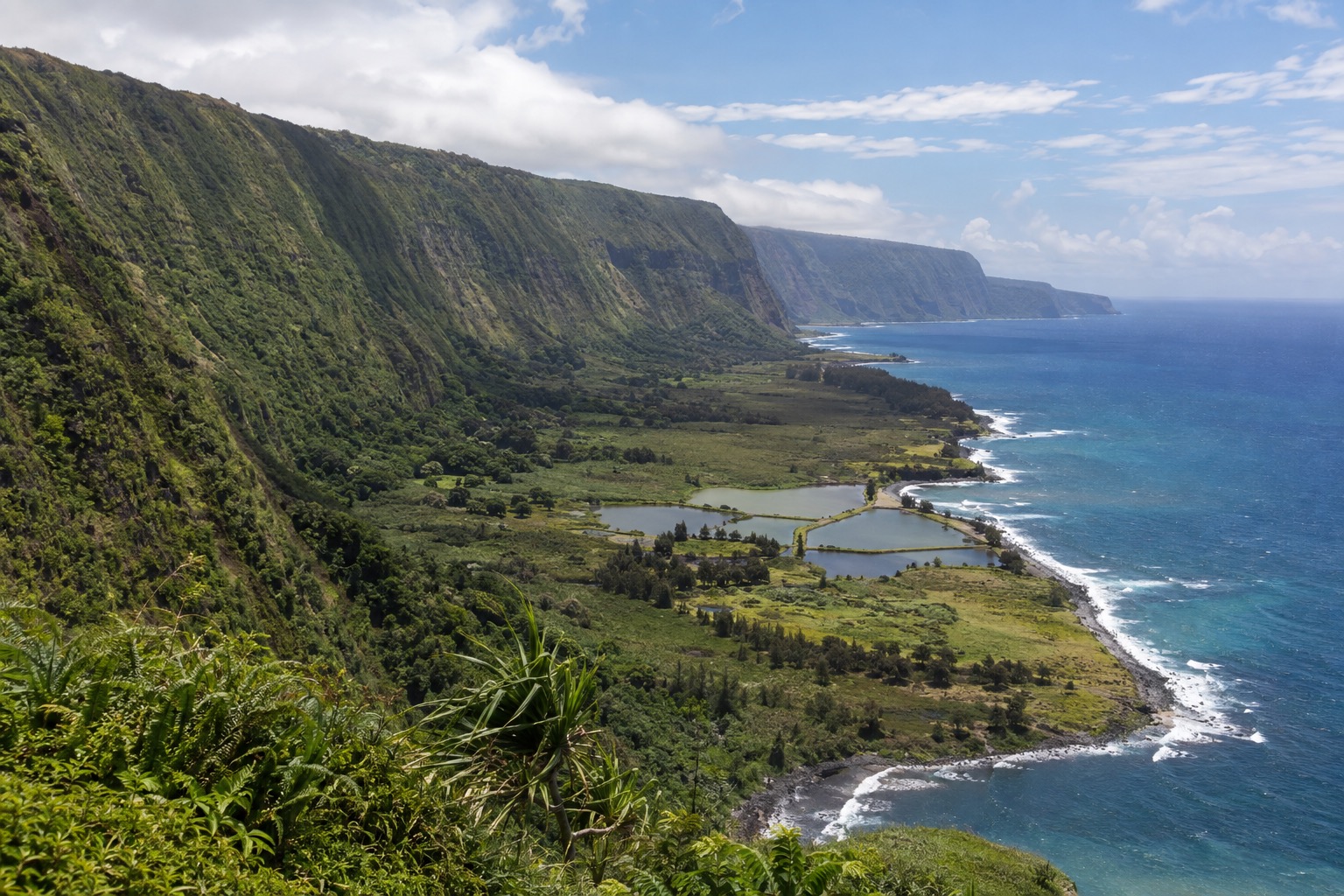
East of town the road follows the coast past fishponds, ancient stone-walled enclosures built to raise fish, which show up as low lines in the shallows. The drive is easy and flat, with beach parks and roadside stops along the way, and it is best in the morning, when the light is clear and the wind is gentle. Keep to the roadside and respect the walls and the private land that borders them.
The north shore: Halawa Valley and the sea cliffs
The road east ends at Halawa Valley, a deep green cleft where Molokai’s oldest settlements once stood. In February the stream runs fuller and the valley is lush, with mist on the ridges and the sound of surf from the bay. The valley is private and sacred to many families, so visiting it with a local guide who is part of the community is the respectful way to go.
The highway on the way there winds through jungle and past quiet bays, and it takes patience, so plan a full day and leave early. Along the route, pull over at lookouts to see the island’s famous sea cliffs and, on clear days, the long waterfalls streaming from the ridges after rain. Wear shoes with grip, since the ground can be muddy and slick after a shower.
Papohaku Beach and the west end
In February, you might find that stretches of Papohaku, among Hawaii’s lengthiest white-sand beaches, are yours alone. The sand is wide and pale, backed by kiawe trees, and sunset here is a favorite ritual, with the sky going orange over open ocean. It is a place to walk, picnic and watch the swell rather than a place for casual swimming in winter.
Nearby, the quiet west-end roads pass ranch land and open hills, and the mood is one of wide-open space. Bring water and snacks, because services are few, and expect a slow, rural pace that rewards anyone who likes empty roads.
Food on Molokai is simple and local: fresh fish, poke, plate lunches, taro and sweet bread from the bakery, plus the fruit and vegetables at small stands and the Saturday market in town. Dinner options are limited and many places close early, so plan your evening meal rather than leave it to chance.
February also brings cultural events on Molokai, but dates move from year to year and are usually announced locally, so ask when you arrive and join in with respect. Community gatherings, hula and slack-key music are woven into island life, and a visitor who listens more than they talk is always welcome.
A two-day itinerary for Molokai in February
Day 1 starts in Kaunakakai, where the morning is cool and the bakery has fresh bread. Walk the main street and the wharf before the sun gets strong, and scan the channel for whale spouts. Late morning, drive east along the south coast past the fishponds and stop at a beach park for a swim or a wade if the water looks gentle.
After a plate lunch from a local counter, spend the afternoon on the green east-side road, with lookouts and short stops along the way. Turn back with enough light to enjoy the drive, because the sun sets early in February. Dinner is in town, and you should eat before the kitchens close.
Day 2 heads west, since the beach is best in the clear morning light. Walk the length of Papohaku, watch the swell and look for whales offshore. Picnic under the kiawe trees with food picked up in town the day before, and keep to the sand and the shallows unless the sea looks calm.
In the afternoon, wander the rural roads and small towns of the central plain and the ranch country, then return in time for a slow sunset from the west or the south shore. If rain sets in, stay in Kaunakakai, browse the local shops, linger over a long lunch and spend an hour at a café or a market stall.
Is Molokai busy in February?
No, Molokai stays quiet in February, as it does most of the year. The island has no big resorts and few visitor services, so even in the busier winter months the pace is calm and the beaches are often empty.
The long weekends around the winter holidays and the mainland school breaks bring a few more travelers, mostly to the small number of rentals and the handful of hotels and condos. Rooms and rental cars are limited, so book early for any week that overlaps a holiday, and a little later for ordinary weeks. Restaurants are small and many close early, so a table is easy on a quiet night but worth planning on a weekend.
There are no timed-entry reservations to arrange for a national park here in February, but guided visits to some places, such as Halawa Valley, are arranged directly with local hosts, so contact them ahead. Ferry and flight options are limited, which makes planning your arrival early a good habit.
What to pack for Molokai in February
Bring easy, light layers for warm days, cool evenings and the occasional shower, and pack whatever you need, since there are few shops.
- A light rain jacket, for passing squalls on the east side
- Mineral sunscreen and a hat, since the sun is strong between showers
- A light sweater for breezy evenings
- Shoes with grip for muddy trails and wet rocks
- Mask, snorkel and a rash guard, since rentals are limited
- Binoculars, for whale spouts offshore
Good to know before you go
February falls outside the official hurricane season, which runs from June 1 to November 30. Services on Molokai are limited, so book your room and rental car first, fill the tank when you can and plan meals, because many places close early. Hawaii’s accommodation and sales taxes apply to your stay, which adds a small, predictable cost to your trip.
| Fee | Amount | Who pays |
|---|---|---|
| State Transient Accommodations Tax | 11.00% | Guests, on lodging |
| Maui County surcharge on the General Excise Tax | 0.5% | Added to taxable sales in Maui County, which includes Molokai |
Molokai in February vs January and March
Moving the trip to January gives you a slightly wetter and a touch warmer sea, with more of the winter holiday crowd early in the month. The island is still quiet, but the weeks near the new year are the busiest for rooms and rental cars. Whales are present, and the north shore swells are strong.
March feels a little warmer, with the sea cooling slightly and showers about as frequent. Spring break brings more mainland visitors, and the whale season begins to wind down toward the end of the month. The hills stay green and the days lengthen.
If you want the quietest stretch with whales still around, February is a good middle. Choose January if you want the holiday mood and the warmest water, and March if you prefer slightly longer days and are comfortable with a few more travelers.
Is February a good time to visit Molokai?
Yes, February suits travelers who want a warm, quiet island with green hills and whales offshore. It is a good month for walkers, drivers, photographers and anyone who prefers an empty beach to a busy one.
It is less suited to people who want a busy nightlife or a long list of organized activities, since the sea is often rough and conditions change from day to day and beach to beach. Winter swells keep the north and west shores for watching, and the island’s services are modest.
On arrival, stock up on groceries and gas in Kaunakakai, then take the south coast drive while the morning light is soft. February here is the month of green valleys, humpback spouts in the channel and sunsets over an empty Papohaku.
Sources
- NOAA NCEI, monthly normals 1991-2020, station USW00022534, checked September 8, 2026
- Open-Meteo Marine API, average 2015-2024, checked September 8, 2026
- sunrise-sunset.org, sunrise and sunset calculated for the 15th of the month, checked September 8, 2026
- Hawaii Department of Taxation, Tax Announcement No. 2025-03 (Transient Accommodations Tax Law Changes from 2025 Legislative Session), files.hawaii.gov/tax/news/announce/ann25-03.pdf, checked September 24, 2026
- Hawaii Department of Taxation, County Surcharge on General Excise and Use Tax page, tax.hawaii.gov/geninfo/countysurcharge/, checked September 25, 2026
- NOAA NCEI, monthly normals 1991-2020, station USW00021504
- NWS Honolulu / Central Pacific Hurricane Center, « 2026 Central Pacific Hurricane Season Outlook », weather.gov/hfo/hurricaneOutlook2026, checked September 24, 2026