
On a November morning in Hilo, the rain drums on the tin roofs of Kamehameha Avenue for a few minutes, then stops, and the sun turns the wet sidewalks to silver. Farmers set out orchids, apple bananas and papayas at the downtown market while Mauna Kea shows itself above the clouds. November on the Big Island’s rainy side feels gentle, lush and easygoing, perfect for gardens, markets, waterfalls and leisurely meals.
What is the weather like in Hilo in November?
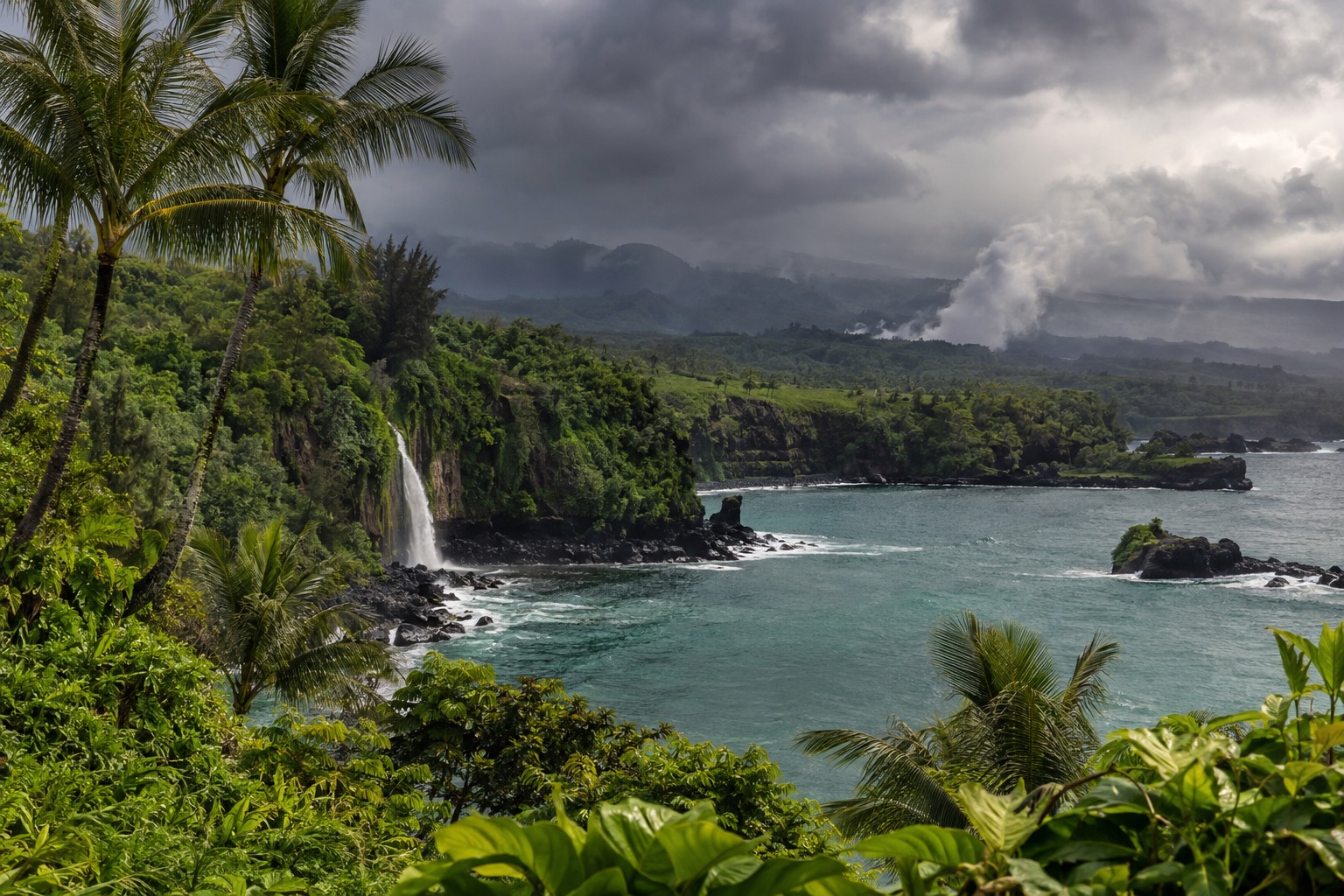
November in Hilo is warm, green and wet, with a rain that comes and goes through the day rather than settling in for good. Trade-wind clouds get caught by the windward coast, and that is what makes the rainforest here so lush.
| Month | Average high (°F) | Average low (°F) | Rain days | Sea (°F) |
|---|---|---|---|---|
| October | 82.4 | 69.0 | 16.7 | 80.5 |
| November | 80.3 | 67.6 | 17.3 | 79.4 |
| December | 78.8 | 65.7 | 16.2 | 78.4 |
The day’s clearest stretch usually comes in the morning, when the clouds rise to reveal the snowless summits and gentle light falls across Hilo Bay. In the afternoon or overnight, rain often shows up, at times a quick heavy burst, at other times a gray mist that hangs around for hours. Rain days are frequent, so plan on getting wet at least once, and treat it as part of the scenery.
You can wear a T-shirt and shorts during the warm days, and the mild evenings let you dine outdoors beneath a cover. A light rain jacket is more useful than an umbrella, because the wind can turn it inside out. Daylight lasts a little over eleven hours in mid-November, so sunset comes early in the evening and the plan for the day is best front-loaded.
Hilo is far wetter than the leeward coast. Kona, on the dry west side, sees only a sliver of Hilo’s rain, so if the clouds settle in, a drive across the island often brings sunshine. Up at Hawaii Volcanoes National Park, it is cooler and rainy at the crater rim, and a sweater is welcome.
Can you swim in Hilo in November?
According to marine records from the last ten years, the water stays near the air’s temperature, so yes, you can enjoy a long, comfortable swim in that warmth.
Hilo is not a classic resort beach town. A long breakwater keeps the bay calm, and close by, the black sand and rocky shores are there more for the views than for lying in the sun.
Several protected-looking pools and coves around Keaukaha and Richardson Ocean Park draw families and snorkelers, but conditions change with the swell and the rain, so look at how the water is behaving on the day. Rain can send dirt washing in and turn the water murky, which is one more cause to hold off until it clears.
In November, north and west shores of the islands begin to see bigger winter surf, and the east side can get rough sets of waves too. Follow the beach signs and the lifeguards where there are any, and stay out when the surf is up.
Pack a rash guard, plus reef shoes for going in over rocks, and a towel that can get muddy. Nervous swimmers and young children are happiest in the calmest pools, and strong swimmers or surfers should ask locally about the day’s break.
What to do in Hilo in November
Come November, Hilo shines at what it does best: gardens that thrive in the rain, waterfalls at full flow, a farmers market piled with produce, and meals that stretch out without hurry. The rainy mood suits the town, and the clouds often break by midday. Hilo keeps its old-Hawaii feel, with wooden storefronts, small museums and mom-and-pop eateries instead of resort towers.
Because the Merrie Monarch hula festival takes place the week following Easter, it does not occur during November. What November does bring is the approach to the winter holidays, with craft fairs, school and church bazaars and local shops filling with gifts. It is a good moment to buy Hawaii-made goods, from macadamia nut candy to koa and wood crafts, and to eat at counters where locals line up for plate lunches and saimin.
Waterfalls and rainforest gardens
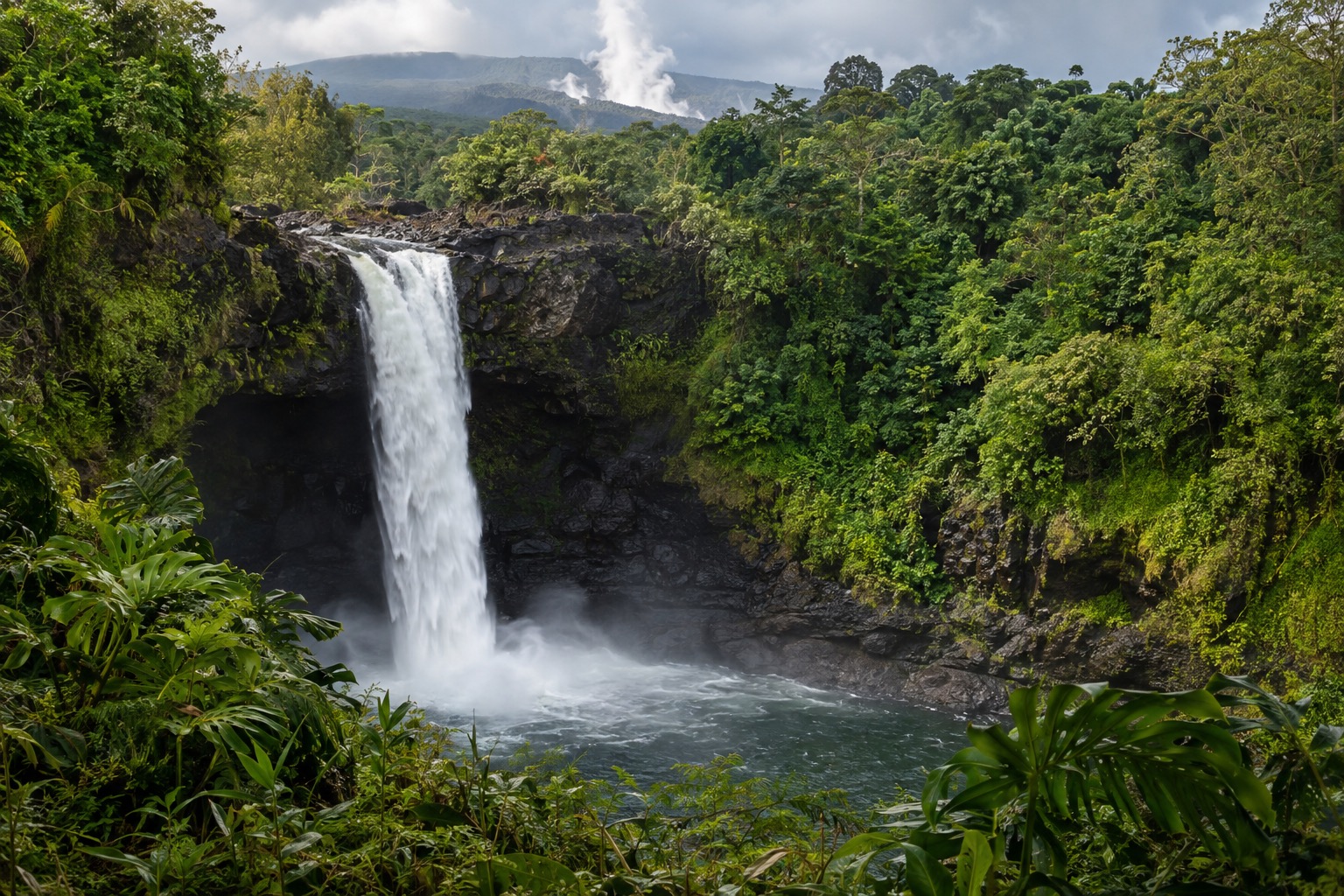
For most visitors, the two trips out of town are Rainbow Falls and Akaka Falls, and with November rain they tend to be flowing hard. Rainbow Falls lies just a brief ride from the center of town, and morning is when it looks its best, as sunlight can catch the mist and every so often create a rainbow. A paved loop trail leads through bamboo, ferns and orchids to the tall plunging cascade at Akaka Falls, a short drive up the Hamakua coast.
Go early to beat the clouds and the tour buses, and wear shoes with grip, since the paths are slick. The Hawaii Tropical Botanical Garden and other garden stops along the coast suit a drizzly afternoon, because umbrellas and ponchos feel natural among the giant leaves. These outings suit almost everyone, including older travelers and families with small children, since the walks are short.
Downtown Hilo and the farmers market
Downtown Hilo is made for strolling between showers. At its center sits the farmers market, where vendors sell tropical fruit, flowers, baked goods, local honey and coffee. Wednesday and Saturday are the big market days, when the stalls multiply and the street fills with locals as well as visitors.
Beyond the market, the shopfronts hold bookstores, galleries, a small Pacific tsunami museum and cafés for shave ice, malasadas and a strong Big Island coffee. Try loco moco, a rice, burger patty and egg plate under gravy, or fresh poke from a counter. When rain sets in, ducking from one shop to the next is the right approach, and nobody hurries.
Hawaii Volcanoes National Park
For a full day away from Hilo, the park rises above town to the crater rim, where the air is cooler and wetter. In November, bring a warm layer and a rain jacket, because mist and drizzle are common and the temperature feels very different from the coast. The visitor center, the steam vents, and the views over Kilauea caldera are the classic stops, and the rainforest trails and lava tubes add variety.
A glow from the crater at night is a chance, never a promise, so treat it as a bonus if conditions line up. Conditions in the park can change after storms, so check the park’s official notices before going. Allow a full day, with a meal on the way back in Volcano village or in Hilo.
Smaller stops fill gaps in a day: Lili’uokalani Gardens, a Japanese-style park on the bay, is a calm place for a walk at the end of the afternoon, and the Banyan Drive trees give shade after the rain. Coconut Island sits just offshore and is a pleasant, easy spot for a picnic on a clear day.
A two-day itinerary for Hilo in November
Day 1 is for Hilo itself. Start early with coffee and a baked pastry downtown, then walk the farmers market while the produce is fresh and the sky is usually clearest. Take Rainbow Falls in the late morning, when the light is better, then have a plate lunch at a local counter. Spend the afternoon in Lili’uokalani Gardens and along Banyan Drive, where the bay opens out and the clouds shift around Mauna Kea.
Rain card for Day 1: duck into the Pacific tsunami museum, browse the bookstores and galleries, and linger over a long lunch. Dinner can be a casual local restaurant with fresh fish or a poke bowl. With around eleven hours of daylight, sunset comes early, so finish outdoor stops by late afternoon.
Day 2 heads out of town. Leave in the morning for Akaka Falls, with a stop at a roadside fruit stand along the coast, then continue to the gardens and small bakeries on the Hamakua side. Be back in Hilo by early afternoon, or choose instead to spend the day at Hawaii Volcanoes National Park, where the crater views and the rainforest trails fill most of the day.
If the weather closes in, the park’s visitor center and museum exhibits give a dry way to learn about the volcano, and a warm bowl of saimin in Volcano village hits the spot. Finish with an early dinner and a quiet evening in town.
Is Hilo busy in November?
No, November is usually one of the calmer months in Hilo, with a lull between the summer family weeks and the winter holidays.
Hilo is never as crowded as the resort coasts, and in November the farmers market, the falls and the park have room to breathe. The Thanksgiving week is the exception, when mainland families travel and flights and rental cars tighten. Rooms are usually easier to find in the first weeks of the month, so book early for Thanksgiving week and a little later for the quiet stretches before it.
Restaurant tables are rarely a problem in town, though small favorite spots can fill on weekend evenings. Rental cars on the island are worth reserving ahead, since a car is the way to reach the falls and the park. Some attractions and parks use reservations, so check the official notices for the places on your list before you travel.
What to pack for Hilo in November
Pack for warm, wet and changeable days, with one cooler layer for the volcano.
- Pack a thin rain shell, since rain moves in and out throughout the day
- Quick-dry clothes, since nothing dries slowly in the damp air
- Shoes with grip for muddy waterfall paths
- A fleece or sweater for the crater rim
- Mineral sunscreen, because the sun is strong between showers
- Reef shoes for rocky ocean entries
Good to know before you go
The Central Pacific hurricane season runs from June 1 to November 30, so November is its last month. Driving is the simplest way to get to the falls and the park, while the morning hours give you the finest window for outdoor stops. The taxes below apply to hotel stays.
| Fee | Amount | Who pays |
|---|---|---|
| State Transient Accommodations Tax | 11.00% | Guests, on lodging |
| County of Hawaii Transient Accommodations Tax | 3% | Guests, on lodging |
Hilo in November vs October and December
Moving the trip to October gives slightly warmer air and sea and a little less rain, with a bit more of the summer feel and the Ironman weekend over in Kona. The water is a touch more inviting, and the clouds break a little more often.
December is cooler and the sea cools a little too, while the winter holiday crowds arrive, rooms tighten and the big surf builds on the north shores. Humpback whales begin to appear around the islands in winter, which can be a draw for those who time it later in the season.
Choose October if you want the warmest swimming. Choose November for the calm between seasons, with easier rooms outside Thanksgiving week and full waterfalls. Choose December if holiday lights and winter whales matter more than quiet.
Is November a good time to visit Hilo?
Sure, for travelers who love green landscapes, waterfalls, markets and a slow pace, and who don’t mind packing a raincoat.
It suits gardeners, food lovers, families who enjoy short walks and anyone who wants the Big Island without resort crowds. For anyone set on seven dry days at the beach, this is the poorer pick, and the Kona side or a different month is where they should turn. Right after you get there, make the farmers market your first stop for fruit and coffee, then save the falls for the clearest morning. What stays with you from Hilo in November is the smell of wet earth and ginger flowers, the sudden sun after a shower, and a plate lunch eaten under a dripping awning.
Sources
- NOAA NCEI, monthly normals 1991-2020, station USW00021504, checked September 8, 2026
- Open-Meteo Marine API, average 2015-2024, checked September 8, 2026
- sunrise-sunset.org, sunrise and sunset calculated for the 15th of the month, checked September 8, 2026
- Hawaii Department of Taxation, Tax Announcement No. 2025-03 (Transient Accommodations Tax Law Changes from 2025 Legislative Session), files.hawaii.gov/tax/news/announce/ann25-03.pdf, checked September 24, 2026
- County of Hawaii, Department of Finance, Transient Accommodations Tax (TAT) page, hawaiicounty.gov/departments/finance/transient-accommodations-tax-tat (live returned HTTP 403 on request, read via Internet Archive Wayback Machine snapshot dated August 14, 2026, same official content), checked September 25, 2026
- Hawaii Department of Taxation, County Surcharge on General Excise and Use Tax page, tax.hawaii.gov/geninfo/countysurcharge/, checked September 25, 2026
- NOAA NCEI, monthly normals 1991-2020, station USW00021510
- NOAA NCEI, monthly normals 1991-2020, station USC00511303
- NWS Honolulu / Central Pacific Hurricane Center, « 2026 Central Pacific Hurricane Season Outlook », weather.gov/hfo/hurricaneOutlook2026, checked September 24, 2026