
January in Crete is quiet, mild and green. It is a month for walking old Venetian harbors, lingering over long lunches in family tavernas and seeing Knossos with room to breathe. Days are cool, rain comes in spells, and the crowds of summer are long gone.
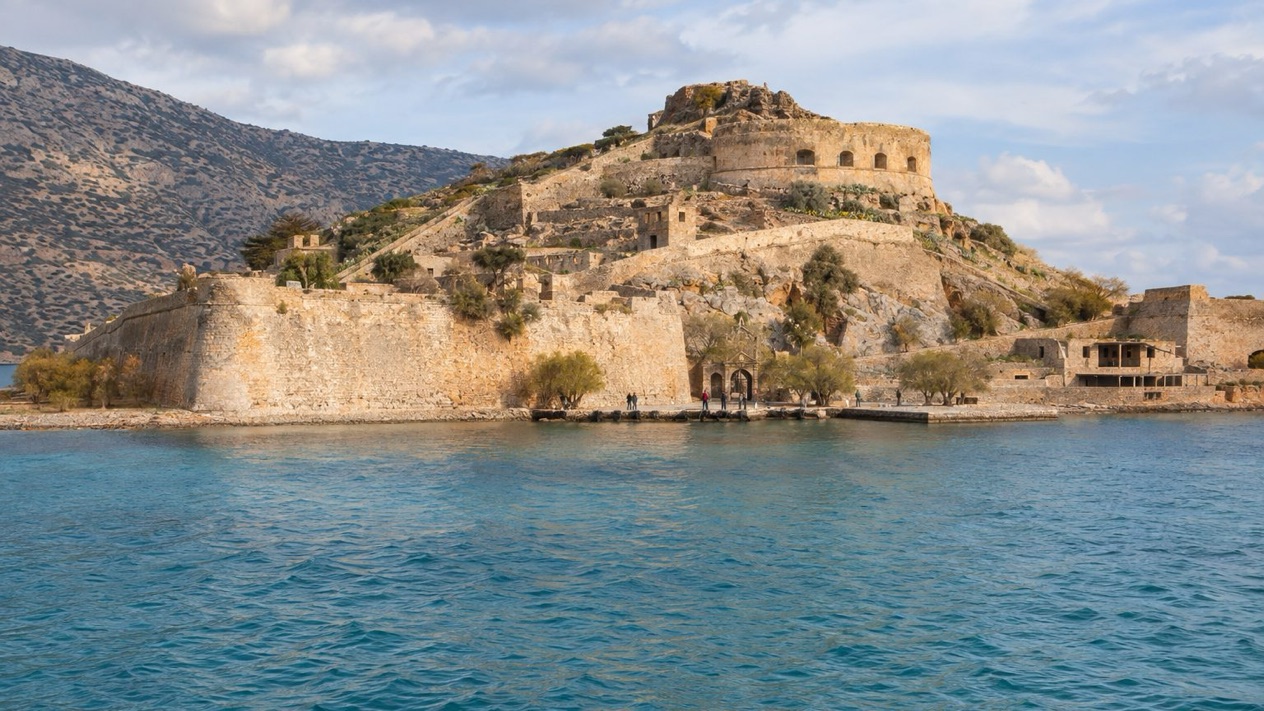
What is the weather like in Crete in January?
| Month | Average high | Average low | Sea | Rainfall | Sunshine per day |
|---|---|---|---|---|---|
| December | 62°F (17°C) | 52°F (11°C) | 64°F (18°C) | 3.8 in (96 mm) | 3.7 h |
| January | 60°F (15°C) | 49°F (9°C) | 61°F (16°C) | 3.7 in (94 mm) | 4.0 h |
| February | 60°F (15°C) | 48°F (9°C) | 60°F (16°C) | 2.9 in (73 mm) | 5.1 h |
Expect overcast skies, occasional showers and gusty wind along the coast, with sun breaking through now and then. Rain tends to arrive in runs, and several wet days in a row are not unusual, so keep a few indoor plans in reserve. Evenings cool off quickly once the sun goes down. Snow is possible in the mountains, where white peaks make a striking backdrop for green valleys and blue bays.
The sea is too cold for comfortable swimming. Brave swimmers manage a short dip on a sunny afternoon, but most people settle for beach walks, sea-view cafés and the hotel spa. If a pool matters to you, ask before booking whether it is heated.
How does January compare with December and February?
December is the wettest and dimmest of the three, with January close behind on rain. December is also a little warmer, both on land and in the sea. February shares January's daytime highs, with slightly cooler nights, noticeably less rain and a bit more sunshine, while the sea dips a hair lower still. February tends to bring a few more bright hours of sunshine than the weeks before it, with about 5.1 hours a day on average.
Is January a good time to visit Crete?
Yes, if you want space. Crete is a lived-in island, and Chania, Rethymno and Heraklion stay busy through the winter, with a core of cafés, bakeries and tavernas open mainly for locals. University students keep Heraklion lively. Museums and archaeological sites are calm, and the old harbors are far quieter than in summer. Flights and hotels generally cost less than in high season, and tours are often discounted.
The trade-off is a reduced schedule. Some smaller restaurants, workshops and attractions close or shorten their hours, and museums, sites and some shops may close or cut hours on New Year's Day and on Epiphany, January 6. Check opening hours on official websites before you go, and build in a day or two of slack, since storms can close roads, gorges and attractions.
Base yourself in Chania, Rethymno or Heraklion, where hotels and restaurants stay open year-round, and take day trips from there. Agios Nikolaos suits travelers who want somewhere very quiet.
Do you need a car in Crete in January?
A rental car is the easiest way to see the island this month. Crete has no trains, so getting around without a car means relying on KTEL buses, and in winter some bus lines and ferry routes may not run. The roads, meanwhile, are clear of summer traffic, which makes the coastal drives a pleasure. Greek law requires visitors to carry a valid U.S. driver's license along with an international driving permit, even if the rental company doesn't ask to see the permit. Talking or texting on a phone while driving is illegal.
If you are heading up into the mountains, a vehicle that handles wet roads is a smart choice, and snow chains in the trunk can come in handy. Stay off high passes and exposed roads during storms, and ask locals about current conditions. Thieves target rental cars for passports and luggage, so take valuables with you when you park.
What should you pack for Crete in January?
Think layers. A warm coat or light down jacket, sweaters, long sleeves and comfortable trousers cover most days, with a lighter layer underneath for when the sun comes out. Add a hat, scarf and gloves for evenings and the mountains. A waterproof shell and closed, water-resistant shoes are essential for the showers. Pack a swimsuit if your hotel has a heated pool.
What is there to do in Crete in January?
Start with the towns. Chania's Venetian harbor and old town are lovely under winter skies, with museums, sea-facing cafés and narrow alleys to wander. Rethymno has its fortress, old town lanes and a winter farmers' market. In Heraklion, pair the Minoan palace of Knossos with the Heraklion Archaeological Museum for a full day, and January lets you see Knossos with few other people around. The Nikos Kazantzakis Museum in the village of Myrtia, about eleven kilometers from Knossos, is often open year-round.
Rainy days suit museums, pottery studios, cooking classes and long café afternoons. Margarites, a village in the Rethymno region, is known for its pottery workshops. Olive pressing often runs into January, especially around Chania, so ask local producers about tours and tastings of fresh oil. Wineries and family-run tasting sessions keep going in many areas, and with fewer guests, hosts have time to share their stories.
Shorter or lower gorges such as parts of Imbros, Kourtaliotiko or Richtis may be passable in dry weather, and walks along the coast or through river valleys are gentler options. Stay out of gorges right after heavy rain. Signage on Cretan trails can be poor, so a local guide is the simplest way to find routes that are safe. Daylight is short, so plan outdoor time between sunrise and mid-afternoon.
Beaches that are packed in summer, like Elafonissi, Balos and Falasarna, are nearly empty now. Under dramatic clouds and moody light, they can make for striking photographs.
Epiphany on January 6 is the big date. In many coastal towns a priest tosses a cross into the sea, and swimmers dive in after it while crowds cheer from the quay. Village saints' days through the month are smaller and warmly local, and attending a liturgy or neighborhood gathering is a rare window into community life.
What do Americans need to enter Greece?
U.S. citizens can enter Greece without a visa for stays of up to 90 days for tourism or business. Your passport should have at least three months of validity beyond your planned departure date, and a passport previously reported lost or stolen will be refused at the border. Be ready to show proof of sufficient funds and a return ticket or other evidence of departure if asked. Once on the island, carry your passport or another form of photo ID at all times.
Sources
- travelthegreekway.com (https://travelthegreekway.com/crete-in-winter/), checked October 18, 2026
- theprofessionalhobo.com (https://www.theprofessionalhobo.com/fantastic-things-to-do-in-chania-crete-in-winter/), checked October 18, 2026
- zicasso.com (https://www.zicasso.com/a/greece/tf/january), checked October 18, 2026
- thedreamtrip.app (https://www.thedreamtrip.app/weather/crete/january), checked October 18, 2026
- creteinsider.com (https://creteinsider.com/things-to-do-in-crete-in-january/), checked October 18, 2026
- U.S. Department of State (https://travel.state.gov/content/travel/en/international-travel/International-Travel-Country-Information-Pages/Greece.html), checked October 15, 2026
- U.S. Department of State (https://travel.state.gov/content/tsg_aem/us/en/home/international-travel/travel-advisories/destination.grc.html), checked October 15, 2026
- anek.gr (https://www.anek.gr/en-gb), checked October 15, 2026
- anek.gr (https://www.anek.gr/en-gb/destinations/chania), checked October 15, 2026
- Visit Greece (GNTO) (https://www.visitgreece.gr/en/islands/crete), checked October 15, 2026