
Late May, June and September bring hot, sunny days that suit swimming and sightseeing, with more breathing room than in midsummer. The days are hot and sunny, the sea is warm enough to swim, crowds are moderate, and restaurants, tours and beach businesses are open for the season. October is a strong second choice, with cheaper rooms and cooler hiking.
When is the best time to visit Crete?
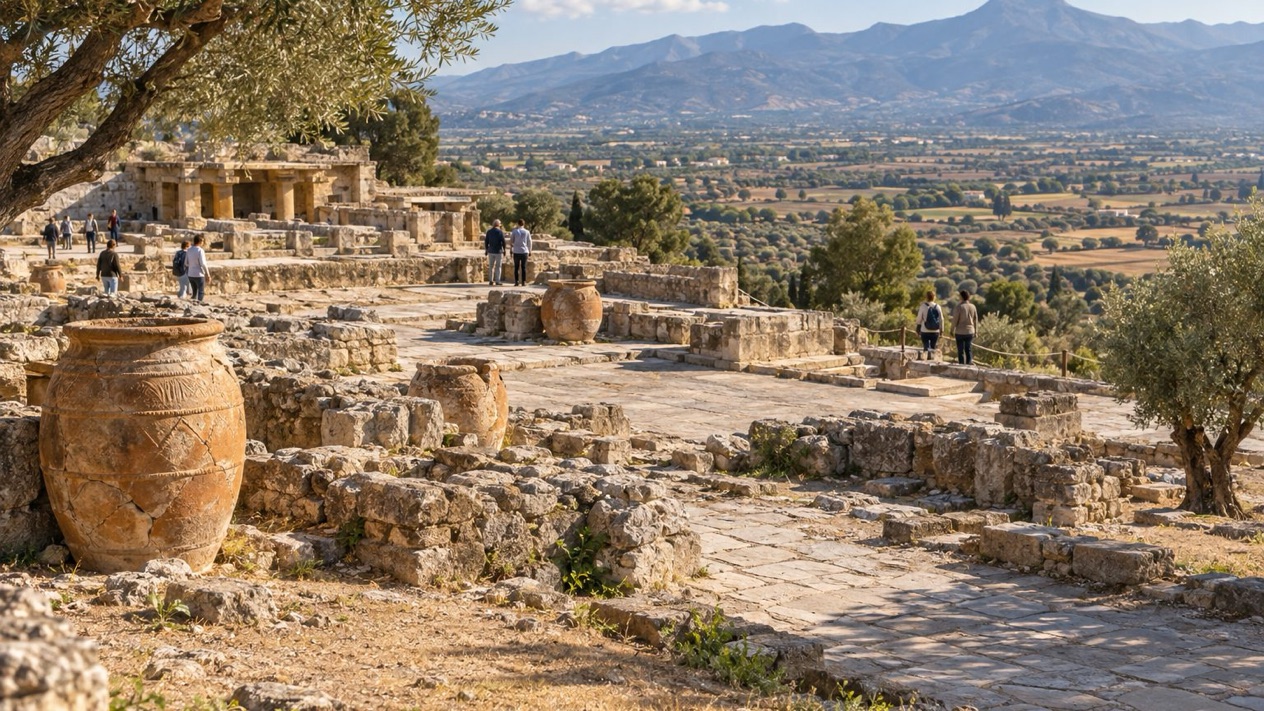
Aim for the edges of summer. In those shoulder months, the tavernas and tours are running, the island has a lively buzz, and the beaches still have space. Midday is hot, but you can still walk the ruins at Knossos or spend a day in the Samaria Gorge in comfort.
Each of the three months has its own character. Late May brings wildflowers, reliably sunny days and quiet beaches. June is the unofficial start of beach season. The sea warms fast and visitors begin arriving in numbers. September keeps the summer's heat in the water, the winds die down, and the crowds ease from the August peak once the school year begins.
October still works if your calendar forces your hand. Beach businesses start closing during the month, but most churches and museums stay open, and the hiking trails are far more pleasant without the heat.
What is the weather like in Crete month by month?
| Month | Average high | Average low | Sea | Rainfall | Sunshine per day |
|---|---|---|---|---|---|
| January | 60°F (15°C) | 49°F (9°C) | 61°F (16°C) | 3.7 in (94 mm) | 4.0 h |
| February | 60°F (15°C) | 48°F (9°C) | 60°F (16°C) | 2.9 in (73 mm) | 5.1 h |
| March | 63°F (17°C) | 50°F (10°C) | 60°F (16°C) | 1.9 in (48 mm) | 6.3 h |
| April | 68°F (20°C) | 54°F (12°C) | 62°F (17°C) | 0.9 in (24 mm) | 8.1 h |
| May | 75°F (24°C) | 60°F (16°C) | 66°F (19°C) | 0.5 in (12 mm) | 10.0 h |
| June | 82°F (28°C) | 68°F (20°C) | 72°F (22°C) | 0.1 in (2 mm) | 12.0 h |
| July | 85°F (29°C) | 73°F (23°C) | 76°F (25°C) | 0.0 in (0 mm) | 12.2 h |
| August | 85°F (29°C) | 73°F (23°C) | 78°F (25°C) | 0.1 in (1 mm) | 11.5 h |
| September | 81°F (27°C) | 69°F (20°C) | 76°F (25°C) | 0.4 in (11 mm) | 9.3 h |
| October | 75°F (24°C) | 63°F (17°C) | 73°F (23°C) | 2.2 in (55 mm) | 6.9 h |
| November | 68°F (20°C) | 57°F (14°C) | 68°F (20°C) | 2.5 in (63 mm) | 4.9 h |
| December | 62°F (17°C) | 52°F (11°C) | 64°F (18°C) | 3.8 in (96 mm) | 3.7 h |
Winter (December to February) is cool, damp and gray. Winter storms can sweep in with rain and chilly wind that lingers for days, and clear sunny spells often break up the gray. During the coldest weeks, snow often settles on the high mountain summits. This is not beach season, so bring a fleece or two for the evenings.
Spring (March to May) brings steady improvement. March has more sun and less rain, though the nights stay cool. April is warmer, with occasional showers, and good for hiking. Early May can still bring cool, overcast days, while late May is consistently sunny and warm. After Orthodox Easter the trails smell of sage, thyme and rosemary, but swimming is still a gamble early in the season.
June is hot, sunny and nearly dry. The sea has warmed enough for proper swimming, and the long days stretch into late evenings on taverna terraces.
The two midsummer months are the hottest stretch, sunny and almost rainless, with Mediterranean breezes for relief. The sea is warmest in August and early September. August also brings occasional strong winds called the meltemi, which can cancel ferries and catamarans. Leave a little slack in your plans if you have a boat to catch.
Fall cools gradually. September stays hot and sunny, just a little cooler than August. October is warm but wetter. Early October can still be hot, while late October can bring cool, cloudy days that make a beach visit uncertain. November is cooler and rainier, though early November can still produce a warm beach day. Pack a light layer and a rain jacket if you're going late in the season.
When is Crete busiest, and when is it quiet?
July and August are the peak, and August is the busiest month of all. The main beaches are body to body, luxury resort towns like Elounda are packed, and party towns like Malia run full tilt. Knossos and Spinalonga draw big crowds, so get there early in the day. On August 15, the Feast of the Assumption, the island comes to a halt: families reunite, roads clog and businesses close.
June and September still bring plenty of visitors, though the crowds feel lighter than at the peak. May and October are quieter still, with some doors already or still closed. From late October through April, many coastal hotels and tourist restaurants shut and the beach towns go quiet. Heraklion, Chania and Rethymno are home to many locals, so life goes on there through the winter months. Even in summer you can escape the crowds on the south coast or in inland villages such as Archanes.
Which festivals are worth planning a Crete trip around?
Orthodox Easter is the most important religious date of the year. It falls in spring on a date that changes every year and usually differs from Western Easter. Good Friday brings large processions, and at midnight on Easter Saturday fireworks go off over towns across the island. A late-night feast of roast lamb follows. Cretans love to invite visitors to join in, though some attractions close for the holiday.
Summer is peak festival season, and in August many towns, even small ones, put on something special. Heraklion hosts its Summer Arts Festival from July to mid-September, with classical music, dance, art and film on the program. November is raki season, when fresh batches of Crete's fiery spirit come from producers large and small. Carnival fills the three weeks before Lent with masquerade balls and street parties, ending in parades on the final Sunday. Rethymno has the wildest scene, so book well ahead if you plan to go.
When is it cheapest to go?
Hotels make all the difference. Room rates peak in July and August, drop in the shoulder months and bottom out in winter. Food, drink and transport prices barely change through the year, so almost all the savings come from the room. If you want pleasant weather without paying top hotel rates, aim for the shoulder months on either side of summer. Winter brings off-season deals and thin crowds, but you give up the beach.
Is Crete worth visiting in winter?
Yes, with the right expectations. Many tourist-focused businesses close for the season, so rooms can be harder to find outside the cities. Ferries and flights run limited schedules, though at least one a day still goes to Athens. Public transport gets trickier but still works.
In return, the countryside turns green, waves pound empty beaches, and most Cretans settle in by a well-stoked fire. The world-class ruins at Knossos stay open year-round and are far more enjoyable without the crowds. Museums and other historical sites also stay open, some with limited hours. Chania and Heraklion stay busy, with businesses open to serve the locals. Winter suits budget travelers and anyone who wants to see everyday Cretan life.
When is the best time to hike in Crete?
Spring and autumn are the best seasons on the trails. Spring brings wildflowers, and in autumn the sea is still warm enough for a dip after a day in the hills.
The Samaria Gorge offers about 10 miles (16 km) of hiking through a unique biosphere reserve. The gorge usually opens to hikers in May and closes in mid-October, so check the current dates before you plan around it.
Imbros Gorge fits nicely into an afternoon. Leave your car on the south coast and take a taxi up to the starting point. Kallikratis Gorge is a wilder walk of three to four hours. It comes out on the south coast at Frangokastello, a little settlement with a lagoon of quiet, warm water.
Which month is right for you?
- Beach swimmers: June and September, when the water is warm and the sand has space.
- Party-goers: July and August, when Malia and the larger towns stay lively late.
- Couples: late May and September, for warm evenings on taverna terraces and quieter beaches.
- Budget travelers: the weeks just outside peak season, or winter if you can skip the beach.
- Crowd avoiders: May, October or winter.
Book July and August rooms at least 3 months ahead, and luxury hotels 6 months ahead. September hotels can also be fully booked months in advance. In spring and October you may find last-minute deals. Even in summer, last-minute rooms can turn up in mountain villages and quieter beach towns like Plakias, Sougia and Ierapetra. Ferries to nearby islands run mostly in the warmer months, and schedules change by season, so check timetables before you plan a day trip. Outside those months, check ferry and bus timetables and confirm what's open before you go.
Sources
- lonelyplanet.com (https://www.lonelyplanet.com/articles/best-time-to-visit-crete), checked October 18, 2026
- santorinidave.com (https://santorinidave.com/best-time-to-visit-crete), checked October 18, 2026
- travel.usnews.com (https://travel.usnews.com/Crete_Greece/When_To_Visit/), checked October 18, 2026
- responsiblevacation.com (https://www.responsiblevacation.com/vacations/crete/travel-guide/best-time-to-visit-crete), checked October 18, 2026
- kimkim.com (https://www.kimkim.com/c/best-time-of-year-to-visit-crete), checked October 18, 2026
- U.S. Department of State (https://travel.state.gov/content/travel/en/international-travel/International-Travel-Country-Information-Pages/Greece.html), checked October 15, 2026
- U.S. Department of State (https://travel.state.gov/content/tsg_aem/us/en/home/international-travel/travel-advisories/destination.grc.html), checked October 15, 2026
- anek.gr (https://www.anek.gr/en-gb), checked October 15, 2026
- anek.gr (https://www.anek.gr/en-gb/destinations/chania), checked October 15, 2026
- Visit Greece (GNTO) (https://www.visitgreece.gr/en/islands/crete), checked October 15, 2026