
MIAMI · SEPTEMBER · 25.79° N
September is the month Miami puts on sale. Rooms fall to their annual floor, the ocean sits at 87.8°F, and the price of both is 10.22 inches of rain and a calendar whose Atlantic hurricane activity peaks, statistically, on the 10th.
The trade is legible once the numbers are on the table. Nothing about the heat is subtle: 89.0°F by day, 76.9°F at night, humidity that does not let go, and 13.1 days in an average month with measurable rain. What that buys is a city with its indoor half open, water warmer than most Americans have ever swum in, and rates that make a beachfront room a defensible idea.
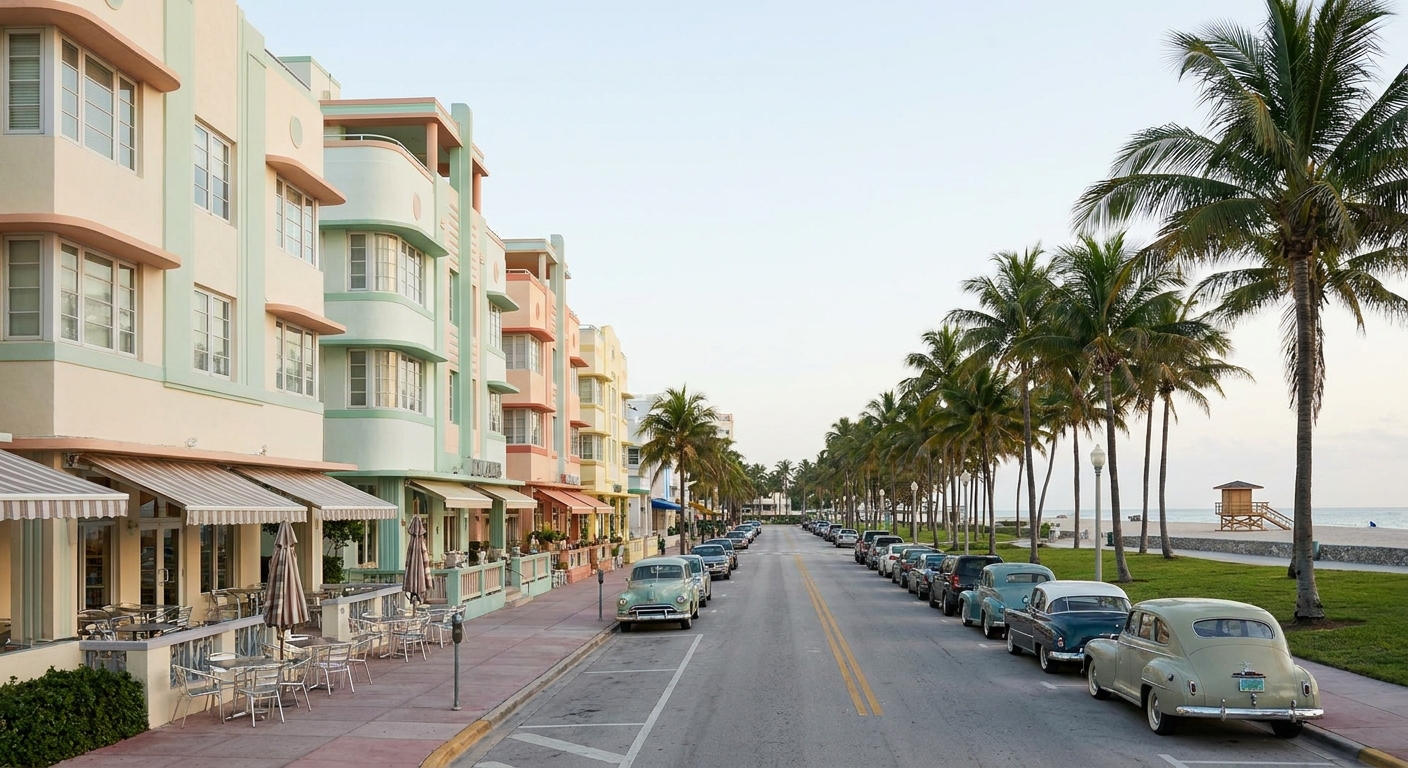
THE MONTH AT A GLANCE · MIAMI IN SEPTEMBER
September buys you 87.8°F water and the cheapest Miami Beach beds of the year, and charges 10.22 inches of rain and the hurricane season’s statistical peak for them.
AVG HIGH 89.0°F · SEA 87.8°F · 13.1 RAIN DAYS · HURRICANE PEAK SEPT 10
Go for: swimming at 87.8°F, museum afternoons at Vizcaya and PAMM, and room rates in their August-to-October trough.
Think twice before: booking non-refundable, since September 10 is the statistical peak of the Atlantic hurricane season.
Climate: NOAA NCEI 1991-2020, Miami International Airport · Sea: Open-Meteo Marine · Tax: Florida DOR · full sources at the end
On this page
- Miami weather in September89.0°F highs, 10.22 in, 13.1 wet days
- Can you swim in Miami in September?Sea at 87.8°F, and how that reads
- Hotel prices and crowds in SeptemberThe annual low, plus 12% in tax
- Things to do in Miami in SeptemberVizcaya at $20, PAMM free Thursdays
- A two-day Miami plan for SeptemberDay one and day two, hour by hour
- September vs August and OctoberThree months, side by side
- Is September a good time to visit Miami?Who it suits, who should shift a month
Two dates frame the month. September 10 is the statistical peak of the Atlantic hurricane season at NOAA’s National Hurricane Center, and by September 15 Miami’s daylight has fallen to 12 hours 20 minutes. Between them sits water still above 87°F and the lowest rates Miami Beach publishes all year.
Miami weather in September: average highs, lows and rain days
| September at Miami International | Normal, 1991-2020 |
|---|---|
| Average high | 89.0°F (31.7°C) |
| Average low | 76.9°F (24.9°C) |
| Precipitation | 10.22 in |
| Days with 0.10 in or more | 13.1 |
| Days with 1 in or more | 3.3 |
| Daylight on Sept 15 | 12 hours 20 minutes |
The climate figures here come from NOAA’s National Centers for Environmental Information: the 1991-2020 monthly normals for station USW00012839, the gauge at Miami International Airport. That distinction is worth having. A station normal is a thermometer standing in one place a dozen miles inland from Ocean Drive, not a reanalysis grid cell that averages ocean, suburb and airfield into a single number. September’s normal high is 89.0°F, its normal low 76.9°F, and its precipitation total 10.22 inches.
Rain arrives in a particular shape. An average September records 13.1 days with at least 0.10 inch and 3.3 days with an inch or more. Two days in five, then, bring rain you notice, and most of it lands as a late-afternoon storm that darkens Brickell, ponds a few intersections and clears inside the hour. The inch-plus days behave differently. Those end a beach afternoon outright, so it pays to keep one indoor option unbooked and ready.
Day and night sit only 12.1 degrees apart, so the evening never truly cools and nothing in the bag needs to be warm. What it does need: a rain shell that folds into a pocket, a second shirt for the wet-season humidity that runs 85 to 90 percent, and shoes that shrug off standing water. Restaurants and museums run their air conditioning hard, so one light layer still earns its space.
On September 15 the sun rises at 7:05 a.m. and sets at 7:25 p.m. Eastern time, giving 12 hours 20 minutes of daylight (sunrise-sunset.org, converted from UTC). Usable beach light is gone by roughly 7:45. That reorganizes the day. Beach hours run early, the storm window sits mid-afternoon, and dinner happens under a dark sky rather than in the long light August still hands out.
Can you swim in Miami in September? Sea temperature and what it feels like
The sea surface off Miami averages 87.8°F in September, from the Open-Meteo Marine dataset averaged over 2015-2024. Read the number carefully: it is the mean of daily maxima, so it averages the warmest reading of each day and sits a shade above a true 24-hour mean. Early mornings run a little below the headline. The frank version is that this is bath-adjacent water rather than bracing water, at any hour of the day.
In practice there is no entry shock and no relief either. You walk in off Lummus Park and nothing changes: no gasp, no acclimatizing, no particular reason to come out. Small children stay in for an hour without going blue, snorkelers stop wanting a shirt, and anyone who uses the ocean to cool down will not get what they came for. Shade and a rinse shower matter more than a towel this month.
Our sources carry no wind or wave normals for Miami in September, and we are not going to invent any. What is documented is the calendar: the Atlantic hurricane season runs June 1 to November 30, peaks on September 10, and concentrates most of its activity between mid-August and mid-October, per the National Hurricane Center. A storm hundreds of miles offshore can churn the water for days without landfall, so check the forecast the morning you plan to snorkel, and swim where lifeguards are posted.
How busy is Miami in September? Crowds, prices and the demand peak
September sits in the cheapest stretch of the Miami year. Rates run lowest from August through October and highest from February through April, a market pattern relayed by local operators rather than an official statistic, and September is the middle of that trough. The reasons are the ones the gauge records: heat, humidity, 10.22 inches of rain and the September 10 peak.
That changes how you book more than when. Two to three weeks of lead time (est.) usually still finds a beachfront room in this window, and the discount is genuine. The hurricane peak argues for a refundable rate rather than a bargain locked in six months out, and both airlines and hotels sell that flexibility cheaply in September. Read the cancellation deadline in hours, not days.
The quoted rate is not the paid rate. Miami-Dade County levies a 6.0% transient rental tax, filed and paid alongside Florida’s 6% state sales tax, so 12% lands on top of the room. Miami Beach hotels then commonly add a nightly resort fee, and published amounts diverge sharply by source and category, from around $25 on average to $35 or $95 at individual properties. Ask for the all-in nightly total before comparing two September quotes.
One upgrade genuinely changes this month, and it is not the view. A hotel with real shade, a pool and a lobby worth sitting in turns the 3 p.m. storm into a pause instead of a lost afternoon. Distance from the sand matters less than usual: the Miami Beach trolley is free, runs 8 a.m. to 11 p.m. daily at roughly 20-minute intervals, and covers five routes including the Collins Express down the length of Collins Avenue.
Things to do in Miami in September
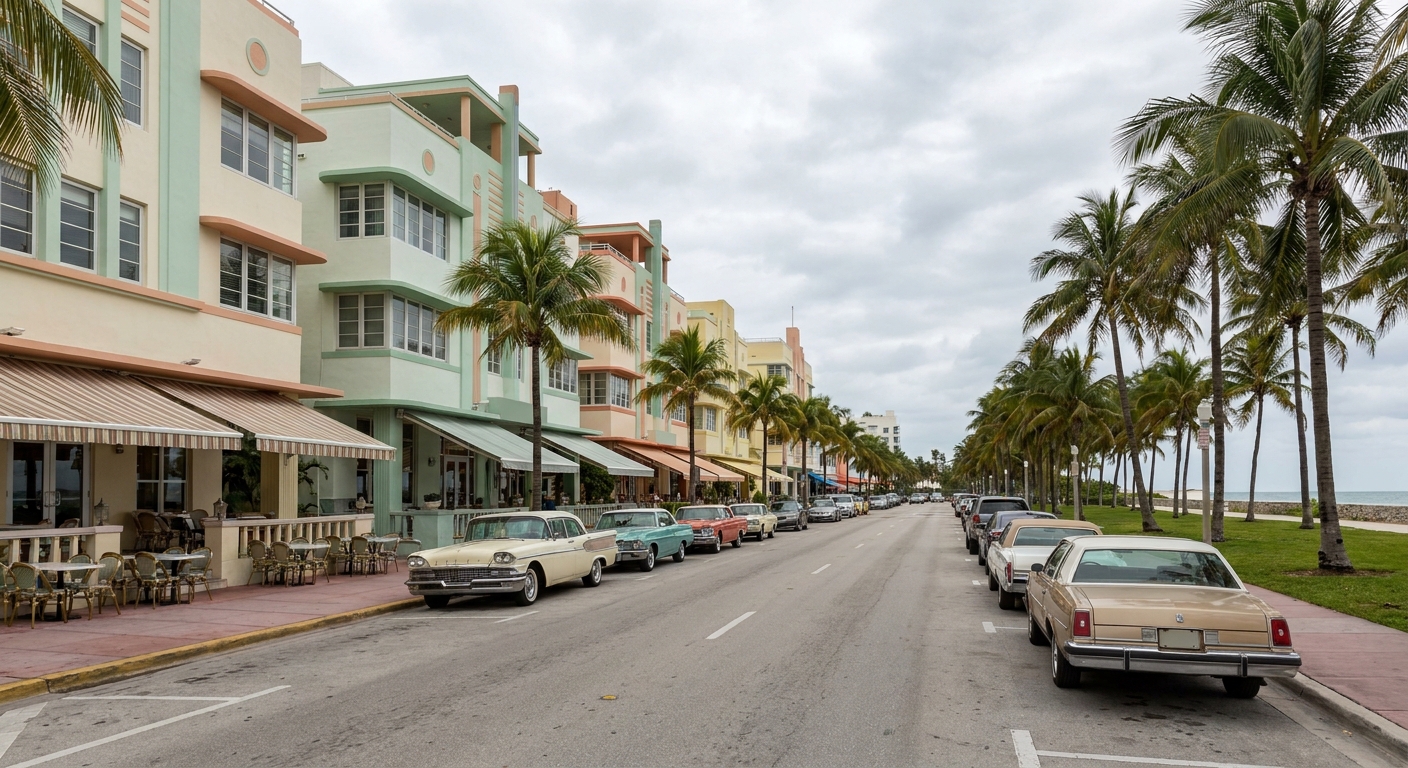
September hands over a pairing the rest of the year does not: sea at 87.8°F alongside rooms at their annual floor. In February the water sits near 72°F and the beds cost the most. By October the sea has already dropped to 84.5°F. Add the wet-season storm schedule and the month acquires a real indoor half, which means opening hours deserve as much planning attention as light and tide.
Vizcaya Museum and Gardens, in north Coconut Grove inside the City of Miami, opens Wednesday to Monday from 9:30 a.m. with last admission at 4:30 p.m., and closes Tuesdays. Adult admission is $20 while restoration work continues, down from the usual $25; ages 6 to 12 pay $5 and under-6s are free. The Vizcaya Metrorail station is a few minutes’ walk, at $2.25 a ride. For sand with parking attached, Crandon Park on Key Biscayne charges $7 on weekdays and $10 at weekends.
The free column is long. Lummus Park, the beach fronting Ocean Drive between 5th and 15th Streets, costs nothing, stays open 24 hours and keeps lifeguards, restrooms and picnic tables. The Metromover is free across Downtown and Brickell, with cars every 90 seconds at rush hour and every three minutes off-peak, though published hours differ: Miami-Dade lists 5:30 a.m. to 10 p.m., other sources 5 a.m. to midnight. And the Perez Art Museum Miami waives admission Thursdays from 5 to 9 p.m., plus all day on the second Saturday of the month.
Miami in September: a two-day itinerary
Day one runs early. Sunrise at 7:05 a.m. puts you on Lummus Park sand while the air is still under the 89°F line, and the 87.8°F water needs no easing into. Shower, eat, and be at Vizcaya for the 9:30 a.m. opening, $20 for adults. Take lunch indoors around 1 p.m., then hold 3 to 5 p.m. loosely, because that is when the storm lands on 13 days out of 30. Ride the free Metromover around Brickell at six and eat after the 7:25 p.m. sunset.
Day two belongs to the mainland: Wynwood’s murals and Little Havana’s coffee counters while the heat is still building, then Crandon Park for the afternoon swim, $7 to park on a weekday. If the sky turns, trade the beach for a Thursday evening at PAMM between 5 and 9 p.m. or the second Saturday, both free, and let the $5.65 daily fare cap on Metrorail and Metrobus absorb the extra rides. Keeping two indoor options in reserve is what separates a rerouted afternoon from a wasted one.
Miami in September vs August and October
| Normal, 1991-2020 | August | September | October |
|---|---|---|---|
| Average high | 90.7°F | 89.0°F | 85.9°F |
| Average low | 77.7°F | 76.9°F | 74.2°F |
| Precipitation | 9.58 in | 10.22 in | 7.65 in |
| Days with 0.10 in or more | 13.3 | 13.1 | 9.0 |
| Sea, daily max average | 88.3°F | 87.8°F | 84.5°F |
Across the three months the temperature curve is gentle and the rain curve is not. August runs 1.7 degrees hotter by day at 90.7°F, October 3.1 degrees cooler at 85.9°F. Rainfall tops out in September at 10.22 inches against August’s 9.58 and October’s 7.65, yet the count of wet days barely moves between August (13.3) and September (13.1) before falling to 9.0 in October. The sea traces the same slope: 88.3°F, 87.8°F, 84.5°F, each an average of daily maxima.
Shift four weeks later and you gain four dry days, lose 3.3 degrees of water temperature, and watch the rate curve start its climb out of the trough once October ends. Shift four weeks earlier and you get marginally warmer sea, longer daylight and the same low rates, in the hotter half of the storm window. Neither move leaves the season behind, since the NHC counts most activity from mid-August to mid-October. Our October guide and August guide take each month on its own terms.
Is September a good time to visit Miami?
Yes, for swimmers, for travelers whose budget decides the trip, and for anyone content to plan around one unpredictable afternoon. The water is 87.8°F, the beds are at their annual floor, and the museums are open with the air conditioning running hard. No, for a first-and-only Florida week bought non-refundable, for outdoor sightseeing scheduled from breakfast to sunset, and for anyone who will spend the trip refreshing a tropical forecast.
If that reads as a no, October is the small correction and the winter is the real one. October cuts wet days from 13.1 to 9.0 and highs to 85.9°F while the sea holds 84.5°F. South Florida’s warm, dry stretch runs December through April, roughly 65°F to 80°F, and that is also when rates peak, February to April. The statewide case is laid out in our Florida timing guide, and the wilder half of a September trip in the Everglades guide.
What September alone offers: water within a degree of 88°F and the year’s lowest published rates under a sky already dark by 7:45 p.m., so the beach day and the city night fit inside the same evening.
The last word
Book refundable, swim before ten, and hold one paid ticket and one free museum for the afternoon. That is the whole September method, and keeping it costs nothing. One last figure for scale: the 10.22 inches that fall in a normal September sit just under June’s 10.51, the wettest month on the Miami International record, and about five and a half times January’s 1.83. This is not a run of bad luck. It is the tail of the wet season, priced accordingly.
Sources & data for this guide
- September normals: high 89.0°F, low 76.9°F, 10.22 in, 13.1 days at 0.10 in, 3.3 days at 1 in · NOAA NCEI monthly normals 1991-2020, station USW00012839 (Miami International Airport) · checked Sep 8, 2026
- August and October normals, same station and same period · NOAA NCEI · checked Sep 8, 2026
- Sea surface 87.8°F in September, mean of daily maxima 2015-2024 · Open-Meteo Marine API · checked Sep 8, 2026
- Daylight of 12 hrs 20 min and sun times for Sept 15, converted from UTC to Eastern time · sunrise-sunset.org · checked Sep 8, 2026
- Hurricane season dates, September 10 peak, mid-August to mid-October activity · NOAA National Hurricane Center · checked Sep 8, 2026
- 6.0% Miami-Dade transient rental tax, filed with the 6% state sales tax · Florida Department of Revenue, form DR-15TDT · checked Sep 8, 2026
- Vizcaya hours, Tuesday closure and $20 reduced adult admission · vizcaya.org · checked Sep 8, 2026
- PAMM free Thursday evenings and second Saturdays · pamm.org · checked Sep 8, 2026
- Transit fares ($2.25 single, $5.65 daily cap), free Metromover and free Miami Beach trolley · Miami-Dade Transit and City of Miami Beach · checked Sep 8, 2026. Metromover hours are published two ways, 5:30 a.m. to 10 p.m. by the county and 5 a.m. to midnight elsewhere, and we have not resolved which is current.
- Parking rates at South Pointe Park and Crandon Park · City of Miami Beach and Miami-Dade Parks · checked Sep 8, 2026, and liable to change
- Rate seasonality (lowest August to October, highest February to April) is a market trend relayed by local operators, not an official statistic. Resort-fee amounts diverge widely by source, so we give the range and never a single figure. Booking lead time is our estimate.