
EVERGLADES NATIONAL PARK · FLORIDA · 25.29° N
There is nothing else like it in America: a river that is fifty miles wide, a few inches deep, and moving so slowly it reads as stillness. The Everglades doesn’t do mountain drama — it does sawgrass to the horizon, alligators sunning beside boardwalks, wading birds by the thousand, and a silence with texture. A million and a half acres of it sit an hour from Miami’s traffic, which remains one of Florida’s better jokes.
THE PARK AT A GLANCE · EVERGLADES
Come in the winter dry season, enter at Homestead for the classic day, and let the boardwalks do the work: the wildlife comes to the water, and the water is where the trails are.
BEST: DECEMBER–APRIL · THREE ENTRANCES, THREE PARKS · AN HOUR FROM MIAMI
Go for: the densest, easiest wildlife viewing in the country (no telephoto required in winter).
Think twice if: your dates land June–September: heat, storms and mosquitoes will run the schedule. Our month-by-month guide has the honest calendar.
Facts: National Park Service · full sources at the end of this guide
Everglades National Park entrances: three doors, three different parks
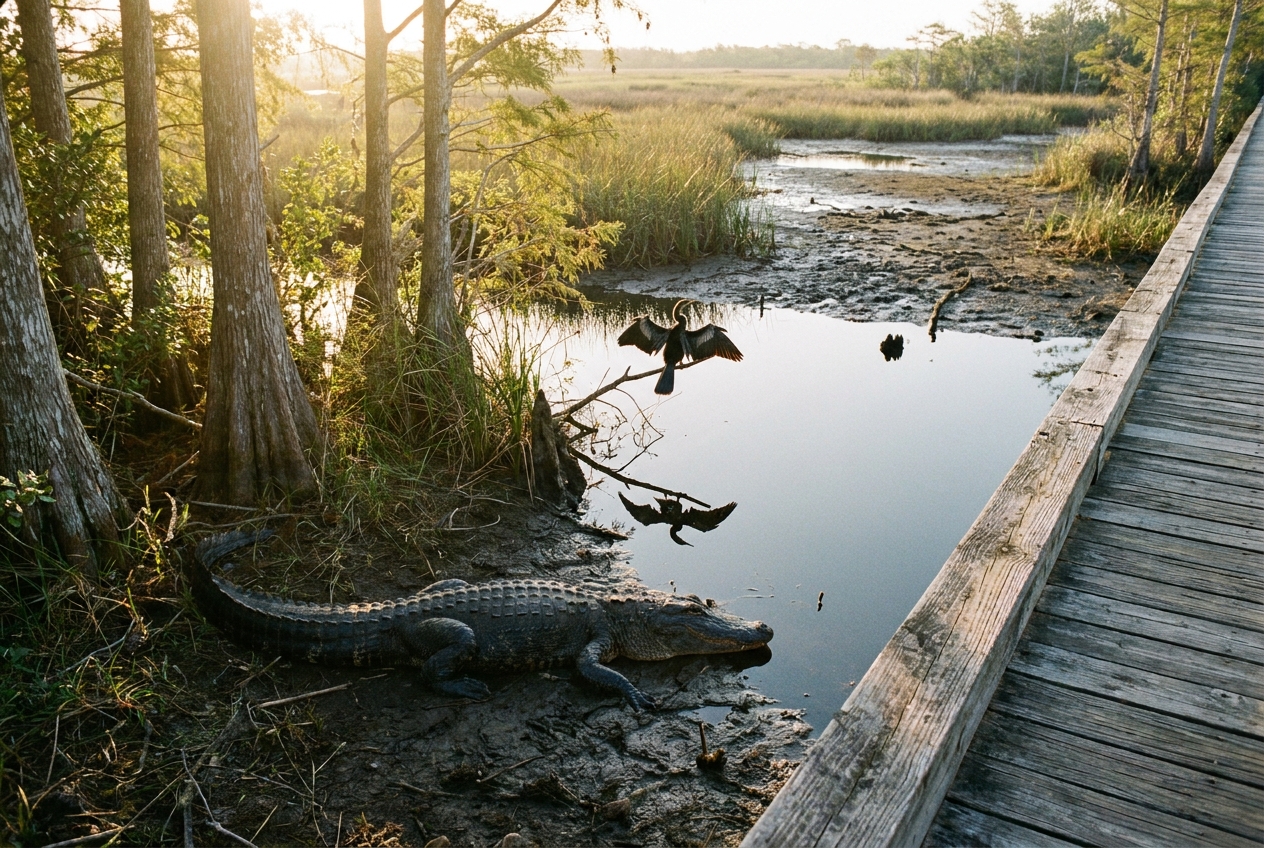
Homestead (Ernest Coe → Royal Palm → Flamingo). The classic. The main road runs 38 miles from the entrance to Flamingo on Florida Bay, and the park’s single best stop sits just inside: Royal Palm’s Anhinga Trail, the 0.8-mile boardwalk where winter concentrates the wildlife into a natural amphitheater. Flamingo at road’s end adds boat tours, mangrove kayak trails, a drive-in campground, manatees around the marina, plus the country’s only spot where alligators and crocodiles share an address. Open 24 hours.
Shark Valley (Tamiami Trail, the Miami side). One thing, done perfectly: a 15-mile paved loop into the heart of the sawgrass, by rental bike or guided tram, ending at an observation tower with the only elevated view of the “river of grass.” Winter mornings line the canal with alligators. Gates 8:30am–6pm.
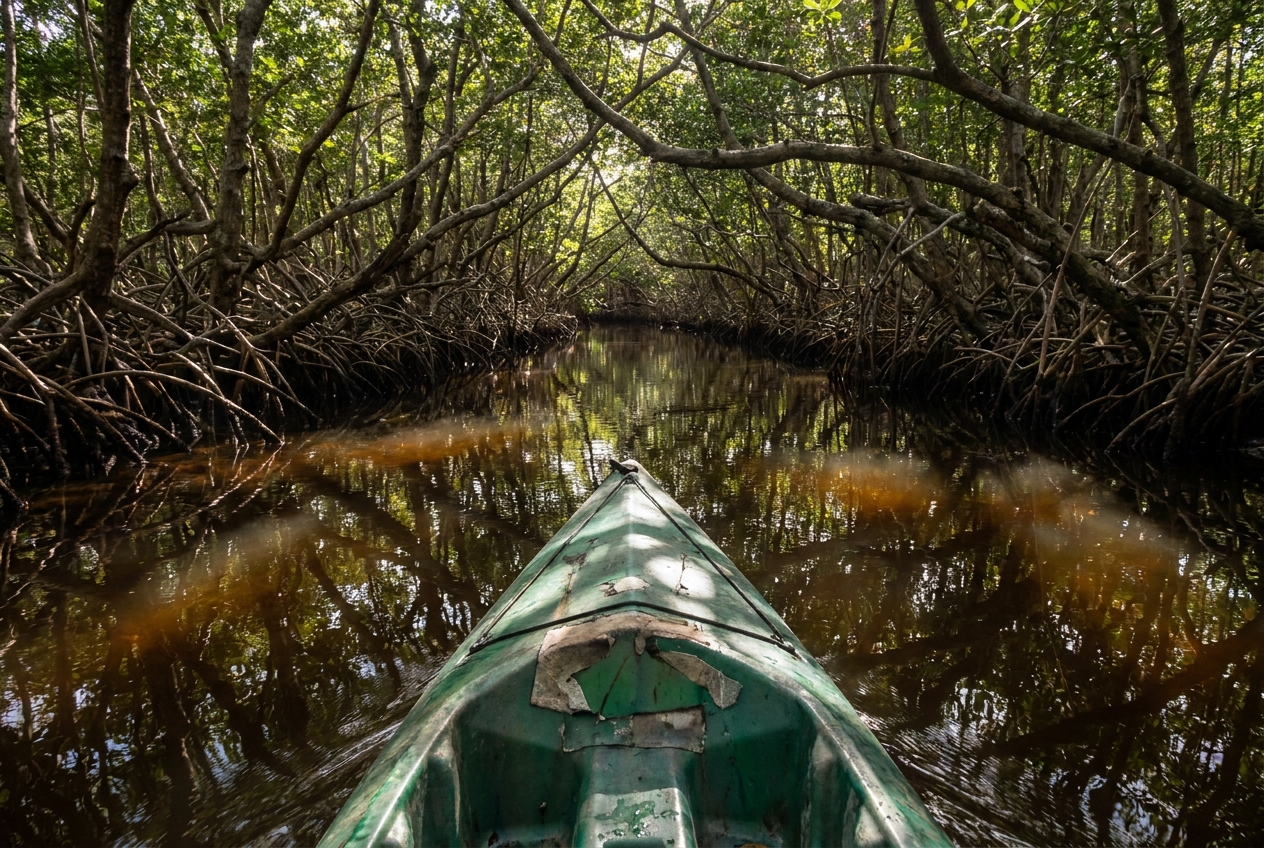
Gulf Coast (Everglades City, the western door). The paddler’s entrance: launch point for the Ten Thousand Islands, a mangrove labyrinth best met by guided kayak or boat tour on calm winter water. Open 24 hours.
One day in the Everglades, hour by hour
| Hour | Where | Why then |
|---|---|---|
| 6:45 | Leave Miami / Homestead | Beat the light and the buses |
| 8:00 | Anhinga Trail, Royal Palm | The wildlife’s rush hour: birds feeding, gators surfacing |
| 10:00 | The road to Flamingo, stops included | Pa-hay-okee overlook, Mahogany Hammock boardwalk |
| 12:00 | Flamingo marina | Manatees off the dock, crocodile spotting, the backcountry boat tour |
| 15:00 | Back out, one more Anhinga pass | The afternoon shift is a different cast |
| 17:00 | Robert Is Here, Florida City | The legendary fruit stand, where a key-lime milkshake is the exit visa |
Swap the middle for Shark Valley (bike or tram, 2–3 hours) if you’re based Miami-side and short on time.
Everglades wildlife: what you’ll see, season by season
Near-guaranteed in winter: alligators (arm’s length at Anhinga: keep the mandated distance anyway, they’re faster than they look), anhingas and cormorants drying their wings, herons, egrets and wood storks working the shallows, turtles stacked on logs, ospreys overhead. Likely with a little effort: manatees around the Flamingo marina in the cooler months, American crocodiles in the same brackish water (the world’s only gator-croc overlap), roseate spoonbills at dawn. The lottery tickets: a bobcat crossing the road at dusk, river otters, and the Florida panther, which exists mostly as a rumor you’ll happily keep believing.
Two field rules the rangers repeat daily: never feed or approach wildlife (a fed gator is a dead gator, and it’s a federal offense), and at Royal Palm, heed the vulture warnings: the local black vultures have a documented taste for windshield rubber, and the parking lot signage means it.
Where to eat, sleep and refuel around the Everglades
Food: pack a cooler. Past the entrance there’s essentially the Flamingo marina store and goodwill. The real meals live outside: Homestead and Florida City’s Mexican counters, and Robert Is Here, the fruit-stand institution on the way in.
Fuel and signal: fill up before the gate, and expect your phone to fade past Royal Palm, so download the map.
Sleeping: most visitors day-trip from Homestead/Florida City (budget motels) or Miami. Inside the park, Flamingo offers campgrounds and eco-tents. Book ahead in season, and know that a dry-season dawn inside the park is the single biggest upgrade money can buy here.
Airboats, the straight note: the roaring airboat rides of the brochures operate on the park’s edges (the Tamiami Trail corridor), not in the wilderness core. Three operators are officially authorized within the preserve areas. The park proper is quiet by design. Do both if you like; know they’re different products.
When to visit the Everglades: the short version
The park has two seasons, not four, and the difference is the whole trip: a mild, dry, wildlife-rich winter (December–April) and a hot, stormy, mosquito-rich summer that the park service itself describes without romance.
March is the crowd peak; December and January are the connoisseur’s window. October is the empty month for those who trade certainty for solitude. The full month-by-month verdict, with the crowd numbers and the hurricane caveat: Best Time to Visit the Everglades.
Everglades National Park fees, passes and rules
Entry is $35 per vehicle (7 days), cashless only: cards or digital passes. Non-US residents without an annual pass pay a $100-per-person surcharge, a recent change worth knowing before an international group shows up.
There is no lodging inside the park beyond Flamingo’s eco-tents and campgrounds. Most visitors day-trip from Homestead, Florida City or Miami. Ranger programs (including the wet-hike “slough slogs” into cypress domes) run at full strength in the dry season only. Bring water, sun cover and repellent in every season; this is a subtropical wilderness with a gift shop, not a theme park.
On this page
- Photographers and birders: boardwalk-easy, world-classWinter, any entrance
- Families: genuine all-ages winsAnhinga Trail + Shark Valley tram
- Paddlers: a life-list playgroundTen Thousand Islands & Flamingo
- Need A/C and infrastructure on demandAn edge airboat tour instead
The last word
The Everglades asks very little — a $35 car, a morning, comfortable shoes — and pays back in a currency no theme park prints: a wild America at arm’s length, behaving as if you weren’t there. Go early, go in the dry season, stand still on the boardwalk longer than feels natural. The park does the rest.
Get the timing right with the month-by-month calendar, and slot it into the bigger trip with our Florida orientation: it pairs with a Miami week the way an interval pairs with a concert.
The Everglades, page by page. The detail sits on its own pages: what each of the three entrances gives you, where to see alligators and birds, and in which season, which entrance to pick from Miami, and how long it takes, when to go and the two campgrounds.
Sources & data for this guide
- NPS · fees, hours and entrances · checked Aug 31, 2026
- NPS · weather and seasons, Anhinga Trail · checked Aug 31, 2026
- Visitor statistics (March peak, October low) · NPS STATS portal · checked Aug 31, 2026
All our pages
When to go
Things to do
- Things to Do in the Everglades: Shark Valley, Anhinga Trail and the Gulf Coast
- Everglades Wildlife: Where to See Alligators, Birds and Manatees