
MADISON BLUE SPRING · MARCH · THE MONTH IN FIGURES
A spring keeps its own calendar. When the U.S. Geological Survey gauge on Madison Blue Spring was read on September 11, 2026, the water came back at 73.2°F with 72 cubic feet per second leaving the vent, and that temperature sits close to the same figure any week of the year. March changes the air above the water. It changes nothing in it.
What the month hands you is a 72.9°F afternoon and a 47.2°F dawn, twelve hours of daylight in the middle of the month, and rain on fewer than six days out of thirty-one. What it withholds is certainty about the park itself: Florida’s own recreation inventory lists no designated swimming area here and no canoe, kayak or tube launch, so plan around the water rather than in it.
THE MONTH AT A GLANCE · MADISON BLUE SPRING
March is the month when the afternoon air (72.9°F) finally catches up with the spring water (73.2°F), and the price is a cold dawn and a handful of wet days.
AIR NORMALS 1991-2020, NOAA NCEI · GAUGE READING SEP 11, 2026 · NO DESIGNATED SWIM AREA
Go for: the rare four weeks when the air and the vent read within half a degree of each other, long light to 7:42 p.m., and water that a 72 cubic-feet-per-second flow keeps clear.
Think twice before: driving out expecting a lifeguarded beach or a rented tube. Florida’s 2024 facilities inventory lists neither for this park.
Air: NOAA NCEI 1991-2020, Valdosta Rgnl AP · Water: USGS station 02319302 · Facilities: FDEP 2024 inventory · full sources at the end
On this page
- Madison Blue Spring weather in MarchHighs of 72.9°F and 5.6 wet days
- How warm it gets, morning and afternoon47.2°F at dawn, 72.9°F by mid-afternoon
- Crowds and prices in MarchDry season, and what we could not price
- Things to do at the spring in MarchWhat the state park inventory lists
- A two-day plan for the springTwo days on 12 hours of daylight
- March vs February and AprilHow the three months compare
- Is March a good time to visit?Our verdict for March
Two instruments feed the numbers below, and they are not equivalent. The air normals come from NOAA NCEI, 1991-2020, recorded at Valdosta Regional Airport in Georgia, about 27 miles (44 km) from the vent, so read them as regional air and not as the microclimate over the water. The water figure is a single instantaneous USGS reading taken at the spring itself. Coastal tables usually publish a mean of daily maxima, which runs a touch warmer than a 24-hour average. Ours is neither of those, just one gauge on one day.
Madison Blue Spring weather in March: average highs, lows and rain days
| Measure | March |
|---|---|
| Average high | 72.9°F |
| Average low | 47.2°F |
| Precipitation | 3.73 in |
| Days with 0.10 in or more | 5.6 |
| Nights at or below 32°F | 1.5 |
| Daylight on March 15 | 12 h 02 min |
| Spring water | 73.2°F, read Sep 11, 2026 |
| Spring discharge | 72 cu ft/s |
NOAA’s 1991-2020 monthly normals for station USW00093845 put March at a 72.9°F average high and a 47.2°F average low, with 3.73 inches of precipitation over the month. That is a real thermometer at a working airport, not a reanalysis grid cell, and the distinction matters when a figure is quoted to a tenth of a degree. It also describes the air and only the air. The vent has no March.
Measurable rain falls on 5.6 days in an average March, roughly one day in five. The other twenty-five run dry or close to it. In practice a wet March day in north Florida is a band that crosses in an hour or two, not a lost weekend, and the rain does almost nothing to the water you drove for: 72 cubic feet per second replaces the pool faster than weather can cloud it.
Between the dawn low and the afternoon high sits a spread of 25.7°F, and that gap is what fills the bag. A fleece and long pants for the first two hours, a T-shirt by two in the afternoon, and a second dry layer for the drive home, because you will be getting out of 73.2°F water into air that starts cooling the moment the sun drops.
On March 15 the sun is up for 12 hours and 2 minutes, rising at 7:40 a.m. and setting at 7:42 p.m. local time. That late sunset is new: it arrives with the clock change in early March and gives you a usable hour after work finishes elsewhere. The warm air, though, leaves well before the light does.
How warm is Madison Blue Spring in March?
Take the two ends of the month’s normal day: 72.9°F at the top, 47.2°F at the bottom, 25.7 degrees apart. February’s afternoon stops at 67.0°F, so March is the first month of the year when the air over the run reaches the temperature of the water in it. Half a degree separates the 72.9°F afternoon from the 73.2°F the gauge read.
On the ground that means two wardrobes in one day. At 8 a.m. you want the fleece, a hat and closed shoes on cold limestone. By 1 p.m. the fleece is in the car and the cold part of the day is the first thirty seconds in the water. Getting out is where March earns its reputation, and a towel left in the sun beats one left in the trunk.
Frost has not finished with the region either. NOAA counts 1.5 nights in an average March falling to 32°F or below, which is one or two mornings when the windshield needs scraping before a 7:40 a.m. start. Those nights sit early in the month far more often than late, and they never touch the water.
How busy is Madison Blue Spring in March? Crowds and prices
March falls squarely inside Florida’s dry season, November through April, and it is the state’s spring-break month, which pushes demand up across the whole peninsula. That is a calendar fact, not a price. We found no occupancy series and no monthly room-rate series for this corner of north Florida, so we crown no month the expensive one and quote no nightly figure. The statewide season guide carries the broader pattern.
Weekends move faster than weekdays anywhere within a tank of Tallahassee or Gainesville, so aim your two nights at a Tuesday and a Wednesday if your calendar allows it. The nearest town we can place with a measured distance is Valdosta, Georgia, about 27 miles north, where the weather station sits. For bases and for the drive itself, see where to stay and getting around Florida.
We could not verify a lodging-tax rate for Madison County, so we give no percentage here. We also could not read the park’s own fee schedule: floridastateparks.org returned a 403 to our automated reads on September 11, 2026. That means no entrance price and no opening hour from us, and a phone call before you drive. Our trip-cost guide handles the state-level arithmetic.
The one line where spending more genuinely changes March is exposure gear. Water at 73.2°F against a 47.2°F dawn asks a great deal more of you at nine in the morning than at three in the afternoon, and a neoprene top buys back the first hour of the day. Rent it or borrow it, but decide before you leave home, because we cannot promise you a rental counter at the park.
Things to do in Madison Blue Spring in March
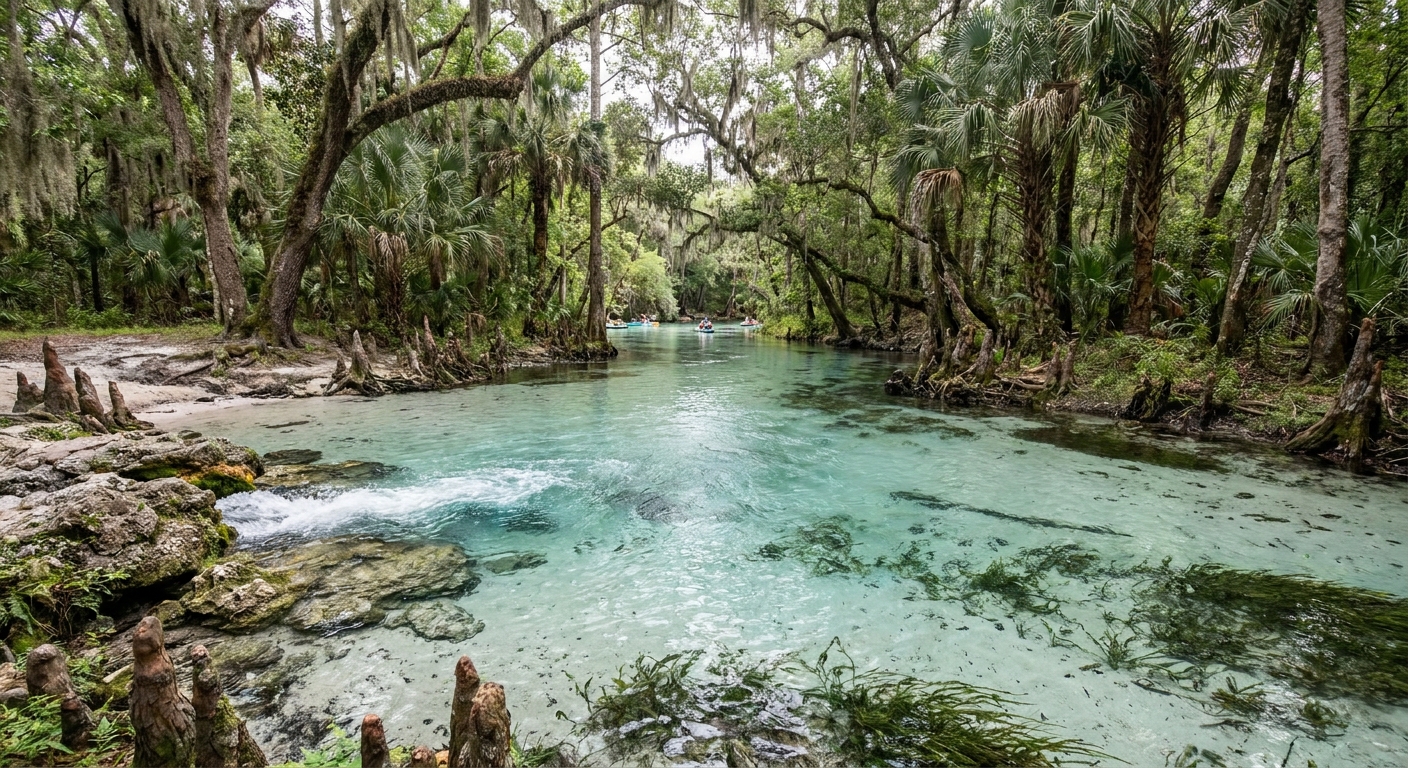
March gives you a match no other stretch of the year offers. Later in the spring and through summer the air climbs far above the vent and the same 73.2°F reads as a plunge. Back in February, with afternoons stopping at 67.0°F, it is the air that punishes you when you climb out. For four weeks the two sit within half a degree, and neither one wins.
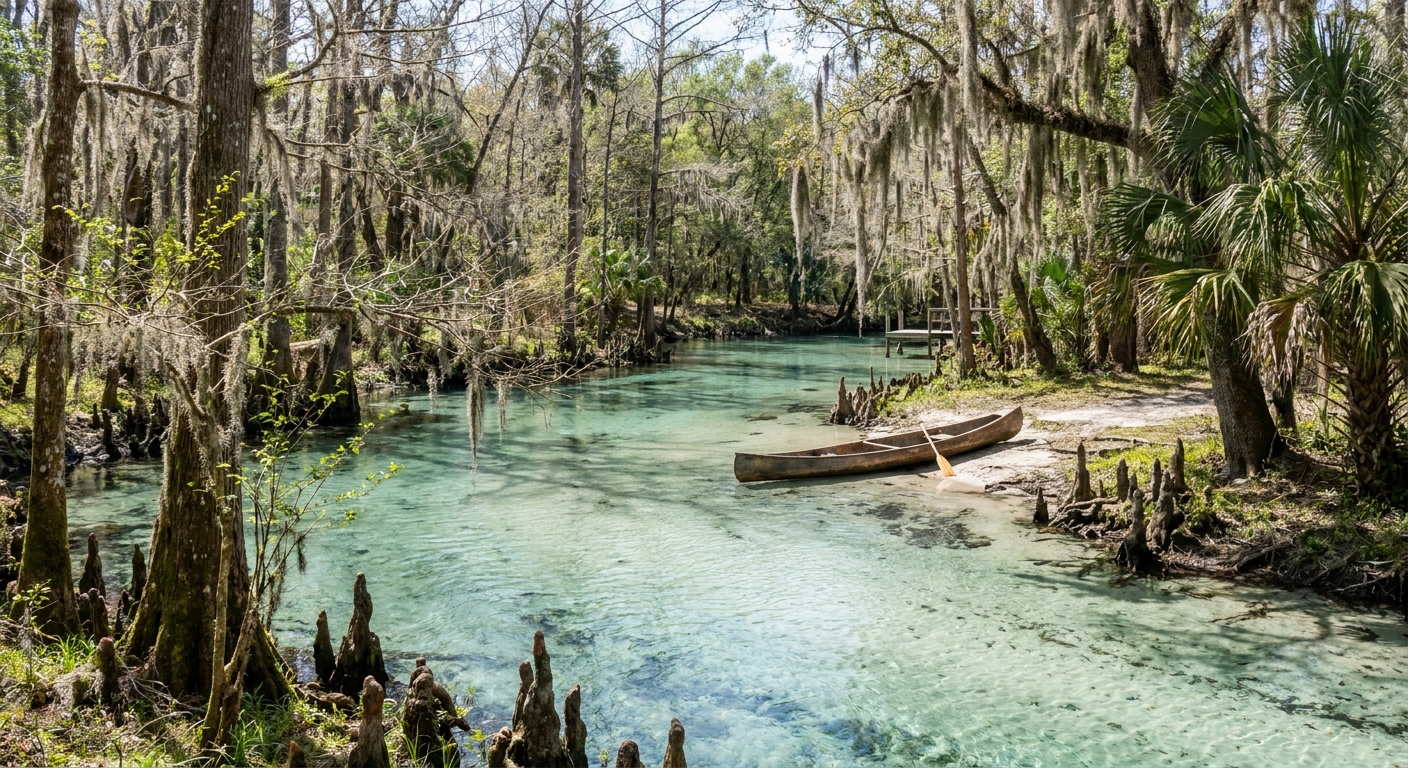
The site is Madison Blue Spring State Park, and Florida law puts it in serious company: Statute 373.802(5) defines Outstanding Florida Springs as every historic first-magnitude spring identified by the Florida Geological Survey, plus six more named by hand in the text. USGS station 02319302 sits on it, logging the 73.2°F temperature and the 72 cubic feet per second. The state’s 2024 facilities inventory, meanwhile, lists no designated swimming area and no canoe, kayak or tube launch.
So what actually shifts in March is everything except the water. The vent holds its figure while the afternoon air moves 12.6 degrees between February and April, and that spread is the entire season at a spring. Anyone comparing north Florida springs to the manatee rivers should read them differently: warm-water gatherings belong to the manatee guide, and we carry no manatee count for this spring.
On what costs nothing in March, we have to be straight about the gap: with the park’s fee page unreadable to us, we can name no free day and no waived entry. What we can hand you at no charge is the data itself. The USGS gauge publishes its temperature and discharge continuously, and checking it the night before tells you exactly what you are stepping into. Other free-to-enter ideas sit in our statewide list.
Madison Blue Spring in March: a two-day itinerary
Day one starts late on purpose. Sunrise at 7:40 a.m. lands on air near 47.2°F, so leave the coffee unhurried and arrive around ten, when the thermometer is climbing toward the seventies. Get in the water between noon and three, the warmest slot the month offers. Dry off by four, walk the run while the light is still flat and generous, and be back at the car before the 7:42 p.m. sunset takes the warmth with it.
Day two repeats the shape with an earlier finish, because the second afternoon is when the cold catches up with you. If one of the month’s 5.6 wet days lands on your trip, do not cancel: the flow keeps the water clear through rain, and the bands here usually pass within a couple of hours. Swap the mid-morning for a drive, then take the water at two. A longer weather plan sits in know before you go.
Madison Blue Spring in March vs February and April
| Measure | February | March | April |
|---|---|---|---|
| Average high | 67.0°F | 72.9°F | 79.6°F |
| Average low | 42.2°F | 47.2°F | 52.8°F |
| Precipitation | 3.31 in | 3.73 in | 3.66 in |
| Days with 0.10 in or more | 5.4 | 5.6 | 4.5 |
| Spring water | No seasonal swing | 73.2°F, read Sep 11, 2026 | No seasonal swing |
March sits 5.9 degrees above February on the afternoon high and 6.7 below April, with the low climbing five degrees on each step. Rain runs almost level between February and March, 3.31 against 3.73 inches, then eases slightly in April at 3.66 inches spread over fewer days: 4.5 against March’s 5.6. The one column that refuses to move is the water, and that is the point of the whole comparison.
Shift four weeks back and you save nothing on rain while losing six degrees of afternoon, which is the difference between drying off in comfort and hunting for the car heater. Our February page makes that case in full. Shift four weeks forward and April hands you a 79.6°F afternoon and a full wet day less, at the cost of sharing the spring with warmer-weather traffic.
Is March a good time to visit Madison Blue Spring?
For anyone bringing their own gear and their own plan, yes, plainly. The afternoon air at 72.9°F, the water at 73.2°F and twelve hours of daylight make a clean combination. For a family arriving with towels and an expectation of a roped-off swim beach, the answer is more cautious: the state inventory lists no designated swimming area and no launch, and we have no fee or hours to confirm what you will find at the gate.
If the cold dawn is what worries you, take April instead. It runs 79.6°F by day and 52.8°F at night, with 4.5 wet days against March’s 5.6 and no frost left in the average month. You pay for it in company, since the water that felt like a match in March becomes the coolest thing for miles once the air is in the high seventies.
What March alone delivers is the half-degree: one month a year when climbing out of the spring costs you nothing at all.
The last word
Decide your hour before you decide your date. A March day here is worth driving for between noon and four and merely tolerable at eight in the morning, and the calendar cannot change that. One more figure for the road: 1.3 days in an average March take an inch or more of rain, the kind that soaks a picnic and leaves the spring untouched. Call the park for its hours, pack the neoprene, and look at the gauge the night before.
Sources & data for this guide
- March, February and April air normals (highs, lows, precipitation, wet days, freeze nights) · NOAA NCEI monthly normals 1991-2020, station USW00093845, Valdosta Rgnl AP, GA, about 27 miles from the spring · checked Sep 24, 2026
- Daylight, sunrise and sunset on March 15 · sunrise-sunset.org, UTC times converted to local · checked Sep 24, 2026
- Water temperature 73.2°F (22.9°C) and discharge 72 cu ft/s · U.S. Geological Survey, National Water Information System, station 02319302 Madison Blue Spring, instantaneous reading · read Sep 11, 2026
- No designated swimming area and no canoe, kayak or tube launch listed · Florida Department of Environmental Protection, Recreational Facilities Inventory, 2024 annual report · checked Sep 24, 2026
- Outstanding Florida Springs definition · Florida Statutes 373.802(5), leg.state.fl.us · checked Sep 24, 2026
- What we could not verify: floridastateparks.org returned a 403 to our automated reads on Sep 11, 2026, so we carry no entrance fee, no opening hours and no manatee count for this park. We also found no lodging-tax rate and no occupancy series for Madison County. Confirm fees and hours with the park before you drive.
To plan your stay
- Madison Blue Spring: When to Go, Month by Month Highs, Rain and Daylight
- Madison Blue Spring in February: 67°F Air, 73°F Water and 3.8 Freezing Nights
- Madison Blue Spring in April: Weather, Water Temperature and How It Compares to March and May
- Madison Blue Spring in January: Weather, Water Temperature and Freeze Nights