
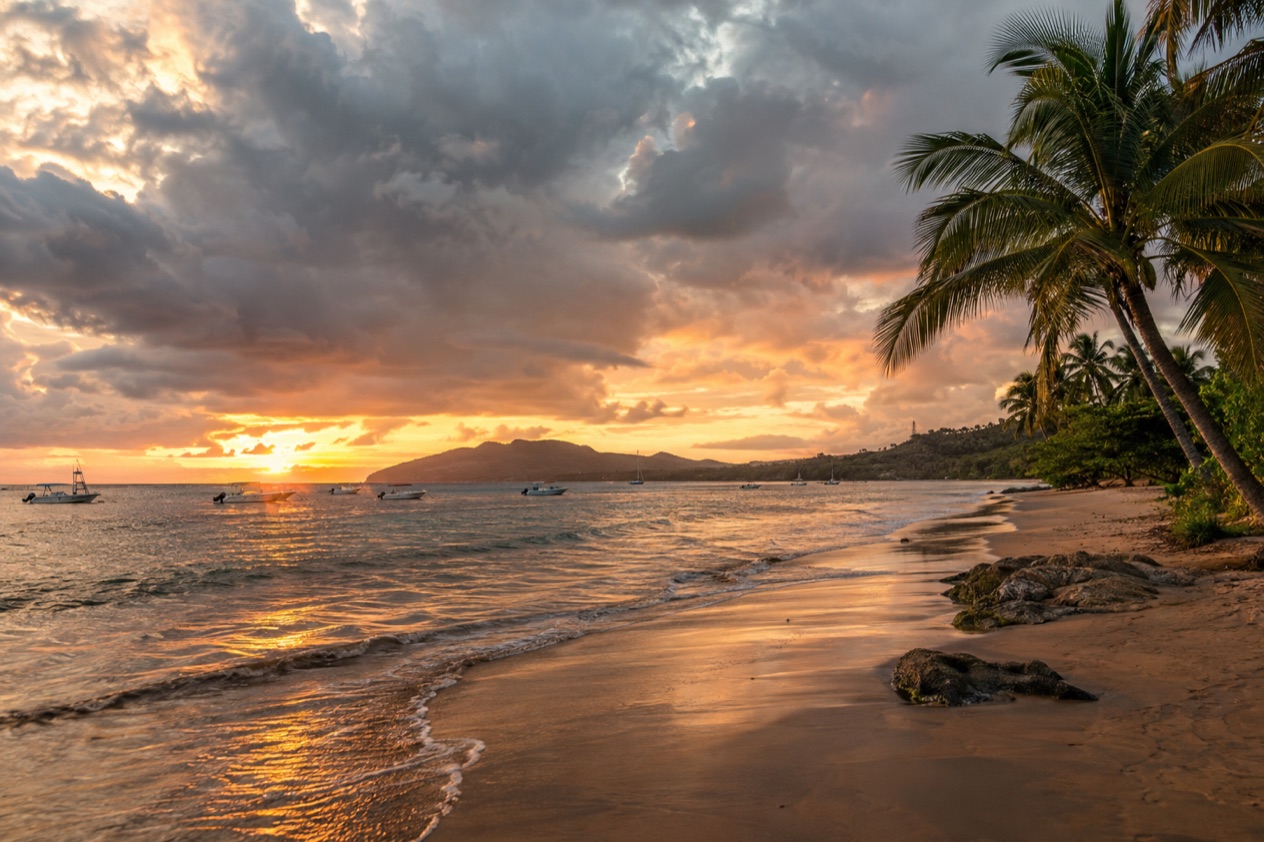
In November, Tamarindo wakes up washed and green. Surfers paddle out in the early light while the hills behind town hold the last of the rainy season, and by late afternoon the beach fills with people walking the wet sand toward the sunset.
The crowds have thinned since the summer, the sea is still warm, and the town is easing toward the busier dry months. It is a good month for surfing, turtle country and slow beach days on the Guanacaste coast.
What is the weather like in Tamarindo in November?
November in Tamarindo is hot, humid and still a little wet, but clearly drier than October as the rainy season winds down.
| Month | Average high (°F) | Average low (°F) | Rain days | Sea (°F) |
|---|---|---|---|---|
| October | 82.5 | 75.5 | 24.8 | 85.6 |
| November | 83.5 | 75.3 | 10.5 | 83.5 |
| December | 86.1 | 75.3 | 1.4 | 83.2 |
Mornings are usually the best part of the day. The air is warm from the start, the light is soft and clear, and it is the time for a surf lesson, a long beach walk or a coffee on a shaded terrace. By midday the heat builds and the humidity settles in, so a pool, a smoothie or a siesta fits the rhythm of the town.
Rain still comes in November, but it behaves differently than it did a month earlier. Rain still comes in November, but less often than it did a month earlier.
Gray, wet days that last from dawn to dusk are less common now, though they can happen. The total for the month is still noticeable, so the hills and fields around town stay lush.
You can eat dinner outside in a T-shirt because the evenings stay warm, while the nights are mild enough that a jacket is not needed. Pack light, breathable clothes, a rain shell for the afternoon and plenty of sunscreen, because the sun is strong between showers. Days are just under twelve hours long, so the light fades early in the evening and dinner plans start around sunset.
Can you swim in Tamarindo in November?
Sure, you can take a long swim in that warm water, which feels like a hot day’s bath, and wading in brings no shock at all.
Tamarindo’s main beach is a wide, sandy bay that is popular with surfers and beginners taking lessons, and swells are often present in the green season. Waves can be gentle in the morning and livelier on some afternoons, and conditions change with the tide, so look at the water before you go in.
The southern end of the bay tends to be mellower for wading and floating, while the central stretch near the surf breaks has more people on boards. Playa Langosta, a few minutes away, is quieter and suits a calmer stroll and swim, though waves are still possible there.
Rip currents pose a genuine threat in Costa Rica, claiming the lives of several American travelers every year, but most beaches have no lifeguard on duty and no warning of dangerous water for those going in. Ask a local surf shop or your hotel about the day’s conditions, stay close to shore with children, and never swim alone. Bring a dry bag to keep your phone dry and a rash guard for sun protection, since rain can arrive during your time at the beach.
What to do in Tamarindo in November
November 2 is All Souls’ Day, Dia de los Difuntos, a national holiday, and it is a quiet one. Families visit cemeteries across the country. In the highlands, the coffee harvest starts toward the end of the year, but in Tamarindo the month is mostly about the beach, the surf and the green landscape.
The town runs along one main street lined with surf shops, restaurants, small markets and bars, and it is an easy place to wander on foot. In the green season, with fewer visitors, the mood is relaxed and friendly. Tables are easier to find, and the pace is closer to a surf town than a resort strip.
Surfing and the beach in the green season
Tamarindo is a place to learn to surf. Schools along the beach offer lessons for first-timers, and the sandy bottom makes falling a gentler experience than on rocky breaks. Ask a surf school when conditions are best for beginners.
If you already surf, ask locally about the breaks within reach of town, since conditions shift with swell and tide. If you would rather stay dry, the bay is lovely for a long walk at low tide, with tide pools and wide sand. Plan to be off the beach before the afternoon clouds darken, and take a bag for your things in case of a downpour.
Playa Grande and the leatherback turtles
Leatherback turtles come ashore to nest at Playa Grande, which lies just a few minutes from town. It is a long, wild stretch of sand backed by trees, a very different feel from the busy main beach, and it attracts surfers who prefer a quieter lineup.
Turtle sightings are a chance, never a promise, and they depend on the season and the night, so do not count on seeing one. Go for the beach itself, for the walk in the late afternoon light and the sense of space.
Playa Langosta and slower afternoons
Playa Langosta is a small beach close to town, with a more residential mood and fewer people. It suits a quiet morning swim, a picnic or a walk at sunset, and it is a good pick for travelers who want a break from the main beach.
A few restaurants and cafes sit nearby, so you can combine a beach stop with a long lunch. If a shower rolls in, shelter under a terrace and wait it out, since many afternoon rains pass within an hour. Remember that the same rules about currents apply here, and the beach has no guarantee of lifeguards.
Picture yourself sitting down to eat: ceviche, fresh fish, and casado (the customary plate of rice, beans, salad and either meat or fish), along with gallo pinto, that rice and beans pairing that comes with breakfast. A cold fruit drink or a coconut is welcome after the heat of midday. Come nightfall, some bars host live music, and the main street takes on a lively yet relaxed mood.
If the weather turns, there are yoga studios, spas, shops and cafes to fill a wet afternoon, and the town’s restaurants make it easy to linger. Rain in November often clears by evening, so a late walk to watch the sunset is still a good bet.
A two-day itinerary for Tamarindo in November
Day 1 starts early on the main beach, when the air is cooler and the light is soft. Take a surf lesson or a walk along the wet sand, then have a breakfast of gallo pinto, eggs and fruit at a casual cafe on the main street. By midday, retreat to a pool or a shaded terrace as the heat builds.
In the afternoon, wander the shops and surf stores along the main street, with a rain jacket in your bag in case clouds roll in. Move toward the beach in the late afternoon for the sunset, then have dinner at a seafood restaurant and linger over a cold drink as the town lights up.
The morning of Day 2 takes you to Playa Grande, where the beach stays peaceful and the light comes in soft. Walk the long stretch of sand, watch the surfers and take it slowly, remembering that turtles are a chance, not a promise. Lunch can be a simple plate at a casual spot nearby.
After lunch, drive to Playa Langosta for a swim and a lazy hour on the sand, before the afternoon clouds gather. If a heavy shower arrives, switch to a spa, a yoga class or a long coffee in town. End the evening with a relaxed dinner and a stroll.
Is Tamarindo busy in November?
No, November is one of the calmer months in Tamarindo, with fewer visitors than the dry season that follows.
The big holiday rush comes later, when the weather turns dry and sunny, so November sits in a quiet pocket between the rainy peak and the winter high season. You can snag a table at restaurants, find plenty of space on the beach, and see fewer people in the surf lineups. Many travelers use the month for a relaxed getaway, and the mood is easygoing and local.
Compared with the dry months, rooms and rental cars are simpler to come by, but the final days of November begin to fill as travelers look ahead to the holidays. Book early if you are traveling near the end of November or want a specific beachfront hotel, and a little later if you are traveling in the first weeks. Popular restaurants on weekends can still fill, so a reservation for a special dinner is a sensible habit.
The national holiday on November 2 can mean a quieter day in town and some closures, so plan meals and errands around it. Check with the operator for the day you want, especially if the weather looks changeable.
What to pack for Tamarindo in November
Think light, quick-drying and ready for a sudden shower, with sun protection for the hours between the clouds.
- A light rain jacket, for the afternoon showers that arrive without much warning.
- Breathable clothes and a hat, since the days are hot and humid.
- Sunscreen and a rash guard, because the sun is strong at the beach.
- Sandals that dry quickly, for wet sand and sudden downpours.
- A dry bag, to keep your phone and wallet safe on the beach.
- For green season evenings, bring bug spray.
Good to know before you go
The U.S. State Department rates Costa Rica Level 2, ‘Exercise increased caution,’ due to crime; it says petty crime is common throughout Costa Rica and that violent crime also affects tourists, including armed robbery, homicide and sexual assault.
November falls at the tail end of the Atlantic hurricane season, and while Tamarindo sits on the Pacific side, the rainy season still shapes the month, so keep a flexible plan and allow for a wet afternoon. A car ride from the Liberia airport to town runs roughly an hour, and you can wander the main street easily on foot. Book lessons, tours and any special dinner ahead, and remember the November 2 holiday when planning errands.
Tamarindo in November vs October and December
Moving the trip a month earlier puts you in the heart of the rainy season, with showers on most days, a greener landscape and a sea that is a touch warmer. The town is at its quietest, and surf and beach days are more often interrupted by heavy rain. It suits travelers who like empty beaches and do not mind getting wet.
Moving a month later brings sunny days, hotter afternoons and rain that comes as short showers. The town gets busier as holiday travelers arrive, rooms fill earlier and the beach is livelier. The sea is slightly cooler, but still pleasant.
Stay in November if you want a middle path, with some rain but also long stretches of sun and a calmer town. Shift earlier for the quietest beaches, and later for the most reliable sunshine and the festive buzz.
Is November a good time to visit Tamarindo?
Yes, November is a good time for travelers who want a warm sea, green hills and a relaxed town, and who can live with an occasional afternoon shower.
It suits surfers, beginners learning on the sandy bay, couples after quiet beaches and anyone who prefers fewer crowds. Travelers who count on uninterrupted sun each hour may find it less than perfect, because brief downpours or a damp stretch can still show up, and the same goes for anyone craving high season at its liveliest.
On arrival, head to the beach in the late afternoon, look at the water, and ask a local about the day’s conditions before swimming. Then settle in for a dinner under the stars, with the sound of the surf nearby. November in Tamarindo is the month when the green season hands over to the dry one, and the town feels like it is exhaling.
Sources
- Open-Meteo / ECMWF ERA5, normals 1991-2020 computed for the grid cell at 10.2993N 85.8371W, checked October 8, 2026
- Open-Meteo Marine API, average 2015-2024, checked October 8, 2026
- sunrise-sunset.org, sunrise and sunset calculated for the 15th of the month, checked October 8, 2026
- U.S. Department of State, Costa Rica Travel Information, Safety and security (https://travel.state.gov/content/travel/en/international-travel/International-Travel-Country-Information-Pages/CostaRica.html), checked October 8, 2026
- U.S. Department of State, Costa Rica Travel Advisory, issued April 1, 2026 (https://travel.state.gov/content/travel/en/traveladvisories/traveladvisories/costa-rica-travel-advisory.html), read via the State Department open data API on October 8, 2026
To plan your stay
- Things to Do in Tamarindo: Surf Lessons, Leatherback Turtles, Beach Days and Sunset Evenings
- Where to Stay in Tamarindo: Town Center, Playa Langosta, Playa Grande and How to Choose
- Tamarindo vs Jaco: Beaches, Surf, Weather and Getting There
- Day Trips from Tamarindo: Playa Grande, Rincon de la Vieja, Liberia and Surf Beaches