
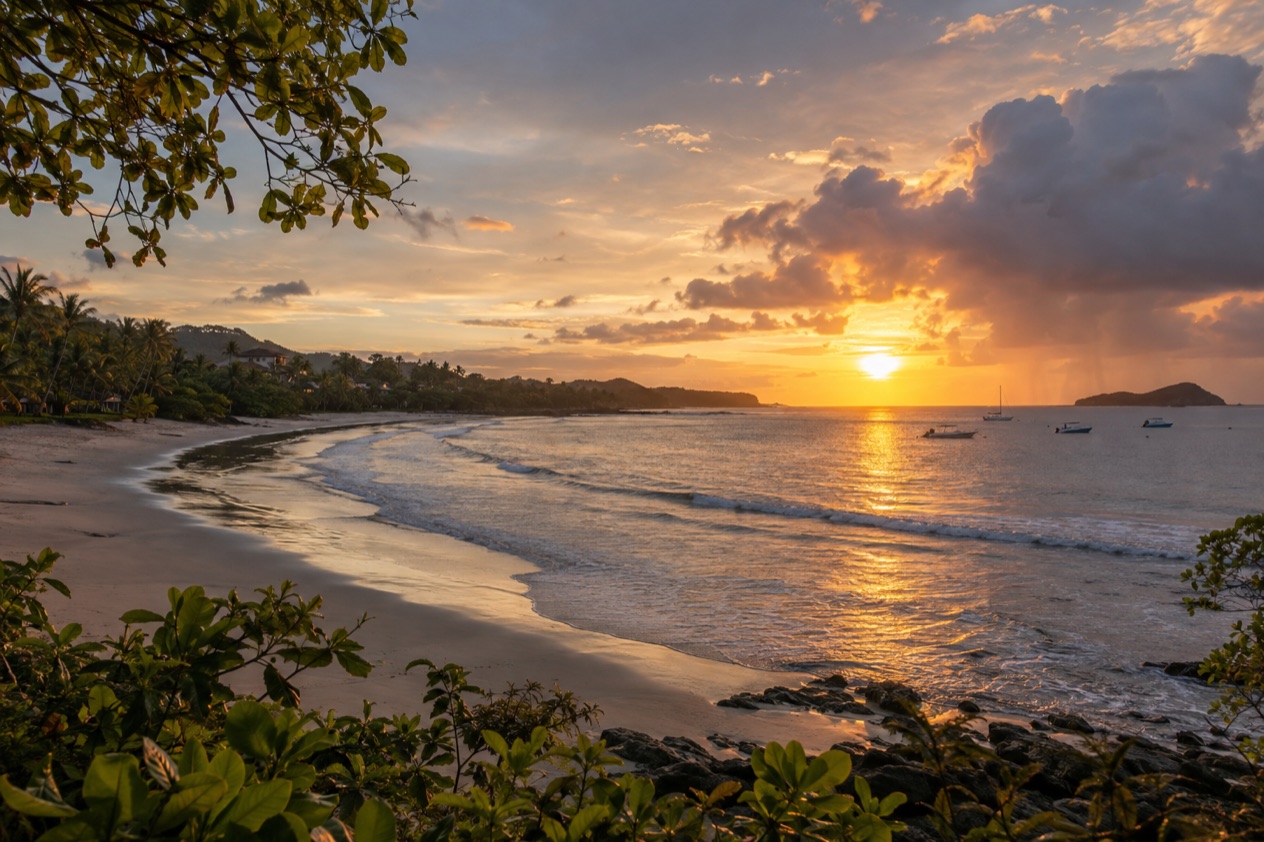
In June, afternoon rain drums on the tin roofs along Tamarindo’s main street, and the surfers walking back from the beach stop under the awnings to wait it out with a cold coconut. By evening the sky has cleared and the sunset over the bay is orange and pink. This is the start of the green season on the Pacific coast of Guanacaste, a month of green hills, quieter beaches and good waves for anyone who wants a surf-town vacation without the dry-season crowds.
What is the weather like in Tamarindo in June?
June in Tamarindo is hot, humid and showery: summer-warm all day, with rain on most days that usually comes in the afternoon and leaves the mornings clear.
| Month | Average high (°F) | Average low (°F) | Rain days | Sea (°F) |
|---|---|---|---|---|
| May | 87.2 | 77.5 | 18.7 | 87.5 |
| June | 84.4 | 76.6 | 23.0 | 86.1 |
| July | 85.0 | 76.4 | 18.0 | 85.5 |
Mornings are the prize. The sun comes up over the hills behind town, the air is still and the beach is most pleasant for a walk, a surf lesson or a run along the sand. Clouds then build through late morning, and the showers often arrive after lunch, sometimes as a short downpour and sometimes as a soft, steady rain that lasts into the evening.
A rainy June day here is rarely a gray one all the way through. Plan the beach, the boat and the hike before noon, and keep the afternoon for lunch, a nap, a massage or a long coffee. Roads and sandy paths can turn muddy after a heavy shower, and the river mouths near town run a little higher.
Evenings stay warm enough for shorts and sandals, and you can eat outside most nights. The air smells of wet earth and salt, and the hills turn a deep green. Bring a light rain jacket and quick-drying clothes, since nothing really dries in the humidity.
Can you swim in Tamarindo in June?
The ocean feels as pleasant as a lukewarm bath, but rip currents are a grave danger, and you still need sunscreen with a rash guard.
Playa Tamarindo, the town beach, has a wide, sandy bay with boats moored offshore. Its waves are usually gentle enough for beginner surf lessons, though the swell often picks up in the green season and the shore break can be strong at high tide. The beaches north and south, such as Playa Langosta, Playa Grande and Playa Avellanas, tend to have more powerful surf and attract experienced surfers.
Rip currents are a grave danger in Costa Rica, causing several drowning deaths each year among visitors from the United States, yet most beaches have no lifeguards and no warnings about dangerous conditions. Watch how the locals and surf instructors use the water, stay near other people, and never swim alone on a beach with big waves.
Snorkelers should not expect much clarity, since rain runoff can cloud the water near the river mouths.
What to do in Tamarindo in June
June is a month for surfing, sunsets and slow days rather than a festival calendar. The big appeal is the green season itself: hills that turn emerald after the first rains, fewer visitors on the sand, and a town that feels like it belongs more to its residents. Mornings are for the outdoors, afternoons for the shade.
Surfing and the beach town
Tamarindo built its reputation on surf, and the green season brings steady swell to the beaches around town. Beginners head out in the morning for a lesson on the gentler waves of the town beach, while stronger surfers seek the more demanding breaks at Playa Grande, Playa Avellanas or Playa Negra. Boards, lessons and rash guards are easy to find along the main street.
Between sessions, the main street is the place to wander: surf shops, craft stalls, small boutiques, juice bars and open-air restaurants. As night falls, folks stroll out to the sand to watch the sun sink into the Pacific, while tunes pour from the beach bars. Expect a relaxed, international crowd of surfers, families and long-stay visitors.
If the afternoon showers arrive, do what the locals do and duck into a café or yoga studio. Many surf schools and shops keep going in light rain, and the water is warm enough that getting wet hardly matters. Lightning is another story, so get out of the water when thunder rolls in.
Nearby beaches and green season drives
A day trip up or down the coast shows how different the beaches of Guanacaste can be. Playa Conchal is known for the shell fragments in its sand, Playa Flamingo for its curved, white bay, and Playa Grande for its long, wild stretch backed by the estuary. Each has its own mood, and in June they are less crowded than in the dry months.
Roads to some of these beaches are slower than they look on a map, especially after rain, and the dirt tracks can be rutted. Start early so you are back before the afternoon showers, and ask about water conditions before swimming. Pack water, sunscreen and snacks, since services can be thin on the quieter beaches.
Wildlife, estuaries and the green season
The rains wake up the dry forest behind the coast. Trees leaf out, howler monkeys call from the canopy at dawn, and birds are busy in the wetlands and estuaries near town. Guided walks and boat trips on the estuaries are the most common way visitors see animals, and mornings are the best time, before the clouds build and the heat settles in.
Animals are never a promise. You may see monkeys, iguanas, herons, egrets or a crocodile sunning on a bank, and some days you will see little more than green. Bring binoculars if you have them, wear long, light sleeves against mosquitoes, and keep a respectful distance from any wildlife you meet.
At the table, the season is simple and satisfying. Look for casado, the plate of rice, beans, plantain, salad and a choice of fish, chicken or beef, along with gallo pinto at breakfast, ceviche with plantain chips, patacones, and fresh fruit juices. After a rainy afternoon, a bowl of sopa de mariscos, or a cold Imperial beer on the sand, hits the spot.
Pura vida is the local greeting, farewell and philosophy, and it fits June. Plans shift with the weather, meals stretch out, and nobody minds a late start. If you can follow that pace, the green season gives you a Tamarindo with more space and softer light than the dry months.
A two-day itinerary for Tamarindo in June
Day 1 is a surf-and-sunset day built around the town beach. Start early with breakfast of gallo pinto and fruit, then take a surf lesson or just wade into the water while the morning is calm and the sun is gentle. With about twelve hours and forty-six minutes of daylight in mid-June, you have plenty of room, but the clouds build by midday.
At lunch, settle into a shaded open-air restaurant on the main street for ceviche or a casado, and stay put if the first shower comes. When it passes, browse the shops and craft stalls, or find a café with a fan and a cold drink. Return to the sand in the late afternoon to walk toward the north end of the bay, then stay for the sunset, with dinner at a beach restaurant afterward.
Day 2 heads out of town in the morning, when the roads and the weather are best. Drive or take a taxi to Playa Grande or Playa Avellanas for a long walk, a look at the surf and a seafood lunch at a simple beachfront place. Keep any swimming to the edges of the beach, and mind the currents.
Head back by early afternoon, before the showers, and use the rest of the day for a massage, a yoga class or a nap. If the rain sets in, a long dinner at a restaurant with a covered terrace makes a good ending, followed by an early night. If you still have energy, book an estuary boat trip for the next clear morning rather than the afternoon.
Is Tamarindo busy in June?
Actually, June counts among the quieter months in Tamarindo, because the green season delivers rain in the afternoons and draws fewer travelers than the dry months do.
The people you meet are mostly surfers, families on summer vacation, long-stay travelers and residents, along with the visitors who prefer green hills to dry ones. The main street is lively in the evening, but restaurants and beach bars rarely feel crowded, and you can usually find a table without much planning. The beaches outside town are often almost empty in the morning.
For rooms, rental cars and surf lessons, you will find more choice and more flexibility than in the dry months. Rental cars and popular hotels can still sell out, so do not leave them for the last minute.
Whatever national park, trail, or boat trip you have in mind, look at that park’s official page for the latest rules and reservations, because they shift. Check availability directly with surf schools and estuary tour operators.
What to pack for Tamarindo in June
Pack for heat, humidity and sudden rain, with clothes that dry fast and a bag that keeps your essentials safe from a downpour.
- A light rain jacket or poncho, for the afternoon showers.
- Quick-drying shirts and shorts, because damp clothes stay damp in the humidity.
- A rash guard and sunscreen, since the sun is strong in the clear mornings.
- Sandals and closed shoes with grip, for muddy trails and wet pavement.
- A waterproof pouch or dry bag, to protect your phone and documents.
- Insect repellent, for evenings and for walks near the estuary.
Good to know before you go
The U.S. State Department rates Costa Rica Level 2, ‘Exercise increased caution,’ due to crime; it says petty crime is common throughout Costa Rica and that violent crime also affects tourists, including armed robbery, homicide and sexual assault.
June is the start of the green season, so plan your outdoor activities for the morning and leave the afternoon flexible. Rain can make roads slower, especially the unpaved ones to some beaches, so allow extra time for drives.
Getting to Tamarindo takes roughly an hour from the Liberia airport, so the trip in is simple, but beach towns see petty theft, so leave valuables hidden when you are on the sand or in parked cars. Rip currents are the biggest danger in the water, and most beaches have no lifeguards, so ask a local or a surf instructor about conditions before you go in.
Tamarindo in June vs May and July
May is the hottest of the three months, with a warmer sea and fewer rain days, as the wet season takes hold, when rain arrives in short showers between sunny stretches. The first rains arrive, but sunny stretches still fill much of the day. If you want more sun and do not mind a warmer, stickier feel, May gives you an easier beach vacation.
July is a little drier and slightly cooler than June, with fewer rainy days and a sea that is a touch less warm. The hills are at their greenest, and the pace in town stays relaxed. Families with school-age children often travel in this stretch, so the beaches and restaurants can feel a bit busier than in June.
Choose May if you care most about sun and swimming, July if you want a drier green season, and June if you want the first emerald weeks, quiet beaches and good surf with clear mornings. Surfers and flexible travelers will enjoy June most, while anyone who needs a guaranteed dry afternoon should aim for the dry months.
Is June a good time to visit Tamarindo?
Yes, June is a good time for travelers who like green hills, warm water and a relaxed beach town, and who are happy to spend afternoons under a roof when the rain comes.
Surfers, photographers, birdwatchers and couples who want sunsets and quiet beaches will love it. Families can have a good time too, as long as they take the rip-current danger seriously and plan their active hours before lunch. Travelers who want hot, dry, cloudless days from sunrise to sunset should look to the dry months instead.
On arrival, spend the first morning on the town beach, watch how the waves break and where the surf instructors send their students, and ask them about the day’s conditions. Then plan your next mornings around the clearest hours and keep the afternoons loose.
Sources
- Open-Meteo / ECMWF ERA5, normals 1991-2020 computed for the grid cell at 10.2993N 85.8371W, checked October 8, 2026
- Open-Meteo Marine API, average 2015-2024, checked October 8, 2026
- sunrise-sunset.org, sunrise and sunset calculated for the 15th of the month, checked October 8, 2026
- U.S. Department of State, Costa Rica Travel Information, Safety and security (https://travel.state.gov/content/travel/en/international-travel/International-Travel-Country-Information-Pages/CostaRica.html), checked October 8, 2026
- U.S. Department of State, Costa Rica Travel Advisory, issued April 1, 2026 (https://travel.state.gov/content/travel/en/traveladvisories/traveladvisories/costa-rica-travel-advisory.html), read via the State Department open data API on October 8, 2026
To plan your stay
- Things to Do in Tamarindo: Surf Lessons, Leatherback Turtles, Beach Days and Sunset Evenings
- Where to Stay in Tamarindo: Town Center, Playa Langosta, Playa Grande and How to Choose
- Tamarindo vs Jaco: Beaches, Surf, Weather and Getting There
- Day Trips from Tamarindo: Playa Grande, Rincon de la Vieja, Liberia and Surf Beaches