
August mornings in Tamarindo arrive hot and bright, as surfers paddle beyond the moored boats and the scent of coffee floats from cafés on the main street. By mid-afternoon the clouds stack up over the hills, the light turns pearly, and the rain drums on tin roofs while the whole town slows down. On the Guanacaste coast, this stretch is the green season, four weeks of thick green slopes, emptier sand and balmy sea.
What is the weather like in Tamarindo in August?
August in Tamarindo is hot, humid and rainy, with sunny mornings and showers that arrive most days, usually later on.
| Month | Average high (°F) | Average low (°F) | Rain days | Sea (°F) |
|---|---|---|---|---|
| July | 85.0 | 76.4 | 18.0 | 85.5 |
| August | 84.7 | 76.3 | 21.9 | 85.7 |
| September | 83.2 | 75.8 | 26.7 | 86.1 |
The day’s finest hours come before noon. The sun is strong, the air is already warm, and the sky is often clear enough for a surf session, a beach walk or a long breakfast on a terrace. Plan anything outdoors before lunch and treat the afternoon as flexible.
Rain tends to come as a heavy afternoon or evening downpour, sometimes with thunder, and it can also settle in for a gray, drizzly stretch of a day. Days with a real soaking are fewer than days with a passing shower, but roads and the dirt lanes around town can turn muddy fast. The hills behind Tamarindo are at their greenest this month, and the dry-forest landscape that looks brown in March is thick and bright.
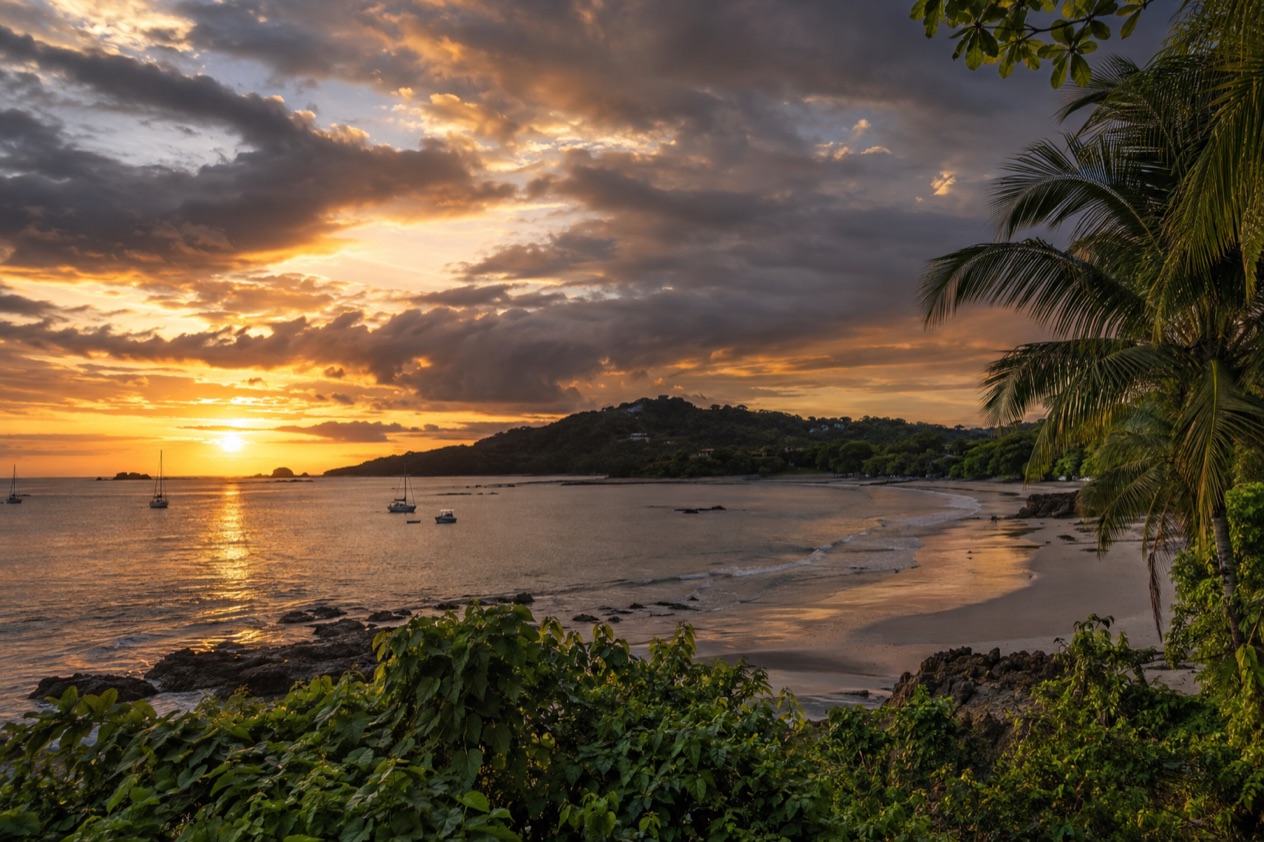
Shorts and sandals work fine after dark, and you will get more use from a light rain jacket than from a sweater. Daylight lasts about twelve and a half hours in mid-August, so the evening comes on early, with sunsets that can be spectacular when the clouds break over the water.
Can you swim in Tamarindo in August?
That’s right, the Pacific in this area stays warm enough to swim for a long time, and you can remain in the water without shivering.
Waves in August are often a bit bigger than in the dry months, which is why surf schools stay busy and beginners still take lessons on the gentle breaks near town. Swimmers who like flat water may find the surf lively, especially at high tide. Playa Langosta, a few minutes from the center, is usually a quieter alternative for a stroll and a dip, though conditions change from day to day.
Several U.S. tourists drown every year because rip currents are so hazardous, and at most beaches here you will find no lifeguards and no alerts about dangerous conditions. Check with a neighborhood surf shop or the place you are staying about how the water looks that day, keep close to other swimmers and avoid spots where waves appear churned up or a darker band of water drags out to sea.
Keep children and nervous swimmers out of the water when surf or currents are unsafe, and always keep children within arm’s reach. Bring a rash guard for sun and a towel you do not mind getting sandy.
What to do in Tamarindo in August
The big date of the month is August 2, when hundreds of thousands of Costa Ricans walk on pilgrimage to the Basilica of Our Lady of the Angels in Cartago. It is a national devotion rather than a Tamarindo event, but you may see the echo of it in conversations, in the news and in the way families plan the long weekend. August 15 is Mother’s Day, a national holiday, so expect restaurants to fill with families at lunch.
In the town itself, August is a month for working with the weather. Mornings belong to the water, and afternoons to cafés, shops and the open-air restaurants along the main street.
Folks in town have casado, that plate of rice, beans, salad, plantain and your pick of fish, chicken or beef, plus gallo pinto, the rice and beans combo, in the morning. When the day is hot, ceviche and grilled fish hit the spot, and on a rainy afternoon a cold batido, a fruit blend, comes close to perfect.
Surfing and surf lessons
Tamarindo is a surf town first, and the green season often brings steadier swell than the dry months. For learning, the classic spot is the beach break right in front of town, where the bottom is sandy and board-rental schools line the sand. More experienced surfers paddle out to the other breaks nearby, and many of them go early, before the wind picks up and the clouds build.
Lessons suit beginners of most ages, and the pace is relaxed. Go in the morning, wear a rash guard, and put sunscreen on thoroughly, since the water reflects the strong tropical sun even on hazy days. After your session, a smoothie bowl or a plate of fish tacos at a beachfront place is the natural next step.
Playa Grande and the leatherback turtles
Playa Grande is a leatherback nesting beach, but August is not the season to plan a trip around nesting activity. The long, wide beach also draws surfers, and on a cloudy day the wide sand and open sea feel dramatic and empty. Walking it in the morning is a quiet pleasure, with pelicans skimming the waves and sometimes a few shorebirds picking along the tide line.
Do not plan a night visit unless you have confirmed the current access rules with SINAC. Do not go looking for turtles on your own at night with lights, which can disturb them. In daylight, the beach is simply a good place to spend a few hours away from the busier main strip.
Playa Langosta and the quieter beaches
A calmer feel comes with Playa Langosta too, just a few minutes from town, with fewer people and a more residential look. It is a good place for a walk at the end of the afternoon, when the light softens and the tide pools at the rocky ends become visible if the tide is low. Bring water shoes if you want to explore them.
On a showery day, the better plan is to spend the morning on the sand and then move to a covered terrace for a long lunch. Sunsets from the beach can be good between rain bands, so keep an eye on the sky around the end of the afternoon. Beyond these, other nearby beaches along the coast are worth a day trip, but ask locally about road conditions after heavy rain.
Wildlife is part of the green season. Howler monkeys often call at dawn and dusk, iguanas sun themselves on walls and branches, and birds are active in the wetter, leafier landscape. A guided walk at a nearby forest or estuary is the usual way to see animals, and the cooler, cloudier hours can be better for it than midday.
In the evenings, the main street fills with the sound of music from bars and restaurants, and the mood is easygoing and sociable, with surfers, expats and families sharing tables. It is a town for lingering over dinner, then wandering back to your hotel with the smell of rain on warm pavement.
A two-day itinerary for Tamarindo in August
Day 1 is for the water and the town. Start early, since the sun is up soon after dawn and the morning is the most dependable stretch of the day. Take a surf lesson or, if local conditions are safe, swim near other people in front of town, then have a late breakfast of gallo pinto, eggs and fresh fruit at a café on the main street.
Late morning is for shopping and wandering the town’s small shops, and lunch can be a casado or a plate of ceviche at an open-air restaurant. When the clouds build in the afternoon, settle under a roof with a cold drink, a book or a massage. If the rain clears by the end of the afternoon, walk to the beach for sunset and then choose a seafood dinner nearby.
Day 2 heads out of the center. In the morning, head to Playa Grande, when the sand stretches wide and quiet, and stroll the beach ahead of the building heat. Surfers will find waves there too, and the setting is more open and less built up than in town.
Return for lunch, then spend the afternoon at Playa Langosta, with its smaller crowd and its tide pools at low tide. If the rain comes in hard, a long lunch, a spa session or a rest at the hotel pool are the fallback plans. Wrap up the day with a meal at a place that was not on your first night’s list, and eat outdoors when the weather permits.
Is Tamarindo busy in August?
Tamarindo is moderately busy in August, with fewer visitors than in the dry months but steady activity from travelers who like the green season.
Many visitors are families on summer break, surfers chasing swell and travelers who prefer a quieter, greener coast. Beaches are rarely crowded, and restaurant tables are usually easy to find, though weekends and the Mother’s Day holiday on August 15 can bring more local families. Hotels and rental cars tend to be easier to arrange than in the winter peak, and some places offer lower rates.
Even so, booking early is a good habit for the holiday weekend and for any hotel you have your heart set on. Quiet weeks can be arranged later. If you want a surf lesson, a guided walk or a boat outing at a specific time, ask ahead, because some operators run small groups and adjust their schedules around the weather.
What to pack for Tamarindo in August
Bring quick-drying, lightweight clothing suited to hot, humid days and unexpected downpours.
- For those afternoon downpours, bring a lightweight rain jacket.
- Quick-dry shirts and shorts, since nothing dries slowly in the humidity.
- A rash guard and sunscreen, for surf and strong sun.
- Sandals and water shoes, for wet sand and tide pools.
- Insect repellent, for the evenings in the green season.
- A small dry bag, to protect your phone and passport on rainy days.
Good to know before you go
The U.S. State Department rates Costa Rica Level 2, ‘Exercise increased caution,’ due to crime; it says petty crime is common throughout Costa Rica and that violent crime also affects tourists, including armed robbery, homicide and sexual assault.
The rainy season delivers heavy showers that can slow roads and delay plans in August, which sits inside the Atlantic hurricane season, even though Tamarindo lies on the Pacific side. Give yourself more time for the roughly one-hour trip from the Liberia airport, and reserve your first hotel and rental car ahead of everything else. Pack patience for a wet afternoon, and keep the evening flexible.
Tamarindo in August vs July and September
Moving a month earlier to July gives you a bit less rain, with more days that just see short showers, and the sea is nearly the same temperature. The town feels similar, with a summer-break crowd, and you will still see green hills and cloudy afternoons.
Moving to September brings more rain, with wet days far more common, and the afternoon showers can stretch into longer gray spells. The sea is slightly warmer, and the town is often quieter, which suits travelers who want empty beaches and do not mind a change of plans.
Choose July if you want the best odds of dry mornings and afternoons. Stay with August for a balance of warm water, green scenery and the August 15 holiday atmosphere. Pick September if quiet and lush landscapes matter more than reliable weather.
Is August a good time to visit Tamarindo?
August works well for travelers who enjoy a laid-back beach town, green hills and warm water, and who don’t mind planning around rain in the afternoon.
Surfers, families who enjoy flexible days and anyone who prefers quieter beaches will like it most. Travelers who need dependable sun for every hour of every day should consider the dry months instead. On arrival, ask your hotel about the day’s beach conditions, then settle in for a morning swim and an unhurried lunch. What makes August special here is the contrast, bright mornings on the surf and a soft, rain-washed evening on the main street, with the hills as green as they get all year.
Sources
- Open-Meteo / ECMWF ERA5, normals 1991-2020 computed for the grid cell at 10.2993N 85.8371W, checked October 8, 2026
- Open-Meteo Marine API, average 2015-2024, checked October 8, 2026
- sunrise-sunset.org, sunrise and sunset calculated for the 15th of the month, checked October 8, 2026
- U.S. Department of State, Costa Rica Travel Information, Safety and security (https://travel.state.gov/content/travel/en/international-travel/International-Travel-Country-Information-Pages/CostaRica.html), checked October 8, 2026
- U.S. Department of State, Costa Rica Travel Advisory, issued April 1, 2026 (https://travel.state.gov/content/travel/en/traveladvisories/traveladvisories/costa-rica-travel-advisory.html), read via the State Department open data API on October 8, 2026
To plan your stay
- Things to Do in Tamarindo: Surf Lessons, Leatherback Turtles, Beach Days and Sunset Evenings
- Where to Stay in Tamarindo: Town Center, Playa Langosta, Playa Grande and How to Choose
- Tamarindo vs Jaco: Beaches, Surf, Weather and Getting There
- Day Trips from Tamarindo: Playa Grande, Rincon de la Vieja, Liberia and Surf Beaches