
Early on The Sidewalk, the concrete path that threads through Placencia village, flip-flops slap past hand-painted signs, a dog dozes in a doorway and the sea shows at the end of every side lane. Placencia sits at the southern tip of its long, narrow peninsula in Belize, a small village of beach bars, dive shops and guesthouses. It suits travelers who want reef days, a Garifuna village next door and long evenings with sand underfoot.
What are the best things to do in Placencia?
The best things to do in Placencia start with the water: a day on the barrier reef, a beach morning, and a stroll along The Sidewalk once the heat lets go. Around that core sit a few outings that give the place its character, from whale shark waters to a river village reached partly by sea.
- Walk The Sidewalk, the pedestrian-only concrete path lined with shops, cafés and small businesses, ending right at the seashore.
- Spend a day on the barrier reef, snorkeling or diving a reef that sits a boat ride off the coast.
- Visit Laughing Bird Caye, a tiny national park and World Heritage Site out on the water.
- Look for whale sharks at Gladden Spit when the season comes around, usually in the spring months near the full moon.
- Meet Seine Bight, the Garifuna village on the peninsula, for its drumming, cooking and history.
- Head up the Monkey River, where fishing and ecotourism shape village life.
- Eat a Belizean meal on a deck above the sand: stew chicken, fresh fish, fry jacks and a rum punch.
- Sit on the beach for a sunrise or a long, slow afternoon.
Placencia is home to one of Belize’s most popular tourist destinations, thanks to its large selection of resorts, guesthouses and hotels, and to white sandy beaches that have been voted among the best in the world. None of it feels hurried. The rhythm is set by boats leaving after breakfast and returning to the docks in the afternoon.
Pick one big outing on the water, one on land and leave the rest of the days loose. Placencia rewards that kind of looseness more than a packed schedule.
Sights and landmarks in Placencia
Placencia has no grand monuments, and that is part of its appeal. The sights are a path, a handful of villages and the memory of older peoples. The Placencia Peninsula was once home to the Maya, who produced salt here and traded it with other coastal settlements, so even this laid-back strip of sand has a long working history.
The Sidewalk and the village center
The Sidewalk is the village’s main street and its social spine. It is a concrete pedestrian-only path that runs most of the length of the village and ends at the seashore, and according to the Guinness World Book of Records, Placencia boasts the narrowest main street in the world. Walk it slowly, because everything of interest opens onto it: gift stalls, tour desks, small cafés, bars, ice cream counters and guesthouse porches.
The best way to read the village is to walk the path once in the morning and once at dusk. Early on you see fishermen and boat captains, shop owners sweeping steps, and the first snorkelers heading toward the docks. Toward evening the same stretch fills with strollers, and music starts leaking out of the bars.
The path is also the easiest orientation you will find anywhere in Belize. Lanes branch off toward the beach on one side and the lagoon side on the other, so you are never far from water. Wander a few of them and you find small painted houses, hammocks on verandas and dive operators laying out gear.
Seine Bight, the Garifuna village
Heading north along the peninsula, Seine Bight is a village on the Placencia Peninsula that lies north of Placencia village. Garifuna people make up the largest share of its residents, with Mestizo, Creole and Maya families alongside them. The name comes from early settlers, who took it from the seine fishing technique and from a bight, a bend in the coastline.
Garifuna culture is one of the most distinctive threads in Belizean life, with its own language, drumming, dance and cooking built around cassava, coconut and fish. A visit here is a chance to see a community going about its day and to hear the rhythms of punta and the deep drums that carry them. Arrive with curiosity and manners, ask before taking photographs of people, and spend money locally on food, crafts or music.
Riversdale and Maya Beach
The peninsula includes the settlements of Riversdale Village, Maya Beach Village, Seine Bight and Placencia Village from north to south. Maya Beach, along the Placencia Peninsula, is a quieter stretch of sand with its own small lodges, beachfront restaurants and a more spread-out feel than the village. It is the sort of place for a lunch with a view rather than a checklist of sights.
Driving or riding north along the peninsula road is a sight in itself. You pass palms leaning toward the sea, wooden homes on stilts, small shops with hand-lettered signs and glimpses of lagoon on the other side. Each settlement has its own pace, and together they show that Placencia is more than the village at the tip.
Beaches and outdoor things to do in Placencia
Outdoor life here means the sea first, then the lagoon behind the peninsula and the reef beyond. Mornings often begin with kayaks or paddleboards at the water’s edge, and by midmorning the boats are out on the reef. Waterside bars and decks serve as the gathering points for everyone returning with salt-dried hair and stories.
The beach at the village and along the peninsula
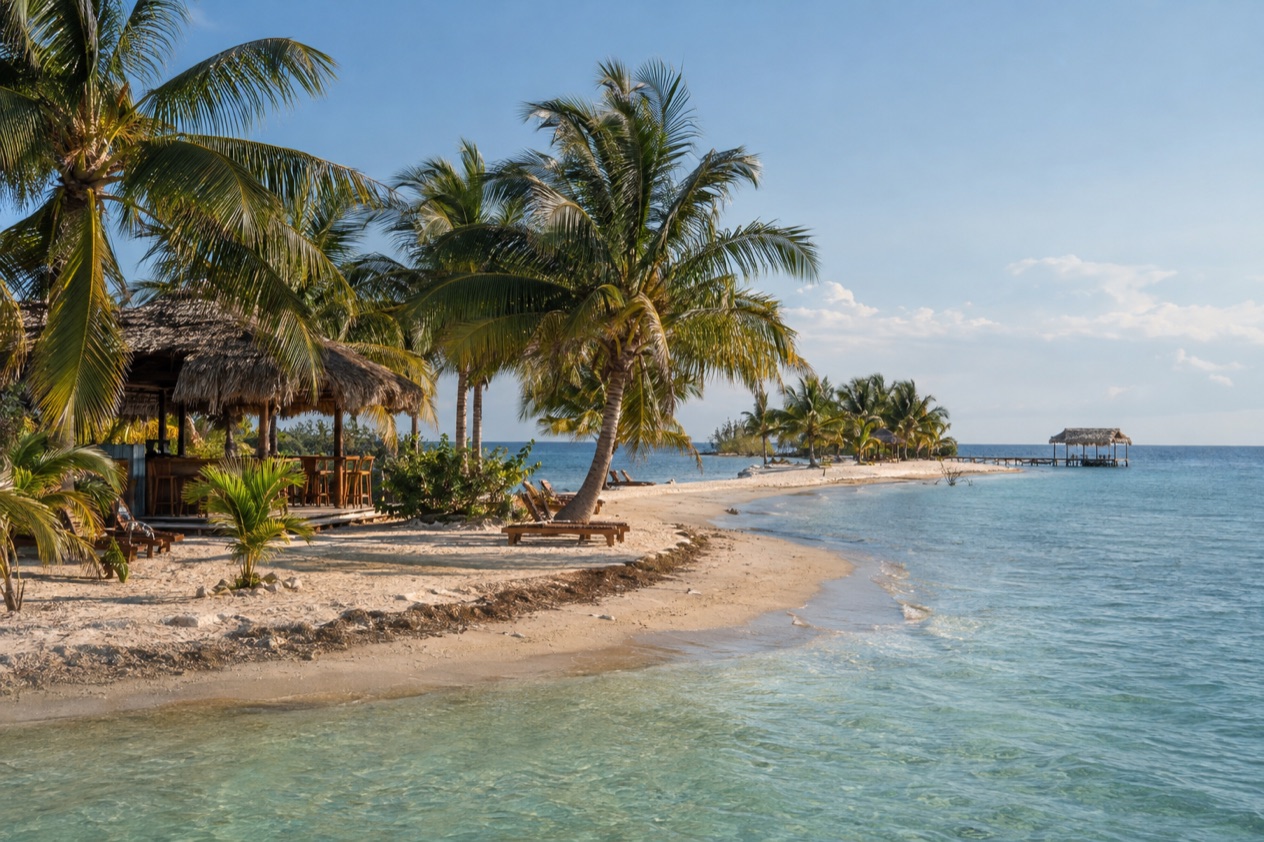
Placencia has been voted as having one of the best beaches in the world, and the sand is the reason many people come: pale, soft and lined with palms, running along the village and up the peninsula. The beach is a working place as much as a lounging one, with boats pulled up, guesthouses stringing hammocks and bartenders carrying drinks across the sand.
Sunrise is the time to see it at its quietest, with the sea going from gray to pink and only a jogger or two for company. Later the shoreline fills with loungers and umbrellas from the resorts. Maya Beach, farther north, offers the same sand with fewer buildings, which suits anyone who wants to read, walk and watch pelicans.
Snorkeling and diving the reef
From Placencia, the longest barrier reef in the northern hemisphere is a 45-minute boat ride off the coast, and the Belize Barrier Reef is a World Heritage Site. Snorkelers and divers head out in small boats from the village docks, stopping at reef sites and cayes where coral, tropical fish and rays are the draw. The reef belongs to the larger Mesoamerican system, which stretches along the coasts of Belize, Guatemala, Honduras and Mexico.
Dive shops along The Sidewalk run trips to the reef, and the same operators handle snorkeling outings for those who prefer to stay near the surface. Expect to see schools of colorful fish, sea fans and, with some luck, turtles or rays gliding past. Bring reef-safe sunscreen and a rash guard, because hours in the sun on the boat add up.
Whale shark season at Gladden Spit
Between March and June, around the full moon, whale sharks pass by a spot called Gladden Spit near Placencia. Visitors can dive or snorkel with them at the annual snapper spawning site on the reef, and since visitors should arrange their spot upfront, this is the one outing to plan before arrival. The sharks come to feed on the spawning fish, which is why timing follows the moon.
Seeing a whale shark is a chance, never a promise, but when it happens, it tends to be the memory people take home. The animal is enormous, slow and spotted, and you slip into the water alongside it with a mask and fins. The site sits inside a marine reserve created to protect the spawning aggregation and the whale sharks that gather there.
Day trips from Placencia
The best day trips from Placencia go to sea or up a river, with one cultural detour along the coast. Almost all begin with a boat or a drive, and each shows a different side of southern Belize.
Laughing Bird Caye
Laughing Bird Caye is an island off the coast of Placencia, 12 miles from the village, and it is a National Park and World Heritage Site. The park was declared in 1991 and the island is tiny, spread over under two acres. You go by boat from Placencia, and the reef that surrounds the caye is the reason to visit.
What you see is a small, green, palm-topped scrap of sand ringed by clear water, with coral and fish beneath the surface. Visitors come to snorkel around it and to see a protected piece of the barrier reef up close. It is an outing for anyone who wants a classic Belize caye without traveling far from Placencia.
Because the island is so small, it feels more like a stop on a reef circuit than a place to settle in. Pair it with other reef sites on the same boat day if the operator offers it, and carry your own water and sun protection.
Silk Cayes and the marine reserve
Gladden Spit and Silk Cayes Marine Reserve lies 22 miles off the coast of Placencia and covers roughly 26,000 acres. It protects the Gladden Spit spawning aggregation site, the whale sharks that gather there and the tourism value of the Silk Cayes. The Southern Environmental Association, a community-based organization, manages it.
Trips out here combine small sandy cayes with open reef water, and in the whale shark months the same boats chase the chance of a sighting. Even outside that season, the reserve is a day of coral, fish and horizon, far from the village. Choose it if you want open-water reef rather than a single island.
Monkey River Town
Monkey River Town is a village in the Toledo District, on the Caribbean Sea at the southern shore of the mouth of the Monkey River. It is small, with an estimated 200 people in 2011, and its main occupations are fishing and ecotourism. A road from the Southern Highway was built in the late 1980s through orange groves and jungle to the village car park, though much travel is still by sea.
A day here is about the river and the forest along its banks, with the village as a calm, weathered base. You may spot birds, iguanas or howler monkeys along the water, but wildlife is a chance rather than a certainty. Wear light long sleeves, bring insect repellent and expect a slower, more rustic day than anything on the peninsula.
Dangriga and Hopkins
Stann Creek District, the district Placencia belongs to, has its capital in the town of Dangriga, formerly known as Stann Creek Town. The Hummingbird Highway and the Thomas Vincent Ramos Highway serve the district and connect it to Belize City by way of the George Price Highway at Belmopan. Dangriga also has an airport.
Hopkins, in the same district, is an ethnic Garifuna village on the coast. For anyone who wants more of the culture met in Seine Bight, a trip toward Dangriga and Hopkins adds drumming, cassava bread and a stretch of coastline with a different feel from Placencia. Treat it as a cultural day, with time at a table and time on the sand.
What to eat in Placencia
Eating in Placencia means seafood, rice and beans, and the small comforts of Belizean home cooking, served at beach decks, village cafés and plastic-chair kitchens. A good meal here is relaxed, a little salty from the breeze and rarely rushed.
Breakfast is the place to begin. Fry jacks, the puffed fried dough, come with beans, eggs, cheese or jam, and a plate of them with strong coffee will set you up for a boat day. Johnnycakes, a dense baked bread, appear on many tables too, sometimes split and filled with cheese or ham.
At lunch and dinner, the national pairing is rice and beans, cooked in coconut milk and served with stew chicken, fish or pork. Fresh snapper, grouper and barracuda turn up grilled, fried or in a coconut curry, and conch appears as fritters, ceviche or soup when it is in season. Lobster is a treat when the season is open, grilled with butter and garlic and carried to the table with a squeeze of lime.
Garifuna cooking adds its own dishes. Hudut is a fish stew in coconut broth, served with mashed plantain, and cassava bread is the old staple baked into flat rounds. Ask in Seine Bight or on the peninsula for Garifuna cooking, because it is a good way to taste the cultural thread that runs through the district.
Drinks are tropical and unfussy. Rum punch comes in plastic cups at the bars, Belikin is the local beer and fresh juices of lime, watermelon and pineapple fill glasses at lunch. Seaweed shakes, blended with milk, nutmeg and cinnamon, are a local oddity many people try once. Finish with an ice cream or gelato from a Sidewalk counter and eat it walking toward the sea.
The kinds of places to look for are simple: beach bars with sand floors, small family-run cafés on The Sidewalk, open-air grills near the docks and the dining rooms of the resorts. Many serve until the evening and double as places to meet other travelers. Menus lean on seafood and chicken, so vegetarians do best with rice, beans, plantain, salads and fruit.
Things to do in Placencia at night
Evenings in Placencia are mostly about the beach and The Sidewalk, with music drifting out of beach bars and a relaxed, barefoot energy. Nightlife here means a rum punch, a band under a thatched roof and a walk home by starlight, not clubs or late-night crowds.
Beach bars and live music
As the sun drops, the beach bars fill. Some have a stool-and-hammock look, others a larger deck with a band playing reggae, soca or acoustic covers. You can order dinner and stay for the music, or stop for a drink and wander on. The mood is friendly, and conversations with strangers start easily.
Many bars string lights over their decks, and the sea behind them goes dark and glittery. Watching boats come in at sunset, with pelicans diving nearby, is part of the evening ritual. Order a local beer, a rum punch or a fresh lime drink and let the hours slide.
The Sidewalk after dark
The Sidewalk changes after dark. The shops light up, restaurants set out tables and people drift along the path with ice cream or a drink in hand. It is a good time to browse crafts, hot sauces, carved wood and small paintings, and to see how the village socializes once the day’s boats are tied up.
Quieter options abound. Sit on a veranda with a book, take a slow stroll to the seashore at the end of the path or find a bench where the breeze comes off the water. With little light pollution, the sky can fill with stars on clear nights, a pleasure you only need a patch of dark sand to enjoy.
Garifuna drumming and cultural evenings
For something rooted in place, ask about Garifuna drumming and dance evenings in the villages of the peninsula. Seine Bight is a Garifuna community, and its music, with deep drums and call-and-response singing, is a living tradition rather than a show invented for visitors. If you attend, arrive respectfully, follow the lead of locals and tip the musicians.
Resorts and guesthouses sometimes host cultural nights, a cooking demonstration or a bonfire on the sand, so ask where you are staying what is on. Even without a formal event, a late dinner of seafood and rice and beans under the stars is a good way to end a day of salt and sun.
Things to do in Placencia with kids
Children in Placencia spend most of their days on sand and in boats, and the village gives them room to roam on foot. The Sidewalk is pedestrian-only, so there are no cars to watch for as you walk from breakfast to the beach and back, which is a relief for parents who like to loosen their grip a little.
Beach days and shoreline play
The beach is the main playground. Kids dig, build castles, collect shells and chase hermit crabs while adults sit under palms. Many guesthouses and resorts keep kayaks and paddleboards on the sand, and a short paddle along the shore feels like an adventure when you are small.
Sun and heat are the practical matters. Hats, long-sleeved swim shirts, reef-safe sunscreen and plenty of water make a long day on the beach comfortable. Take breaks in the shade, and keep a close eye on children near the water, as you would at any sea beach.
Boat trips, reef and wildlife
A boat ride is an event for children, with spray, a salty breeze and a destination at the end. Laughing Bird Caye and the reef sites reached from Placencia give older children a chance to look through a snorkel mask at fish and coral. For younger ones, the boat, the island and the sight of pelicans may be adventure enough.
A Monkey River outing adds wildlife: you may see birds, iguanas or monkeys along the banks, though sightings are never guaranteed. Children who like animals tend to enjoy the slow pace of a river trip, with its watching and pointing. Pack snacks, sun protection and insect repellent for the day.
Food, ice cream and village life
Food is often an easy win with kids. Fry jacks are a breakfast favorite, rice and beans with chicken is familiar and a scoop of ice cream along The Sidewalk becomes a daily ritual. Fresh fruit juices and coconut water cool everyone down between swims.
Seine Bight offers children a look at another culture, with drumming and Garifuna cooking that can be a window onto a different way of life. Keep outings paced, with a swim, a snack and a rest in the shade, and the village rewards families who slow down to match it.
Good to know before you go
The U.S. State Department rates Belize Level 2, “Exercise increased caution”, because of crime, and says the south side of Belize City has historically had the highest concentration of violent crime.
Placencia is small enough to explore on foot, with The Sidewalk as its main route, while the peninsula stretches north through Seine Bight and Maya Beach. Maya Island Air flies to Placencia, a forty minute flight, and the Hummingbird Highway and the Thomas Vincent Ramos Highway link Stann Creek District to Belize City by way of Belmopan.
The Atlantic hurricane season runs from June 1 to November 30, and Hurricane Iris struck southern Belize in 2001, so it is worth knowing that the coast has weathered storms. Whale shark trips between March and June need to be arranged upfront, and the village of about 1,600 people is best enjoyed at an unhurried pace.
Sources
- Wikipedia, Placencia (https://en.wikipedia.org/wiki/Placencia), checked October 11, 2026
- Wikivoyage, Placencia (https://en.wikivoyage.org/wiki/Placencia), checked October 11, 2026
- Wikipedia, Seine Bight (https://en.wikipedia.org/wiki/Seine_Bight), checked October 11, 2026
- Belize Fisheries Department, Gladden Spit and Silk Cayes Marine Reserve (https://fisheries.gov.bz/gsscmr/), checked October 11, 2026
- Wikipedia, Gladden Spit and Silk Cayes Marine Reserve (https://en.wikipedia.org/wiki/Gladden_Spit_and_Silk_Cayes_Marine_Reserve), checked October 11, 2026
- Wikipedia, Silk Cayes (https://en.wikipedia.org/wiki/Silk_Cayes), checked October 11, 2026
- Wikipedia, Laughing Bird Caye (https://en.wikipedia.org/wiki/Laughing_Bird_Caye), checked October 11, 2026
- Tropic Air, Placencia (https://www.tropicair.com/placencia-plj/), checked October 11, 2026
- Maya Island Air, Placencia flights (https://www.mayaislandair.com/belize-flights-placencia/), checked October 11, 2026
- Wikipedia, Stann Creek District (https://en.wikipedia.org/wiki/Stann_Creek_District), checked October 11, 2026
- Wikivoyage, Stann Creek (https://en.wikivoyage.org/wiki/Stann_Creek), checked October 11, 2026
- Wikipedia, Monkey River Town (https://en.wikipedia.org/wiki/Monkey_River_Town), checked October 11, 2026
- Wikipedia, Tourism in Belize (https://en.wikipedia.org/wiki/Tourism_in_Belize), checked October 11, 2026
- U.S. Department of State, Belize Travel Advisory, Level 2, March 11, 2026 (https://travel.state.gov/), checked October 11, 2026
- NOAA National Hurricane Center, Climatology (https://www.nhc.noaa.gov/climo/), checked October 11, 2026
To plan your stay
- Best Time to Visit Placencia: Dry Season, Whale Sharks, Sea Temperatures and Hurricane Months
- Where to Stay in Placencia: The Village, Seine Bight, Beachfront Resorts and How to Choose
- Placencia from Belize City: Flights, Rental Cars and What Waits on the Peninsula
- Know Before You Go to Placencia: Entry Rules, Money, Health and Getting Around