
You step off the bus or out of the car in Corozal Town and the first thing you hear is Spanish, spoken over the counters, across the plaza and from open doors along the street. Beyond the low buildings the Caribbean Sea opens into the bay, with the Mexican border not far to the north. A few things are worth sorting out before you arrive: the entry paperwork, the money, the roads and the distance to serious medical care.
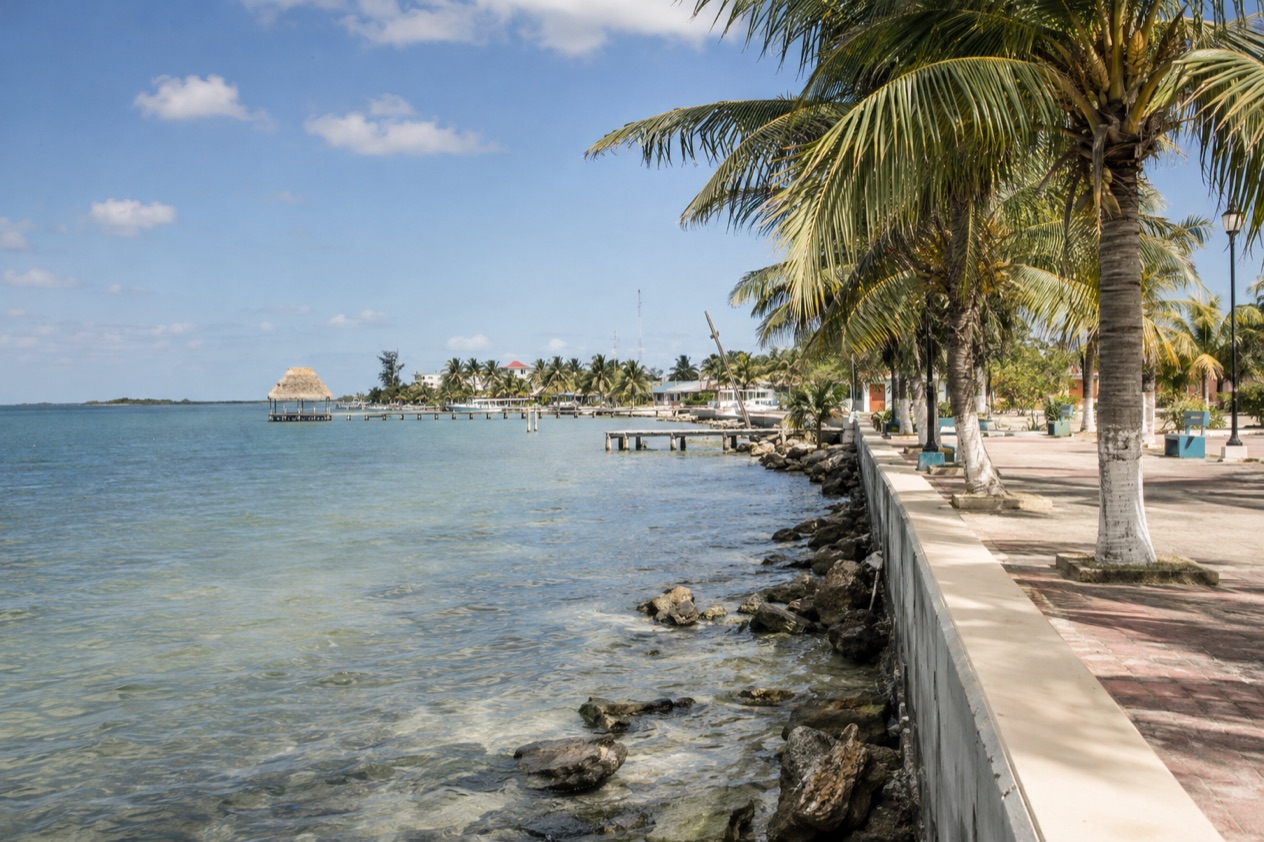
What should you know before visiting Corozal?
Four things matter most here: the paperwork for entering Belize, a language mix tilted toward Spanish, roads that change character quickly, and medical care that can be a long way off. Corozal Town is the capital of Corozal District, the northernmost district of Belize, and it sits on the Caribbean Sea in the north of the country, 9 miles from the Mexican border.
What surprises first-time visitors is how much of Belize’s usual picture changes in the north. English is the official language of the country and the language of schools, government and most media, yet Spanish is the most used language in the frontier districts of Orange Walk and Corozal.
You will hear both, often in the same conversation, and a few words of Spanish go a long way in a shop or a market stall. Many visitors also expect a colonial old town, but Hurricane Janet in 1955 destroyed an estimated 90 percent of Corozal Town, and most of what stands today was built after that storm. The town is a bayside place of practical streets, not a museum of old facades.
Corozal is also a long way from the airport most travelers fly into. The town lies about 84 miles north of Belize City, and the distance shapes how you plan arrivals and departures.
Sarteneja, a fishing village at the mouth of the Bay of Chetumal, belongs to the same northern corner and gives a sense of the area: a place that lives mainly from fishing, away from the main tourist crowds. Across the bay in Mexico, Chetumal is the capital of the state of Quintana Roo, a city on the western side of Chetumal Bay near the mouth of the Río Hondo.
Entry, fees and paperwork
U.S. citizens need a U.S. passport valid for the length of their stay, according to the State Department, and Belizean immigration sources ask for validity of at least six months after the intended stay. A tourist staying less than 30 days does not need a visa. Every traveler must show proof of an onward or return ticket and sufficient funds to cover the whole stay. Belize does not require special immunizations for visitors.
Visitors are usually given a 30-day stay. Those who want longer must have the passport re-stamped at a local immigration office and pay an extra fee for each additional month, up to a maximum of six months. The Visitor’s Permit Extension allows a further month, on condition that you do not work or engage in business without consent. To find out whether you qualify, you visit the nearest Immigration Office in Belize.
If you enter Belize by land, the fees differ depending on whether your stay is shorter or longer than 24 hours. Children who travel without both parents meet a further requirement: immigration officials ask for proof of consent and identification from the parent who is not traveling, along with the children’s birth certificates.
The airport fees apply when you leave from Philip S. W. Goldson International Airport, and travelers are expected to arrive at least three hours before the scheduled departure. The airport also charges for overnight parking.
| Fee | Amount | Who pays |
|---|---|---|
| Visitor’s Permit Extension (a further 30 days) | BZ$200.00 | All nationals |
| Passenger Service Fee, Philip S. W. Goldson International Airport | US$53.50 | Airport passengers |
| PACT fee (Protected Areas Conservation Trust), Philip S. W. Goldson International Airport | US$20.00 | Airport passengers |
| Overnight parking, Philip S. W. Goldson International Airport | US$9.00 | Anyone leaving a vehicle overnight |
Money and cards
The Belize dollar is pegged at two Belize dollars to one U.S. dollar. That fixed rate makes mental math simple: halve a price in Belize dollars and you have the U.S. amount. The Central Bank of Belize, which stands behind the currency, was established on January 1, 1982.
Prices and fees come in two currencies. Government charges such as the Visitor’s Permit Extension are set in Belize dollars, while the airport lists its passenger fees and parking in U.S. dollars. Reading the currency sign before you pay saves a misunderstanding, since the two dollars look alike on a sign and are worth very different amounts.
In a town where Spanish is the main street language and the border with Mexico is close, you may hear prices quoted in more than one way. Asking for the amount in Belize dollars or in U.S. dollars, whichever you are counting in, settles it in a few words.
Getting around
Roads in Belize range from two-lane paved roads to dirt or gravel tracks, and the change can come within a short stretch. Corozal Town lies about 84 miles north of Belize City, so a good part of any journey here is on the open road. Driving at night is strongly discouraged in Belize, and roadside assistance is frequently unavailable, which makes daylight hours the sensible window for any trip by road.
Visitors who plan to drive should know that valid U.S. or international driver’s permits are accepted in Belize only for three months after initial entry. A longer stay changes the situation, so the date of arrival matters.
The airport that serves the country’s international arrivals is Philip S. W. Goldson International Airport, at Belize City. Departing passengers are expected to be there at least three hours before the scheduled flight, so a trip back from the north is planned backward from that time. If you are driving, remember the discouragement of night driving, and allow daylight for the journey to the airport.
Within Corozal Town itself, you are on the bay and close to the plaza and the waterfront. Beyond the town, the district stretches north to the Mexican border and around the bay to villages such as Sarteneja, where the roads and the pace of life follow the fishing community. Chetumal, the Mexican state capital across the bay, belongs to another country with its own rules, so crossing is a separate undertaking from a day in Corozal.
Health and the sun
Medical care in Belize is limited, and Corozal lies far from the places where it is strongest. Emergency services are usually unavailable or significantly delayed. Serious injuries or illnesses normally require evacuation to another country, and advanced treatment is scarce even in Belize City and Belmopan.
In rural and remote areas, even basic care is hard to find or not available at all. For a trip to the north, it is worth checking that your health coverage includes medical evacuation.
The Centers for Disease Control and Prevention recommends the hepatitis A vaccine for unvaccinated travelers one year old or older, and for infants 6 to 11 months old. Travelers allergic to a vaccine component should receive a single dose of immune globulin, which protects for up to two months depending on the dose. The hepatitis B vaccine is recommended for unvaccinated travelers younger than 60, and those 60 and older may get vaccinated.
Typhoid vaccine is recommended for travelers who might visit rural areas with poor sanitation, spend a month or more in Belize, or visit friends or relatives. None of these vaccines is a condition of entry, since Belize does not require special immunizations for visitors.
The sun on the northern coast is strong, and a bayside town offers little shade at the waterfront. A hat, sunglasses and sunscreen belong in your daypack, and a water bottle fills the same role. Plan the walk along the bay for the softer light of early morning or the hour before sunset.
Local customs and etiquette
A greeting comes first in Corozal. People say good morning or buenos días when they enter a shop, pass a neighbor on the street or sit down at a restaurant, and a visitor who does the same is met with a smile. English and Spanish both work, and the Spanish heard in the north reflects a community that lives close to Mexico. A few phrases, such as gracias and por favor, are noticed and appreciated.
Dress in the town is relaxed and practical, with light clothes and sandals for the waterfront. For a church or a town office, shoulders covered and shorts of a modest length show respect, and a swimsuit stays at the beach. Corozal is a town of families, so manners at the market lean toward patience and a friendly tone.
In a market, prices at food stalls are generally what is posted or quoted, and a visitor who tries to haggle over a plate of tamales will get puzzled looks. A little bargaining may be natural for a handmade item from a craft seller, done with a smile and without pressing.
Meals follow a familiar rhythm, with a large midday meal of rice and beans, stewed chicken or fish, and a lighter evening. Breakfast might be fry jacks, johnnycakes or tortillas with eggs, and panades and garnaches are everyday snacks in the north.
There are no legal restrictions on consensual same-sex relations in Belize. The Immigration Act prohibits “homosexual” persons from entering the country, but immigration authorities have not enforced that law. There continues to be significant hostile sentiment toward people based on real or perceived sexual orientation, and LGBTQ travelers may weigh that in how openly they show affection in public.
One more rule applies on the way home: bringing counterfeit and pirated goods back to the United States can lead to fines and the loss of the items, so a bargain-priced souvenir that copies a brand is better left on the stall.
Good to know before you go
The U.S. State Department rates Belize Level 2, “Exercise increased caution”, because of crime, and says the south side of Belize City has historically had the highest concentration of violent crime.
The Atlantic hurricane season runs from June 1 to November 30, and the Caribbean coast of Belize follows it. Corozal Town still carries the memory of Hurricane Janet in 1955, which is why so many of its buildings are newer than the town’s age suggests. In a typical season the Atlantic sees 14 named storms, so the months of the season are worth planning around with flexible arrangements.
Keep your passport, your onward or return ticket and any document from an immigration office together in one place, and carry the receipt if you paid to extend your stay. Make the daylight hours your travel hours, as roads in the north can turn from pavement to gravel without warning.
Sources
- U.S. Department of State, Belize Travel Information, Entry and exit requirements (https://travel.state.gov/), checked October 11, 2026
- U.S. Department of State, Belize Travel Information, Health (https://travel.state.gov/), checked October 11, 2026
- U.S. Department of State, Belize Travel Information, Traveling and transportation (https://travel.state.gov/), checked October 11, 2026
- U.S. Department of State, Belize Travel Information, Local laws and special circumstances (https://travel.state.gov/), checked October 11, 2026
- U.S. Centers for Disease Control and Prevention, Belize traveler view (https://wwwnc.cdc.gov/travel/destinations/traveler/none/belize), checked October 11, 2026
- Wikipedia, Belize dollar (https://en.wikipedia.org/wiki/Belize_dollar), checked October 11, 2026
- Wikipedia, Languages of Belize (https://en.wikipedia.org/wiki/Languages_of_Belize), checked October 11, 2026
- Philip S. W. Goldson International Airport (Belize), FAQ (https://www.pgiabelize.com/about-us/faq/), checked October 11, 2026
- Belize Immigration Department, Visitor's permit (https://immigration.gov.bz/permits/visitors-permit/), checked October 11, 2026
- Tropic Air, Belize immigration and visas (https://www.tropicair.com/belize-immigration-visas/), checked October 11, 2026
- Maya Island Air, Belize visa requirements (https://www.mayaislandair.com/belize-visa-requirements/), checked October 11, 2026
- NOAA National Hurricane Center, Climatology (https://www.nhc.noaa.gov/climo/), checked October 11, 2026
- Wikipedia, Corozal Town (https://en.wikipedia.org/wiki/Corozal_Town), checked October 11, 2026
- Wikivoyage, Corozal (https://en.wikivoyage.org/wiki/Corozal), checked October 11, 2026
- Wikipedia, Corozal District (https://en.wikipedia.org/wiki/Corozal_District), checked October 11, 2026
- Wikipedia, Sarteneja (https://en.wikipedia.org/wiki/Sarteneja), checked October 11, 2026
- Wikivoyage, Sarteneja (https://en.wikivoyage.org/wiki/Sarteneja), checked October 11, 2026
- Wikipedia, Chetumal (https://en.wikipedia.org/wiki/Chetumal), checked October 11, 2026
- U.S. Department of State, Belize Travel Advisory, Level 2, March 11, 2026 (https://travel.state.gov/), checked October 11, 2026
To plan your stay
- Best Time to Visit Corozal: Weather by Month, Sea Temperatures and Festivals
- Things to Do in Corozal: Santa Rita Ruins, the Bayfront, Day Trips to Chetumal and Bacalar
- Where to Stay in Corozal: Corozal Town, Sarteneja, Hotel Licenses and the Lodging Tax
- Corozal from Belize City: By Road, by Air, and a Day on the Bay of Chetumal