
On the first mornings of the year, the smell of woodsmoke and frying fish drifts through the settlements of Andros, and somewhere a goatskin drum is being tested for the next celebration. Out on the water the mangrove creeks hold still while the flats shimmer pale green under a low winter sun. January here is a quiet, open-air month on the largest island in the Bahamas, with the reef, the blue holes and the crawfish season all within reach.
What is the weather like in Andros in January?
January in Andros is mild and bright, with a sea that is a little cooler than in the fall and days that are slowly getting longer again.
| Month | Sea at Andros (°F) | Daylight on the 15th (hours and minutes) |
|---|---|---|
| December | 79.1 | 10 h 39 min |
| January | 78.0 | 10 h 49 min |
| February | 76.8 | 11 h 22 min |
In Nassau, highs average about 79°F in January, and rain falls on only a handful of days. That gives you a sense of the winter pattern across this part of the Bahamas: warm afternoons, cooler nights, and showers that tend to pass quickly rather than settle in. On Andros, with its mangroves and open pine land, mornings often feel fresh enough for a light layer, and by midday you will want to take it off.
The sea sits at a comfortable winter level. It is a few degrees under the peak of late summer, which most people notice for about a minute when they first get in, and then forget.
Daylight lasts a little under eleven hours, so the sun sets while the evening is still young. Plan your boat trips, fishing and reef visits for the middle of the day, when the light is highest and the water looks its clearest.
Evenings are the part that surprises people. Out on a veranda or a dock, away from town lights, the air cools enough that a sweater or a light jacket is welcome, and the sky fills with stars. Bring something with sleeves for dinner and for the early start of a fishing morning, and keep a light rain jacket in your bag for a passing shower.
Can you swim in Andros in January?
The sea is mild in January, cool at first and comfortable once you are in, so most people will find it good for a dip and a longer snorkel at midday.
Andros has a long coast that faces the open Atlantic side on one edge and the sheltered flats and the Tongue of the Ocean on the other, and the feel of the water changes from one stretch to the next. Some shores are open and can have waves, others sit behind the reef or in the lee of a point. Conditions change from day to day, so judge each beach when you arrive and ask the people who live nearby how the water has been behaving.
Snorkeling and diving are the main reasons to get in the water here, since visitors to the Andros Barrier Reef can experience scuba diving and snorkeling. Bring a mask and snorkel if you have your own, a rash guard or a thin wetsuit top for the first chill of the morning, and a towel for the boat ride back. Nervous swimmers and young children will do best to stay near the shore and to go with someone who knows the local water.
What to do in Andros in January
The year starts with Junkanoo, the Bahamian street parade of cowbells, whistles, horns and goatskin drums under towering paper costumes. The largest celebrations take place in Nassau on Boxing Day and New Year’s Day, and Bahamians across the 16 islands keep the tradition alive. In Andros you are more likely to catch it as a sound drifting from a settlement than as a grand parade, and that is part of the pleasure: the rhythm is the same, only closer and quieter.
January also sits inside crawfish season, which runs from August 1 to March 31. Bahamian crawfish salad, made with onions, sweet peppers, lime juice and diced lobster, appears on lunch menus, and so do stewed crawfish in brown gravy, cracked conch, peas and rice, and fried fish with johnnycake.
On many menus the words crawfish and lobster mean the same thing, so a plate marked lobster is very likely what the locals call crawfish. For dessert, look for guava duff or coconut tart.
The Andros Barrier Reef
The Andros Barrier Reef is the third-largest fringing barrier reef in the world, and it runs along the eastern edge of the island. On the island side the reef drops to about eight feet, so the water is shallow and bright. On the ocean side it falls away to approximately 6,000 feet in the Tongue of the Ocean, which gives divers the sensation of hanging over a deep blue wall.
Scuba diving and snorkeling are the two ways to see it. In January the sea is cooler than in summer, so the water often looks crisp and clear in the middle of the day, when the sun is high.
Expect coral heads, schools of small reef fish, sea fans moving with the current, and now and then a larger visitor passing by. A wetsuit top is a sensible comfort, and so is a morning that starts without hurry.
Blue holes and West Side National Park
Andros has more than 180 blue holes, found inland and along its shore, the highest concentration of these geological wonders in the world. From above, they look like dark inkwells set into pale shallows or deep green forest. In the south of the island, South Andros has more than 100 tidal, freshwater blue holes, and each one has its own character, from round, still pools to openings that breathe with the tide.
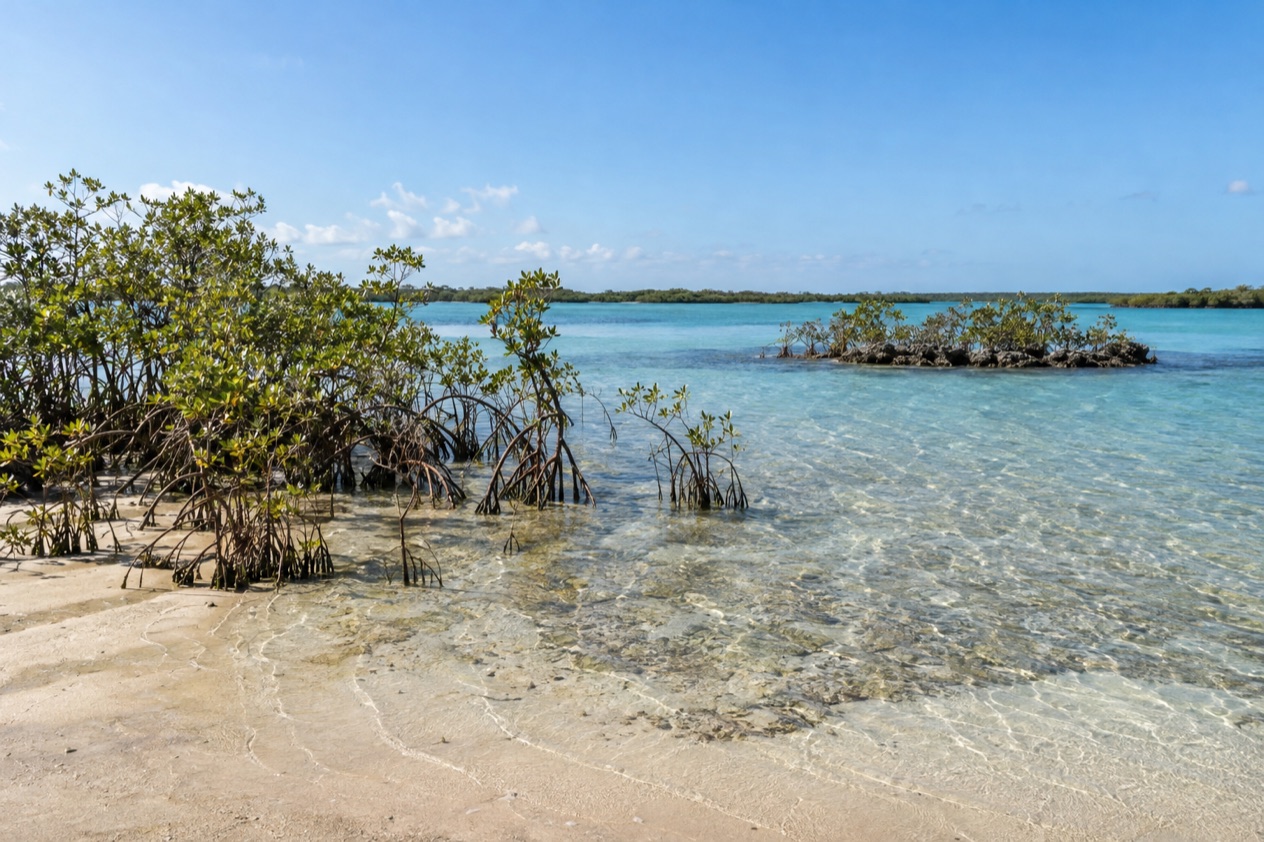
West Side National Park protects 1.5 million acres of pristine wilderness, a country of mangrove, creek and flat that suits birdwatchers, anglers and anyone who likes landscapes with few buildings. January’s cooler air makes time on the water more comfortable than in the heat of summer.
Go for the stillness, the birds on the flats, and the sense of being very far from anywhere. Leave swimming in a blue hole to guided arrangements and local advice, since the rules vary from one hole to the next.
Fresh Creek and Andros Town
Fresh Creek, in the central part of the island, is where Andros Town sits, a small waterfront settlement tucked along a tidal creek. Boats come and go at the dock, fishermen mend gear in the shade, and the pace slows to a walk. It is a good base for seeing how daily life runs here, and for a plate of fresh fish at a roadside kitchen.
Andros is also known for Androsia, the bright batik cloth made at Fresh Creek, with patterns drawn from the sea and the local flora. A stop at the workshop shows how the wax and dye are applied, and the finished fabrics make light, colorful gifts. The cooler January air is a good moment for wandering the settlement on foot, with a drink in the afternoon and conversation with whoever is sitting on the porch.
Anglers know the flats of Andros as bonefish country, and January’s cooler mornings are a pleasant time to be on the water at first light. Whether you fish, paddle a kayak through a mangrove channel or just sit on a dock with a cold drink, the island rewards slow days. Evenings are for conch salad, a game of dominoes and an early night.
A two-day itinerary for Andros in January
Day 1 is for the water. Start early with a local breakfast of johnnycake and eggs or, if you like, stewed fish, and spend the morning on the reef with a mask or a tank.
The light is best when the sun is high, so the middle of the day is the time to be over the coral. Come back to the dock for a crawfish salad or a plate of cracked conch at a settlement kitchen.
In the afternoon, walk the waterfront of Fresh Creek and visit the batik workshop, then sit by the creek as the light turns gold. Because daylight lasts a little under eleven hours in January, plan to be off the water by late afternoon. Dinner is fresh fish, peas and rice, and a quiet evening with a sweater on the veranda.
Day 2 turns inland and toward the flats. Head out in the morning toward West Side National Park for a day with a guide among mangroves and creeks, watching for birds and for the dark circles of blue holes. Take water, sun protection and insect repellent. A picnic lunch on the boat or at a quiet landing suits the setting.
In the afternoon, look at one of the blue holes from the shore and spend the rest of the day on a slow drive or a last look at the sea. If the weather turns, keep to the indoor options: a long lunch of crawfish stew, time at the batik workshop if you skipped it, or a book on a covered porch while the shower passes. Rain in this season tends to come and go within a few hours.
Is Andros busy in January?
Andros is a quiet island in January, with space and calm even when the Bahamas as a whole is still in its winter season.
The holiday weeks around Christmas and New Year’s bring families home and visitors in, and the early days of January can feel lively in the settlements as Junkanoo sounds carry through the air. After the first week, the island settles into its usual rhythm. Small lodges and guesthouses are the norm here, so the number of rooms is limited, and the habit that works best is to book early for the holiday weeks and a little later for the quieter weeks that follow.
Restaurant tables are rarely a problem in small settlements, where most places are casual and the day’s catch decides the menu. Fishing guides and reef boats are the arrangements to settle first, since they depend on the weather and on how many people are traveling. Let the guide pick the day with the best conditions, and keep a day or two loose in your plans for that reason.
Because Andros is so large and so lightly built up, even a busy week feels spread out. You will hear more of the sea and the wind than of other travelers, and on the flats or in the national park you may see no one at all.
What to pack for Andros in January
Pack for warm afternoons, cool evenings and a day on a boat, with a few light layers rather than anything heavy.
- A light sweater or jacket, for evenings on the dock and early boat rides.
- A swimsuit and a rash guard, for the first chill of a winter swim.
- A mask and snorkel, if you have your own, for the reef.
- Sun protection and a hat, because the glare off the flats is strong.
- Insect repellent, for the mangroves and creeks.
- A light rain jacket, for the shower that sometimes passes in the afternoon.
Good to know before you go
The U.S. State Department rates the Bahamas Level 2, “Exercise increased caution”, and says most crime occurs in Nassau on New Providence and in Freeport on Grand Bahama.
January falls outside the official Atlantic hurricane season, which runs from June 1 to November 30. The month’s weather is shaped instead by winter air, which brings cooler nights and the occasional brief shower.
Andros is about 31 miles west of Nassau, separated from it by the Tongue of the Ocean, and the island is made of three main parts, North Andros, Mangrove Cay and South Andros, so decide which part you are visiting before you fix your plans. Settlements are small, services are limited, and slow days are the point.
Andros in January vs December and February
Moving four weeks earlier, to December, gives you a slightly warmer sea and shorter days, and in Nassau a few more rain days. The Christmas season is in full swing, with caroling and decorations in Nassau, and Junkanoo on Boxing Day is still ahead. If you want the holiday mood and the festive end of the year, December is the month to choose.
Moving four weeks later, to February, the days are noticeably longer, which gives you more time on the water in the evening. The sea is a little cooler still, which you will notice mostly in the first minute of a swim or a snorkel. The holiday rush is over, and crawfish season continues until the end of March, so the menus stay the same.
Choose December if you want the holidays and the warmest water, February if you want longer days and a calm island, and January if you want the middle path: the first Junkanoo sounds of the year, crawfish on the table and a quiet reef.
Is January a good time to visit Andros?
Yes, January is a good time to visit Andros for travelers who prefer fishing, diving, birdwatching and quiet settlements to beach resorts and nightlife.
Divers and snorkelers will enjoy the reef in clear midday light, anglers will find the flats open and the mornings pleasant, and anyone who likes slow travel will be happy with the island’s pace. If you want a big beach scene, a long list of restaurants or a nightlife of any size, another island will suit you better.
On arrival, settle into your lodging, talk to the people who run it about the week’s weather, and fix your boat or guide first, since the sea decides the rest of the plan. Then taste the crawfish salad, which is in season now.
What is special about January here is the combination: the sound of Junkanoo drums at the start of the year, a sea that is clear and cool over the biggest reef in the Bahamas, and an island so large and so lightly settled that you can spend a whole day without seeing a crowd.
Sources
- Open-Meteo Marine API, average 2015-2024, checked October 10, 2026
- sunrise-sunset.org, sunrise and sunset calculated for the 15th of the month, checked October 10, 2026
- NOAA NCEI, GHCN-Daily station BF000078073 (Nassau Airport), normals 1991-2020 computed from the daily record (https://www.ncei.noaa.gov/access/services/data/v1?dataset=daily-summaries&stations=BF000078073), checked October 10, 2026
- Bahamas Ministry of Tourism, Junkanoo (https://www.bahamas.com/events/junkanoo), checked October 10, 2026
- Wikipedia, Junkanoo (https://en.wikipedia.org/wiki/Junkanoo), checked October 10, 2026
- Bahamas Ministry of Tourism, Christmas season (https://www.bahamas.com/blog/christmas-season-officially-launched-in-the-bahamas), checked October 10, 2026
- Bahamas Ministry of Tourism, Investments & Aviation (bahamas.com), Junkanoo (https://www.bahamas.com/events/junkanoo), checked October 10, 2026
- Bahamas Ministry of Tourism, crawfish season (https://www.bahamas.com/blog/its-crawfish-season), checked October 10, 2026
- Bahamas Ministry of Tourism, Investments & Aviation (bahamas.com), Andros (https://www.bahamas.com/islands/andros), checked October 10, 2026
- Wikipedia, Andros, Bahamas (https://en.wikipedia.org/wiki/Andros,_Bahamas), checked October 10, 2026
- Wikipedia, Fresh Creek (Andros Town) (https://en.wikipedia.org/wiki/Fresh_Creek), checked October 10, 2026
- Bahamas Ministry of Tourism, Investments & Aviation (bahamas.com), travel blog, Andros nature (https://www.bahamas.com/blog/the-wild-side-of-andros), checked October 10, 2026
- Wikipedia, Geography of the Bahamas (https://en.wikipedia.org/wiki/Geography_of_the_Bahamas), checked October 10, 2026
- Bahamas Ministry of Tourism, Investments & Aviation (bahamas.com), Island FAQ (https://www.bahamas.com/plan-your-trip/island-faq), checked October 10, 2026
- Bahamas Department of Immigration, Entry requirements (https://www.immigration.gov.bs/entry-requirements/), checked October 10, 2026
- Bahamas Department of Immigration, Before your arrival (https://www.immigration.gov.bs/entry-requirements/before-your-arrival/), checked October 10, 2026
- U.S. Department of State, The Bahamas Travel Advisory, Level 2 (https://travel.state.gov/), checked October 10, 2026
- NOAA National Hurricane Center, Climatology (https://www.nhc.noaa.gov/climo/), checked October 10, 2026
To plan your stay
- Things to Do in Andros: Blue Holes, Barrier Reef Diving, Bonefish Flats and Island Food
- Where to Stay in Andros: North Andros, Mangrove Cay, South Andros and How to Choose
- Andros from Nassau: Flights, Mailboats and the Fresh Creek Side of the Island
- Know Before You Go to Andros: Entry Rules, Money, Getting Around and Island Etiquette