
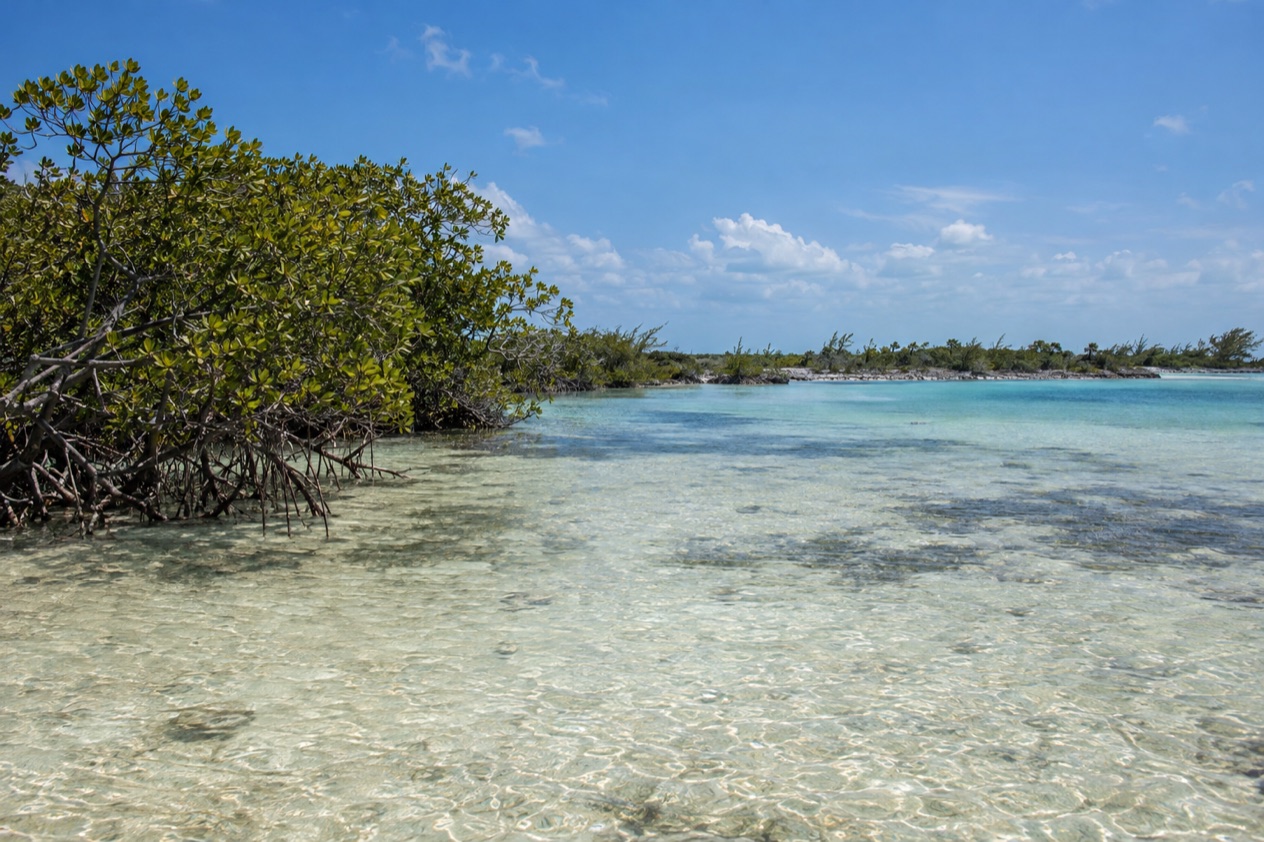
On a December morning in Andros, the mangrove creeks lie flat and silver, and the only sound is a skiff engine somewhere out toward a bonefish flat. By July the same coast is heavy with heat and afternoon thunder, and the sea feels like bathwater. The bright, mild months from late winter into spring suit most travelers to this huge, thinly settled island of blue holes, barrier reef and wilderness, but each season has something of its own to offer.
When is the best time to visit Andros?
For most travelers the best time to visit Andros is from late February through April, when the air is warm without being heavy, the sea is pleasant and the long, dry-feeling days suit boats, reefs and flats. December and January come close, with cooler mornings and a sea that has lost a little of its summer warmth. The summer months bring the hottest water and the stormiest skies, and they belong to travelers who plan around the weather.
For the beach and the sea, April and May are the sweet spot. The water warms quickly through those weeks, the days are long, and the shallows around the barrier reef are inviting for snorkeling and diving.
The Andros Barrier Reef is the third-largest fringing barrier reef in the world, and its island side is shallow while the ocean side drops away into the Tongue of the Ocean. That contrast is a big part of why people come, and spring is when it is most comfortable to spend a full day on a boat.
For sightseeing, the cooler months are kinder. Wandering the pine forests, paddling mangrove channels and visiting the freshwater blue holes inland all involve long stretches of open sun, and a winter or early spring day lets you do more of it. Blue Holes National Park and the vast West Side National Park are places to explore at a gentle pace, and Fresh Creek and Andros Town make a natural base for settlement life, local meals and the sea.
For budget and quiet, look at the edges of the season: the weeks right after the winter holidays and the stretch after Easter, as well as the heat of summer and early fall. Those are the times when rooms and flights tend to ease and the island feels most like itself, though you trade away some comfort and some certainty about the weather.
Families should know that March brings U.S. spring break to the Bahamas, and the islands that receive big groups of students and vacationers can feel louder and busier. Andros is sparsely settled, but flights and rooms are still shaped by those weeks, so younger children are happier in April, May or the weeks around Thanksgiving.
Andros weather by month
The sea around Andros Town swings from pleasantly cool in winter to bathtub warm in late summer, and the days stretch and shrink by several hours across the year.
| Month | Sea at Andros (°F) | Daylight on the 15th (hours and minutes) |
|---|---|---|
| January | 78.0 | 10 h 49 min |
| February | 76.8 | 11 h 22 min |
| March | 77.6 | 12 h 03 min |
| April | 78.5 | 12 h 48 min |
| May | 81.7 | 13 h 24 min |
| June | 84.7 | 13 h 42 min |
| July | 86.7 | 13 h 33 min |
| August | 87.1 | 13 h 02 min |
| September | 86.7 | 12 h 19 min |
| October | 85.1 | 11 h 37 min |
| November | 81.7 | 10 h 59 min |
| December | 79.1 | 10 h 39 min |
The sea is at its coolest in February, then warms steadily through spring and holds a bathwater-like plateau from midsummer into early autumn. It slips back through November and December, so a winter dip is a refreshing one rather than a cold one. Daylight follows its own rhythm: winter evenings arrive early, which makes for long dinners and short beach afternoons, while June brings the longest days of the year and plenty of time on the water.
For the air, the nearest picture comes from Nassau, where highs average about 81°F in March. Summer feels very different from winter in the Bahamas as a whole, with showers that arrive as short bursts in the cooler months and as heavy, thundery downpours when the heat builds. Pack light cotton for most of the year and a thin layer for winter evenings on the water.
What is there to do in Andros in each season?
Winter and spring: reefs, blue holes and the flats
From the winter holidays into April is the time for the full range of outdoor days. Boats head out to the barrier reef for snorkeling and diving, with the ocean-side wall falling toward the deep water of the Tongue of the Ocean. On the island side the reef is shallow, so a day of looking down through clear water is part of what this coast does.
Inland, this is the season for the blue holes. Andros has more than 180 of them, found both inland and along the shore, and Blue Holes National Park protects part of the pine and creek country around them.
The Guardian Blue Hole has a surface pond of fresh water, with a deep cave below. The mangrove creeks and the flats, where anglers wade after bonefish, are at their pleasantest in these cooler months, and birdwatchers may spot winter migrants alongside the residents.
Summer and early fall: hot water and big skies
From June through September the island turns hot, humid and thundery, with afternoon storms building over the interior and rolling across the creeks. Mornings are the time to be out, and the middle of the day suits a hammock, a cold drink and a long lunch of fresh conch. The sea is at its warmest, which makes a morning on the reef feel gentle in temperature, though the weather decides the plan.
Summer is also when the island belongs to its own people. Independence celebrations in early July bring music, food and gatherings in the settlements, and the pace is slow and local. If you are happy to adapt to the sky, these months are the island in its most peaceful mood. Hurricane season is running, so keep your plans loose and your return flexible.
Shoulder months and the winter holidays
October and November are the shoulder months. The sea is still very warm, the storm season is winding down, and the light gets softer as days shorten. Rain tapers off through November, and the island starts to feel settled again before the holiday visitors arrive.
December brings Christmas and the Junkanoo spirit, with parades of drums, cowbells and costumes in Bahamian towns on the day after Christmas and again on New Year’s morning. Family gatherings fill the settlements, and dinners are rich with roast pork, peas and rice, and sweet pineapple tarts. It is the time to enjoy the island’s food and warmth, and to leave the longest boat days for spring.
When is Andros cheapest and least crowded?
Andros is least crowded outside the big vacation weeks, and the gentlest stretches are the early weeks of the year after the holidays, the weeks after Easter and the long summer and early autumn. The island is large and thinly settled, so even the busy periods feel spread out compared with a resort island, but the calendar still shapes who is on the flights and in the rooms.
The busiest weeks follow U.S. calendars. Christmas and New Year bring families home and visitors in, Presidents’ Day weekend and spring break in March send groups south, and Easter week is a popular time for family trips. Those are the weeks when peak-season rates are most likely to apply and when rooms are harder to find. The Thanksgiving week is another time when American visitors travel in numbers.
The quiet months run from late April through the early summer, and again from September through mid-November. Rooms are easier to find, the reef and the creeks are less visited, and the settlements are calm. The tradeoff is the heat and the storm season, and travelers who come then are often anglers, divers and people who like the empty feel of a big island.
If you want a balance, aim for April after Easter or the first half of May. The sea is already warm, the days are long, and the school-holiday weeks have passed. November, before the Christmas rush, offers a similar mix of warm water, softer light and a slower pace.
Which months should you avoid in Andros?
Avoid August through October if you want settled weather, since those months fall in the heart of the Atlantic hurricane season, which runs from the first of June to the end of November. The season peaks in early to mid September, with most activity between mid-August and mid-October.
Not every year brings a storm to the islands, but this is when tropical systems form and move through the region, and a storm elsewhere in the Atlantic can still turn a day gray and rough. The Bahamas Ministry of Tourism & Aviation monitors tropical storms and hurricanes, and travelers are encouraged to check the Bahamas.com hurricane page for updates. June and November sit on the edges of the season, so the same caution applies.
Summer heat is the other reason to think twice. From June to September the air is hot and humid, and rain days in Nassau climb to a dozen or more a month, with thundery downpours that can interrupt a boat day. Mornings are fine, and afternoons are for shade.
Winter has its own small drawback. Cold fronts push through now and then from December into March, bringing a gray day, a brisk wind and a cooler evening, and they can make the sea less inviting for a short spell. They pass quickly and never turn the island cold, so they matter far less than a summer storm. No month is off-limits, and the right pick depends on whether you value certainty or solitude.
When can you swim in Andros?
The sea around Andros is warm enough for a dip all year, and it is most inviting from May through November. Even in the coolest weeks of winter the water stays in the upper 70s, which feels refreshing rather than cold, particularly on a sunny afternoon.
Spring is the transition: the water warms through April and May, and by June it has reached the temperatures of midsummer. From June to October the sea is like a warm bath, which suits long mornings on the reef and slow afternoons in the shallows. The weather matters more than the temperature in those months, since storms can stir up the water and keep boats in port.
The island’s coast is long and mostly wild, with beaches that are quiet stretches of sand, mangrove edges and rocky shores rather than resort strips. In winter, a wetsuit top or a thin rash guard keeps long snorkeling sessions comfortable. In summer, light sun protection and an early start are the better companions.
Festivals and events in Andros through the year
Winter holidays and Junkanoo
The island’s big celebration season starts at Christmas. Churches fill for services and carols, houses are lit with colored lights, and families gather for long meals of baked macaroni, peas and rice, roast pork and fresh fish. The settlements feel at their warmest in these days, and visitors are welcomed into the rhythm.
Junkanoo is the Bahamian tradition that brings the new year in, with parades of goombay drums, cowbells, whistles and dazzling cardboard-and-crepe-paper costumes, on the day after Christmas and again on New Year’s morning. The biggest parades are in Nassau, while smaller island communities hold their own celebrations. Go for the sound, which carries long before the dancers appear.
Easter week and spring gatherings
Easter week moves every year, falling in March or April, and it is a time for church services, family reunions and beach days. Good Friday and Easter Monday are traditional days off in the Bahamas, and settlements celebrate with picnics, music and homemade food. Spring is also a time of local sporting events and small-boat gatherings, which suit the island’s sailing and fishing roots.
These weeks also overlap with the best weather, so they are a lovely moment to see how local life and the sea go together. Expect more visitors and fuller flights around the holiday itself.
Summer independence and nature seasons
Independence celebrations in early July bring music, food and gatherings to the settlements, and it is a good moment to hear local bands and taste Bahamian cooking. Summer is also the season of fruit, and sweet pineapples and mangoes find their way to roadside stands.
Nature keeps its own calendar. In the cooler months migrating birds pass through the pine forests and wetlands of the West Side National Park, which protects 1.5 million acres of wilderness, and you may spot herons and other waders on the flats. Sea turtles may turn up around the mangrove creeks, and the reef shows its fish all year. Treat these as chances, and let a patient morning do the rest.
Sources
- Open-Meteo Marine API, average 2015-2024, checked October 10, 2026
- sunrise-sunset.org, sunrise and sunset calculated for the 15th of the month, checked October 10, 2026
- NOAA NCEI, GHCN-Daily station BF000078073 (Nassau Airport), normals 1991-2020 computed from the daily record (https://www.ncei.noaa.gov/access/services/data/v1?dataset=daily-summaries&stations=BF000078073), checked October 10, 2026
- Bahamas Ministry of Tourism, Investments & Aviation (bahamas.com), Andros (https://www.bahamas.com/islands/andros), checked October 10, 2026
- Wikipedia, Andros, Bahamas (https://en.wikipedia.org/wiki/Andros,_Bahamas), checked October 10, 2026
- Wikipedia, Fresh Creek (Andros Town) (https://en.wikipedia.org/wiki/Fresh_Creek), checked October 10, 2026
- Bahamas Ministry of Tourism, Investments & Aviation (bahamas.com), travel blog, Andros nature (https://www.bahamas.com/blog/the-wild-side-of-andros), checked October 10, 2026
- Bahamas Ministry of Tourism, Investments & Aviation (bahamas.com), Blue Holes National Park (https://www.bahamas.com/natural-wonders/blue-holes-national-park), checked October 10, 2026
- Bahamas Ministry of Tourism, Investments & Aviation (bahamas.com), Guardian Blue Hole (https://www.bahamas.com/natural-wonders/guardian-blue-hole), checked October 10, 2026
- Bahamas Ministry of Tourism, Investments & Aviation (bahamas.com), Sapphire Blue Hole (https://www.bahamas.com/natural-wonders/sapphire-blue-hole), checked October 10, 2026
- Wikipedia, Andros Town Airport (https://en.wikipedia.org/wiki/Andros_Town_International_Airport), checked October 10, 2026
- Wikipedia, Geography of the Bahamas (https://en.wikipedia.org/wiki/Geography_of_the_Bahamas), checked October 10, 2026
- NOAA National Hurricane Center, Climatology (https://www.nhc.noaa.gov/climo/), checked October 10, 2026
- Bahamas Ministry of Tourism, Investments & Aviation (bahamas.com), Hurricane and storm information (https://www.bahamas.com/hurricane-storm-information), checked October 10, 2026
- U.S. Department of State, The Bahamas Travel Advisory, Level 2 (https://travel.state.gov/), checked October 10, 2026
To plan your stay
- Things to Do in Andros: Blue Holes, Barrier Reef Diving, Bonefish Flats and Island Food
- Where to Stay in Andros: North Andros, Mangrove Cay, South Andros and How to Choose
- Andros from Nassau: Flights, Mailboats and the Fresh Creek Side of the Island
- Know Before You Go to Andros: Entry Rules, Money, Getting Around and Island Etiquette