
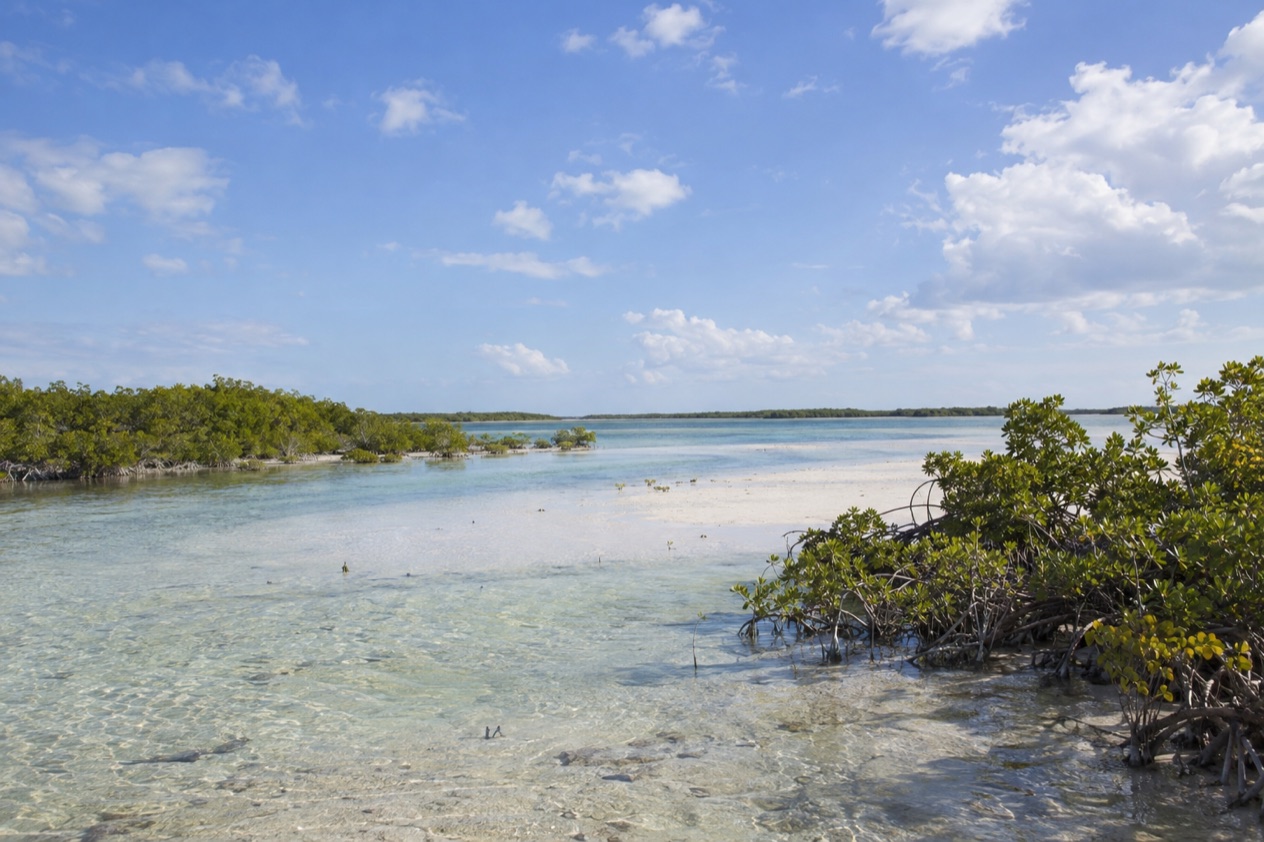
Before the sun is fully up at Fresh Creek, a skiff slides out of the tidal channel with a fly rod propped against the bow, and the flats beyond turn from pewter to pale green. Across the island the day begins differently on Mangrove Cay, where settlements wake slowly along the shore, and in the far south, where the road runs on past mangroves and open water. Andros is not one resort town but a long scatter of settlements, and the real decision is which stretch of it will be home for your stay.
What is the best area to stay in Andros?
For a first visit, North Andros around Andros Town and Fresh Creek is the most natural base. For fishing and diving it is also the obvious choice, Mangrove Cay suits travelers who want a calm middle ground with village life, and South Andros is for people who want to be far from everything and happy about it. Andros has no nightlife district and no big-resort strip, so the choice has less to do with entertainment than with how you want your days to feel.
If you come to fish, the answer is plain. The creek at Fresh Creek is known for fly fishing for bonefish, and the area is popular among tourists on angling holidays. Staying near the water here means your morning starts a few steps from the boat. Divers and snorkelers look to the same part of the island, because the barrier reef that runs along the eastern side is the third largest in the world, and lodges close to it organize their days around it.
Families and travelers who like to keep a rhythm of beach, lunch and a long afternoon are best served by a lodge or guesthouse with its own stretch of shore. Andros is a place for nature rather than for programs, so children who like boats, tide pools, shells and the idea of a jungle-like interior tend to enjoy it more than those who need a pool deck with a schedule. Budget travelers will find the island’s character in small guesthouses and self-catering apartments rather than in large properties, and should expect a simple, local style of stay.
Nightlife seekers should be honest with themselves. Evenings on Andros are for dinner of fresh fish and conch, a drink on a veranda, and a sky with remarkably little light in it.
Anyone who wants clubs, casinos or a busy promenade is better placed on another island of the Bahamas, perhaps with Andros as a short, deliberate escape. The island sits about 31 miles west of Nassau, separated from it by the deep water of the Tongue of the Ocean, and that gap is exactly why it feels so untouched.
The three main parts of the island differ in what surrounds them. Andros is an archipelago of three major islands, North Andros, Mangrove Cay and South Andros, with hundreds of small islets and cays joined by mangrove estuaries and tidal swamps.
Each part has its own settlements, its own water and its own tempo. Picking an area first and a property second will save you from a stay that is lovely but far from what you came to do.
One more thing to settle early is how much of the island you want to see. Andros is the largest island in the Bahamas, bigger than any other single island, and nobody sees it all in one trip., and nobody sees it all in one trip. Choosing one base and doing it well, with a boat day, a reef day and a day to wander through settlements, beats trying to cover the length of the island in a single visit.
The best areas to stay in Andros
North Andros: Andros Town, Fresh Creek and Coakley Town
North Andros is the part of the island most visitors picture when they imagine a stay here. Fresh Creek is a tidal creek running between Coakley Town and Andros Town, and the whole area is organized around water: skiffs, docks, mangrove edges and flats.
Fresh Creek was once its own district, and the name still turns up in conversation, though the district was replaced by Central Andros in the mid-1990s. Lodging tends toward small, family-run lodges and boutique-style properties, plus guesthouses and a few vacation rentals in the settlements.
This is the strongest base for anglers, divers and anyone who likes the idea of having a reef and a creek within a short hop of the room. Fly fishing for bonefish is the signature pursuit, and the mornings, with guides poling across pale flats, are the scene to hold onto.
Divers will notice that one of the lodges on this side of Andros runs a shark dive that is not a live feed, so divers are free to swim about. Evenings are for sitting on a deck, watching the tide turn in the creek and eating whatever came out of the water that day.
A tip: if your trip is built around a particular boat day or dive, choose the lodge before the room, because on this side of the island the lodge is the logistics. Ask which excursions it runs itself, so that your days are arranged around the property rather than around a drive. Those staying in a vacation rental rather than a lodge should remember the advice for the whole country: stay alert in rental properties, especially where there is no private security.
Mangrove Cay: the middle of the island
Mangrove Cay sits in the middle of Andros and feels like the island’s heartland. It is one of the three major islands of the Andros archipelago, cut off from its neighbors by tidal channels and mangrove creeks, and its settlements strung along the shore have the unhurried feel of places where everyone knows the boat that just passed. Lodging here is small in scale, mostly guesthouses, little inns and self-catering cottages, with a few lodges for fishing and diving.
It suits travelers who want to be a guest in a community rather than the audience of a resort. Days revolve around the water, with bonefish flats, bays and channels to explore by boat, and in between there is time to walk through a settlement, buy bread from a home bakery or watch the fishermen sort the catch at the dock. Evenings are quiet, and dinner is often whatever the kitchen has that day, which is part of the charm.
A tip: because the cay is a place of small properties, plan your meals and your outings with your host. A small guesthouse is often the best source of local knowledge, from which beach is worth the walk to which family cooks the best crab and rice, so ask for suggestions at check-in rather than relying on a map.
South Andros: blue holes and space
South Andros is the place to go when the point of the trip is to leave things behind. The region is known for its blue holes, with more than 100 tidal, freshwater ones, and for long, empty shorelines, open water and settlements that are few and far between. Lodging is small and simple: fishing lodges, guesthouses and rentals, usually on or near the shore, with an emphasis on being outdoors rather than on amenities.
Most blue holes begin amid shallow coral reefs and drop away to 300 to 400 feet, and the freshwater inside the inland ones is noticeably cooler than the surface of the sea. The inland holes run vertically, unlike the horizontal cenotes of other countries, which is a curiosity divers and geology fans often travel to see. The island’s wide skies and dark nights make it a lovely place for stargazing.
A tip: South Andros rewards people who bring their own entertainment, whether a fishing rod, a good book or a camera for birds and light. If you like having restaurants within walking distance, you may find it too remote. If you can slow down to the speed of the tide, it is the most memorable base on the island.
Andros areas compared
| Area | Best for | Feel |
|---|---|---|
| North Andros (Andros Town, Fresh Creek, Coakley Town) | First visit, bonefish fishing, diving | Creek and flats, lodge life, easy access to the reef side |
| Mangrove Cay | Village life, boat days, travelers who like small places | Unhurried, community-based, surrounded by channels and mangroves |
| South Andros | Blue holes, solitude, stargazing, long empty shorelines | Remote, simple, wide open water and few settlements |
The main trade-off on Andros is between convenience and remoteness. North Andros gives you the most infrastructure of the three, with lodges built for fishing and diving and the kind of services that go with them, while South Andros asks you to be more self-sufficient and rewards you with space. Mangrove Cay sits between the two, and many travelers find that it balances comfort and local life better than either end.
A second trade-off is between beach time and local life. Andros is not a beach-resort island in the way that Paradise Island or Cable Beach are, and the water is as much about creeks, flats and reefs as about sand.
If an afternoon on a long white beach matters most to you, ask your lodge directly how close the nearest one is. If you would rather spend the afternoon on a skiff or in a village, you will not miss it.
A third choice is between quiet and nightlife, and here the answer is simple: the island is quiet everywhere. Evenings across all three areas are for supper, conversation and early nights, because the next morning usually begins with a boat. The entertainment is the setting itself, from the glow of a creek at dusk to the sound of insects and water in the dark.
Finally, think about scale. The island is 104 miles long and 40 miles wide at its broadest point, and its west side holds a national park of 1.5 million acres of wilderness. That sheer size is why staying in two areas can feel like visiting two different places.
If you have the time, splitting a stay, for instance fishing and diving in the north and then moving to the south for the blue holes, shows you how varied the island is. If not, one well-chosen base does the job.
How to choose your hotel in Andros
Start with the kind of stay you want. Andros is known for fishing lodges and small, independent properties rather than for large all-inclusive resorts, so the first question is whether you want a lodge that organizes your days, perhaps with meals and excursions built in, or a guesthouse or apartment where you arrange things yourself.
Lodges suit travelers who want a ready-made program of fishing, diving or reef trips. Rentals and guesthouses suit those who like to cook, wander and set their own pace.
Next, think about the water at your door. Some properties sit right on the open sea facing the reef, others along tidal creeks or on a bay. A property on the reef side puts you closest to the diving and snorkeling, while one on a creek is better for fishing and the quiet of mangrove edges. Neither is better in the abstract, so match it to what you plan to do each morning.
Families should ask what the property is actually like for children: whether there is a shoreline for play, whether the lodge runs boat trips that suit a mixed group, and how meals are handled. Travelers with accessibility needs should ask about steps, docks, boat boarding and the path from the room to the dining area, since small properties and water-based days can involve more of all three than a standard hotel.
If you are traveling around a holiday or a peak week, such as a festival weekend or the weeks around Christmas, contact the property directly about availability. On an island of small lodges, rooms are few, and a full house can mean a different base than the one you wanted. The hurricane season runs from June 1 to November 30, so a trip within those months deserves a look at what each property says about its own arrangements for storms and changes.
Before booking, check a few practical points with the property rather than assuming them. Ask about noise, for instance whether the room faces a generator, a dock or a road. Ask how you will reach the property from the airport or the dock, since transfers are part of the stay on an island this large. And if you choose a vacation rental, stay alert, especially where there is no private security on site.
Finally, remember that Andros is the kind of island where the host matters. A good lodge owner or guesthouse keeper can point you to a guide, a quiet beach or a family kitchen that no listing will mention. Read descriptions for what a place offers in the way of boats, guides and local contacts, and choose the one whose mornings sound like the trip you have in mind.
Good to know before you go
The U.S. State Department rates the Bahamas Level 2, “Exercise increased caution”, and says most crime occurs in Nassau on New Providence and in Freeport on Grand Bahama.
Andros lies about 31 miles west of Nassau, across the deep water of the Tongue of the Ocean, and your lodge or guesthouse is the best source for how to reach it from the airport or dock where you arrive. Arrange that transfer with your host so that the first evening begins at the property rather than at the arrivals area. Settle questions about payment and local arrangements with the property before you travel.
Sources
- Bahamas Ministry of Tourism, Investments & Aviation (bahamas.com), travel blog, Andros nature (https://www.bahamas.com/blog/the-wild-side-of-andros), checked October 10, 2026
- Wikipedia, Fresh Creek (Andros Town) (https://en.wikipedia.org/wiki/Fresh_Creek), checked October 10, 2026
- Bahamas Ministry of Tourism, Investments & Aviation (bahamas.com), Andros (https://www.bahamas.com/islands/andros), checked October 10, 2026
- Wikipedia, Andros, Bahamas (https://en.wikipedia.org/wiki/Andros,_Bahamas), checked October 10, 2026
- Bahamas Ministry of Tourism, Hotels (https://www.bahamas.com/hotels), checked October 10, 2026
- U.S. Department of State, The Bahamas Travel Information, Travel Advisory (Level 2) (https://travel.state.gov/), checked October 10, 2026
- U.S. Department of State, The Bahamas Travel Advisory, Level 2 (https://travel.state.gov/), checked October 10, 2026
- NOAA National Hurricane Center, Climatology (https://www.nhc.noaa.gov/climo/), checked October 10, 2026
To plan your stay
- Best Time to Visit Andros: Weather by Month, Sea Temperatures, Hurricane Season and Festivals
- Things to Do in Andros: Blue Holes, Barrier Reef Diving, Bonefish Flats and Island Food
- Andros from Nassau: Flights, Mailboats and the Fresh Creek Side of the Island
- Know Before You Go to Andros: Entry Rules, Money, Getting Around and Island Etiquette