
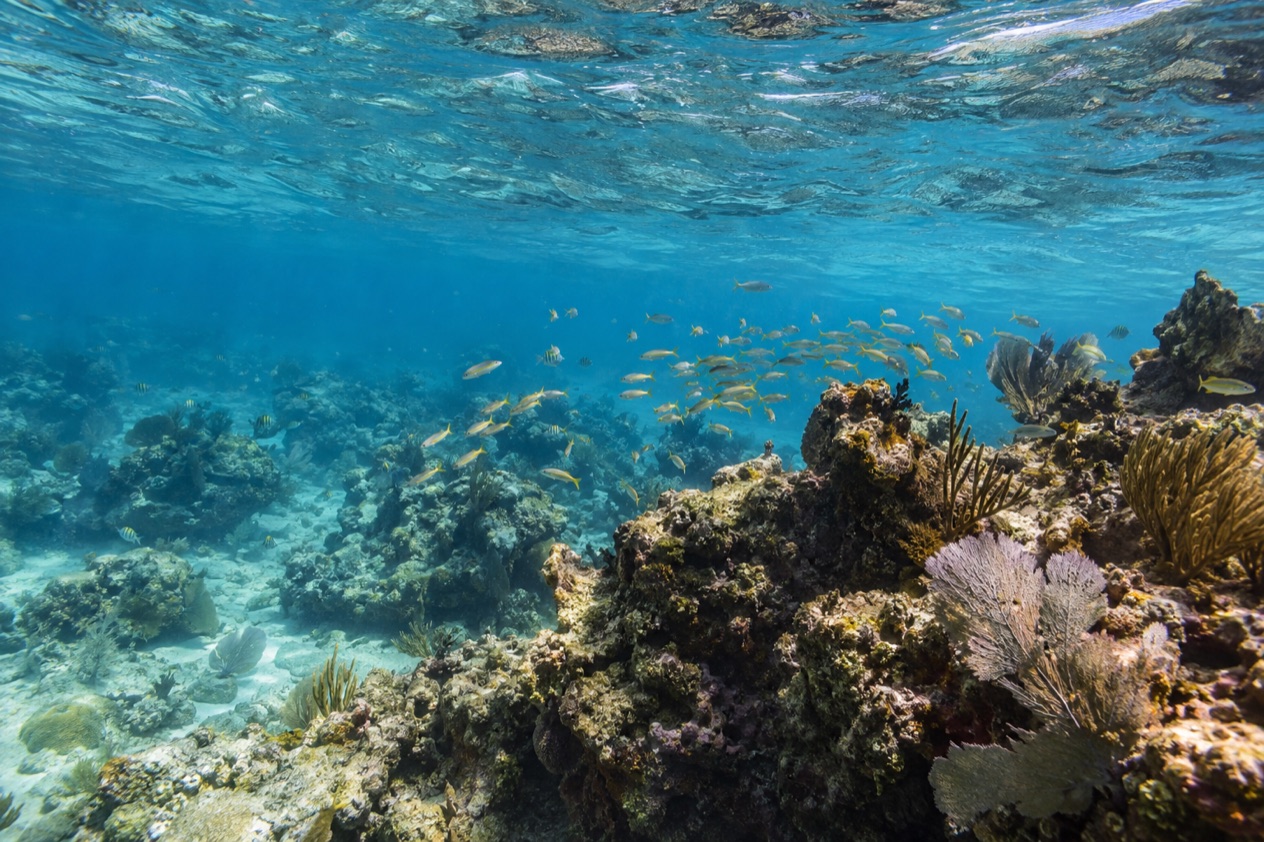
Out past the mangrove creeks on the east side of Andros, the water changes from pale green shallows to a deep, dark blue, and the reef sits right on that line. Coral heads rise toward the surface, schools of fish drift along the edge, and a gray shape may glide through below the boat. This is one of the great reef systems of the Atlantic, and the visit is a day or a week spent in and on the water, mostly diving and snorkeling.
Is visiting the Andros Barrier Reef worth it?
Yes, if what you want is a big, wild reef rather than a polished attraction, and it suits divers and snorkelers above all. You come here for the water, not for a boardwalk or a visitor center.
What sets it apart from the reefs you may have visited on other islands is how little has been built beside it. Andros has very little development, and that is the reason given for why its reefs are healthier than those of other destinations.
The reef also sits beside the Tongue of the Ocean, a deep canyon between Andros and Nassau, so a few minutes of boating separate a sunlit shallow garden from open blue water that plunges into the abyss. Add the sharks, the turtles, the stingrays and the blue holes that open both on land and in the sea, and you get a place that rewards people who like to look closely and travel slowly.
It is less suited to travelers who want a resort day with a long list of side attractions. Tourism is the largest industry on Andros, and divers and bonefishing anglers are the visitors it was built around. If that sounds like your kind of trip, the reef is the main reason to cross the water.
What to see at the Andros Barrier Reef
The reef is a long ribbon rather than a single spot, so what you see depends on where your boat stops. Four parts of the experience stand out.
The wall and the Tongue of the Ocean
The most striking thing about this reef is its two faces. On the island side it drops only to about eight feet, a calm-looking, sunlit shelf where the coral grows in patches and heads. On the ocean side it falls away to approximately 6,000 feet in the Tongue of the Ocean.
Divers hang along that edge and look down into water that simply keeps going. What you look for is the contrast: bright coral and small reef fish at the lip, then the blue emptiness beyond, where larger animals pass. Visibility in the Bahamas can reach 150 to 200 feet, which makes the drop feel enormous.
Sharks and the dive sites
On most dives around Andros you are likely to meet at least one Caribbean reef shark, and many visitors come specifically for that. At The Labyrinth dive site, sharks, turtles and stingrays are all likely sightings, so a single dive can hold three very different animals.
Small Hope Bay Lodge runs a shark dive that is not a live feed, which means divers are free to swim about rather than kneel in a fixed spot. It is a different feeling from a staged encounter: you move through the water and the sharks go about their business around you. Plan this kind of dive with a lodge or operator that knows the sites.
Snorkeling over the shallows
Snorkeling is one of the two activities the reef is known for, and the shallow island side is where its logic shows. Because the coral sits so close to the surface, you float above brain coral, sea fans and the fish that shelter among them, with sunlight reaching the bottom.
Look for parrotfish nibbling at the coral, small groupers tucked into ledges and the occasional turtle moving over the sand between heads. The reef is healthy enough that the colors read clearly even from the surface. Bring a patient eye: the best things here are often small and take a moment to find.
The blue holes beside the reef
Andros holds the world’s largest collection of blue holes, 178 on land and at least 50 in the sea. Most start amid shallow coral reefs and plummet to 300 to 400 feet, which gives them a dramatic look from above: a dark circle of deep blue in a pale sandy or coral setting.
The inland holes run vertically and hold freshwater that is at least 10 degrees cooler than the surface temperature. South Andros alone has more than 100 tidal, freshwater blue holes. They make a fascinating companion to a day on the reef, because you see the same island from underneath, shaped by the same limestone.
Hours, tickets and rules
The Andros Barrier Reef is open sea rather than a fenced site, so there is no gate to walk through and no ticket office to find. You meet the reef by getting on the water with a dive or snorkel outing, and the time you spend is shaped by the boat, the tide and the light rather than by a posted schedule.
What the reef offers is clear: scuba diving and snorkeling are the two activities visitors come for. The lodges on the island, including Small Hope Bay Lodge and Andros Beach Club Resort, are the bases from which travelers organize their time here.
One rule worth knowing comes from the shark dive at Small Hope Bay Lodge: it is not a live feed, so divers are free to swim about. Beyond that, the sensible approach to a living reef is simple. Look, do not touch, and keep your fins off the coral, which grows slowly and is the reason this reef is so well regarded.
Because water conditions decide what is possible on any given day, the plan you make at breakfast may shift by lunchtime. That is part of the rhythm of a reef trip, and a flexible morning usually serves better than a rigid one.
How to get to the Andros Barrier Reef
You reach the reef by reaching Andros, and the island lies about 31 miles west of Nassau, separated from it by the Tongue of the Ocean. The reef itself runs along the eastern side of Andros, so you travel to the island first and then go out on the water.
By ferry from Nassau
Andros is connected to Nassau by Sea-Link ferry, which runs daily to Morgan’s Bluff on the north end of the island and to Fresh Creek in central Andros. That gives you two doors into the island, one at each end of the stretch where most visitors stay.
Choose the landing that is nearest to your lodge. The island is long, so a landing in the north and a lodge in the center would leave you with a lot of island between them. Match the two before you go.
By air
Andros has four airports with paved runways: San Andros Airport, Andros Town International Airport, Clarence A. Bain Airport and Congo Town Airport. The names point to different parts of the island, from north to south, so the airport you fly into places you near a particular stretch of coast.
With the island stretching 104 miles, the choice of airport matters more than it would on a small cay. Ask your lodge which airstrip suits its location best before you settle on a flight.
Getting around once you are there
There is no public transport on Andros Island. A private shuttle bus service on North Andros does connect Nicholls Town with Behring Point, which helps if you are staying in that part of the north.
Since the island is so large and so lightly developed, your lodge is the natural center of your plans. Small Hope Bay Lodge and Andros Beach Club Resort are two places travelers base themselves, and they are where the outings to the reef begin.
When to visit the Andros Barrier Reef
On the water, the day itself matters more than the calendar. Morning is the classic time to be out on a reef: the light is soft, the surface tends to be quieter and you have the whole day ahead of you for a second dive or a longer snorkel. As the sun climbs, the light penetrates deeper, and the colors of the shallow coral are at their strongest around midday.
For the visibility that makes the wall dramatic, the Bahamas can offer 150 to 200 feet underwater, so a clear day lets you see far along the reef edge and down into the blue. A gray, windy day changes the mood, but the reef and its animals are still there.
The Atlantic hurricane season runs from June 1 to November 30, and Andros is hit by a hurricane every 2.5 years on average. A trip in December through May falls outside the official hurricane season. A trip during the season is possible, but weather can reshape plans, so keep your dates flexible and watch forecasts as you approach your departure.
No single month is reserved for the reef, because the sharks, turtles and coral are there year-round in the sense that matters for planning. What changes is the weather around you, so choose your dates for the season you prefer on the island and let the reef do the rest.
Tips for your visit
Give Andros more time than a day trip suggests. Most travelers opt to spend a full week on the island to experience the sharks and the geographic phenomena, and the scale of the place explains why: the reef, the blue holes and the bonefish flats are spread along a very long island.
What to bring and how to plan the days
Bring your snorkel gear if you have a mask that fits you well, and a swim shirt for the hours on the boat. A camera that works underwater earns its place here, since the animals are the reason you are in the water. Plan a morning on the reef and leave the afternoon open, so a good encounter can stretch into a second outing.
Divers will want to think about which sites they aim for. The Labyrinth is the site where sharks, turtles and stingrays are all likely sightings, and the shark dive at Small Hope Bay Lodge lets divers swim about freely. Talk through both with the lodge you choose.
What to combine with the reef
The blue holes are the obvious pairing, since Andros has the largest collection in the world and they sit close to the reef in character and in setting. Bonefishing is the other great draw: Andros is known as the bonefish capital of the world, and anglers come for the flats while their dive-minded companions head out to the reef.
That makes the island a good choice for a mixed group. One traveler can spend the morning with a rod, another with a mask, and everyone meets again at the lodge in the evening.
Families and anyone with limited mobility
The reef is reached by boat, so how well it suits a family or a traveler with limited mobility depends on the outing you choose and the lodge that arranges it. Speak with your lodge about the boat, the entry into the water and what a given snorkel stop involves before you commit.
Snorkeling is among the two activities the reef is known for, so a snorkeler who does not dive can still share the same water as the divers. Plan the pace of the day around the slowest member of your group and enjoy what the shallows hold.
Good to know before you go
The U.S. State Department rates the Bahamas Level 2, “Exercise increased caution”, and says most crime occurs in Nassau on New Providence and in Freeport on Grand Bahama.
Andros is a large, lightly developed island, and your lodge will be your base for meals and outings, so it helps to treat the stay as a self-contained trip. Travelers who reach the island by ferry or by air should think of the lodge as the place where plans come together. Hurricane season runs from June 1 to November 30, which is worth remembering when you choose your dates.
Sources
- Bahamas Ministry of Tourism, Investments & Aviation (bahamas.com), Andros Barrier Reef (https://www.bahamas.com/natural-wonders/andros-barrier-reef), checked October 10, 2026
- Wikipedia, Andros, Bahamas (https://en.wikipedia.org/wiki/Andros,_Bahamas), checked October 10, 2026
- Bahamas Ministry of Tourism, Investments & Aviation (bahamas.com), travel blog, Andros nature (https://www.bahamas.com/blog/the-wild-side-of-andros), checked October 10, 2026
- Bahamas Ministry of Tourism, Investments & Aviation (bahamas.com), Diving (https://www.bahamas.com/plan-your-trip/diving), checked October 10, 2026
- U.S. Department of State, The Bahamas Travel Advisory, Level 2 (https://travel.state.gov/), checked October 10, 2026
- NOAA National Hurricane Center, Climatology (https://www.nhc.noaa.gov/climo/), checked October 10, 2026
To plan your stay
- Best Time to Visit Andros: Weather by Month, Sea Temperatures, Hurricane Season and Festivals
- Where to Stay in Andros: North Andros, Mangrove Cay, South Andros and How to Choose
- Andros from Nassau: Flights, Mailboats and the Fresh Creek Side of the Island
- Know Before You Go to Andros: Entry Rules, Money, Getting Around and Island Etiquette