
On the first Saturday of March, Fourth Avenue in downtown Anchorage fills with the barking of dogs that cannot wait to run, and with spectators leaning over the barricades for a look at the teams. The Iditarod Trail Sled Dog Race is one of Alaska’s iconic winter events, a long run from Anchorage country to the Bering Sea coast. Visitors can watch the start in person, see the finish in Nome, or follow the teams from home.
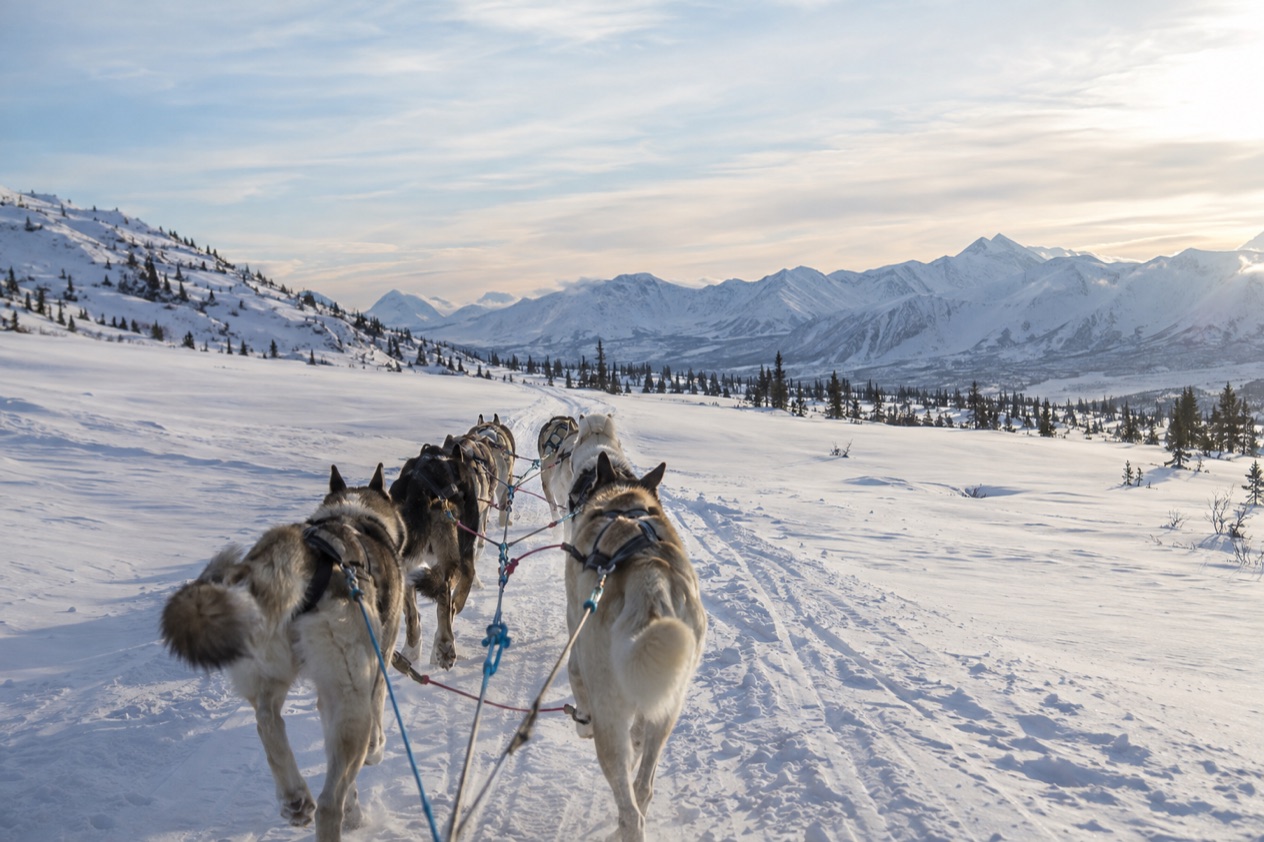
What is the Iditarod?
The Iditarod is a sled dog race across Alaska, 1,049 miles long, in which mushers and their dog teams travel from the Anchorage area to Nome. It is run by the Iditarod Trail Committee, a 501(c)(3) non-profit organization, and the Committee holds the registered trademarks Iditarod, The Last Great Race on Earth and Red Lantern Award. The race commemorates the 1925 serum run to Nome, which gives the finish its weight beyond the sporting result.
The trail itself is the story. It leaves Willow, climbs through Rainy Pass in the Alaska Range, passes towns such as Skwentna, McGrath and Unalakleet, and then follows the Bering Sea shore into Nome. Each of those names is a checkpoint or a landmark where teams stop, feed their dogs and rest, and where the race is won or lost over many days.
The teams and the rules of the trail
Every team must start with between 12 and 16 dogs, and at least 5 dogs must be on the towline when it reaches the finish line in Nome. That rule shapes the whole race: a musher thinks about the health and pace of the team from the first mile, not just about speed.
Rest is built into the race too. Mushers must take three mandatory stops, listed here with where each can happen.
| Mandatory rest | Length | Where |
|---|---|---|
| Layover | 24 hours | Any checkpoint |
| Layover | 8 hours | Any checkpoint on the Yukon River |
| Final stop | 8 hours | White Mountain |
A race with a name people protect
Because the Iditarod Trail Committee owns its trademarks, individuals do not have permission to sell Iditarod-themed products, whether they made them or the Committee did. The Committee also owns all rights to Iditarod Insider videos, live stream videos and GPS Tracker content, and unauthorized use is strictly prohibited.
There is a classroom side as well. The Iditarod Education Department works to help teachers and students reach higher academic success with Iditarod-based curriculum, and teachers may freely use the lessons on the Iditarod website or build their own lessons for their students. For a family planning a trip around the race, that makes it an easy subject to study together before leaving home.
Where does it start and finish?
The race starts in downtown Anchorage with a ceremonial start and finishes under the burled arch on Front Street in Nome. In between, an official restart in Willow sets the teams on the real trail the next day, so the race has in effect two beginnings.
The ceremonial start in Anchorage
The excitement traditionally starts in Anchorage on the first Saturday of March each year. Teams leave from Fourth Avenue at D Street, where spectators gather to watch the mushers depart, and the route runs 11 miles through the city to the Campbell Creek Science Center.
This leg is a send-off more than a race. Anchorage turns out to see the teams, and the Wildbirch Hotel serves as the official Anchorage headquarters for the event. Around the start there is a run of related happenings: the Musher’s Banquet takes place at the Dena’ina Center on the Thursday before the start, and the Running of the Reindeer is held on the afternoon after the Iditarod start.
One particular treat is the Iditarider program. Spots in contenders’ sled baskets for the Anchorage ceremonial start are auctioned off in December and January, so a ride is something to plan for in the winter before the race, not in March.
The restart in Willow
The official restart is in Willow, 80 miles north of Anchorage, on the day after the ceremonial start. From there the mushers and their dogs cover roughly 1,000 miles to Nome. Willow is where the competition begins in earnest, and the trail leaves the road system behind.
The finish in Nome
The finish line is the burled arch on Front Street in Nome, where a Widow’s Lamp is lit and stays lit until the last musher arrives. That detail says a lot about the race: it honors the final team as much as the winner.
Nome is a city on the southern Seward Peninsula coast, on Norton Sound of the Bering Sea, with 3,699 residents in the 2020 census. Its gold rush began in 1898, when three Nordic-Americans found gold on the ocean shores, and the town claims the world’s largest gold pan, a title Quesnel, British Columbia disputes. No railroads go to or from Nome, which is part of what makes the arrival at the arch feel like the end of a long journey.
How can visitors follow it?
Visitors can follow the Iditarod in person at the Anchorage start, by flying out to a checkpoint, by volunteering, or online through Iditarod.com. Each way gives a different view of the same race.
In person: Anchorage and the checkpoints
It sits in the middle of the city, so the whole event feels like a street celebration with dogs at its center.
A more adventurous option is to fly to a checkpoint. Skwentna is a 40-minute flight from Anchorage, and spectators who make the trip can see the mushers there. Out on the trail the scene is quieter than in town, a small settlement with a team pulling in to rest.
Volunteering
Volunteers keep the race moving. They help handle dogs on start day, communicate with checkpoints and monitor race updates. It is a way to stand closer to the action than a spectator can, and to meet people who return to the race every year.
Online with Iditarod.com
For anyone not in Alaska in March, Iditarod.com offers three levels of access. Visitor access includes race standings, 10-second video clip previews and free live broadcasts. Insider Free registration adds visitor features, some full video content with commercials, one favorite musher email alert and some articles. The paid Insider Subscription includes the free and visitor features plus all video content, multi-cam trail live streams, all live broadcasts, exclusive musher and trail videos, the GPS Tracker, email alerts for five favorite mushers, and Iditarod documentaries.
| Level | What it includes |
|---|---|
| Visitor | Race standings, 10-second video clip previews, free live broadcasts |
| Insider Free | Visitor features, some full video with commercials, 1 favorite musher alert, some articles |
| Insider Subscription | All video, multi-cam trail live streams, all live broadcasts, exclusive musher and trail videos, GPS Tracker, 5 favorite musher alerts, documentaries |
Good to know before you go
The ceremonial start falls on the first Saturday of March, so a trip built around it means planning for an Anchorage winter. Anchorage events cluster around that weekend, from the Musher’s Banquet on the Thursday before to the Running of the Reindeer the afternoon after the start. Souvenirs are worth a thought as well: the Iditarod Trail Committee’s trademarks mean Iditarod-themed products are not for individuals to sell, so look for items from the race organization itself.
Sources
- Iditarod Trail Committee, the Iditarod (https://www.iditarod.com/), checked October 11, 2026
- Iditarod, about (https://www.iditarod.com/about/), checked October 11, 2026
- Visit Anchorage, Iditarod (https://www.anchorage.net/winter/events/iditarod-sled-dog-race/), checked October 11, 2026
- Wikipedia, Iditarod Trail Sled Dog Race (https://en.wikipedia.org/wiki/Iditarod_Trail_Sled_Dog_Race), checked October 11, 2026
- Wikipedia, Nome, Alaska (https://en.wikipedia.org/wiki/Nome,_Alaska), checked October 11, 2026
To plan your stay
- Alaska State Fair: Giant Cabbages, Fair Food, Exhibits and Getting to Palmer
- Fur Rendezvous (Fur Rondy): Sled Dog Races, Reindeer Run, Outhouse Races and Dates
- Nenana Ice Classic: The Tripod, the Ticket Window and How Visitors Can Join In
- World Ice Art Championships: Fairbanks Dates, Competitions and What to See