
A bus slows on the park road, a hush falls, and a dozen people lean toward the same window to look at a dark shape on a hillside. That moment is why people come to Denali. The park was created to protect its animals, and what you find here are wild residents that have never been fed or tamed, best watched from a respectful distance and never counted on.
What wildlife lives in Denali National Park?
Denali shelters a full northern community, from large mammals and migratory birds down to a crowd of creatures smaller than your thumbnail. It was the first national park created to protect wildlife, and that purpose still shapes how the place is run, from the rules about distance to the way traffic is managed on the one road through it.
| Group | Species in the park |
|---|---|
| Mammals | 39 |
| Birds | 169 |
| Amphibians | 1 |
| Reptiles | 0 |
The plant side is just as rich, with more than 1,500 kinds of vascular plants, mosses and lichens carpeting the ground that all those animals depend on. Most of Denali’s creatures, in fact, are insects and other invertebrates, and the park notes that the vast majority are less than an inch long.
Bears and moose
Bears are the animals people ask about first. Alaska is home to black bears, brown bears (the grizzly is a brown bear) and polar bears, though the polar bear belongs to the Arctic coast and not to the interior. In Denali, the bear you may glimpse is a brown bear or a black bear, usually a long way off, a moving patch of fur on a slope of tundra or a gravel bar.
Moose are the other big names. An adult can stand almost six feet tall at the shoulder and weigh anywhere from 800 pounds for a small female to 1,600 pounds for a large male. Only the males carry antlers, which makes bulls easy to pick out. A big bull can grow a rack weighing 80 pounds in a single summer, adding about an inch of bone a day, which is part of why a bull in full antler looks almost unreal when it steps out of the willows.
Other mammals of the park
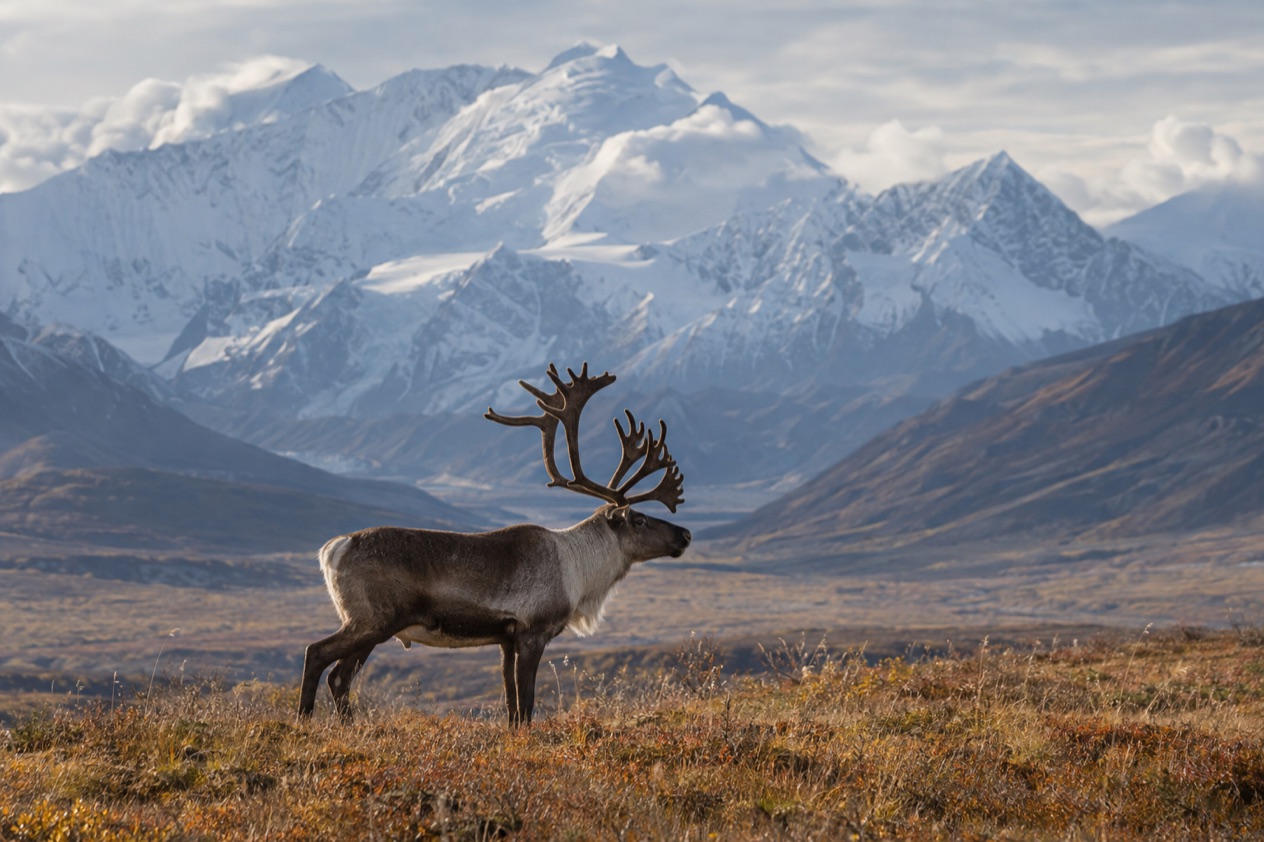
Beyond bears and moose, the list of 39 mammals runs through the animals people associate with the Alaskan interior: caribou, Dall sheep, wolves, foxes and a long tail of smaller animals such as squirrels, hares and voles. These are chances, never promises. A day on the road can bring a wolf track in the mud, a fox trotting past, or nothing but tundra and sky, and the park is not a zoo.
Part of the fun is the way a sighting arrives, often through someone else’s pointing arm and a pair of borrowed binoculars. Small things count too.
Birds, and the one amphibian
More than 160 species of birds spend the summer months in Denali, so the birdlife is a seasonal arrival, and by October much of it has left. What remains in the cold months is a smaller cast. The park’s single amphibian is a species adapted to life in the cold, and there are no reptiles at all, a reminder of how far north you are.
For a visitor who enjoys watching things quietly, birds reward patience in a way big mammals do not. You stop, you listen, and the tundra starts to fill in with small movements. Binoculars matter more here than any lens.
Where do you see it?
You look along Denali Park Road, the single ribbon that runs 92 miles from the George Parks Highway to Kantishna, and across the open country it crosses. Animals do not follow the road, but the road is how almost everyone gets a view of the park’s wide valleys and slopes, and the rangers study how traffic on it influences wildlife behavior through the Road Ecology Program.
The first stretch, by private vehicle
Private vehicles can drive only the first 15 miles of the road, up to Savage River Bridge. That section gives you a first look at the landscape, with the edges of spruce forest opening onto bigger country. It is a place to pull over where it is allowed, get out of the car carefully, and scan the slopes and willow flats with binoculars.
Moose often feed on willow and other shrubs near water and in thickets, so low, brushy ground is worth a slow look. Watch the open ground for movement instead of searching for a whole animal. The first clue is usually a shape that does not match the rocks around it.
The interior, by shuttle or tour bus
Past mile 15, access to the park interior is only by shuttle or tour bus. This is the stretch where the country grows larger and the distances to animals grow with it. A window seat, a pair of binoculars and the habit of looking far across a valley matter more than anything else you bring.
In August 2021, a landslide at Polychrome Pass led to the closure of the road west of Mile 43. That is a reminder that the road is a working piece of a living landscape, and that how far it reaches can change. The mountain that gives the park its name, Denali, stands at 20,310 feet and is visible on clear days, but the cloud often hides it.
In October and the cold months
Now, in October, snow closes the road past the park headquarters, and the closure lasts until April. The park itself stays open for cross-country skiing, snowshoeing and dogsledding. The Alaska Railroad’s Denali Star route serves the park depot only from mid-May to mid-September, so it is not running now.
The moose rut falls in late September and early October, when adult males compete for mates, so bulls can be restless and unpredictable around now. In fall and winter, moose eat large quantities of willow, birch and aspen twigs, which is why you may find them in shrubby country. Snow can fall in nearly any month in Denali, so a winter landscape does not mean an empty one, but it does change what you can reach.
How do you watch wildlife safely?
You watch from far away, you never feed anything, and you keep yourself and your food out of an animal’s reach. Denali asks visitors to keep wildlife wild and never to feed or harass it, and feeding any animal in the park is strictly forbidden. The park also sets minimum distances, listed here once.
| Animal | Minimum distance (yards) |
|---|---|
| Bears | 300 |
| All other animals | 25 |
Those distances apply at all times. They are not a target to approach but a floor, and a long lens or binoculars is how you close the gap. If an animal moves toward you, the sighting is over and the right move is to give it room.
Bears, food and bear spray
In Alaska, people must keep all human sources of food secure from bears, and the state wildlife agency offers a page on bear resistant containers for that purpose. Food left out turns a wild bear into a problem bear, and that is a bad outcome for the animal as much as for the people. Bear spray is strongly encouraged for all hikers in Denali.
Dangerous bear situations in Alaska should be reported to the Alaska Department of Fish and Game on its wildlife encounter form. The agency also loans bear safety videos from its offices in Anchorage, Fairbanks and Juneau, which is useful if you want to learn before you arrive.
On foot: weather, falls and company
Hypothermia is always a factor in the subarctic, so the park advises dressing in layers, preferably wool or synthetic, and carrying rain gear or an umbrella. Because snow can fall nearly any month, that advice does not belong only to winter. Wet and cold arrive quickly, and they make poor decisions easier.
More people die from falls in Denali than from any other cause, so footing on slopes, rock and river bars deserves attention, especially when your eyes are on an animal instead of the ground. The park asks you to hike with at least one other person and to make sure someone else knows where you are going.
Plants and small risks
There is no poison oak, sumac or ivy in Denali, but some other plants can cause allergic reactions, cow parsnip among them. It is a good reason to keep skin covered when walking through thick growth. A few minutes of attention to what you touch is a small price in a place with so much to look at.
Good to know before you go
In an emergency in the park, dial 9-1-1 and give your location as Denali National Park. Cell phone coverage exists only within three miles of the park entrance, so do not count on a signal once you leave it.
A ranger is available by phone at 907 683-9532 from 9 am to 4 pm daily, except on major holidays, for questions about wildlife and conditions. Daylight is shorter in October, and the road beyond the park headquarters is closed by snow until April, so plan what you can reach before you head out.
Sources
- National Park Service, Denali wildlife (https://www.nps.gov/dena/learn/nature/wildlife.htm), checked October 11, 2026
- National Park Service, Denali National Park & Preserve, plan your visit: safety (https://www.nps.gov/dena/planyourvisit/safety.htm), checked October 11, 2026
- National Park Service, Denali nature (https://www.nps.gov/dena/learn/nature/index.htm), checked October 11, 2026
- Alaska Department of Fish and Game, Living with bears (https://www.adfg.alaska.gov/index.cfm?adfg=livingwithbears.main), checked October 11, 2026
- Alaska Department of Fish and Game, Moose species profile (https://www.adfg.alaska.gov/index.cfm?adfg=moose.main), checked October 11, 2026
- Wikipedia, Denali National Park and Preserve (https://en.wikipedia.org/wiki/Denali_National_Park_and_Preserve), checked October 11, 2026
To plan your stay
- Best Time to Visit Denali National Park: Summer Buses, Fall Road, Winter Quiet and Weather by Month
- Where to Stay in Denali National Park: Park Entrance, Healy, Backcountry Lodges and Campgrounds
- Denali National Park from Anchorage: the Parks Highway, the Denali Star Train and Park Shuttles
- Know Before You Go to Denali National Park: Fees, Bus Season, Weather and Bears