
Late in the afternoon, when the light softens over the spruce and the first campfire smoke drifts between the tents, the question comes up at every picnic table in the park: where exactly do we sleep tonight? Denali offers two very different answers, a numbered site in a developed campground or a patch of wilderness with no trail at all. Both are possible, and each comes with its own paperwork.
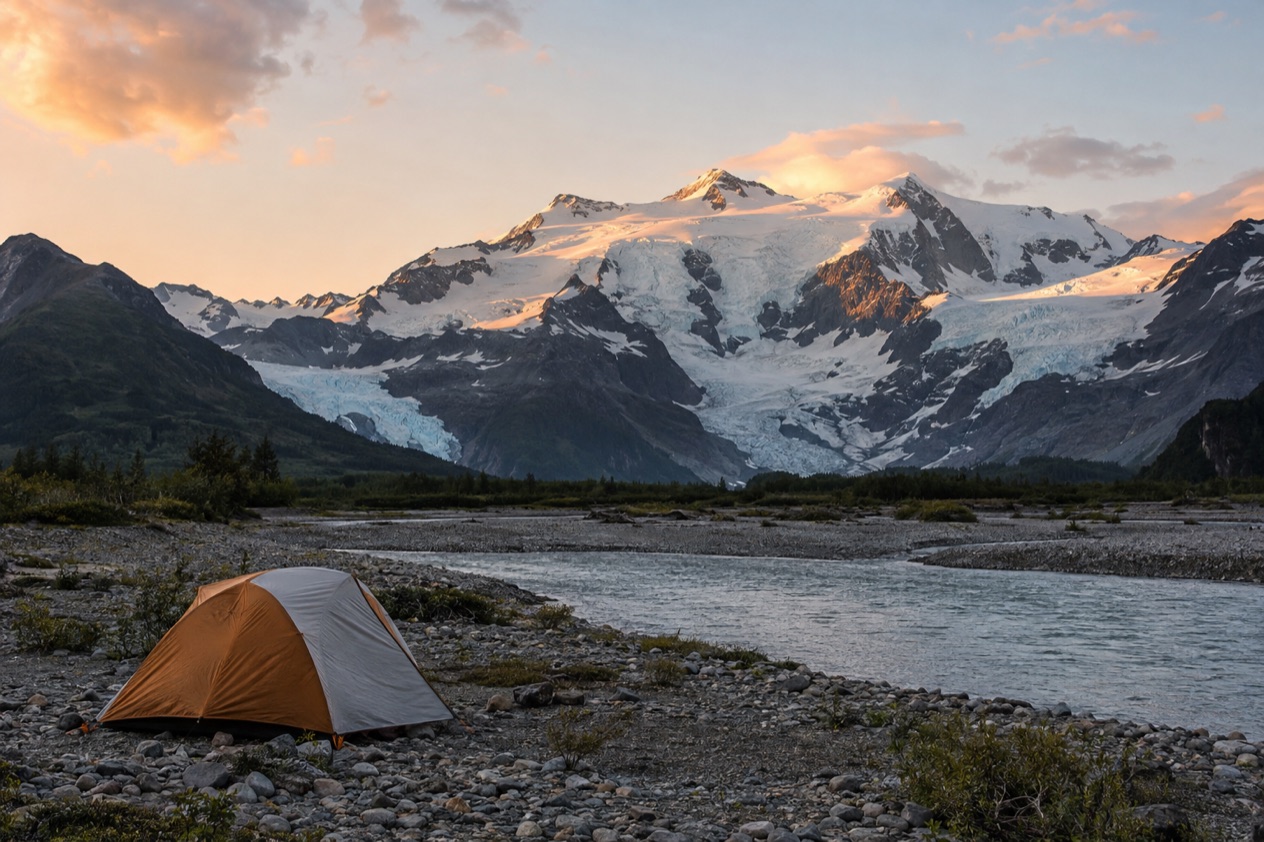
Where can you camp in Denali National Park?
You can camp in the park’s developed campgrounds along the Denali Park Road or out in the backcountry with a free permit. The first choice suits anyone with a tent or an RV who wants a defined site and a fixed address for the night. The second is a true wilderness trip, and it asks far more of you in planning and self-reliance.
Winter changes the picture. Camping in Denali is free from roughly late September to early May, which is also the stretch when the bus service has stopped and the road is closed beyond the first few miles. The main visitor season runs from May 20 through the second or third week in September, and that is when the campgrounds feel like small villages of tents, trailers and bus passengers swapping wildlife stories.
Developed campgrounds
A developed campground means a set site, a place to pitch a tent or park a rig, and a rhythm of rules that keep a crowded summer evening peaceful. Check-in and check-out are both at 11 am, so a morning departure to catch a bus fits naturally.
Two campgrounds, Igloo Creek and Sanctuary River, have no drinking water, so campers there bring a water filter and treat what they collect. Everywhere else you will find the usual comforts of a national park campground, though none of them offers electrical or water hookups. Quiet hours run from 10 pm to 6 am, which matters more than you might expect when the evening light lingers and campers lose track of the clock.
| Item | Detail |
|---|---|
| Nightly fee | Around $25 to $50 |
| Senior Pass or Access Pass | 50% off nightly fee |
| Check in and check out | 11 am |
| Quiet hours | 10 pm to 6 am |
| Maximum stay in any summer season | 14 nights |
| Longest RV accepted | 40 feet |
| Hookups | None (no electric, no water) |
| No drinking water | Igloo Creek, Sanctuary River |
Camping with an RV
RV travelers should plan around two hard limits. No campground in the park can take a rig longer than 40 feet, and none has electrical or water hookups. That means arriving with a full water tank, a charged battery system or a generator plan, and an understanding that you are essentially dry camping in a spruce forest.
Private vehicles can drive only the first 15 miles of the Denali Park Road in summer, from the entrance to Savage River. Beyond that point buses carry visitors along the rest of the road, so where you park your rig and how you reach the farther campgrounds are decisions to make together. The road is 92 miles long, and only the first 15 miles are paved.
Backcountry camping
The backcountry here is not a network of marked sites. Denali has no trails, designated routes or backcountry campsites to guide a wilderness trip, and the park is about the size of Vermont with only a handful of trails, most near the entrance and meant for day hikes. You choose your own way across open terrain, which is the whole appeal and the whole challenge.
In summer the entire park is divided into 87 units, and only a certain number of people can camp in each unit on a given night. Your permit names the unit where you must sleep for every night of the trip. Backcountry permits are free and required for any overnight trip.
How do you reserve a campsite?
You reserve campground stays ahead of time, and reservations open on December 1 of the year before your trip. That same opening date applies to bus trips, so travelers who want to camp deep in the park and ride a bus to get there can plan both pieces at once.
Reserving a developed campground
Think of the reservation as the first step in a chain. Pick your campground and your nights, remember the 14-night maximum for any summer season, and match your arrival to the 11 am check-in. If you hold a Senior Pass or an Access Pass, the 50% discount applies to nightly camping fees in the developed campgrounds.
Payment is worth thinking about before you arrive. Denali National Park does not accept cash, so bring a card for fees and any purchases at park facilities. No refunds are given because of bad weather, which is a useful thing to know in a place where a cold, wet day is entirely normal.
Getting a backcountry permit
From mid-May to late September they are issued in person at the Backcountry Information Center on the Denali Bus Depot campus, and no more than one day before your trip begins. In the fall, winter and spring, permits are available at the visitor center.
Every member of your backpacking party must attend a backcountry orientation before the permit is issued, so the whole group needs to show up together. Your permit also comes before your bus ticket: you need it before you can get Camper Bus tickets at the Denali Bus Depot. Because the unit quota is set night by night, your first-choice area may not be open, and flexibility in your plan helps.
Entrance fees and passes
A campsite is separate from the cost of entering the park. Denali charges an entrance fee year-round for visitors 16 and older, while anyone 15 or younger is free. The Standard Pass costs $15.00 and is valid for 7 days, and the Denali Annual Pass costs $45.00 and covers up to four adults for 12 months from the date of purchase.
Holders of a valid Denali Annual Pass or an America the Beautiful pass skip the entrance fee, and the pass covers the holder plus up to three other adults in the party. The America the Beautiful Resident Annual Pass costs $80.00 and is available to U.S. citizens and residents. The pass holder must be present and show the physical pass and a valid photo ID to park staff.
| Pass | Price | Covers |
|---|---|---|
| Standard Pass | $15.00 | Valid for 7 days |
| Denali Annual Pass | $45.00 | Up to four adults, 12 months |
| America the Beautiful Resident Annual Pass | $80.00 | Pass holder and up to three other adults |
What should you know before you go?
Know that Denali is subarctic wilderness, so weather, wildlife and distance all shape a camping trip more than they would at a roadside campground elsewhere. Snow can fall in nearly any month of the year, and hypothermia is always a factor. Dress in layers, preferably wool or synthetic, and bring rain gear or an umbrella even if the morning starts clear.
Bears, wildlife and food storage
Bear Resistant Food Containers are required for backcountry trips from April 15 to September 30. The park asks visitors to keep wildlife wild, so never feed or harass animals. You must stay 300 yards from bears and 25 yards from other animals at all times, and bear spray is strongly encouraged for all hikers.
These rules shape how a campsite runs day to day. Food, cooking and cleanup become part of the routine, and the habit of staying alert on every walk to the water source or the bathroom is simply part of camping here.
Getting around and staying in touch
Buses carry visitors along the Denali Park Road beyond the first 15 miles in summer, but they do not operate in fall, winter or spring. In winter only the first 3 miles of the road are open to public vehicles, and the rest is closed because of snow. A late-September or early-May trip therefore looks nothing like a July one.
Cell phone coverage exists only within three miles of the park entrance. Beyond that you are out of reach, so make sure someone knows where you are going and always hike with at least one other person. In an emergency, dial 9-1-1 and be ready to give your location as Denali National Park.
Staying safe on the ground
More people die from falls than from any other cause in the park, which is a reminder to take uneven ground, wet rock and river banks seriously. The park has no poison oak, sumac or ivy, though some plants, such as cow parsnip, can cause allergic reactions. Keep it in mind when you push through brush near camp.
If your plans include climbing Mount McKinley or Mount Foraker, that is a different category altogether. It requires advance registration and a pre-paid mountaineering fee, and it sits well outside the world of campground tents.
Good to know before you go
Carry a card, since cash is not accepted, and plan for temperatures that can drop fast even in the main season, which runs from May 20 through the second or third week in September. Free winter camping is a real option for those who like solitude, though with the road closed and buses stopped, you will be traveling far lighter on services. Wherever you pitch your tent, leave your site clean and your food secured.
Sources
- National Park Service, Denali National Park & Preserve, plan your visit: campgrounds (https://www.nps.gov/dena/planyourvisit/campgrounds.htm), checked October 11, 2026
- National Park Service, Denali National Park & Preserve, plan your visit: backcountry (https://www.nps.gov/dena/planyourvisit/backcountry.htm), checked October 11, 2026
- National Park Service, Denali National Park & Preserve, plan your visit: basicinfo (https://www.nps.gov/dena/planyourvisit/basicinfo.htm), checked October 11, 2026
- National Park Service, Denali National Park & Preserve, plan your visit: fees (https://www.nps.gov/dena/planyourvisit/fees.htm), checked October 11, 2026
- National Park Service, Denali National Park & Preserve, plan your visit: safety (https://www.nps.gov/dena/planyourvisit/safety.htm), checked October 11, 2026
To plan your stay
- Best Time to Visit Denali National Park: Summer Buses, Fall Road, Winter Quiet and Weather by Month
- Things to Do in Denali National Park: Park Road Rides, Sled Dogs, Trails and Where to Eat
- Denali National Park from Anchorage: the Parks Highway, the Denali Star Train and Park Shuttles
- Know Before You Go to Denali National Park: Fees, Bus Season, Weather and Bears