
On a quiet fjord in Southeast Alaska, a small vessel slows near a wall of ice while passengers line the rail with coffee in hand. That is the pull of a small-ship cruise: a boat that follows the narrow, sheltered waterways instead of staying in the big ports. It suits travelers who care more about fjords, forests and wildlife country than about onboard entertainment.
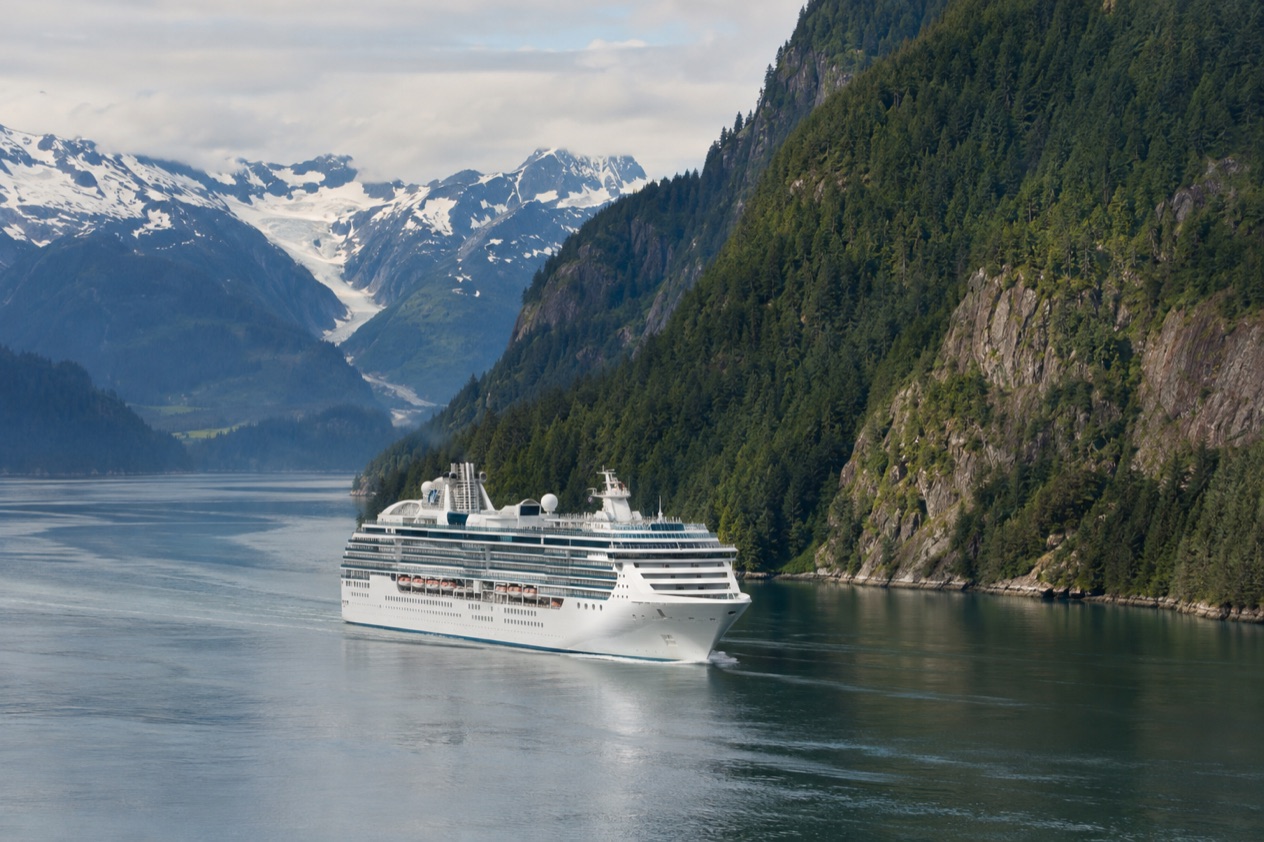
What is a small-ship cruise in Alaska?
A small-ship cruise is a vacation voyage aboard a modest vessel that threads the narrow channels, coves and bays of Southeast Alaska, with the scenery itself as the main event. The general idea of a cruise is the same everywhere: a passenger ship used mainly for vacations, usually on round-trip voyages to various ports of call where passengers may join shore excursions. Alaska is one of the places where cruise ships operate, alongside the better-known Caribbean and Mediterranean.
What changes with a smaller boat is the stage. The Alaska portion of the Inside Passage holds a thousand islands and thousands of coves and bays, and that maze of sheltered water is the natural home of this kind of trip. You spend your days looking at forest, shoreline and ice rather than at the ship’s own attractions.
What the fare usually covers
As on almost all cruise ships, dining is included in the cruise price, with meals served in a main dining room or a buffet-style eatery. Traditionally ships ran two dinner seatings, early and late, with a set time for the whole cruise, though a recent trend lets diners eat whenever they like.
Drinks are a different matter. Most cruise lines do not include alcohol in their fares, so you pay for each drink as you have it, and most lines do not allow passengers to bring their own beverages aboard and drink them. If the evening glass of wine matters to you, it is worth thinking of it as a separate line in the budget.
What the days feel like
A typical day is built around the water. You wake to a different cove, spend the morning scanning the shoreline for eagles or bears, and step ashore at a small community or a trailhead in the afternoon. Shore excursions are part of the cruise tradition, and in this country they tend to mean forest, wildlife viewing areas and glacier country.
Casinos, a staple of the biggest ships, only open when a ship is at sea, to avoid conflict with local laws. On a small-ship itinerary that spends its time in sheltered channels, that is a minor detail. The real draw is looking out the window.
Where do small ships go?
Small ships work the Inside Passage of Southeast Alaska, the sheltered sea route that runs for more than 1,000 miles from Seattle, Washington to Skagway, Alaska. Haines and Skagway sit at the head of the Lynn Canal and mark the northernmost points of the route. The Alaska stretch of the passage covers 500 miles from north to south and 100 miles from east to west.
Tracy Arm and Endicott Arm
Tracy Arm lies off Holkham Bay, next to Stephens Passage, inside the Tongass National Forest. It is about 45 miles from Juneau and about 70 miles from Petersburg. Congress designated it the heart of the Tracy Arm-Fords Terror Wilderness in 1990, a wilderness of 653,179 acres made up of two deep, narrow fjords, Tracy Arm and Endicott Arm.
Both fjords are more than 30 miles long, and one-fifth of their area is covered in ice. For a traveler, that means sheer walls closing in around the boat and ice in the water. It is the kind of place where a smaller vessel and its slow pace suit the setting.
Glacier Bay National Park and Preserve
Glacier Bay lies west of Juneau and covers 3,223,384 acres, much of it water. The land is mountainous, covered with dense rain forest or alder thickets, and has neither roads nor trails.
No roads lead to the park at all, so it is most easily reached by air or sea, which is exactly why a cruise is a natural way to see it. The park was established on December 2, 1980, and is part of a UNESCO World Heritage Site inscribed in 1979.
The number of cruise ships allowed in the bay each day is limited by regulation. Inside the park, the Glacier Bay Lodge runs a daily tour boat each summer, guided by a Park Ranger Naturalist, along with a camper drop-off service that takes campers and their kayaks to two locations. Private vessels such as sailboats and yachts may also explore the bay, and visitors can travel under their own power by kayak.
Admiralty Island and bear country
Admiralty Island is wild country. The Kootznoowoo Wilderness covers all but 18,351 acres of the monument and shelters old-growth temperate rainforest, home to brown bears, bald eagles and Sitka black-tailed deer. The island has the highest density of brown bears in North America, an estimated 1,600, outnumbering human residents nearly three to one.
Angoon, a traditional Tlingit community of 572 people on the western coast, is the only settlement on the island, and the fishing and outdoor lodges mostly operate there. Designated bear viewing is available at Pack Creek Bear Sanctuary on Admiralty Island near Juneau, and at Anan Creek near Wrangell. At Pack Creek, visitors must obtain permits through the Forest Service to watch brown bears during the summer months.
How do they differ from large ships?
The difference lies in where you spend your time: a small ship goes into the narrow fjords and coves and is built around the landscape, while the large-ship idea of a cruise leans on a floating resort that moves between ports of call.
The waterways they can use
Alaska’s Inside Passage is a maze of a thousand islands, with coves and bays beyond counting. About 36,000 recreational cruising boats use portions of the route, a reminder that these are waters made for modest vessels. A narrow fjord like Tracy Arm or Endicott Arm, with ice filling a fifth of its area, shows why a nimble boat is a good match for the scenery.
Glacier Bay shows the other side of the question. Because the number of cruise ships allowed in each day is limited by regulation, the bay is a place where access is managed, and anyone choosing an itinerary will want to see how it fits the bay.
Life on board
On any cruise ship, dining is included and alcohol generally is not. Where large ships traditionally ran early and late dinner seatings, the trend is toward eating when you want. The casino rule, open only at sea, applies to ships in general, so the biggest vessels are the ones most likely to build their evenings around gaming.
A small ship tends to point attention outward. The evening is for the view, the next morning’s cove and the bear country ahead, rather than for a long program inside the ship. What you give up in on-board attractions, you gain in time among forest and water.
Good to know before you go
Budget separately for drinks, since most cruise lines leave alcohol out of the fare and expect you to pay as you go. Glacier Bay limits the number of cruise ships entering each day, and bear viewing at Pack Creek requires a Forest Service permit during the summer months. Much of Southeast Alaska has no roads, so the water is the way in, and the Alaska Marine Highway ferry connects Juneau and Gustavus via Hoonah twice weekly.
Sources
- Wikipedia, Cruise ship (https://en.wikipedia.org/wiki/Cruise_ship), checked October 11, 2026
- Wikipedia, Inside Passage (https://en.wikipedia.org/wiki/Inside_Passage), checked October 11, 2026
- Wikipedia, Glacier Bay National Park and Preserve (https://en.wikipedia.org/wiki/Glacier_Bay_National_Park_and_Preserve), checked October 11, 2026
- National Park Service, Glacier Bay National Park & Preserve, plan your visit: cruising (https://www.nps.gov/glba/planyourvisit/cruising.htm), checked October 11, 2026
- Wikipedia, Admiralty Island (https://en.wikipedia.org/wiki/Admiralty_Island), checked October 11, 2026
- Wikipedia, Tracy Arm (https://en.wikipedia.org/wiki/Tracy_Arm), checked October 11, 2026
To plan your stay
- Alaska Cruise in May: Port Weather, Whales and Glaciers, and the Cruise Lines
- Alaska Cruise Ports: Ketchikan, Skagway, Sitka, Icy Strait Point and Where Cruises Start
- How Much Does an Alaska Cruise Cost?: Cruise Lengths, What's Included and Extras
- Alaska Cruise in June: Weather, Ports, Wildlife and Glaciers