
At noon in downtown Vancouver, ten horns on a hotel roof play the first notes of O Canada across the harbor, and the cruise ships tied up below get ready to slip out under the mountains. For travelers bound for Alaska, this waterfront is where the trip really starts.
Which Alaska cruises leave from Vancouver?
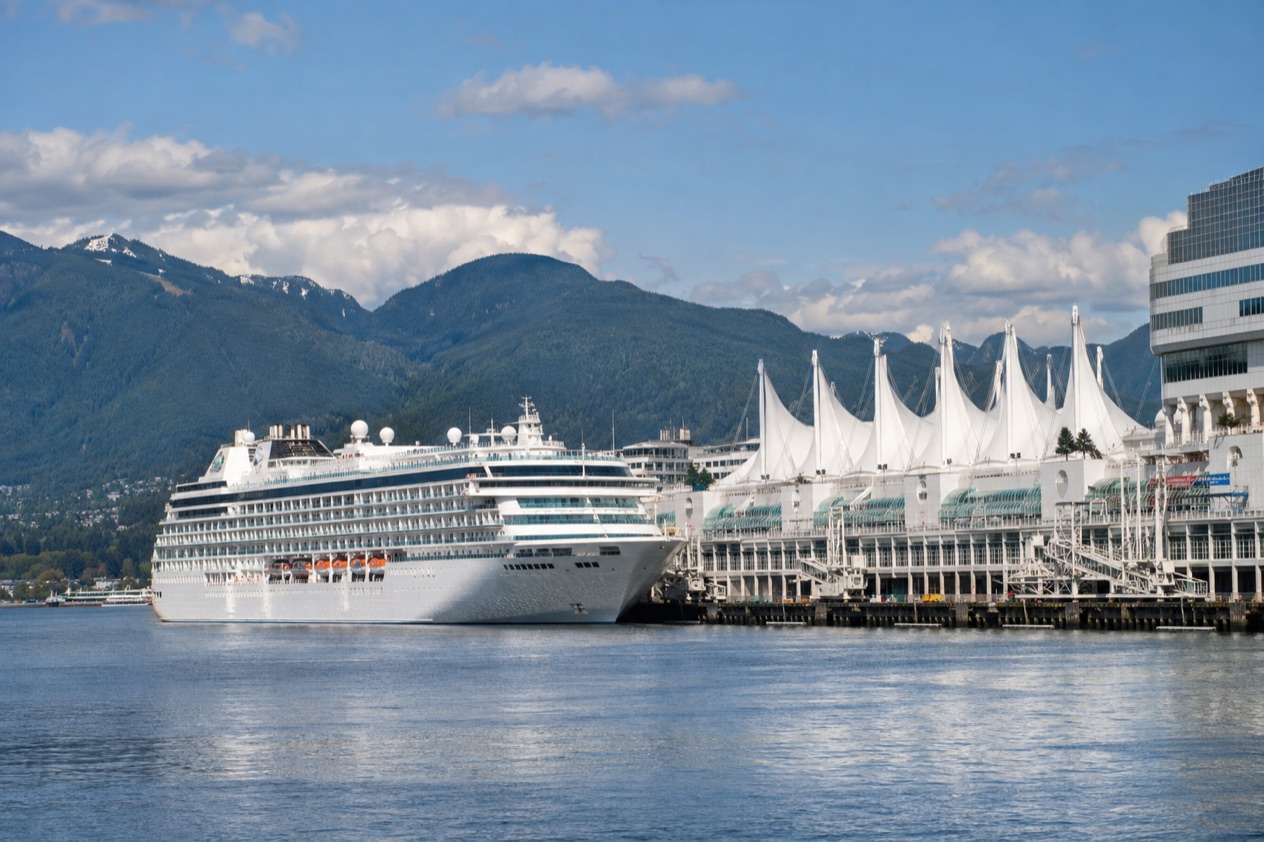
Several major lines send Alaska itineraries out of Vancouver, and all of them board at Canada Place, the main cruise ship passenger terminal for the region and the place where Alaska cruises originate. The terminal sits on Burrard Inlet, in the middle of the city rather than in an industrial corner of the port. You step from a downtown street into the boarding hall, and the harbor, the seaplanes and the North Shore mountains are all within sight.
Vancouver belongs to the Port of Vancouver, run by the Vancouver Fraser Port Authority, a port with dozens of terminals handling cars, bulk cargo, containers and cruise passengers. The cruise berths are only one small corner of that working harbor. That explains the cranes and freighters you may notice as you leave.
Holland America Line
Holland America’s Alaska cruises depart from Seattle, Vancouver, Whittier or San Diego, and the length of the voyage ranges from 7 to 28 days. That spread matters when you choose. A Vancouver departure sits in the middle of the line’s network, so you can pick the city that suits your flights, then pick the length of voyage that suits your calendar.
The line also offers a glacier guarantee. If your Alaska cruise does not include a glacier visit, you receive a Future Cruise Credit equal to 15% of your fare. For anyone who is sailing mainly to see ice, that is a useful promise to know about before you compare sailings.
Holland America also sells Alaska cruisetours, which range from 9 to 17 days and depart from Seattle, Vancouver, Anchorage or Fairbanks. The pairing of those four cities hints at the shape of the trip: a sea portion combined with time on land in the Interior. A cruisetour is a different purchase from a simple round-trip sailing, so read the itinerary to see where you start and where you finish.
Norwegian Cruise Line
Norwegian’s Alaska cruises depart from Seward, Vancouver and Seattle. Three ships sail its Alaska cruises: Norwegian Bliss, Norwegian Encore and Norwegian Joy. If you like big ships with plenty of onboard variety, those are the names to look for when you search sailings, and the departure port is listed beside each one.
Having Seward on the list next to Vancouver is worth a thought. It means that a Norwegian Alaska voyage can begin in one place and be built around another, so check the departure and arrival ports of each itinerary before you book flights.
Princess Cruises and the Denali lodges
Princess Cruises has been voted Best Cruise Line in Alaska 22 times by the readers of Travel Weekly. The company also operates lodges on land. Denali Princess Wilderness Lodge stands one mile from the entrance to Denali National Park, while Mt. McKinley Princess Wilderness Lodge is 40 miles from Mt. McKinley and two hours south of the park entrance.
Those lodges are the sort of stay a traveler adds to a coastal voyage when the mountain is part of the dream. They show how Alaska trips often combine water and land, even when the first night is spent aboard a ship in Vancouver.
How do you get to the cruise terminal in Vancouver?
Canada Place is reached from West Cordova Street and sits close to Waterfront Station, where the SkyTrain, the SeaBus and the West Coast Express all connect. That makes the terminal one of the more transit-friendly embarkation points you will meet, since a train or a ferry from across the water can drop you almost at the gangway.
The building is more than a cruise terminal. It houses the Vancouver Convention Centre East Building, the Pan Pacific Vancouver Hotel, the Vancouver World Trade Centre and Flyover, a simulated flight ride across Canada. The white sails on its roofline are easy to spot from the harbor and from the streets above, so you will rarely feel lost on the final stretch.
Arriving by air
Many cruise passengers fly into Vancouver the day before sailing. Travelers flying into Canada can use Advance Declaration in ArriveCAN to submit their customs and immigration declaration before they land, which moves some of the paperwork out of the arrivals hall. Travelers connecting between international flights at select Canadian airports can also save time at the border checks.
A night in town before the ship leaves gives the trip a cushion. You can wander the waterfront, walk the seawall toward Stanley Park, which covers 1,001 acres, and still reach the terminal fresh. The park is one of the largest urban parks in North America, and its forest trails make a quiet contrast to the ship that waits for you.
Arriving by land
Travelers driving up from the United States cross into Canada first, and the Canada Border Services Agency publishes land border wait times for crossings from the United States, so you can see how busy a crossing is before you set out. Border officers may also examine travelers’ digital devices, a point worth remembering when you pack your phone and tablet.
Once you reach the city, the terminal is a short step from Waterfront Station, so the rail and ferry links can take the place of a car for the last leg. Whatever the route, the waterfront is a good place to spend your last hour on land, and if you are there at noon you will hear the Heritage Horns. Their ten horns have an output of 115 decibels and can be heard throughout downtown Vancouver and beyond.
Where do the ships go in Alaska?
Ships that leave Vancouver for Alaska call at a chain of small towns tucked between mountains and water, and the ports named on Norwegian’s Alaska cruises show the pattern well. They are Skagway, Juneau, Icy Strait Point, Sitka, Ketchikan, Prince Rupert, Victoria and Astoria. Not every voyage visits every port, so the itinerary you choose decides which ones you see.
Skagway, Juneau and Icy Strait Point
Skagway is a small town with wooden boardwalks and gold rush storefronts, and it feels like a set from an old Western once you walk its main street. Juneau is the state capital, a city you cannot reach by road, with mountains rising straight up behind its downtown. Icy Strait Point is a very different stop, a smaller place where the day revolves around the surrounding scenery.
All three are places where nature fills the frame. Your cruise line’s excursion list will show what is organized in each port, and Holland America’s glacier guarantee reminds you that ice is a main attraction of these voyages.
Sitka, Ketchikan and Prince Rupert
Sitka is a town with strong Russian and Tlingit threads in its history, and a walk through its center turns up an onion-domed church and totem poles. Ketchikan is known for its creek-side houses and its collection of totem poles, and it is a place where salmon are part of the local story. Prince Rupert, across the border in British Columbia, is a quieter stop on the way.
These ports are close in spirit. Each has a working waterfront, a few shops, a museum or cultural center worth a visit and forest just beyond the last street.
Victoria and Astoria
Victoria, the capital of British Columbia, is a stop of a different kind, with a harbor lined with grand old buildings and gardens. Astoria sits at the mouth of the Columbia River in Oregon and appears among Norwegian’s ports of call as well. They remind you that some itineraries mix Canadian and American stops with the Alaska ports, so a closer look at each sailing is worthwhile.
What do you need to board?
A passport is the only reliable and universally accepted travel identification document. U.S. Customs and Border Protection lists different documents for American citizens returning to the United States by air and by land or sea.
| How U.S. citizens enter | Documents accepted |
|---|---|
| By air | Valid U.S. Passport, Trusted Traveler Program card (NEXUS, SENTRI or FAST), U.S. Military identification card on official orders, or U.S. Merchant Mariner document for official maritime business |
| By land or sea | Valid U.S. Passport, Passport Card, Enhanced Driver’s License, Trusted Traveler Program card (NEXUS, SENTRI or FAST), U.S. Military ID on official orders, U.S. Merchant Mariner document, Form I-872 American Indian Card, or Enhanced Tribal Card |
Flying to Vancouver
Children traveling by air are required to present their own passport when returning to the United States. An Indian or tribal card cannot be used for air travel. Lawful permanent residents of the United States are not required to present a passport when entering by air, but they must continue to present a valid Permanent Resident Card.
Canadian citizens have their own rule. You need a valid Canadian passport to board a flight to Canada, and the passport also proves your right to return. If your name is the same as or similar to that of someone on the No Fly List, a Canadian Travel Number helps avoid delays at the airport.
Driving or arriving by sea
For the return to the United States by land or sea, the longer list includes the Passport Card and the Enhanced Driver’s License along with the passport. Keep in mind that this list is for the border crossing and the way back home, not a replacement for what your cruise line asks of its passengers.
A passport covers every case in both tables, which is why it is the document travelers carry on a cruise that begins in another country. Border officers may examine digital devices, so it is wise to have your phone and travel documents organized before you reach the counter.
Good to know before you go
Vancouver sits in British Columbia, so the day before you sail is spent in Canada, with a port city of a few million people around you and the waterfront within walking reach of Canada Place. Give yourself time to see the harbor before you board, and if you pass the Pan Pacific hotel at noon, stop to hear the Heritage Horns play. The first Alaska port is still ahead, but the mountains of British Columbia already frame the sailing.
Sources
- Wikipedia, Vancouver (https://en.wikipedia.org/wiki/Vancouver), checked October 11, 2026
- Wikipedia, Port of Vancouver (https://en.wikipedia.org/wiki/Port_of_Vancouver), checked October 11, 2026
- Wikipedia, Canada Place (https://en.wikipedia.org/wiki/Canada_Place), checked October 11, 2026
- Princess Cruises, Alaska cruises (https://www.princess.com/en-us/cruise-destinations/alaska-cruises), checked October 11, 2026
- Holland America Line, Alaska cruises (https://www.hollandamerica.com/en/us/cruise-destinations/alaska-cruises), checked October 11, 2026
- Norwegian Cruise Line, Alaska cruises (https://www.ncl.com/cruise-destinations/alaska-cruises), checked October 11, 2026
- U.S. Customs and Border Protection, Western Hemisphere Travel Initiative (https://www.cbp.gov/travel/us-citizens/western-hemisphere-travel-initiative), checked October 11, 2026
- Canada Border Services Agency, Cross the Canadian border (https://www.cbsa-asfc.gc.ca/travel-voyage/menu-eng.html), checked October 11, 2026
- Government of Canada, Travel documents (https://travel.gc.ca/travelling/documents), checked October 11, 2026
To plan your stay
- Alaska Cruise in May: Port Weather, Whales and Glaciers, and the Cruise Lines
- Which Side of the Ship for an Alaska Cruise: Glacier Bay, Inside Passage Routes and Balcony Choices
- How Much Does an Alaska Cruise Cost?: Cruise Lengths, What's Included and Extras
- Alaska Cruise in June: Weather, Ports, Wildlife and Glaciers