
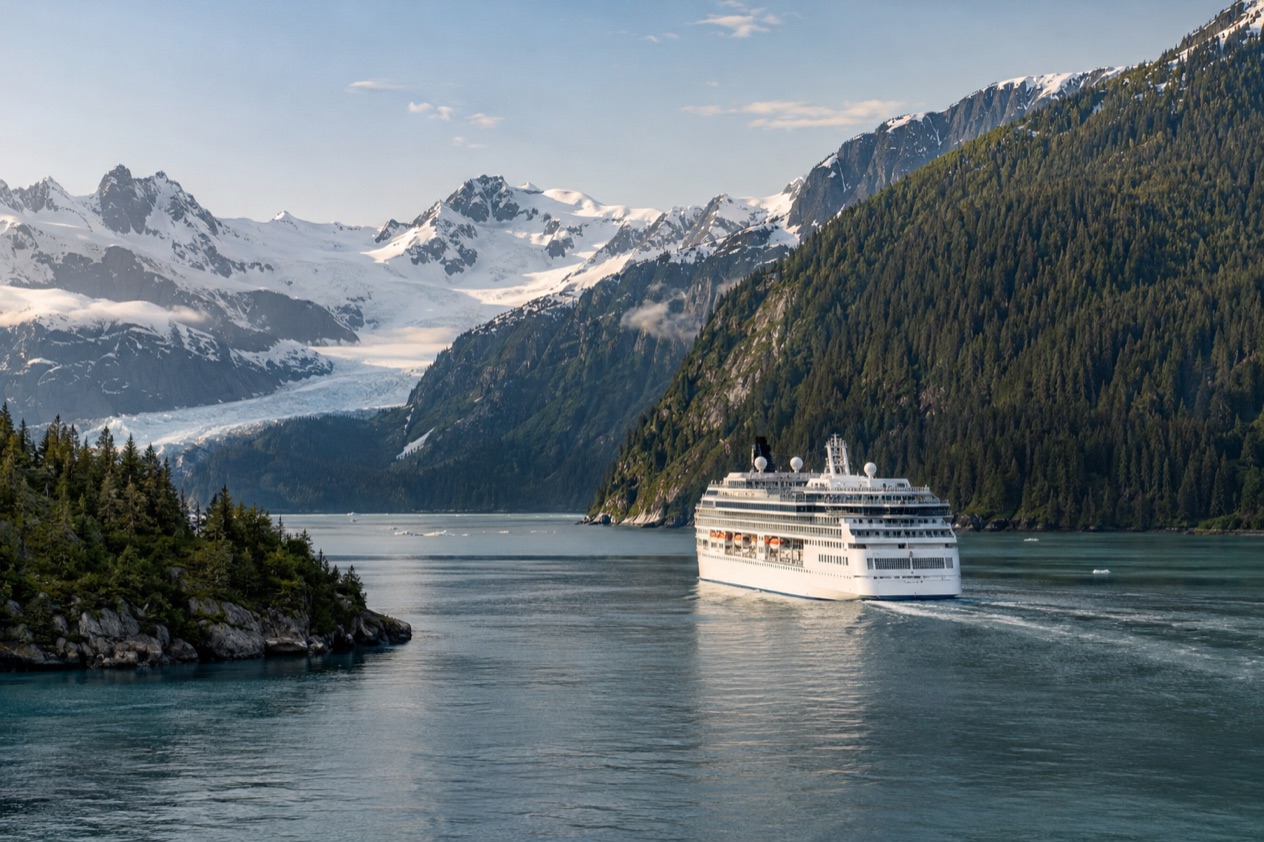
The ship slides past a wall of dark spruce, the deck rail is wet with mist, and half the passengers are in shorts while the other half are wrapped in blankets. That is the packing question of an Alaska cruise in a single scene. The short answer is a set of layers, a real waterproof shell and a few small items for sun and bugs, with very little else.
What should you pack for an Alaska cruise?
Pack in layers, topped by a fully waterproof, breathable shell with a hood. That is the advice of the National Park Service, and it fits a cruise well, because a day can go from a windy deck to a sheltered town street to a drizzly dock without you changing anything but a sweater. From spring to early fall, temperatures in Alaska run from 50 to 70 degrees Fahrenheit, with rain and wind possible, so the wardrobe is built for that range rather than for a heat wave or a deep freeze.
Alaska cruises include stops such as Juneau, Ketchikan and Skagway, and ships such as the Star Princess sail in Alaska. Princess Cruises runs roundtrip sailings from Vancouver, a Voyage of the Glaciers itinerary of seven or more days, and Cruisetours of ten or more days. Whichever you choose, you step ashore in a different small town on different days, so what you carry in a daypack matters as much as what hangs in the cabin closet.
The layering system
Start with a base layer that sits against the skin, then a middle layer such as a fleece or a light sweater, then the shell. The point of layers is that you can take them off as the weather changes: a bright stretch on the water can feel almost warm, and ten minutes later a gust off the glacier sends you back into the fleece.
Add a small backpack. You will use it every time you go ashore, to hold the layer you shed, a water bottle and the sunscreen. It also keeps your hands free for a camera and the railing. Park Service advice is to carry the extra layers so you stay warm and dry when it turns chilly or wet, and a cruise day, with its long walks between dock and town, is exactly that kind of day.
The shell and the rain
The outer layer should be fully waterproof and breathable, with a hood, so it keeps you warm when it is windy and dry when it rains. A hood matters more than it sounds. Umbrellas are awkward on a windy deck and in a crowd on a narrow sidewalk, while a hood stays put and leaves both hands free.
Southeast Alaska is a rain forest, and Juneau averages over 50 inches of precipitation a year. In rain forest areas, sustained downpours can overwhelm breathable waterproof fabrics, which is why coated waterproof raingear of the Helly Hansen type is recommended for extended charters. If your plans include a long boat excursion, that heavier gear is worth a thought.
Sun, sunglasses and bug repellent
It sounds odd after all this talk of rain, but bring a lightweight brimmed hat, sunglasses and sunscreen. Alaska’s long summer days give you double the hours of daylight of the Lower 48, which means more hours of light bouncing off water and ice, and more time for a burn on a clear afternoon at the rail.
Add bug repellent with Deet. It works well against mosquitoes, black flies and no-see-ums, especially on calm days along coastal beaches and in the backcountry. On a ship deck you will hardly notice insects, but on a shore walk away from the town center, a small bottle in the daypack earns its space.
How cold does it get on deck and ashore?
Cool rather than cold, in the range of 50 to 70 degrees Fahrenheit from spring to early fall, though wind on an open deck makes it feel colder than the numbers suggest. That range is the reference for the season, and it is why the answer is layers rather than a parka. A sweater and a shell handle most of it.
| Place | Precipitation per year |
|---|---|
| Juneau | over 50 inches |
| Anchorage | 16 inches |
| Some areas of southeast Alaska | up to 275 inches |
| Northern Seward Peninsula | under 10 inches |
Wind and wet on deck
A moving ship makes its own breeze, and a deck beside a glacier or a fjord is where you feel it. The shell does double duty here: it cuts the wind as well as the rain, and a hood keeps your ears warm while you watch the scenery go by. Stay for a while on deck and you will be glad of the middle layer under it.
When it is chilly or wet, the layers keep you comfortable, and when it clears, you peel them off and stuff them in the backpack. That flexibility is the real comfort of the system, because on one day you may do both several times between breakfast and the evening dinner seating.
Ashore in the ports
In the southeast, where Juneau and Ketchikan sit, the weather leans wet. Juneau gets over 50 inches of precipitation a year, and some corners of the region get as much as 275 inches, so a rainy port day is a real possibility and the rain gear is not optional. Walking a town in drizzle is perfectly pleasant in a proper shell, and the hood does most of the work.
Anchorage, by contrast, gets 16 inches of precipitation a year, with around 75 inches of snow, a far drier picture, which matters if your Cruisetour carries you inland. The same layers still apply, but you may leave the heavier rain gear more often in the bag. Do not assume the weather of one stop is the weather of the next.
Far north and snowy extremes
Alaska stretches far beyond the cruise routes. Utqiaġvik is the northernmost city in the United States, Valdez receives up to 300 inches of snow in a year, and the northern side of the Seward Peninsula gets less than 10 inches of precipitation, making it a desert. These places show how widely the state varies, and they are a reminder that a packing list for the ports of the southeast is not a list for the whole state.
What do you not need?
You do not need heavy winter gear, a wardrobe of dressy outfits or a big pile of beach clothes. With temperatures from 50 to 70 degrees Fahrenheit from spring to early fall, a thick parka would sit in the closet, and the water is not for swimming, so a swimsuit is the first thing to leave off the list unless your ship has a heated pool.
Leave the bulk at home
Layers replace bulk. Three thin pieces take less room than one heavy coat and cover more situations, so a suitcase of many thick items is a sign of overpacking. Choose pieces that work together, in colors that mix, and you can wear the same fleece on deck in the morning and over a shirt at dinner.
An umbrella is a candidate for the leave-at-home pile as well. A hooded waterproof shell keeps you dry and leaves your hands free, and in wind an umbrella is more trouble than help. Extra pairs of shoes follow the same logic: one comfortable pair that can handle wet pavement is better than three that cannot.
Do not skip the small things
Not needing much does not mean forgetting the basics. The hat, the sunglasses, the sunscreen and the Deet repellent are small, light and easy to forget, yet they are the items the Park Service names. They take almost no room, so they are the last things to cut when the suitcase is full.
Think of the list as short and specific: layers, a waterproof shell with a hood, a backpack, sun protection and repellent. Everything beyond that is a comfort item you choose for yourself, not a requirement of the place. Pack the essentials first, and add the extras only if there is room left.
Good to know before you go
Alaska weather changes quickly, and the same day can bring wind, rain and a bright, long stretch of light. Because summer days in Alaska are long, with twice the daylight hours of the Lower 48, you have time ashore, and the sun gear matters even when the sky looks gray. Keep the backpack stocked with the shed layers, the sunscreen and the repellent, and you are ready for whatever the next port brings.
Sources
- Princess Cruises, Alaska cruise tips (https://www.princess.com/en-us/cruise-destinations/alaska-cruises/alaska-cruise-tips), checked October 11, 2026
- Alaska.org, what to wear (https://www.alaska.org/advice/what-to-wear-in-alaska), checked October 11, 2026
- Wikipedia, Climate of Alaska (https://en.wikipedia.org/wiki/Climate_of_Alaska), checked October 11, 2026
To plan your stay
- Alaska Cruise in May: Port Weather, Whales and Glaciers, and the Cruise Lines
- Which Side of the Ship for an Alaska Cruise: Glacier Bay, Inside Passage Routes and Balcony Choices
- Alaska Cruise Ports: Ketchikan, Skagway, Sitka, Icy Strait Point and Where Cruises Start
- Alaska Cruise in June: Weather, Ports, Wildlife and Glaciers