
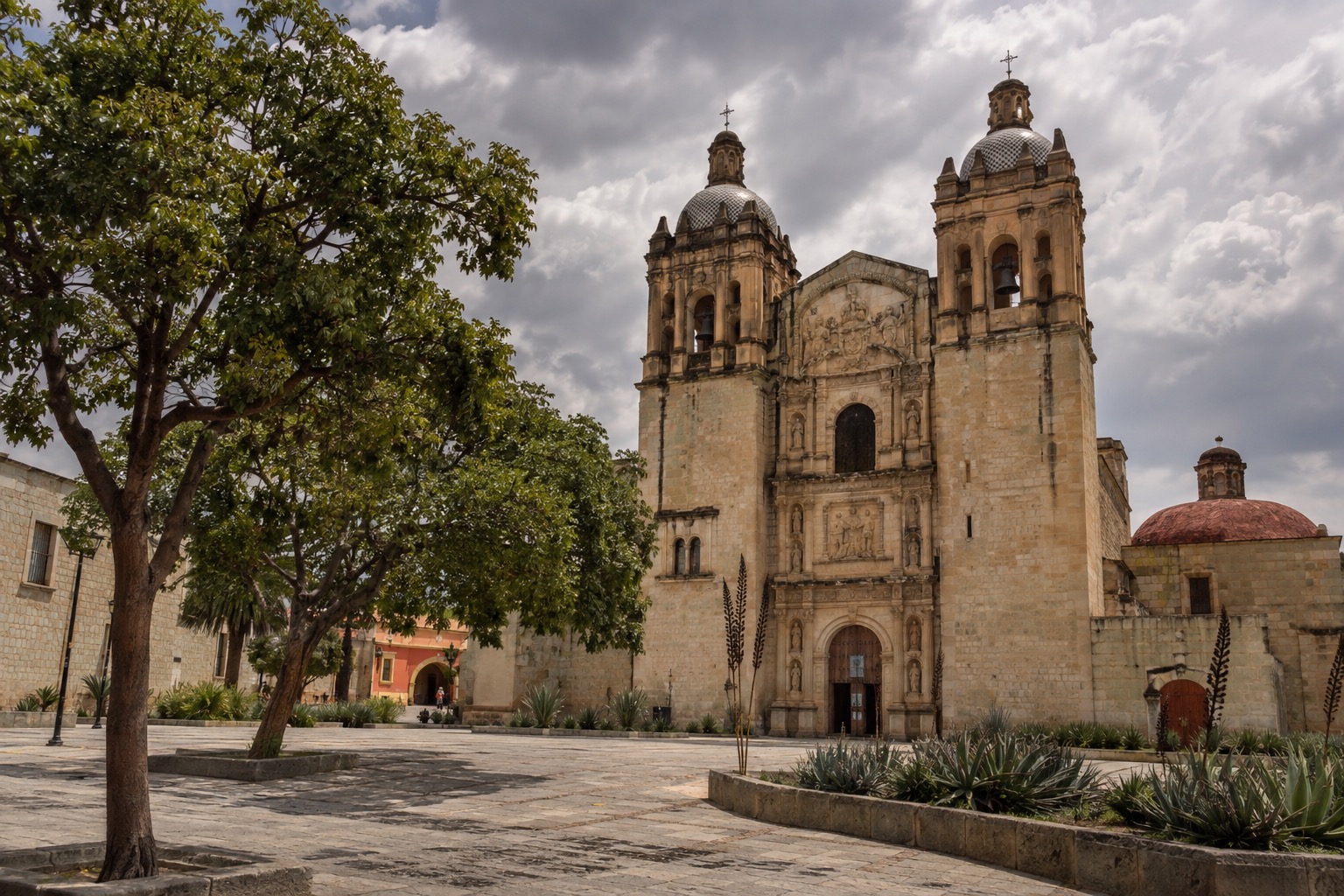
In August the hills around Oaxaca turn a deep, wet green, and the afternoon sky builds into towering gray clouds above the cathedral towers before the first fat drops hit the stone. Under the arcades, vendors pull their tarps down, waiters set out one more round of hot chocolate, and the whole city waits out the storm with a plate of something in front of it. This is Oaxaca in the heart of its rainy season, for travelers who want lush scenery, unhurried streets and a table at the best kitchens.
What is the weather like in Oaxaca in August?
August in Oaxaca means warm days, cool nights and rain on most afternoons, rarely an all-day washout.
| Month | Average high (°F) | Average low (°F) | Rain (in) | Rain days | Daylight on the 15th |
|---|---|---|---|---|---|
| July | 86.2 | 60.6 | 4.67 | 20.4 | 13 hours 5 minutes |
| August | 86.0 | 60.6 | 5.19 | 20.5 | 12 hours 44 minutes |
| September | 84.4 | 61.0 | 6.44 | 21.4 | 12 hours 16 minutes |
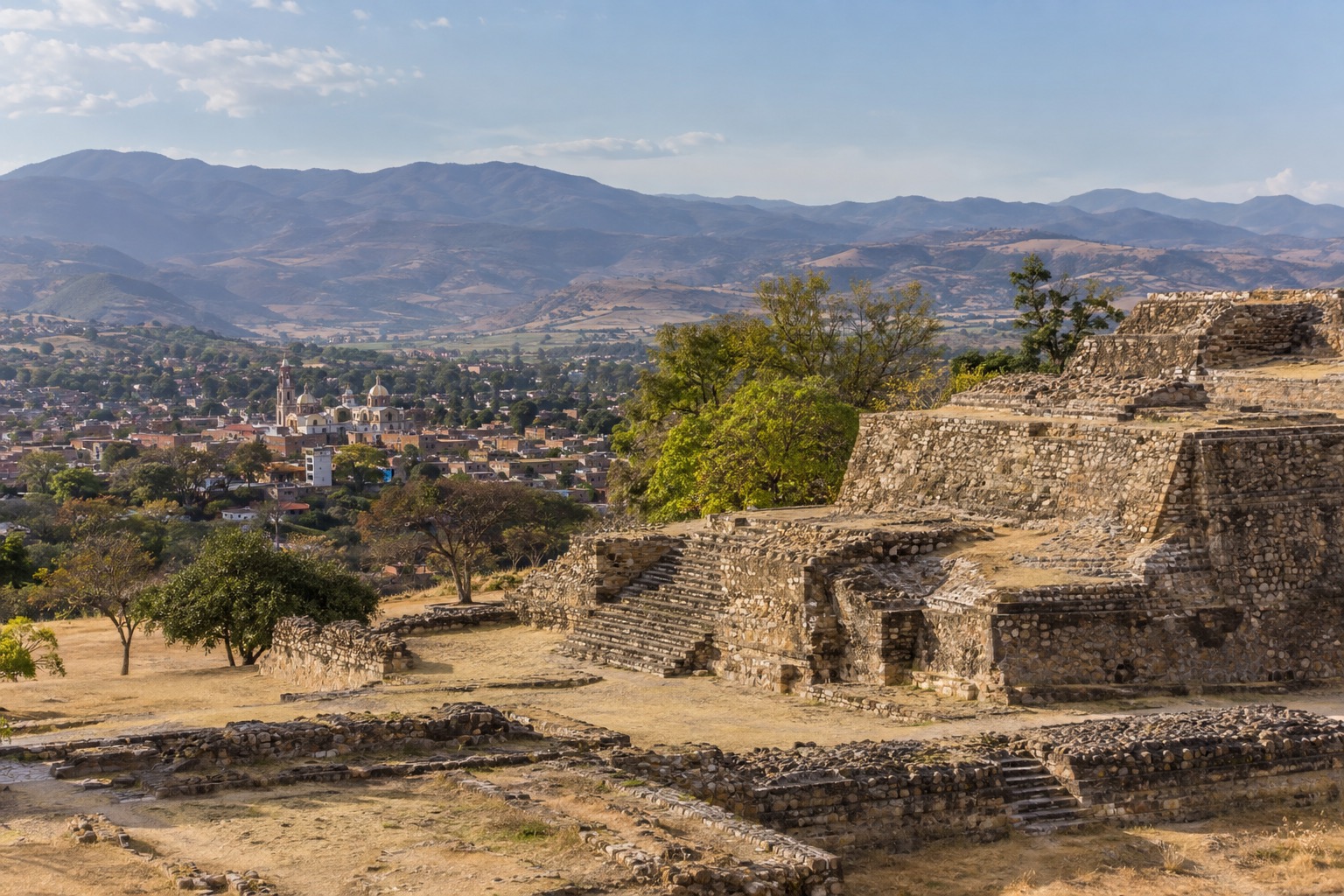
Mornings are the prize. The air is fresh, the light is clear and the valley looks scrubbed, so this is when you plan the outdoors: a village market, a walk to a viewpoint, an hour among the ruins. By early afternoon the clouds stack up, and the rain usually comes as a heavy shower that passes within an hour or two.
Evenings turn cool enough that a light sweater feels right at a sidewalk table. Days stay long, with daylight lingering past seven, so there is plenty of time for a late lunch, a storm and a stroll afterward. Dirt roads to small villages can turn muddy, which is one more reason to go early.
What to do in Oaxaca in August
The big event of the Oaxaca summer, the Guelaguetza, belongs to July, and by August its dancers’ feathers and pineapple-shaped skirts have gone back into storage. What remains is the city on an ordinary, rewarding rhythm, with the rainy season setting the pace.
Eating through the rainy season
This is the season for a bowl of something hot. Caldo de piedra, the stew of broth and fish cooked with heated stones, and thick tlayudas charred over coals both taste better with rain drumming on a roof. Squash blossoms, fresh corn and the first green chiles fill the stalls, and quesillo, the stringy local cheese, turns up in everything.
The seven moles are the city’s calling card, and a long lunch of mole negro or coloradito is a fine way to spend a stormy hour. Walk through the Mercado 20 de Noviembre for the smoky grilled meat alley, then cross to Mercado de la Merced or Benito Juárez for fruit, chapulines and bread. Go before noon, when the stalls are full and the weather is still kind.
Mezcal, chocolate and cooking classes
Rain makes indoor pleasures easy to love. Tasting rooms in the center pour mezcal by the sip, with orange slices and salt flavored with chile, and the stories behind each agave variety take longer than the glass. Chocolate shops grind cacao and almonds on the spot for the traditional drink, frothed until it is thick and foamy.
Cooking classes often start with a market tour in the morning and end with a meal you made yourself by the time the clouds break. They suit couples, solo travelers and food-minded families, and they turn a wet afternoon into the best part of the trip.
Villages and valley mornings
With the fields green, the valley is prettiest for a day out. Weaving villages east of the city, pottery towns to the south and the Tlacolula market on Sundays all reward an early start by car, taxi or shared colectivo. Plan on being back in town by midafternoon, before roads soften and the heaviest rain arrives.
The market at Tlacolula is loud and generous, with barbacoa, tejate (the pale corn and cacao drink) and baskets stacked head high. Hierve el Agua, with its white mineral cliffs, is a longer outing, and the morning light gives you the clearest views across the valley.
When the sky opens
A storm is a cue to slip into the Santo Domingo cultural center, where the former convent’s cloisters and ornate church interior hold the city’s story. Galleries, print workshops and bookshops around the Macedonio Alcalá pedestrian street are good for another hour. When the rain stops, the streets steam and the church bells ring again, and the evening paseo begins.
Is Oaxaca busy in August?
Oaxaca is moderately busy in August, with Mexican families on school vacation and a smaller number of visitors from the U.S., but the crowds of the big festival periods are absent.
The weekends feel livelier, especially around the Santo Domingo plaza and the market streets. Popular restaurants fill up at lunch on Saturdays and Sundays, while weekday evenings are easy. Rooms are generally simple to find, and the better small hotels still go fast on holiday weekends, so booking ahead is sensible for those dates.
What to pack for Oaxaca in August
Pack for sun in the morning, a downpour after lunch and a cool night, and for shoes that tolerate wet cobblestones.
- For the afternoon downpours, pack either a lightweight rain shell or a small umbrella.
- Shoes with good grip that can get wet, since old streets turn slick
- A sweater or thin layer for evenings on a terrace
- Sunscreen and a hat for the clear mornings
- A small bag to protect your phone and camera during sudden showers
Good to know before you go
The U.S. State Department rates the state of Oaxaca Level 2, Exercise Increased Caution, and places no restrictions on travel to Oaxaca City, Monte Alban, Puerto Escondido or Huatulco.
August falls within the Pacific hurricane season, though Oaxaca’s inland valley feels it mainly as extra cloud and rain rather than wind. Coastal plans toward Puerto Escondido or Huatulco can shift when a storm system passes offshore, so keep your schedule flexible if you plan to head to the beach.
Is August a good time to visit Oaxaca?
Yes, for travelers who like green landscapes, food-centered days and a slower city, and who can accept a daily soaking.
Compared with July, August has the same warmth and rain without the Guelaguetza crowds and prices that come with it. September is a touch cooler and wetter, so August is slightly gentler for outings. What makes the month special is the combination of the verdant valley, the steaming plates of mole and the sound of rain on old stone while a mezcal waits on the table.
Sources
- Servicio Meteorologico Nacional (CONAGUA), normales climatologicas 1991-2020, estacion 20079 (Oaxaca, Oaxaca De Juárez), checked September 29, 2026
- sunrise-sunset.org, sunrise and sunset on the 15th of the month, checked September 8, 2026
- U.S. Department of State, Mexico Travel Advisory, State of Oaxaca (travel.state.gov, date issued May 29, 2026), checked October 3, 2026
To plan your stay
- Things to Do in Oaxaca: Monte Albán, Mezcal, Markets and Day Trips
- Where to Stay in Oaxaca: Historic Center, Jalatlaco, Xochimilco and the Pacific Beaches
- Oaxaca Airport to City: Taxi and Car Rides to the Historic Center, Jalatlaco and Xochimilco
- Know Before You Go to Oaxaca: Fees, Cash, Getting Around and Local Customs