
In September, Tulum smells of wet earth and woodsmoke after an afternoon downpour, and the jungle behind the beach road turns a deep, glossy green. Coconut vendors wait out the rain under tarps, the sea stays as warm as the air, and the ruins are close to empty by late afternoon. This is Tulum in its quiet, lush season, for travelers who would trade a sure blue sky for open beaches and a slower pace.
What is the weather like in Tulum in September?
September in Tulum is hot, humid and rainy, with sunny mornings that often give way to heavy showers or a thunderstorm later in the day.
| Month | Average high (°F) | Average low (°F) | Rain (in) | Rain days | Sea (°F) | Daylight on the 15th |
|---|---|---|---|---|---|---|
| August | 88.3 | 72.3 | 3.59 | 9.0 | 87.1 | 12 hours 51 minutes |
| September | 88.0 | 71.6 | 6.97 | 11.2 | 87.1 | 12 hours 17 minutes |
| October | 86.9 | 69.8 | 8.04 | 10.8 | 85.9 | 11 hours 43 minutes |
Rain is part of the rhythm rather than an all-day event. A typical day starts bright and steamy, clouds stack up by early afternoon, and the sky opens for a while before the evening cools slightly. When night comes, it is still warm enough for an outdoor dinner in a T-shirt, but the air hangs thick and the mosquitoes love the damp.
The Caribbean here feels like bathwater, so swimming is a pleasure at any hour. The days stay long, and the light lasts well into the evening, so you can still take a late walk on the beach once the rain passes. September also sits at the peak of the Atlantic hurricane season, so a tropical system can turn a few days gray and windy.
What to do in Tulum in September
September rewards people who plan around the weather: outdoor sights in the morning, something under a roof or in the water when the clouds build. It is also the month when Mexico celebrates its independence, which gives the town a festive edge.
Independence Day in town
On the night of September 15, Mexicans mark the Grito de Dolores, the cry that began the independence movement. In Tulum, the celebration gathers around the central plaza on the main avenue, with flags in green, white and red hung across the streets, vendors selling snacks and a crowd that comes out after dark.
Restaurants serve the dishes of the season, like pozole, chiles en nogada in some kitchens, tostadas and tamales, and you will hear mariachi or banda music drifting from open doors. September 16 is the national holiday, so expect a slower morning and some local businesses closed. It is a good moment to eat where Mexican families eat rather than on the beach strip, and to join in for an evening.
The ruins on the cliff, early and calm
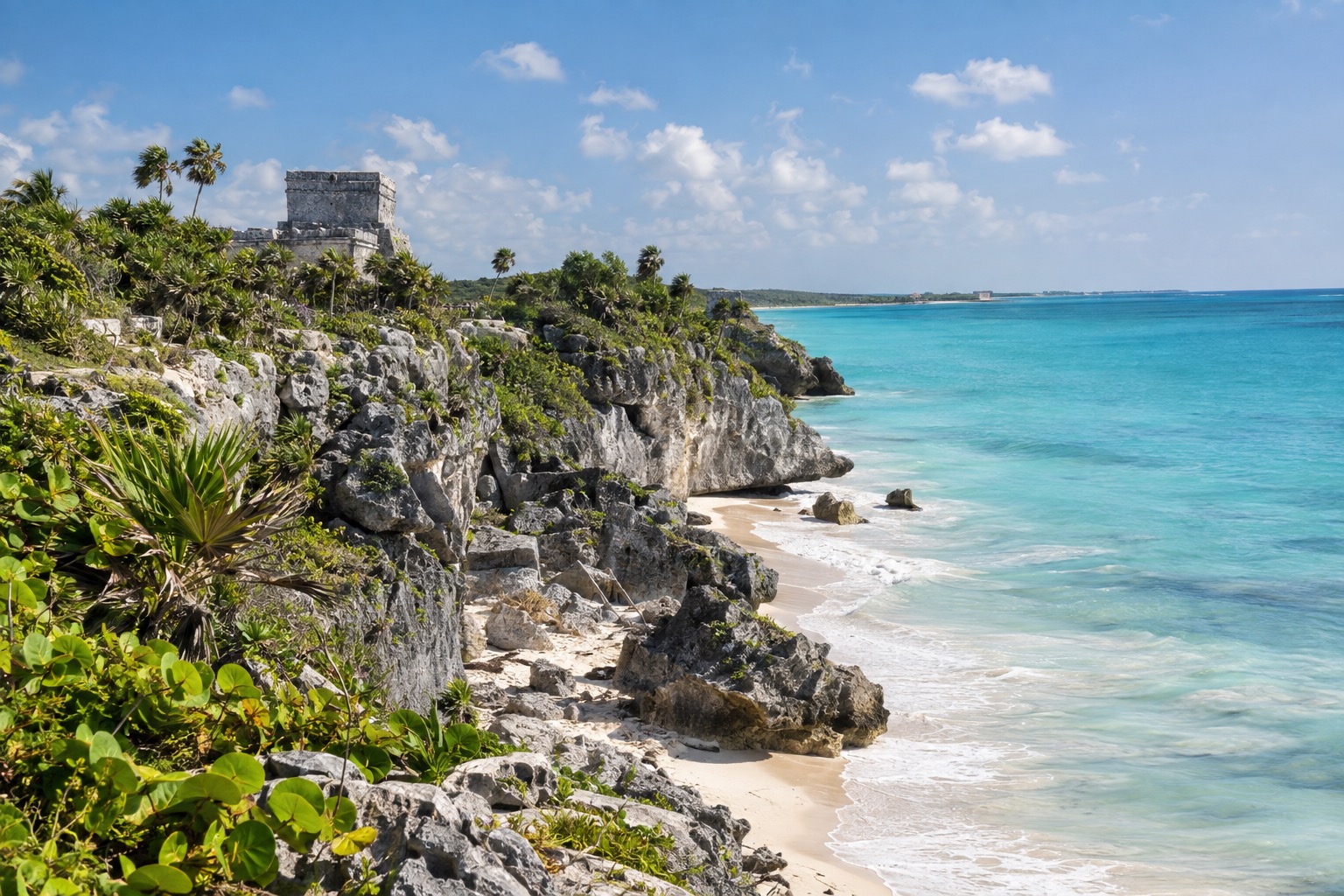
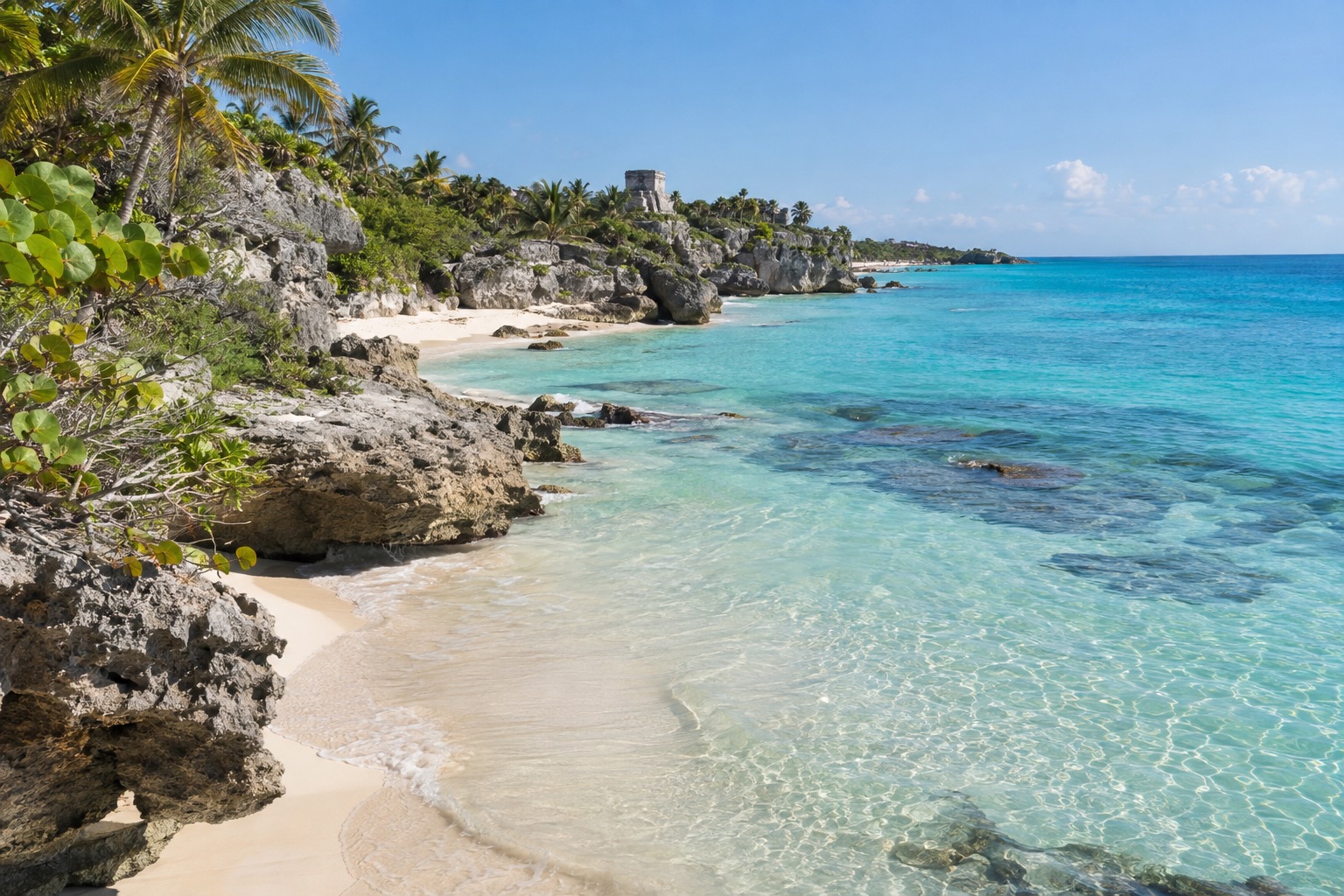
The Maya walled city sits on a cliff directly above the Caribbean, and September mornings suit it well. The heat has not yet peaked, the sea below is a vivid turquoise after clear nights, and there are far fewer tour groups than in winter. Go as the gates open and you can linger at the Temple of the Wind God and look down at the small beach below.
Afternoon storms can roll in fast, so treat the visit as a morning outing and plan lunch in town afterward. The ruins suit nearly everyone, including families, though there is little shade on the grounds.
| Site | Open | Admission |
|---|---|---|
| Tulum archaeological zone | Daily, 8:00 a.m. to 5:00 p.m. (last entry 3:30 p.m.) | $265 pesos foreign visitors, $80 pesos Mexican nationals; free Sundays for Mexican nationals and foreign residents of Mexico |
Cenotes and the jungle in the rainy season
The cenotes around Tulum, including Gran Cenote and the Dos Ojos system, stay cool and clear under tree shade, making them a natural solution for a humid September. The surrounding forest is at its greenest, and the water inside stays calm and inviting while the sky outside does its thing. Each is run independently, so conditions and rules vary from one to the next.
Because heavy rain can make the water slightly murky and turn the paths muddy, mornings are typically the wiser choice. These make an easy half day from town, with a stop for lunch on the way back.
Sian Ka’an on the water
The Sian Ka’an Biosphere Reserve, a UNESCO World Heritage site, stretches along the coast just south of town with lagoons, mangroves, wetlands and a stretch of the Mesoamerican Barrier Reef. Because access by private car is limited and the reserve’s interior roads remain unpaved, most travelers sign up for boat or kayak tours run by local cooperatives, which typically depart from Muyil or Punta Allen.
The wet season fills the wetlands and brings out birds and greenery, though a storm can change plans on the water. Start in the morning, bring patience for the humidity, and treat it as the slow, quiet counterpart to the ruins. On rainy afternoons, the town itself is the plan: a long lunch of fresh ceviche or cochinita pibil, a coffee or a cold agua fresca, and a browse through the shops until the sky clears.
Is Tulum busy in September?
No, September is one of the quietest months in Tulum, with the beach road and restaurants noticeably calmer than in winter or spring.
The summer vacation rush fades once American schools are back in session, and the storm season keeps many visitors away. The exception is around Independence Day, when Mexican families travel and the plaza fills in the evening. Beaches and cenotes mostly have space to spare, and the ruins thin out by afternoon.
For travelers, that means rooms are easier to find and restaurants rarely need a wait. Some smaller places on the beach strip may close for part of the month or keep shorter hours, so the busy-season buzz is toned down.
What to pack for Tulum in September
Pack for heat, humidity and sudden rain, with clothes that dry quickly and shoes that can handle wet paths.
- A light rain jacket or a compact umbrella for the afternoon downpours
- Quick-dry clothing and a spare swimsuit, since nothing dries fast in the humidity
- Sandals with a grip for wet ruins paths and cenote steps
- For morning rays at the ruins, bring reef-safe sunscreen and a hat
- Insect repellent for evenings and jungle outings
- A waterproof pouch for your phone and passport
Good to know before you go
The U.S. State Department rates the state of Quintana Roo Level 2, ‘Exercise increased caution,’ due to terrorism and crime.
September falls inside the Atlantic hurricane season, which runs through November and peaks around the tenth of this month, so keep an eye on forecasts and keep your plans flexible. A Tourist Assistance Module in Tulum can help you with lost documents, legal advice and emergency numbers.
Travelers from other countries visiting Quintana Roo must also pay a state tourist fee called Visitax, which can be paid over the internet. Tulum’s own airport has been open since late 2023 and sits closer than Cancun, which is useful when you are choosing flights.
| Fee | Amount | Who pays |
|---|---|---|
| Visitax (state tourist fee) | About 293 pesos (2.50 UMA), paid online at visitax.gob.mx | Foreign tourists |
| Tulum archaeological zone | $265 pesos | Foreign visitors |
Is September a good time to visit Tulum?
Yes, if you are happy to trade guaranteed sunshine for green jungle, empty beaches and a warm sea, and you can keep your plans flexible around the weather.
Compared with August, September is a touch wetter and a little less hot at night, with the sea just as warm. October stays rainy but cools slightly, and the sea eases off a bit, so September is the more summery of the two while sharing much of the same storm risk. What stays with you from this month is the contrast: a bright cliff-top morning among the ruins, a thunderstorm drumming on the roof by afternoon, and a night in the plaza on the fifteenth with flags, music and plates of pozole.
Sources
- Servicio Meteorologico Nacional (CONAGUA), normales climatologicas 1991-2020, estacion 23025 (Tulum, Tulum), checked September 29, 2026
- Open-Meteo Marine API, average 2015-2024, checked September 8, 2026
- sunrise-sunset.org, sunrise and sunset on the 15th of the month, checked September 8, 2026
- NOAA National Hurricane Center, checked September 6, 2026
- INAH, official for the Tulum archaeological zone, inah.gob.mx/zonas/99-zona-arqueologica-de-tulum, checked September 29, 2026
- Wikipedia, "Tulum", en.wikipedia.org, checked September 29, 2026 (source secondaire)
- INAH, inah.gob.mx/zonas-arqueologicas, checked September 29, 2026
- UNESCO World Heritage Centre, record 410, whc.unesco.org/en/list/410, checked September 29, 2026
- reserve de sourcage (CONANP dediee non atteinte, 404), aucun chiffre affirme
- common knowledge; no single official source available
- Wikipedia, "Tulum International Airport", en.wikipedia.org, checked September 29, 2026 (secondary source; the group’s official site not reachable that day)
- Wikipedia, "Tulum Municipality", en.wikipedia.org, checked September 29, 2026 (source secondaire)
- U.S. Department of State, Bureau of Consular Affairs, Mexico Travel Advisory, travel.state.gov, checked September 29, 2026
- Gobierno del Estado de Quintana Roo, portal visitax.gob.mx, checked September 29, 2026 (amount unconfirmed)
- Ley de Derechos del Estado de Quintana Roo, art. 51-Octies, congresoqroo.gob.mx, checked September 29, 2026