
On a Sunday morning in Merida, the Paseo de Montejo fills with cyclists and families strolling under the trees, while in the Plaza Grande the shaded confidenciales benches hold couples and old friends in no hurry. The city is a colonial heart of pastel facades and inner courtyards, with Maya history close by and a kitchen all its own. It suits travelers who like to walk, eat well and use the city as a base for ruins and cenotes.
What are the best things to do in Merida?
The best things to do in Merida are to walk the old center, eat Yucatecan food, and head out to the Maya sites and villages around it.
- Stroll the Plaza Grande and step into the Cathedral of San Ildefonso, the oldest cathedral on the continent’s mainland.
- Spend a morning at the Gran Museo del Mundo Maya to understand the ruins you will see later.
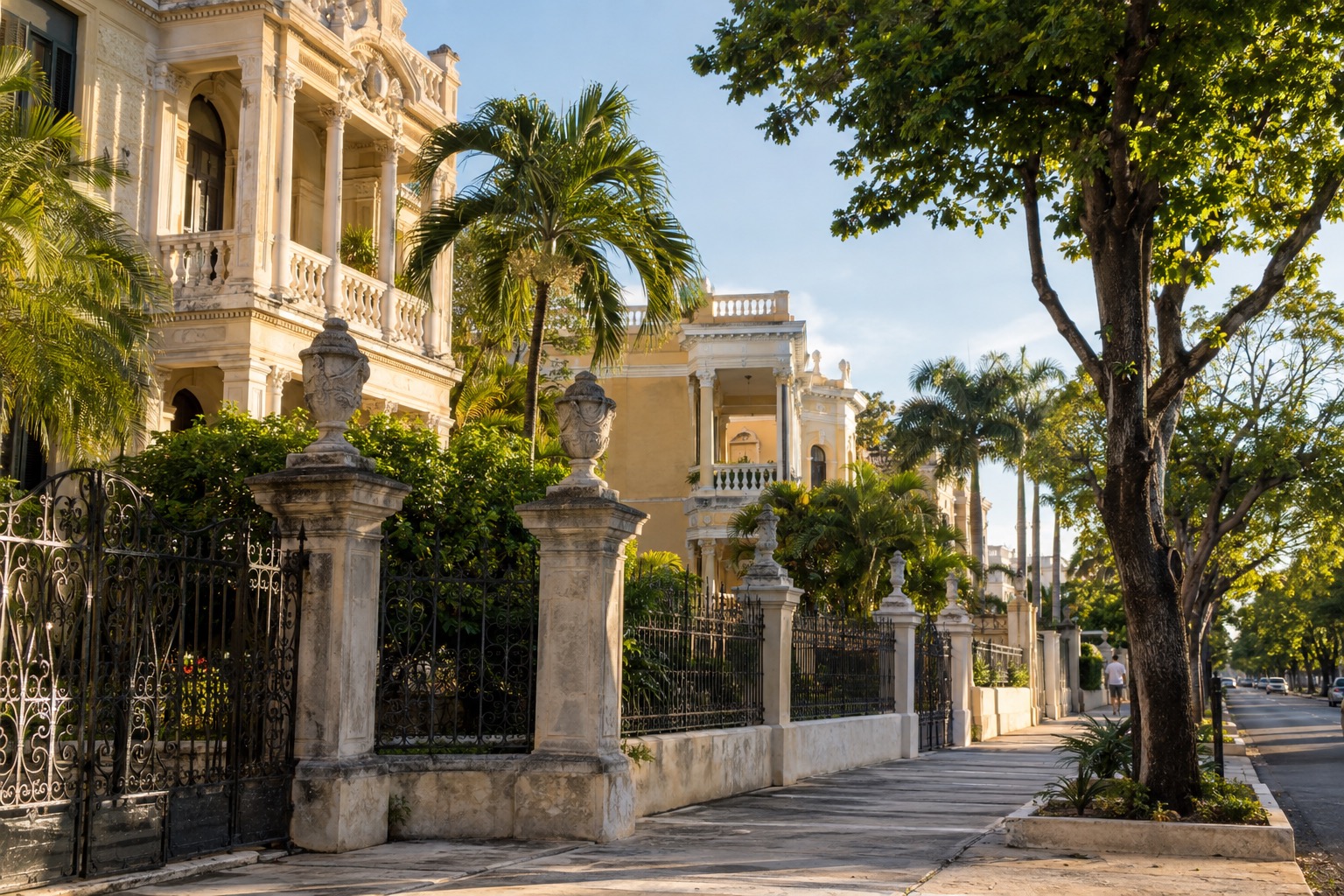
- Walk or bike the Paseo de Montejo, especially on a Sunday morning when cars give way.
- Eat cochinita pibil, sopa de lima and panuchos at the Santa Ana market and small family places.
- Take a day trip to Maya ruins, a cenote or a colonial town.
- Spend an evening in a neighborhood park, where music and street food take over.
- Browse hammocks, guayabera shirts and Panama-style hats in the market streets.
Sights and landmarks in Merida
The Plaza Grande and the Cathedral
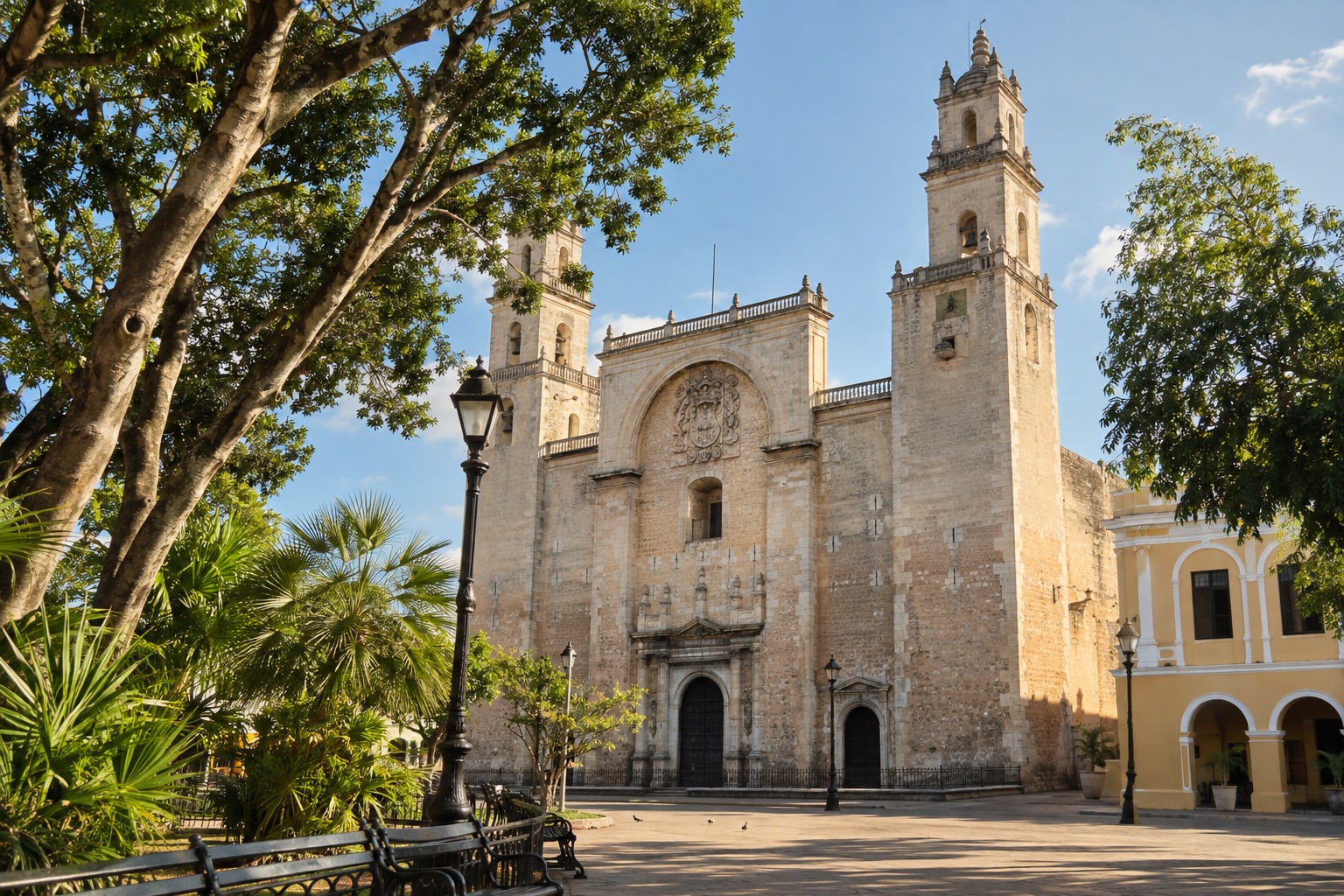
Everything in the historic center orbits the Plaza Grande, a square of laurel trees, white stone benches and vendors selling balloons and ice cream. Most places to stay in the Centro Histórico are less than five minutes away on foot, so you can drift in and out of it at any hour. The square was once the heart of the Maya city of T’ho, and the Spanish built their power around it after 1542.
On one side stands the Cathedral of San Ildefonso, begun in the 16th century and finished in 1598. Inside it is stark and cool, a relief from the heat, with a large crucifix that draws quiet visitors.
Late afternoon, when the facades turn gold and the square starts to fill, is the nicest time to sit and watch. The center can get loud in the evening because of restaurants and cultural events, so a room facing an inner courtyard sleeps better.
Gran Museo del Mundo Maya
This is the museum to visit before heading to any ruin. Its collections of jade, carved stone, ceramics and everyday objects, along with exhibits on the living Maya culture of today, give context to the temples and glyphs you will meet on the road. The building itself is modern and airy, set on the northern edge of the city.
Allow a relaxed morning, since the galleries are cool and a good break from the sun. It is a good fit for curious adults and for older children who like objects with stories. A taxi or Uber from the center is the easy way out there.
| Site | Open |
|---|---|
| Gran Museo del Mundo Maya | Wednesday to Monday, 9:00 a.m. to 5:00 p.m. (closed Tuesdays) |
Paseo de Montejo and its mansions
Merida’s grand avenue was laid out in the spirit of the Champs-Élysées, and it is lined with the mansions of families who grew rich in the henequen boom. Among them, the Twin Houses, Las Casas Gemelas, date to 1911. Sculptures stand along the way, and the broad sidewalks make it a calm, residential-feeling walk.
The Plaza Grande is a 20 to 25 minute walk from the avenue, or a short taxi ride. Evenings here are quiet, with a handful of restaurants and cafés rather than bars. Many boutique hotels occupy former family houses, which suits couples and travelers wanting a more refined, peaceful stay.
Neighborhood parks and churches
Santa Ana and Santiago each have a shaded park and a church, and both are worth a wander on foot from the center. Santa Ana has cafés and a market and feels lively and relaxed. Santiago is more residential and picks up late in the afternoon, a good time to watch local life unfold around the church steps, with ice cream from a corner stand.
Outdoor things to do in Merida
Sunday on the Paseo de Montejo
On Sunday mornings the avenue closes to cars and becomes a long, open-air promenade for cyclists, runners, skaters and strollers. Families set out with strollers and dogs, and vendors appear with fruit cups and fresh juice. The tree cover gives some relief from the sun, especially early.
It is an easy outing for nearly everyone, and a nice way to see the mansions at a slow pace. Go in the first hours of the morning before the heat builds. A bike path also runs along the avenue on other days, so a ride is possible outside Sundays too.
Biking and walking the neighborhoods
Merida is flat and compact, so the best way to know it is to link its neighborhoods on foot or by bike. From the Santa Ana park, the historic center is a walk of 10 to 15 minutes, and Santiago sits about the same distance away. Along the way you pass colorful facades, shuttered windows and glimpses of tiled courtyards through open doors.
Early morning and the hours before sunset are the pleasant times, when the heat softens and the streets come alive. The routes suit couples, solo travelers and anyone who likes to wander without a plan. Stop at a park bench, a juice stand or the Santa Ana market when you need a rest.
Markets and shaded squares
The market streets near the center are a jumble of hammocks, embroidered blouses, guayabera shirts, hats and spices, with the smell of fruit and grilled meat in the air. Santa Ana’s market is a friendlier, smaller place to taste regional cooking at modest cost. Shaded parks across the city give you somewhere to sit when the sun is high, so go to the markets in the morning.
Day trips from Merida
The Yucatan Peninsula is the historical heartland of the Maya civilization, so ruins, cenotes and colonial towns sit within easy reach of the city.
Maya ruins: Uxmal and Chichén Itzá
The two great Maya sites near Merida are Uxmal, with its Puuc-style stonework and the tall Pyramid of the Magician, and Chichén Itzá, with the stepped pyramid of Kukulcán and its ball court. Both are reached by road from the city, usually with a rental car, a tour or a shuttle, and both fill a good part of a day.
Go early, since the stone gets hot by midday and the tour buses arrive later. Uxmal is quieter and gives you more space to wander, while Chichén Itzá is the famous one. Bring a hat, water and sunscreen. Stopping at a cenote on the way back is a classic way to cool off.
Cenotes
The cenotes, natural sinkholes of clear water, are a signature of the peninsula. Some sit in caves with light falling through a hole in the ceiling, and others are open pools ringed by roots and vines. Several lie in villages within a short drive of the city.
They are best in the middle of the day when light enters the caverns and the water is a welcome change from the heat. Rules vary from one cenote to the next, so follow the posted instructions at each site.
Colonial towns and haciendas
Smaller outings take you to Izamal, the yellow town with its great convent, and to old henequen haciendas turned into hotels and restaurants. These suit travelers who prefer a slow lunch and a walk to a long day on ruins. Late October is outside the busiest part of the hurricane peak but still inside the Atlantic season, so keep an eye on the forecast when planning a longer trip.
What to eat in Merida
Eating in Merida means Yucatecan cooking, a cuisine of slow-roasted pork, sour orange, achiote and fiery habanero salsa. Cochinita pibil, pork marinated in achiote and bitter orange and cooked until it falls apart, is the dish to start with, piled on tortillas with pickled red onion. Sopa de lima is a bright chicken broth with lime and crisp tortilla strips. Panuchos and salbutes are fried tortillas topped with turkey, avocado and onion, and poc chuc is grilled pork with a citrus tang.
For a first taste, the Santa Ana market is a good place for regional cooking at small-eatery prices. Order a fresh agua de chaya or horchata, and look for marquesitas, crisp rolled crepes filled with cheese and sweet spreads, from street carts in the evening.
Things to do in Merida at night
Evenings in Merida are social and unhurried, centered on the squares and parks rather than on clubs. The Plaza Grande and the streets around it stay animated with restaurants, bars and cultural events, and there is often live music in the open air. The Santa Ana park has a relaxed atmosphere in the early evening, with cafés and diners. Santiago grows busy at the end of the afternoon, then settles into calm.
On the Paseo de Montejo, night life amounts to a few quiet restaurants and cafés, ideal for a long dinner. If you want to sleep early, pick lodging away from the busiest streets of the center.
Things to do in Merida with kids
Children do well in Merida because so much happens outdoors, in parks and on the car-free Sunday avenue. Bikes, scooters and a stroll on the Paseo de Montejo on a Sunday morning are an easy win, and the shaded parks give them room to run. Santiago is a calm, residential area that suits families. The Gran Museo del Mundo Maya adds a cool indoor stop, and the cenotes are a highlight for older children when posted rules allow.
Keep the heat in mind: plan outdoor time for early morning or late afternoon, bring hats and water, and leave pauses for ice cream in the plaza. Distances in the center are short, so tired legs are rarely far from a taxi.
Good to know before you go
The U.S. State Department rates the state of Yucatan Level 1, ‘Exercise normal precautions’.
The airport lies a short drive southwest of downtown, and in town you can walk, or use taxis, Uber and local buses. Merida is inland, so there is no beach, but the Atlantic hurricane season, which runs through the end of November, can affect travel plans across the peninsula. In 2015 the city was certified an International Safe Community.
Sources
- Wikipedia, "Merida, Yucatan", en.wikipedia.org, checked September 29, 2026 (source secondaire)
- Gran Museo del Mundo Maya (exploitant), granmuseodelmundomaya.com.mx, checked September 29, 2026
- U.S. Department of State, Bureau of Consular Affairs, Mexico Travel Advisory, travel.state.gov, checked September 29, 2026
- Wikipedia, "Manuel Crescencio Rejon International Airport", en.wikipedia.org, checked September 29, 2026 (source secondaire, citant les statistiques de la Agencia Federal de Aviacion Civil)
- EBSCO Research Starters (INEGI data), confirmed by Geo-Mexico, checked September 29, 2026
- NOAA National Hurricane Center, checked September 29, 2026
- Office du tourisme du Yucatán