
Early in the morning along the beach, the only sounds are waves and a few bicycle bells as guests drift toward breakfast under palm roofs. A few minutes inland, the town wakes up to taco stands, delivery scooters and buses pulling out of the station. Tulum is really four different places to sleep, and the choice comes down to whether you want sand at your door, local life, a quiet modern base or more space for less.
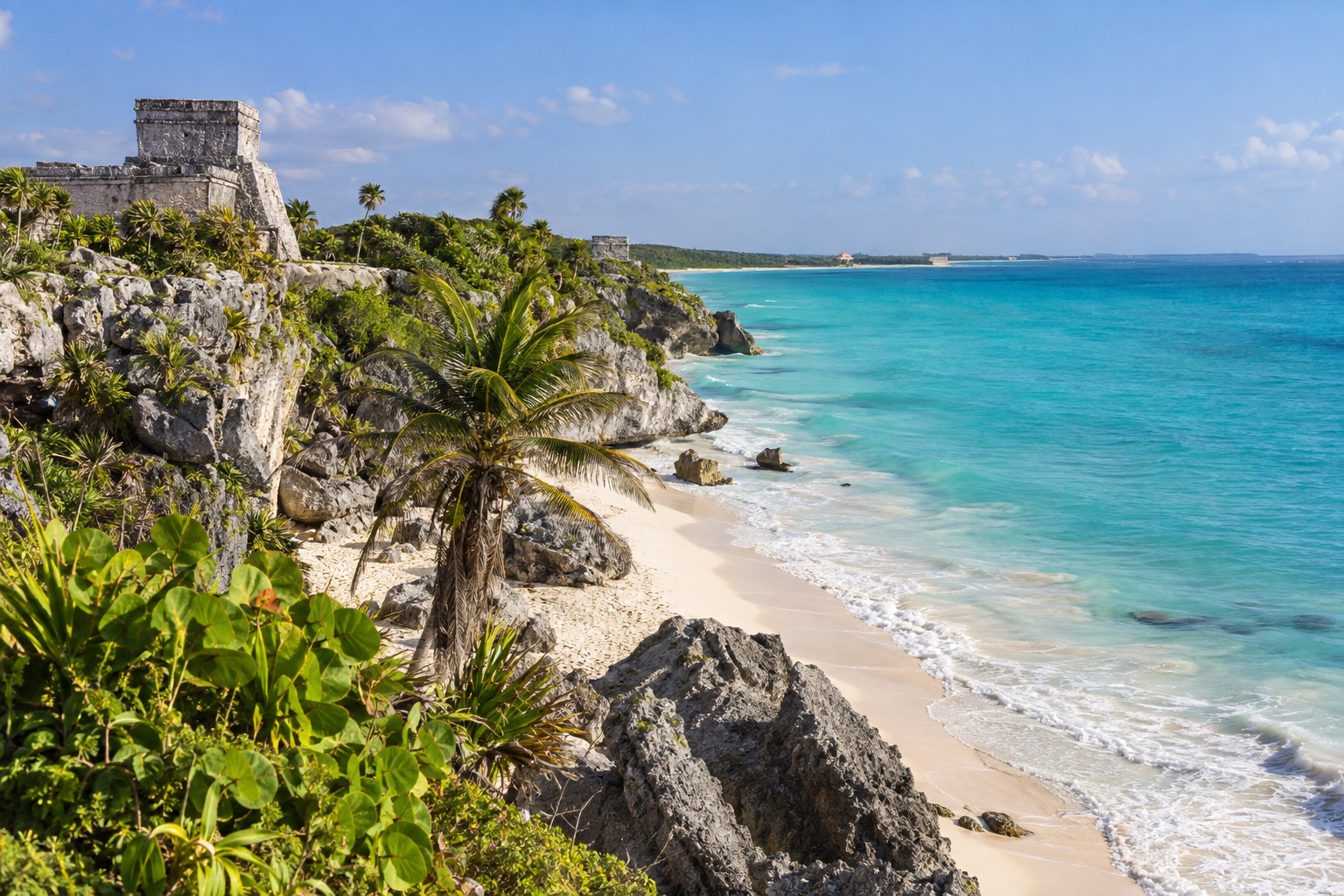
What is the best area to stay in Tulum?
For a first visit focused on the beach, the Zona Hotelera is the classic choice, while Tulum Pueblo suits budget travelers and anyone who wants nightlife and cheap eats, and Aldea Zama works best for families who want modern comforts.
La Veleta is for those who want room to spread out and lower rates, and don’t mind a ride to the water. The areas sit only minutes apart, yet they feel very different: barefoot and pricey on the sand, lively and Mexican in town, tidy and calm in the planned neighborhood, raw and sandy to the south.
The best areas to stay in Tulum
Zona Hotelera (the beach zone)
This is the Tulum of postcards: palm trees leaning over a pale shoreline, hammocks, candlelit dinners and a deliberately unhurried, barefoot-luxury mood. It is relaxed rather than loud, which is why couples and honeymooners favor it. Be ready for high lodging rates, and do not expect large all-inclusive resorts.
Places to sleep are mostly boutique hotels, cabanas and eco-chic stays built with local materials, often tucked back from the sand. Town is about 3 to 6.2 miles away depending on where you stay, a taxi ride of 10 to 20 minutes or a bicycle ride of 20 to 35 minutes. Cancun airport is about 73 miles off, usually 90 to 120 minutes by car or private transfer.
Walking and cycling are the natural ways to move along the shore, and taxis can be flagged or called. A tip for the busy months from December to April: reserve daybeds and dinner tables ahead, and keep cash on you, since some small beach spots set card minimums or have no card machine at all.
Tulum Pueblo
The town center is where Tulum feels most Mexican: a busy main avenue, local shops, a market, street food stalls and evenings that spill onto the sidewalks. It is less polished than the coast, and that is much of its charm. Budget travelers, backpackers and long-stay visitors who want cheap meals and local nightlife do well here.
Expect hostels, guesthouses, small family-run hotels and short-term apartments, many within walking distance of the ADO bus station. The center is compact and walkable around Avenida Tulum, and colectivos (shared vans) run often to the beach and the nearby ruins. Cancun airport is about 71 miles away, roughly 2 hours by car or 2 to 2.5 hours on the direct ADO bus.
A tip: the ADO station on Avenida Tulum has direct air-conditioned buses to Cancun airport, Playa del Carmen and nearby towns, and tickets are worth booking online in high season.
Aldea Zama
Aldea Zama is a planned neighborhood of modern condominiums, wide paved streets and landscaped shared spaces, set between town and shore but not on the water. It feels orderly and quiet, a different mood from both the beach and downtown. Families, digital nomads and longer stays tend to like the comfort and calm.
Most lodging is newer apartments and condos with shared pools, plus a handful of small boutique hotels. Town is about a 5-minute drive, and the beach 10 to 15 minutes by car or taxi, too far to walk for most people. Cancun airport takes 90 to 120 minutes by car or private transfer.
The development is spread out with few public transport stops, so bicycles and scooters make life easier. Taxis can be hard to find late at night, and if you have a car, confirm that your rental comes with parking.
La Veleta
South of town, La Veleta is a neighborhood in the middle of change: local homes beside new condo buildings, and sand or gravel roads that give it a raw feel. It suits budget-minded long-term renters, digital nomads and families who want space and lower rates and accept being farther from the sea.
Lodging is mainly apartments, casitas and small guesthouses, many new, and some offer monthly deals. Town is a 5 to 10 minute drive and the beach 15 to 20 minutes, though taxis run slower after rain. Cancun airport is about 75 miles away, around 2 hours by car or transfer.
People walk to corner stores but use bicycles, scooters or taxis (called by phone or app) for anything farther. Before booking, check that the place has a water tank and a backup generator, as services can be less reliable than in town, and carry a flashlight for unlit roads at night.
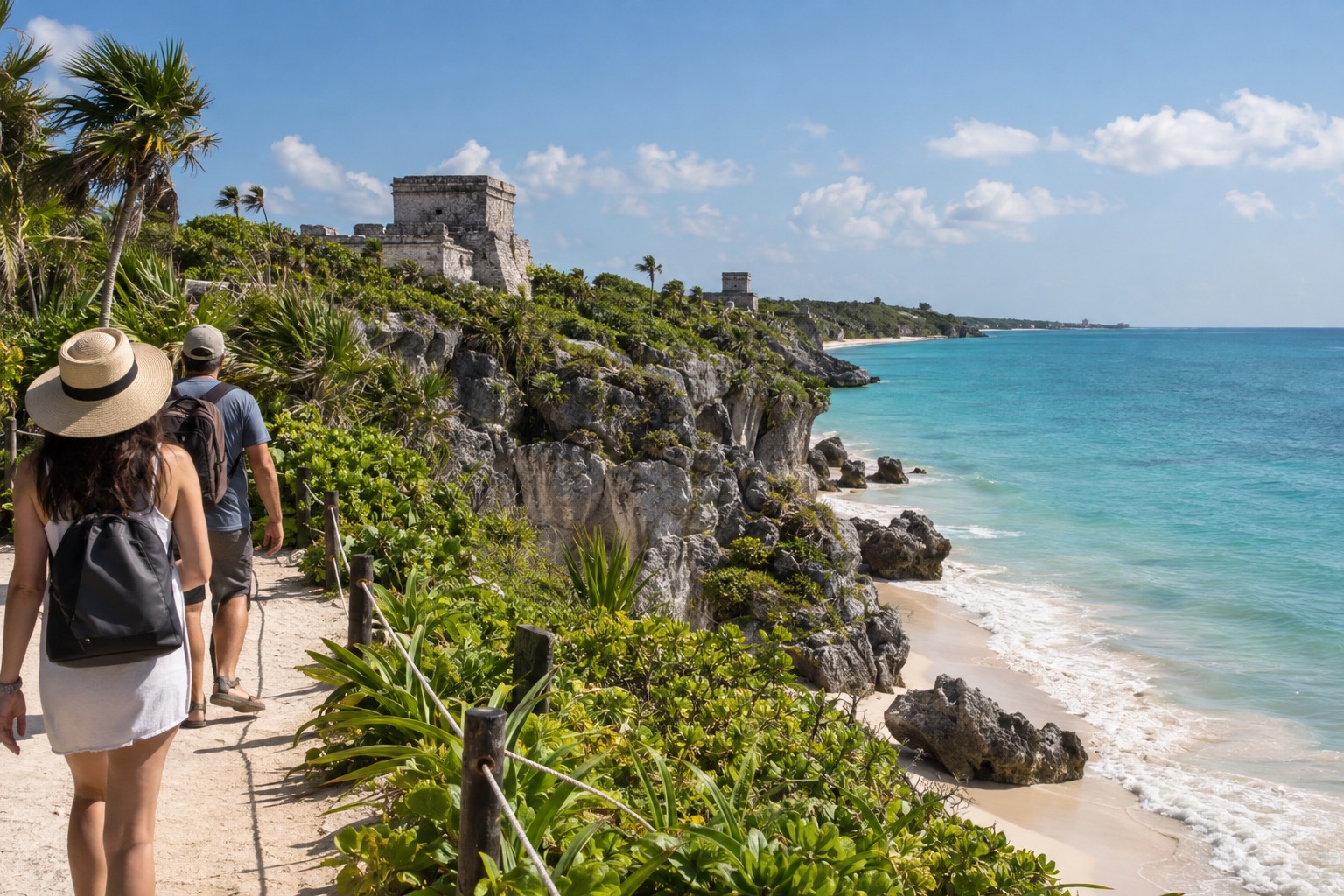
Tulum areas compared
| Area | Best for | Feel | Getting around | Airport by car |
|---|---|---|---|---|
| Zona Hotelera | Couples, honeymooners, beach access | Relaxed, low-rise, barefoot luxury | Walking, cycling, taxis | About 90 to 120 minutes |
| Tulum Pueblo | Budget travelers, backpackers, long stays | Busy, local, less polished | Walking, colectivos, ADO buses | About 2 hours |
| Aldea Zama | Families, digital nomads | Modern, quiet, planned | Bicycle, scooter, taxi | About 90 to 120 minutes |
| La Veleta | Long-term renters, budget families | Raw, transitional, residential | Bicycle, scooter, taxi by phone or app | About 2 hours |
The trade-off is mostly sea against everyday life. Sleeping on the sand gives you quiet mornings and the shoreline at your door, but meals and rooms cost more and you are removed from the town’s markets and taverns. Staying inland puts you close to local food and nightlife, with a short ride to the beach whenever you want it.
How to choose your hotel in Tulum
If an all-inclusive resort is what you picture, know that the beach zone has none of the large ones. Tulum is a place of small hotels, guesthouses and apartments, so you will usually build your own days around restaurants, beach clubs and the ruins instead of one resort compound.
Beachfront stays give you the sea at breakfast, while inland options trade that for space, kitchens and a shorter bill. Because the beach strip is narrow, ask about noise from neighboring beach clubs and which side of the road your room faces. Since sargassum can wash up on the Caribbean coast, ask how the specific stretch of sand has been lately.
Rooms near the shore fill early from December to April, so book ahead for those months. Families and anyone with mobility needs may find Aldea Zama easier, with its paved streets and modern buildings, than the sandy lanes of the beach zone or La Veleta. Finally, confirm how you will get from the airport, since transfer time varies with where you sleep.
Good to know before you go
The U.S. State Department rates the state of Quintana Roo Level 2, ‘Exercise increased caution,’ due to terrorism and crime.
Tulum has its own international airport, about 12 miles southwest of town, which is closer than Cancun’s airport, 80 miles to the north. Bring some cash for small beach spots and local stands. Tourist Assistance Modules in Tulum can help with emergency numbers, legal advice and police reports for lost passports. Stretching from June 1 to November 30, the Atlantic hurricane season tends to be busiest near September 10.
Sources
- Wikipedia, "Tulum International Airport", en.wikipedia.org, checked September 29, 2026 (secondary source; the group’s official site not reachable that day)
- INAH, official for the Tulum archaeological zone, inah.gob.mx/zonas/99-zona-arqueologica-de-tulum (distance), checked September 29, 2026
- U.S. Department of State, Bureau of Consular Affairs, Mexico Travel Advisory, travel.state.gov, checked September 29, 2026 (date issued May 29, 2026) (date issued May 29, 2026)
- NOAA National Hurricane Center, checked September 29, 2026
To plan your stay
- Best Time to Visit Tulum: Weather by Month, Crowds, Sargassum and Festivals
- Things to Do in Tulum: Ruins, Beaches, Cenotes and Sian Ka'an
- Tulum Airport to City: Taxis, Private Transfers, the ADO Bus and the Ride to the Beach
- Know Before You Go to Tulum: Visitax, Pesos and Cash, Getting Around and Sun Safety