
In July, the afternoon sky over Oaxaca turns slate gray, the first fat drops hit the plaza, and everyone ducks under the arcades with a cup of hot chocolate until the sun comes back. Along the Caribbean, the water is bath-warm and the beach clubs hum, while at the tip of Baja the desert bakes against a bright blue sea. Mexico in July is a green, stormy, lively country, with beach towns in full summer mode and highland cities washed clean every afternoon.
What is the weather like in Mexico in July?
July is hot on every coast and mild in the mountains, and almost everywhere except Baja it is the rainy season, with showers that arrive in the afternoon and clear by evening. The Caribbean is hot and humid with passing downpours, the mainland Pacific is the wettest of the beach destinations, the highlands are green and cool, and Los Cabos stays desert-dry.
| Place | Region | Average high (°F) | Average low (°F) | Rain (in) | Rain days | Sea (°F) |
|---|---|---|---|---|---|---|
| Cancun | Caribbean coast | 94.6 | 77.0 | 2.64 | 9.2 | 85.0 |
| Puerto Vallarta | Mainland Pacific | 88.0 | 70.9 | 15.46 | 22.2 | 86.9 |
| Cabo San Lucas | Baja California Sur | 93.9 | 72.3 | 0.31 | 1.0 | 84.5 |
| Mexico City | Central highlands | 76.5 | 55.4 | 6.85 | 21.8 | |
| Oaxaca | Central highlands | 86.2 | 60.6 | 4.67 | 20.4 |
The biggest contrast is rain. Puerto Vallarta gets 15.46 inches in July, falling on more than twenty days, so expect downpours that can be heavy and a jungle backdrop at its greenest. Cabo San Lucas sits at the other extreme, with 0.31 inches and a single rainy day, which makes it the dry option on the coast.
Heat tells a different story in the interior. Mexico City tops out around 76.5°F with chilly nights near 55.4°F, so a light layer is welcome after dark, while Oaxaca is warmer by day, in the mid-80s. Cancun is the steamiest, with highs near 94.6°F, and it is less rainy than the Pacific side, with showers that tend to be brief.
Where to go in Mexico in July
The Caribbean coast
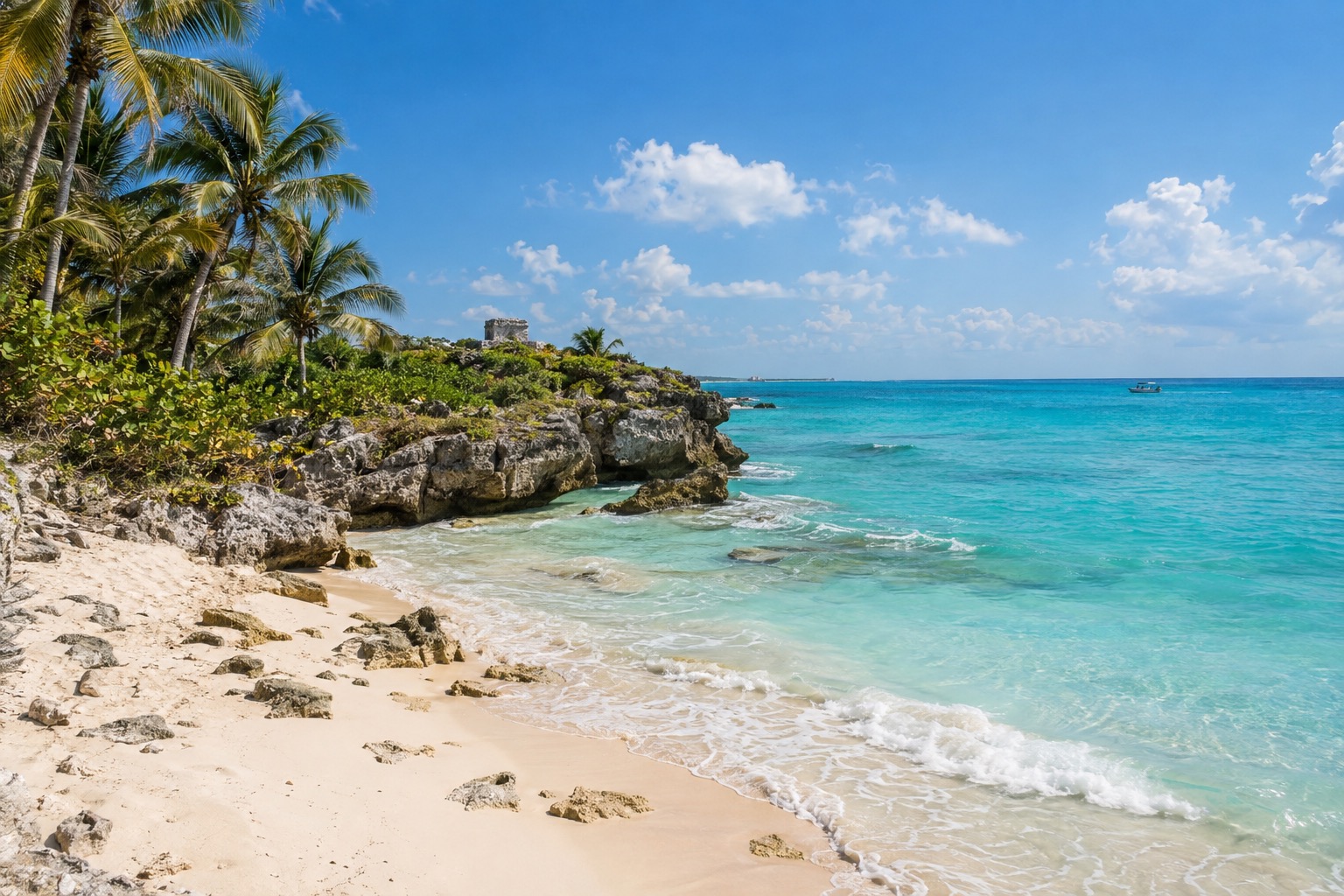
Across Tulum, Playa del Carmen, Cancun, Isla Mujeres and Cozumel, summer is at its peak, with white-sand beaches, cenotes and Maya ruins such as Tulum and Chichen Itza, which lies inland in Yucatan. The days feel hot and muggy, and the ocean is so warm you’ll stay in for a good while. Showers are usually short, and July is drier here than June was.
The thing to watch is sargassum. Reports say the seaweed generally reaches its peak in June or July, washing ashore from Cancun south through Playa del Carmen, Tulum and Mahahual. Some beaches will be clean and others carpeted, so be flexible about which stretch of sand you claim. The Atlantic hurricane season is underway, so a tropical system can scramble plans.
Families, couples and anyone eager for swimming, snorkeling and cenote dips when the heat is high will find this coast just right. Early mornings are the best time for the ruins, before the sun gets fierce.
Los Cabos and Baja California Sur
Los Cabos is where desert and sea come together, and July there stays hot and dry, with hardly any rain. Nightlife, boats, and that famous arch define Cabo San Lucas, whereas San Jose del Cabo offers galleries and a slower rhythm, making it the more tranquil option. The water is warm, yet going for a swim is unwise at numerous Pacific-facing beaches since the surf runs too rough, so look for sheltered coves and heed the beach flags.
Midday is a time for pools and shade, and the best hours are early morning and evening. The Pacific hurricane season is already running, and the heavier rains arrive later, in August. July suits sun-seekers who want dry weather, sportfishing and a lively scene.
Puerto Vallarta and the mainland Pacific
Set along the Bay of Banderas, Puerto Vallarta has Riviera Nayarit beach towns like Sayulita and Punta Mita close at hand, while hills covered in jungle rise at its back. In July the hills glow emerald and the sea is very warm, but this is the wettest of our beach stops. Mornings are often bright, with storms rolling in during the afternoon or evening, sometimes heavy.
It suits travelers who do not mind rain, enjoy lush scenery and like quieter streets along the Malecón. Plan beach time for the morning and keep the afternoon for restaurants, galleries and the old town. The Pacific hurricane season is on, so watch the forecast. The U.S. State Department notes no travel restrictions for government employees in Puerto Vallarta, including Riviera Nayarit, though Jalisco as a state is rated Level 3.
The central highlands
In the highlands, Oaxaca, Mexico City, San Miguel de Allende and Guadalajara swap sand for colonial streets, museums and markets, and the altitude keeps July nights cool. July is the green season here. Rain arrives most afternoons, usually in a burst, and then the streets steam and the light turns soft and golden.
Plan museums, markets and long lunches around the showers. For Mexico City, picture the Anthropology Museum and cafés in Roma and Condesa, while Oaxaca brings markets, mole and mezcal bars. Mornings are the sunniest part of the day, so do your outdoor wandering early. Guadalajara sits in Jalisco, so check the advisory there before planning.
What to do in Mexico in July
Guelaguetza in Oaxaca
The big cultural event of the month is the Guelaguetza, held on Mondays in July in Oaxaca, with the exact dates shifting from year to year. Dancers from the state’s regions come in embroidered costumes and perform in a hillside amphitheater, tossing out fruit, bread and little gifts to the crowd. The name comes from a Zapotec word for reciprocity.
Around the performances, the city fills with parades, music, markets and plenty of mezcal. Rooms get scarce, so plan ahead if you want to be there. Afternoon showers are a regular guest, so bring a light rain jacket.
Whale shark season
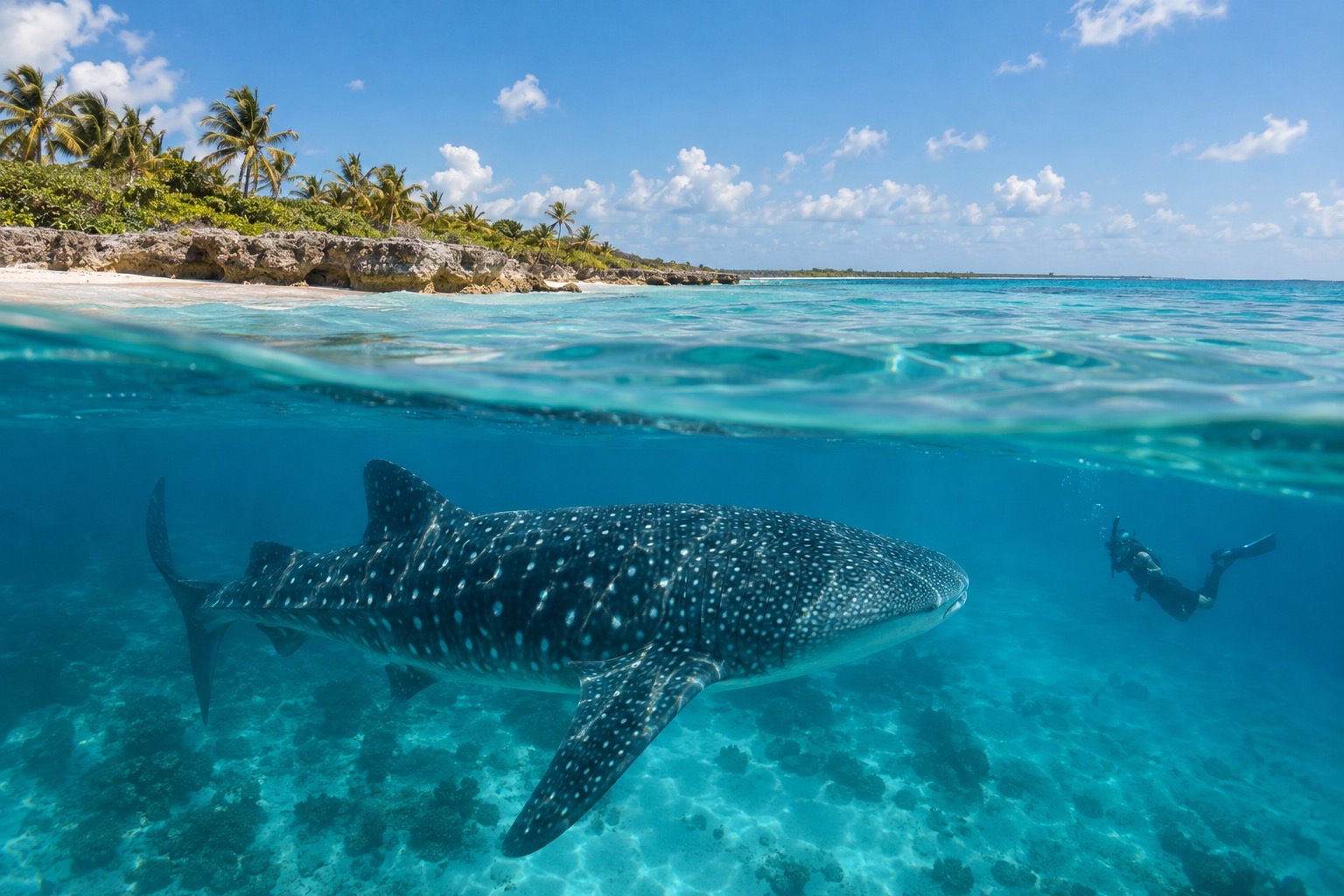
July sits inside whale shark season. In the Bahia de los Angeles Biosphere Reserve in Baja California, the whale shark is described as arriving in June and staying until December. Along the Caribbean coast, guided tours leave from Cancun, Isla Mujeres and Holbox, and swimmers, accompanied by a guide, enter the water next to the shark and never touch it.
It is one of the most memorable things you can do on a Mexican summer vacation, a slow, silent giant gliding past in warm water. Choose a morning outing, when the sea is usually calmer, and expect a day on the boat.
Beach days, cenotes and highland museums
Beyond the headline events, July rewards a mix. On the Caribbean, mornings are for cenotes and ruins, and afternoons for the water. In the highlands, it is a month for museums, street food such as tlayudas and tacos al pastor, and cafés while the rain drums on the roof. Independence celebrations come later in the year, so July belongs to summer vacation and regional fiestas, many of them small and local, with patron saint days in towns across the country.
Is Mexico busy in July?
Yes, the beach resorts are busy in July, because it is summer vacation for both Americans and Mexican families. Children are out of school, so the coasts fill with domestic travelers, and Cancun, Playa del Carmen and Los Cabos feel lively from morning to night.
Oaxaca gets its own surge for the Guelaguetza, with crowded streets and hotels that fill early. Mexico City is less packed, as the rain keeps some visitors away and the museums are easy to enjoy. Puerto Vallarta is calmer than in winter, since the wet weather thins the crowds, and that can mean easier restaurant tables and more room on the sand.
What to pack for Mexico in July
Packing depends on where you go. For the coasts, think light, quick-drying clothes and strong sun protection, while the highlands call for layers and rain gear, because evenings are cool and showers are daily.
- A compact rain jacket or umbrella for highland and Pacific afternoons
- Breathable, quick-drying clothes for the coast
- A light sweater for cool evenings in Mexico City
- Reef-safe sunscreen, a hat and sunglasses
- Sandals that handle wet streets, plus walking shoes
Good to know before you go
The Atlantic hurricane season, which applies to the Caribbean coast, lasts from June 1 to November 30, while the Eastern Pacific season, which takes in Los Cabos and Puerto Vallarta, lasts from May 15 to November 30. July falls inside both, so keep an eye on forecasts. Sargassum affects the Caribbean beaches in particular, while the Pacific resorts sit outside the Atlantic belt.
The U.S. State Department rates Mexico Level 2, exercise increased caution. Levels differ by state, so check the advisory for each region you plan to visit.
Is July a good time to visit Mexico?
July is a good time for travelers who like warm seas, green landscapes and lively festivals, and the best region depends on your tolerance for rain. Los Cabos is the driest pick, the Caribbean offers warm water with shorter showers, and Oaxaca is the choice for culture.
Compared with June, the Caribbean is much drier in July, with far less rain and fewer wet days. August brings hotter air and rain returning to Los Cabos, and the highlands stay wet in both months. Mexico City is a touch cooler than in June. What makes July special is the mix of dancing in Oaxaca, whale sharks gliding through warm water, and a landscape at its greenest, with rain that cools the afternoon and lights up the evening.
Sources
- Servicio Meteorologico Nacional (CONAGUA), normales climatologicas 1991-2020, estacion 23155 (Cancun, Benito Juárez), checked September 29, 2026
- Open-Meteo Marine API, average 2015-2024, checked September 8, 2026
- Servicio Meteorologico Nacional (CONAGUA), normales climatologicas 1991-2020, estacion 09048 (Tacubaya Central (Obs), Miguel Hidalgo), checked September 29, 2026
- sunrise-sunset.org, sunrise and sunset on the 15th of the month, checked September 8, 2026
- Servicio Meteorologico Nacional (CONAGUA), normales climatologicas 1991-2020, estacion 03005 (Cabo San Lucas, Los Cabos), checked September 29, 2026
- Servicio Meteorologico Nacional (CONAGUA), normales climatologicas 1991-2020, estacion 14339 (El Cuale, Puerto Vallarta), checked September 29, 2026
- Servicio Meteorologico Nacional (CONAGUA), normales climatologicas 1991-2020, estacion 20079 (Oaxaca, Oaxaca De Juárez), checked September 29, 2026
- NOAA National Hurricane Center, "Tropical Cyclone Climatology", nhc.noaa.gov, checked September 29, 2026
- University of South Florida, Optical Oceanography Lab, "Sargassum Watch System (SaWS)", optics.marine.usf.edu, checked September 29, 2026
- U.S. Department of State, Mexico Travel Advisory (main, level banner), travel.state.gov, read live via browser (protected by Cloudflare, direct fetching blocked with 403) on 29 September 2026
- U.S. Department of State, Mexico Travel Advisory (reissued May 29, 2026), section « Risks in specific areas », travel.state.gov/en/international-travel/travel-advisories/mexico.html, read via browser (Cloudflare blocks curl) on 29 September 2026
- CONANP (Comision Nacional de Areas Naturales Protegidas), "Inicia la temporada de tiburon ballena en la Reserva de la Biosfera Bahia de los Angeles", gob.mx/conanp, checked September 29, 2026
To plan your stay
- Things to Do in Mexico: Ruins, Beaches, Day of the Dead and Street Food
- Where to Stay in Mexico: Riviera Maya, Los Cabos, Puerto Vallarta, Mexico City and All-Inclusive Areas
- Getting Around Mexico: Buses, the Tren Maya, Taxis and Driving Your Own Car
- Mexico Travel Tips: Dollars, Tourist Tax, Tipping, Tap Water, Driving and Safety by State