
On an August afternoon in the highlands, the sky turns slate gray around four o’clock, thunder rolls over the rooftops, and everyone ducks into a café for hot chocolate and a basket of pan dulce until the rain passes. By evening the plazas glisten and the mountains look freshly painted. August is Mexico’s green month, with warm seas on both coasts, whale sharks offshore and far fewer crowds in the colonial cities.
What is the weather like in Mexico in August?
August is hot and humid on the coasts and mild and rainy in the highlands, with Puerto Vallarta the wettest place listed and Los Cabos the driest of the beach towns. Cancun is sunny with a few showers, Puerto Vallarta gets near-daily downpours, and Mexico City and Oaxaca see an afternoon storm on most days.
| Place | Region | Average high (°F) | Average low (°F) | Rain (in) | Rain days | Sea (°F) |
|---|---|---|---|---|---|---|
| Cancun | Caribbean coast | 95.2 | 77.0 | 4.02 | 11.6 | 84.8 |
| Puerto Vallarta | Mainland Pacific | 88.7 | 70.9 | 16.82 | 24.0 | 88.9 |
| Cabo San Lucas | Baja California Sur | 94.5 | 74.8 | 3.35 | 3.6 | 87.0 |
| Mexico City | Central highlands | 76.3 | 55.8 | 6.91 | 20.8 | |
| Oaxaca | Central highlands | 86.0 | 60.6 | 5.19 | 20.5 |
The biggest contrast is rain. Puerto Vallarta is drenched, with rain on all but a handful of days, usually as heavy tropical downpours that clear to steamy sunshine. Cancun is far drier, and Cabo San Lucas has only a few rainy days, though its afternoons are nearly as hot as Cancun’s.
Altitude changes everything inland. Mexico City remains in the mid-70s, nights are cool, and rain arrives most days, usually in the afternoon. Oaxaca is warmer by day but cools off nicely after dark. The sea is bathwater-warm everywhere on the coasts.
Where to go in Mexico in August
The Caribbean coast
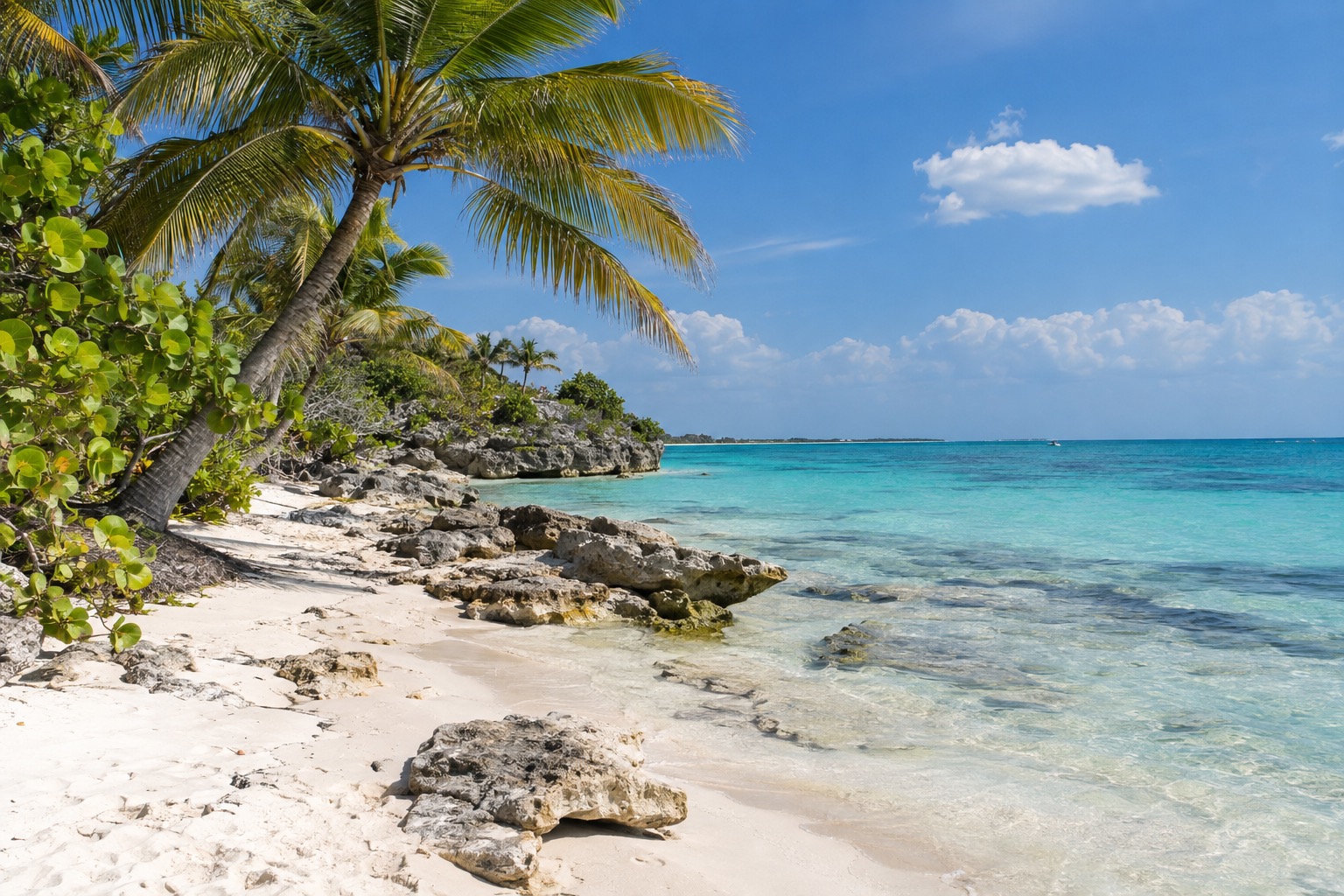
Quintana Roo is hot, bright and mostly sunny in the mornings, with showers rolling in some afternoons. It suits families on school vacation and anyone who wants warm water and cenotes. Cozumel and Isla Mujeres are easy to pair with a mainland base in Cancun, Playa del Carmen or Tulum.
Midday heat is intense, so the Maya ruins, Tulum on the coast and Chichén Itzá inland in Yucatán, reward an early start. Afterward, a cenote is the natural way to cool off.
Seaweed is the thing to watch. Sargassum typically peaks around June and July, and some beaches from Cancun down to Mahahual can still be heaped with it after the peak. Beaches that face it differ from day to day, so be ready to hop to another stretch of sand. This is also the middle of the Atlantic hurricane season.
Los Cabos and Baja California
In August, Los Cabos, where desert meets the sea, has its warmest water, with strong sun and little rain. Cabo San Lucas, the lively end, gives you the arch, the marina, and nights that stretch late. San José del Cabo is the calmer town for slow dinners.
Heat is the main limit, so plan boat trips and walks for the morning and spend afternoons by a pool. Many Pacific-facing beaches here have strong surf, so look to the flags before wading in. The Eastern Pacific hurricane season is under way, so keep an eye on forecasts.
Puerto Vallarta and the mainland Pacific
Puerto Vallarta in August is lush, with jungle hills behind the Bay of Banderas turned deep green and the water at its warmest. It is a good month for the Malecón at dusk, restaurants with open terraces and day trips toward Sayulita and Punta Mita in Riviera Nayarit, between the showers.
Rain is the price of that green. Expect heavy, steamy downpours most days, often late in the day, and plan a flexible schedule with indoor options. The U.S. assigns Jalisco a Level 3 rating. State Department, which notes no restrictions for government employees in Puerto Vallarta and Riviera Nayarit.
The central highlands
The highland cities fare well in August. Museums, markets and long lunches fit the rhythm of afternoon storms, and the cool altitude means you can walk all morning in comfort. Oaxaca’s mole and tlayudas taste better with the rain drumming on the courtyard.
Mornings are usually the clearest, so save plazas and outdoor sights for then. Streets can flood briefly during a downpour, so a flexible afternoon plan helps.
What to do in Mexico in August
Swimming with whale sharks
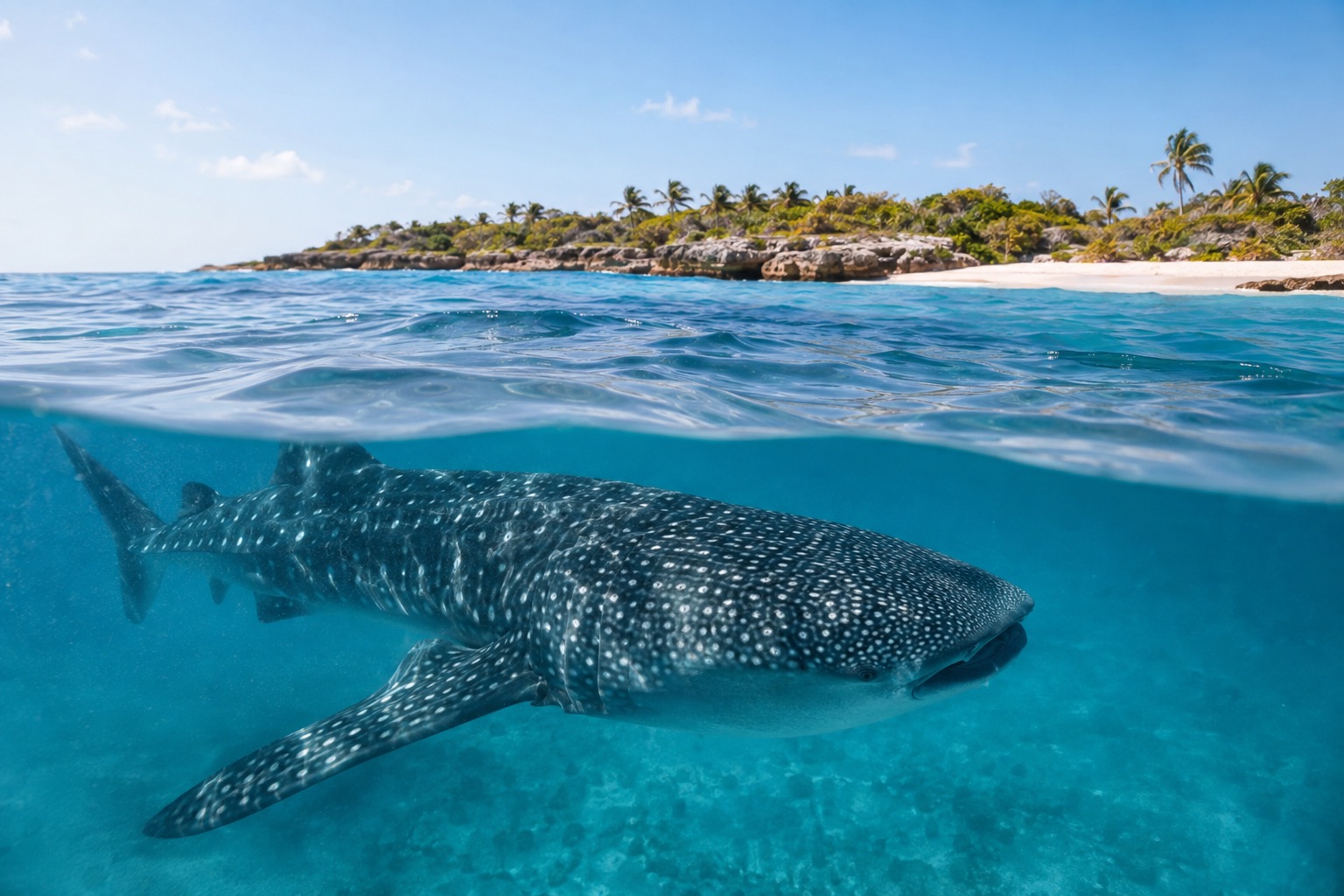
August is whale shark season. From Holbox, Isla Mujeres and Cancun, tours set out along the Caribbean coast, and with a guide, swimmers go into the water beside the shark, never touching it. It is one of the memorable days of a Quintana Roo trip.
At the opposite end of the country, within Baja California’s Bahía de los Ángeles Biosphere Reserve, whale sharks appear in June and remain until December. Boats go out in the calm waters of the Sea of Cortez.
Rainy-season days and local life
August has few national festivals, so the pleasure is everyday life. In the highlands that means markets heaped with seasonal fruit, corn and squash blossoms, fondas serving soups, and museums to wait out the rain. Many towns hold their own patron saint fiestas with fireworks, bands and street food, and these vary by town. On the coasts, mornings belong to the beach, snorkeling and boat trips, while afternoons are for a long lunch of ceviche or grilled fish while a storm passes.
Is Mexico busy in August?
Beach towns are fairly busy, while the colonial cities are calmer. U.S. families travel during summer vacation, and Mexican families also take their school break, so Cancun, Playa del Carmen and Los Cabos see plenty of visitors.
The rainy season thins the crowds in Mexico City, Oaxaca and San Miguel de Allende, where museums and restaurants are easy to enjoy. Puerto Vallarta feels calmer than it does in winter, and finding rooms is easier.
What to pack for Mexico in August
Packing splits by altitude. For the coasts, think light and quick-drying, with a rain layer. For the highlands, add something warmer for cool, wet evenings.
- For afternoon storms, a lightweight rain shell or a small, foldable umbrella
- Quick-drying clothes and a swimsuit for the coasts
- Sandals that handle wet streets, plus closed shoes for the highlands
- For evenings in Mexico City and Oaxaca, pack a sweater or a light jacket
- Reef-safe sunscreen and a hat for midday heat
Good to know before you go
August falls inside both hurricane seasons. The Atlantic season, covering the Caribbean coast, runs from June 1 to November 30, and the Eastern Pacific season, covering Los Cabos and Puerto Vallarta, started on May 15 and also ends November 30. Sargassum can continue to wash up on Caribbean beaches, but Pacific resorts lie beyond the sargassum belt.
The U.S. State Department rates Mexico Level 2 overall, with levels set state by state that range from normal precautions to do not travel. Look up each state on your route before booking.
Is August a good time to visit Mexico?
August is a good month for the highlands and for Los Cabos, and a fair one for the Caribbean if you accept some seaweed and showers. Mexico City, Oaxaca and Cabo San Lucas offer the best mix of manageable weather and fewer crowds, while Puerto Vallarta is for travelers who don’t mind daily rain in exchange for green hills.
Compared with July, the sea warms at Cabo San Lucas, which also sees more rain. September is wetter in Cancun and Cabo, and it is the heart of hurricane season, while Mexico City’s rain eases a little. What makes August distinctive is the combination of lush landscapes, warm seas full of whale sharks and storm-cleared evenings in the plazas, when the whole town comes out to stroll.
Sources
- Servicio Meteorologico Nacional (CONAGUA), normales climatologicas 1991-2020, estacion 23155 (Cancun, Benito Juárez), checked September 29, 2026
- Open-Meteo Marine API, average 2015-2024, checked September 8, 2026
- Servicio Meteorologico Nacional (CONAGUA), normales climatologicas 1991-2020, estacion 09048 (Tacubaya Central (Obs), Miguel Hidalgo), checked September 29, 2026
- sunrise-sunset.org, sunrise and sunset on the 15th of the month, checked September 8, 2026
- Servicio Meteorologico Nacional (CONAGUA), normales climatologicas 1991-2020, estacion 03005 (Cabo San Lucas, Los Cabos), checked September 29, 2026
- Servicio Meteorologico Nacional (CONAGUA), normales climatologicas 1991-2020, estacion 14339 (El Cuale, Puerto Vallarta), checked September 29, 2026
- Servicio Meteorologico Nacional (CONAGUA), normales climatologicas 1991-2020, estacion 20079 (Oaxaca, Oaxaca De Juárez), checked September 29, 2026
- NOAA National Hurricane Center, "Tropical Cyclone Climatology", nhc.noaa.gov, checked September 29, 2026
- University of South Florida, Optical Oceanography Lab, "Sargassum Watch System (SaWS)", optics.marine.usf.edu, checked September 29, 2026
- U.S. Department of State, Mexico Travel Advisory (main, level banner), travel.state.gov, read live via browser (protected by Cloudflare, direct fetching blocked with 403) on 29 September 2026
- U.S. Department of State, Mexico Travel Advisory (reissued May 29, 2026), section « Risks in specific areas », travel.state.gov/en/international-travel/travel-advisories/mexico.html, read via browser (Cloudflare blocks curl) on 29 September 2026
- CONANP (Comision Nacional de Areas Naturales Protegidas), "Inicia la temporada de tiburon ballena en la Reserva de la Biosfera Bahia de los Angeles", gob.mx/conanp, checked September 29, 2026
To plan your stay
- Things to Do in Mexico: Ruins, Beaches, Day of the Dead and Street Food
- Where to Stay in Mexico: Riviera Maya, Los Cabos, Puerto Vallarta, Mexico City and All-Inclusive Areas
- Getting Around Mexico: Buses, the Tren Maya, Taxis and Driving Your Own Car
- Mexico Travel Tips: Dollars, Tourist Tax, Tipping, Tap Water, Driving and Safety by State