
In the first hours of November, the cemeteries of Mexico glow with candles, and the smell of copal smoke and orange marigolds drifts between the graves. Families sit on blankets beside the headstones, sharing pan de muerto and telling stories about the people they are visiting. Day of the Dead falls on November 1 and 2, with preparations in the last days of October, and it plays out in towns and cities all over the country, from Oaxaca to Pátzcuaro to Mexico City.
When is Day of the Dead in Mexico?
Day of the Dead is celebrated on the first and second of November, with the preparations starting in the last days of October. The tradition holds that deceased relatives return briefly to Earth, so families get ready to welcome them with flowers, candles and the dishes their loved ones enjoyed most.
In the days before, markets fill with marigolds, bakeries stack up loaves of pan de muerto, and sugar skulls appear on every stall. By the time the festival arrives, the mood in the streets is busy and warm, more like a family reunion than a solemn occasion.
Weather during the festival
Early autumn is the tail end of the rainy season, so October still brings showers in both Oaxaca and Mexico City, while November turns noticeably drier. Oaxaca stays warm in the afternoons and cool at night, and Mexico City is mild by day and chilly once the sun goes down. A light jacket is enough for most evenings, but the long hours spent outdoors among the graves are easier with a sweater.
| City | Month | Avg high (°F) | Avg low (°F) | Rain (in) | Rain days |
|---|---|---|---|---|---|
| Oaxaca | October | 84.7 | 58.1 | 2.48 | 12.0 |
| Oaxaca | November | 84.2 | 54.1 | 0.36 | 3.5 |
| Mexico City | October | 74.1 | 53.2 | 2.81 | 10.1 |
| Mexico City | November | 73.0 | 49.8 | 0.69 | 3.7 |
What is Day of the Dead?
Day of the Dead is a family remembrance in which the living welcome the spirits of their dead back home for a short visit. In the indigenous communities where the custom runs deepest, families lay flower petals, candles and offerings along the path from the cemetery to the home shrine, and cook the favorite dishes of those who have died. UNESCO added the tradition to its list of the intangible cultural heritage of humanity in 2008.
It is not a Mexican Halloween. The mood is joyful rather than frightening, full of affection and humor, and visitors are welcome as long as they stay respectful in cemeteries.
The ofrenda
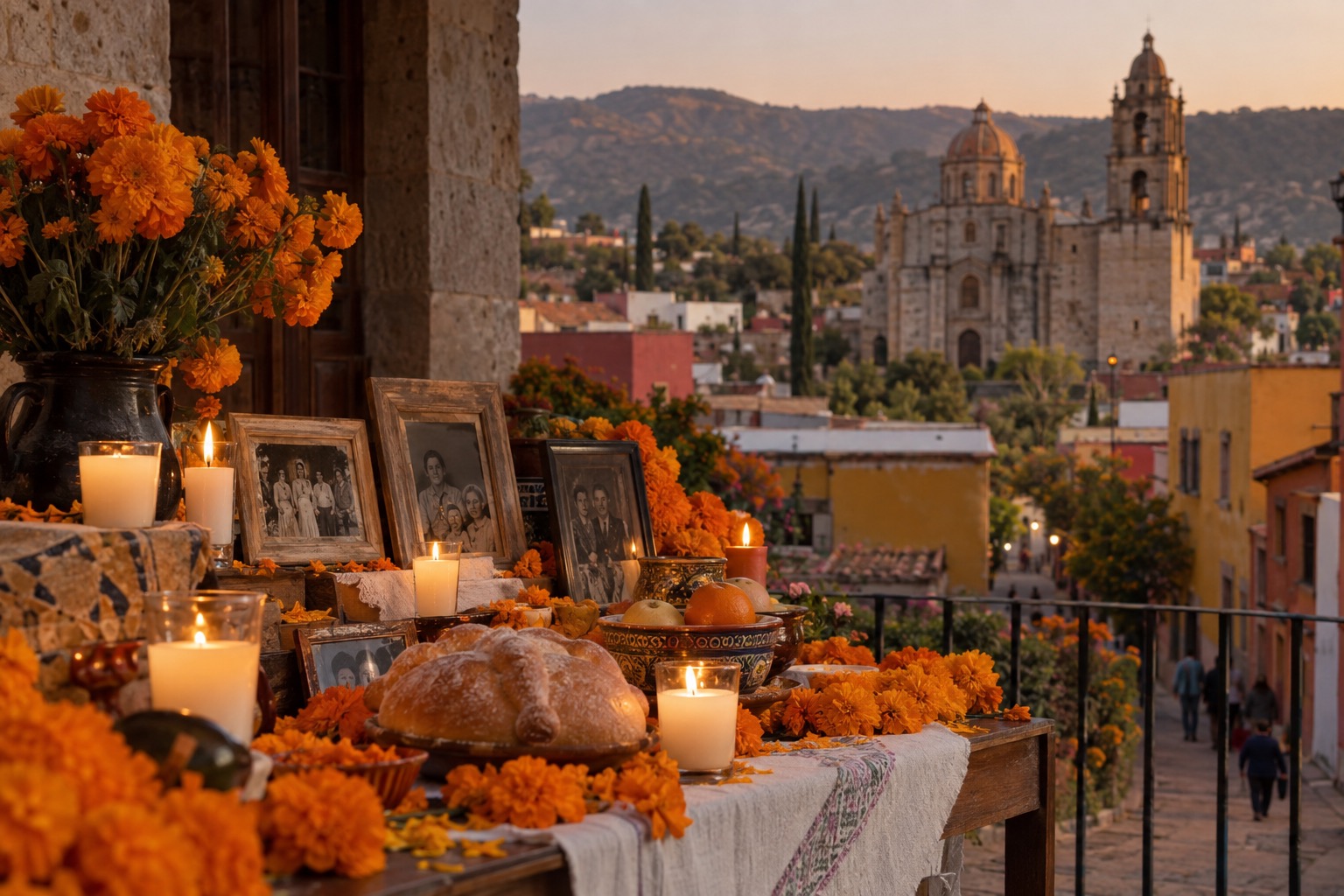
The altar, or ofrenda, is the heart of the celebration. It is built in homes, schools, plazas and shops, and it carries marigolds (cempasúchil), candles, photos of the dead, pan de muerto and sugar skulls. Often there are also a glass of water, a favorite drink and a plate of the person’s preferred meal.
Look for the tiers, the paper cutouts called papel picado and the trail of petals leading toward the door. Each altar is personal, so two of them side by side can tell very different stories.
Cemetery nights
After dark, cemeteries fill with families who clean the graves, cover them with marigolds and light candles. Some bring music, food and a thermos of something warm, then stay until the early hours of the morning.
The best moment is from evening into the night, when the candlelight is at its fullest and the crowds are mostly local families. It suits travelers who are comfortable being quiet observers, and it is worth wearing warm layers and comfortable shoes, since the ground can be uneven and you will be standing for a while.
Where to celebrate Day of the Dead in Mexico
Oaxaca, Pátzcuaro and Mexico City are among the places visitors go to see Day of the Dead, and each one has a different feel.
Oaxaca
Oaxaca is the classic choice. The city’s plazas are decorated with elaborate sand tapestries and altars, comparsas (costumed street parades with brass bands) wind through the historic center, and the neighborhood markets overflow with marigolds, chocolate and mole. Many people paint their faces as catrinas and join the processions.
The nearby villages hold their own vigils in their cemeteries, each with its own customs. Evenings are cool and the days are warm and mostly dry in early November. Oaxaca suits travelers who want a full immersion in food, craft and ritual, and who like to stay out late.
Pátzcuaro and Lake Pátzcuaro
Around Lake Pátzcuaro in Michoacán, the Purépecha communities keep the tradition in a quiet, deeply rooted form, with candlelit vigils in village cemeteries. It is the image many people have in mind when they picture Day of the Dead.
Michoacán is one of the states the U.S. State Department rates Level 4, Do Not Travel, which means it advises Americans not to travel to the state, Pátzcuaro included.
Mexico City
Mexico City mixes big public spectacle with neighborhood tradition. Giant ofrendas fill the Zócalo, marigold displays line the streets, and a parade of skeletons and catrinas moves through the center. In quieter corners such as Coyoacán, you find smaller altars and a more local atmosphere.
The capital works well for travelers who want an easy base, plenty of food and a mix of museums and street life. The city is rated Level 2, Exercise increased caution, and evenings are cool enough to want a jacket.
How to visit Day of the Dead respectfully
Visiting respectfully starts with remembering that you are a guest at a family occasion, not at a show. Cemeteries are places where people are grieving and celebrating at once.
That means keeping your voice low, stepping around graves and altars, and remembering that the person at the candle may be sitting with someone they recently lost. Ask before taking a close photograph of a person or a family, and never place yourself between mourners and a grave for a better shot.
Public parades and plaza altars are made to be seen, so they are a relaxed place to start. Costumes and face paint are part of the street celebrations, but they should be a tribute to the tradition rather than a Halloween outfit. Buying bread, flowers and crafts from local vendors is a good way to take part.
Good to know before you go
Day of the Dead is among the busiest moments of the year in Oaxaca and Mexico City, so expect crowded streets and plan your evenings around late nights. Carry some pesos for markets and street food, keep your usual city habits with phones and bags in crowds, and check the advisory for each state you plan to visit, since levels differ widely across Mexico.
Sources
- UNESCO, "Indigenous festivity dedicated to the dead", ich.unesco.org, checked September 29, 2026
- U.S. Department of State, Mexico Travel Advisory (main, level banner), travel.state.gov, read live via browser (protected by Cloudflare, direct fetching blocked with 403) on 29 September 2026
- U.S. Department of State, Mexico Travel Advisory, section "Risks in specific areas" / State of Guerrero, travel.state.gov, read live via browser on September 29, 2026
- U.S. Department of State, Mexico Travel Advisory, section "Risks in specific areas" / State of Baja California, travel.state.gov, read live via browser on September 29, 2026
- U.S. Department of State, Mexico Travel Advisory, section "Risks in specific areas" / State of Baja California Sur, travel.state.gov, read live via browser on September 29, 2026
- U.S. Department of State, Mexico Travel Advisory, section "Risks in specific areas" / State of Sonora, travel.state.gov, read live via browser on September 29, 2026
- U.S. Department of State, Mexico Travel Advisory, section "Risks in specific areas" / State of Michoacan, travel.state.gov, read live via browser on September 29, 2026
- U.S. Department of State, Mexico Travel Advisory, section "Risks in specific areas" / State of Quintana Roo, travel.state.gov, read live via browser on September 29, 2026
- U.S. Department of State, Mexico Travel Advisory, section "Risks in specific areas" / State of Mexico (Estado de Mexico), travel.state.gov, read live via browser on September 29, 2026
- U.S. Department of State, Mexico Travel Advisory (reissued May 29, 2026), section « Risks in specific areas », travel.state.gov/en/international-travel/travel-advisories/mexico.html, read via browser (Cloudflare blocks curl) on 29 September 2026
- Servicio Meteorologico Nacional (CONAGUA), normales climatologicas 1991-2020, estacion 20079 (Oaxaca, Oaxaca De Juárez), checked September 29, 2026
- Servicio Meteorologico Nacional (CONAGUA), normales climatologicas 1991-2020, estacion 09048 (Tacubaya Central (Obs), Miguel Hidalgo), checked September 29, 2026
To plan your stay
- Best Time to Visit Mexico: Weather by Region, Crowds, Hurricane Season and Festivals
- Where to Stay in Mexico: Riviera Maya, Los Cabos, Puerto Vallarta, Mexico City and All-Inclusive Areas
- Getting Around Mexico: Buses, the Tren Maya, Taxis and Driving Your Own Car
- Mexico Travel Tips: Dollars, Tourist Tax, Tipping, Tap Water, Driving and Safety by State