
In Mexico, a plate of cochinita pibil comes off the pit while the afternoon light climbs the stones of a Maya temple. In Costa Rica, a howler monkey roars from the canopy at dawn and the morning starts with gallo pinto and strong coffee. Both countries are easy to love, and the real question is whether you want ruins, markets and big flavors or rainforest, volcanoes and wildlife.
Which is better, Mexico or Costa Rica?
Mexico suits travelers who want variety, culture and food along with a beach, while Costa Rica suits those who care most about wildlife, forest and outdoor adventure. Mexico is a whole menu of trips, from resort beaches to colonial cities. Costa Rica is a smaller, greener country built around nature.
| Category | Mexico | Costa Rica |
|---|---|---|
| Beaches | White sand on the Caribbean, rougher Pacific shores | Caribbean and Pacific coasts backed by rainforest |
| Vibe | Big, varied, lively, rich in history | Small, green, eco-lodge and adventure minded |
| Things to do | Maya and Aztec sites, cenotes, reefs, museums, food | Wildlife, ziplines, volcanoes, cloud forest |
| Nightlife | Strong in Cabo San Lucas and the big cities | Quieter, centered on beach towns and lodges |
| Weather | Varies by region, with cool nights in the highlands | Rainforest climate with a green season |
| Getting there | Many airports across the country | A smaller country with fewer entry points |
| Best for | Culture, food, beach resorts | Nature, wildlife, adventure |
Beaches and the sea
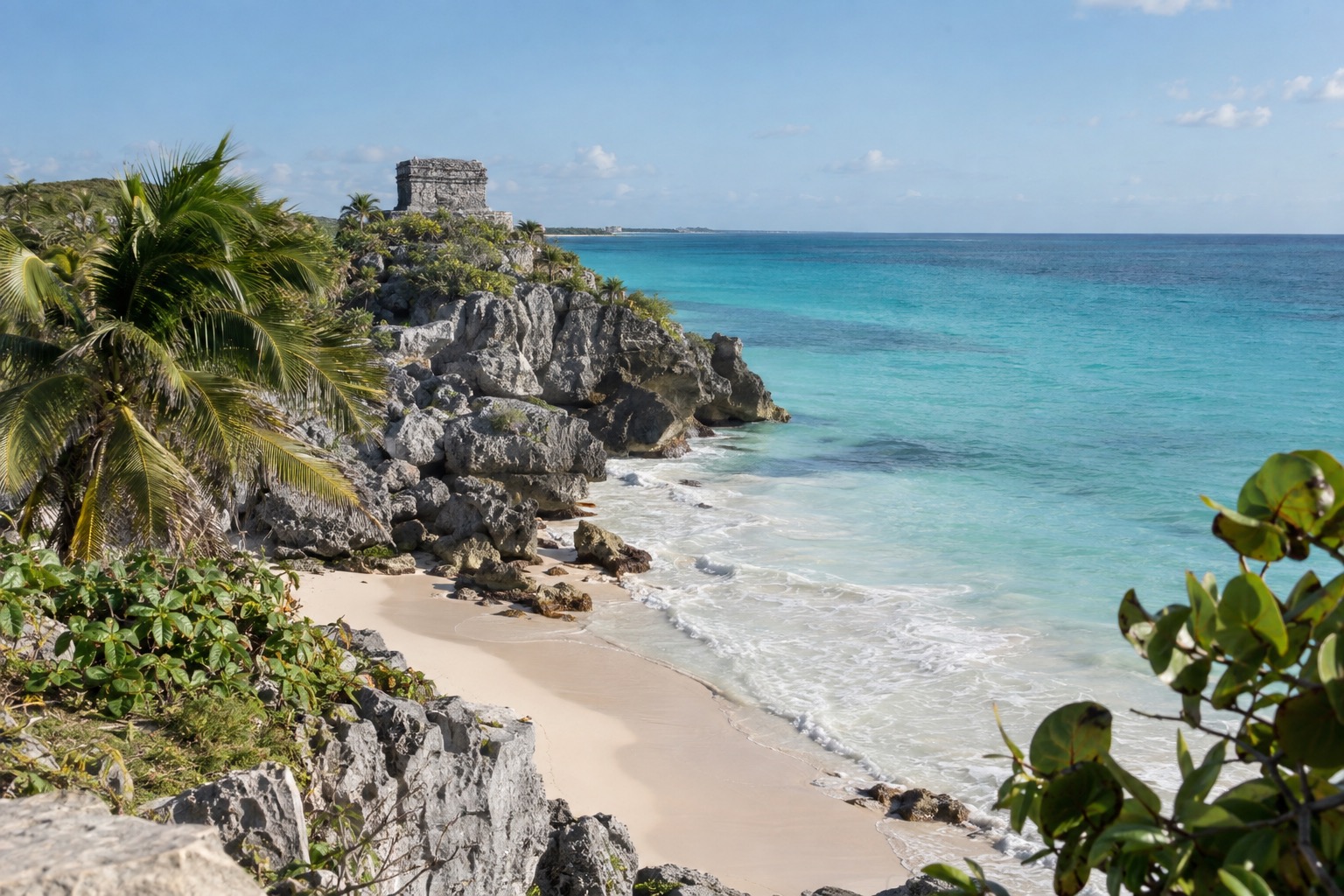
Mexico’s Caribbean shore around Cancun, Cozumel and Tulum is where people picture turquoise water and pale sand. Reefs and cenotes sit a short hop from the beach, which gives the coast more to do than lie in the sun. Sargassum can drift in at times, so the look of the water changes from season to season.
The Pacific side is wilder. Around Los Cabos the desert drops straight into the sea, and many beaches facing the open ocean are too rough for swimming, so you admire them from the sand. Farther south, surf towns and bay beaches such as Sayulita and Punta Mita offer gentler spots, and flags tell you how the waves are behaving.
Costa Rica puts beaches on both coasts, with forest running right down to the sand. Here you swim and surf with monkeys and birds in the trees behind you, though the sea can be strong in places and flags matter.
For a classic, easy beach vacation, Mexico’s Caribbean coast wins. For beaches framed by jungle and wildlife, Costa Rica has the edge.
Things to do
Mexico offers ancient history on a scale Costa Rica cannot match. Maya sites such as Tulum and Chichén Itzá, Aztec heritage in the highlands, and colonial centers in Mexico City, Oaxaca, Guadalajara and San Miguel de Allende fill days with museums, markets and street food. Add cenote swims, reef snorkeling and Cabo San Lucas nightlife and the choices multiply.
Costa Rica is about being outdoors. Rainforest hikes, volcano views, cloud forest walks, ziplines and eco-lodges are the heart of a trip, and wildlife spotting is the main event. There are no large ancient ruins to visit, so the days revolve around nature rather than monuments.
Food leans toward Mexico, with regional cooking that could justify a trip by itself. Costa Rican meals are simpler and homey, built around rice, beans and fresh fruit.
Weather and the best time to go
Mexico is too large for one weather story. The Caribbean and Pacific coasts are hot and humid, Los Cabos is desert, and the central highlands keep nights cool because of their altitude. For the Caribbean and the Gulf, the Atlantic hurricane season sets the timing, but the Pacific coast has a season of its own that gets going in mid-May.
Costa Rica is a rainforest country, so greenery comes with rain, and the wetter months bring showers that shape the day. Early mornings tend to be the clearest time for wildlife and hikes. Either way, packing a light rain layer is sensible.
Getting there and getting around
Mexico has airports serving its resort coasts, highland cities and Pacific towns, so you can often fly straight to the region you want. Once there, you move by airport transfer, local transport or short domestic flights between regions, and distances between regions are large.
Costa Rica is compact, which keeps transfers shorter, though mountain roads make travel slower than the map suggests. Most trips link a few bases such as a volcano area, a cloud forest and a coast, moving between them by road.
Who should choose which
Choose Mexico if you want a trip with range: beach days that lead into ruins, a city weekend with museums and long lunches, or a first resort vacation with cenotes close by. It rewards travelers who love food and history.
Choose Costa Rica if you want to wake up to birdsong, hike through forest and watch wildlife. The two also combine, but they are different trips, and pairing them in one vacation means a lot of flying, so most travelers do better giving each its own visit.
Good to know before you go
Mexico uses the peso, and no shop is required to take dollars, so businesses outside resorts may refuse them or give a poor rate. Costa Rica uses the colón. Both countries carry the same national advisory level, and Mexico’s varies a lot by state, so look at the region you plan to visit.
| Fee | Amount | Who pays |
|---|---|---|
| Mexico tourist entry form (FMM) | 717.00 pesos base amount, indexed each year | Foreign tourists; for air arrivals the airline collects it |
Sources
- U.S. Department of State, Costa Rica Travel Advisory (Date issued: April 02, 2026), travel.state.gov/en/international-travel/travel-advisories/costa-rica.html, read via browser on September 29, 2026
- U.S. Department of State, Mexico Travel Advisory (main, level banner), travel.state.gov, read live via browser (protected by Cloudflare, direct fetching blocked with 403) on 29 September 2026
- U.S. Department of State, Mexico Travel Advisory, section "Risks in specific areas" / State of Guerrero, travel.state.gov, read live via browser on September 29, 2026
- U.S. Department of State, Mexico Travel Advisory, section "Risks in specific areas" / State of Baja California, travel.state.gov, read live via browser on September 29, 2026
- U.S. Department of State, Mexico Travel Advisory, section "Risks in specific areas" / State of Baja California Sur, travel.state.gov, read live via browser on September 29, 2026
- U.S. Department of State, Mexico Travel Advisory, section "Risks in specific areas" / State of Sonora, travel.state.gov, read live via browser on September 29, 2026
- U.S. Department of State, Mexico Travel Advisory, section "Risks in specific areas" / State of Michoacan, travel.state.gov, read live via browser on September 29, 2026
- U.S. Department of State, Mexico Travel Advisory, section "Risks in specific areas" / State of Quintana Roo, travel.state.gov, read live via browser on September 29, 2026
- U.S. Department of State, Mexico Travel Advisory, section "Risks in specific areas" / State of Mexico (Estado de Mexico), travel.state.gov, read live via browser on September 29, 2026
- U.S. Department of State, Mexico Travel Advisory (reissued May 29, 2026), section « Risks in specific areas », travel.state.gov/en/international-travel/travel-advisories/mexico.html, read via browser (Cloudflare blocks curl) on 29 September 2026
- Ley Monetaria de los Estados Unidos Mexicanos, art. 1, ordenjuridico.gob.mx, checked September 29, 2026
- Ley Monetaria de los Estados Unidos Mexicanos, art. 8, ordenjuridico.gob.mx, checked September 29, 2026
- article 8 of the Ley Monetaria (see fact money/dollarnoncourslegal above); practice observed and widely reported, not published by a single authority
- U.S. Department of State, "Compare a Passport Card and Book", travel.state.gov, updated on 28 September 2026, read live via browser on 29 September 2026
- Ley Federal de Derechos, art. 8-I (current text, APTA CE mirror, update 91), apta.com.mx ; supplemented by Instituto Nacional de Migracion, "Forma Migratoria Multiple Digital (FMMd)", gob.mx/inm, checked September 29, 2026
- U.S. Customs and Border Protection, « Western Hemisphere Travel Initiative », cbp.gov/travel/us-citizens/western-hemisphere-travel-initiative, checked September 29, 2026
To plan your stay
- Best Time to Visit Mexico: Weather by Region, Crowds, Hurricane Season and Festivals
- Things to Do in Mexico: Ruins, Beaches, Day of the Dead and Street Food
- Where to Stay in Mexico: Riviera Maya, Los Cabos, Puerto Vallarta, Mexico City and All-Inclusive Areas
- Getting Around Mexico: Buses, the Tren Maya, Taxis and Driving Your Own Car