
Somewhere in Mexico City, a taquero slices pork from a spinning spit, flicks a sliver of pineapple through the air and catches it on a tortilla no bigger than your palm. Down the road a woman stirs a pot of dark mole, a cart sells grilled corn rolled in cheese and chili, and a glass of smoky mezcal waits at the end of the night. This is the country’s table, from street corners to Oaxacan kitchens to the Yucatan, and it is the reason many people book the trip.
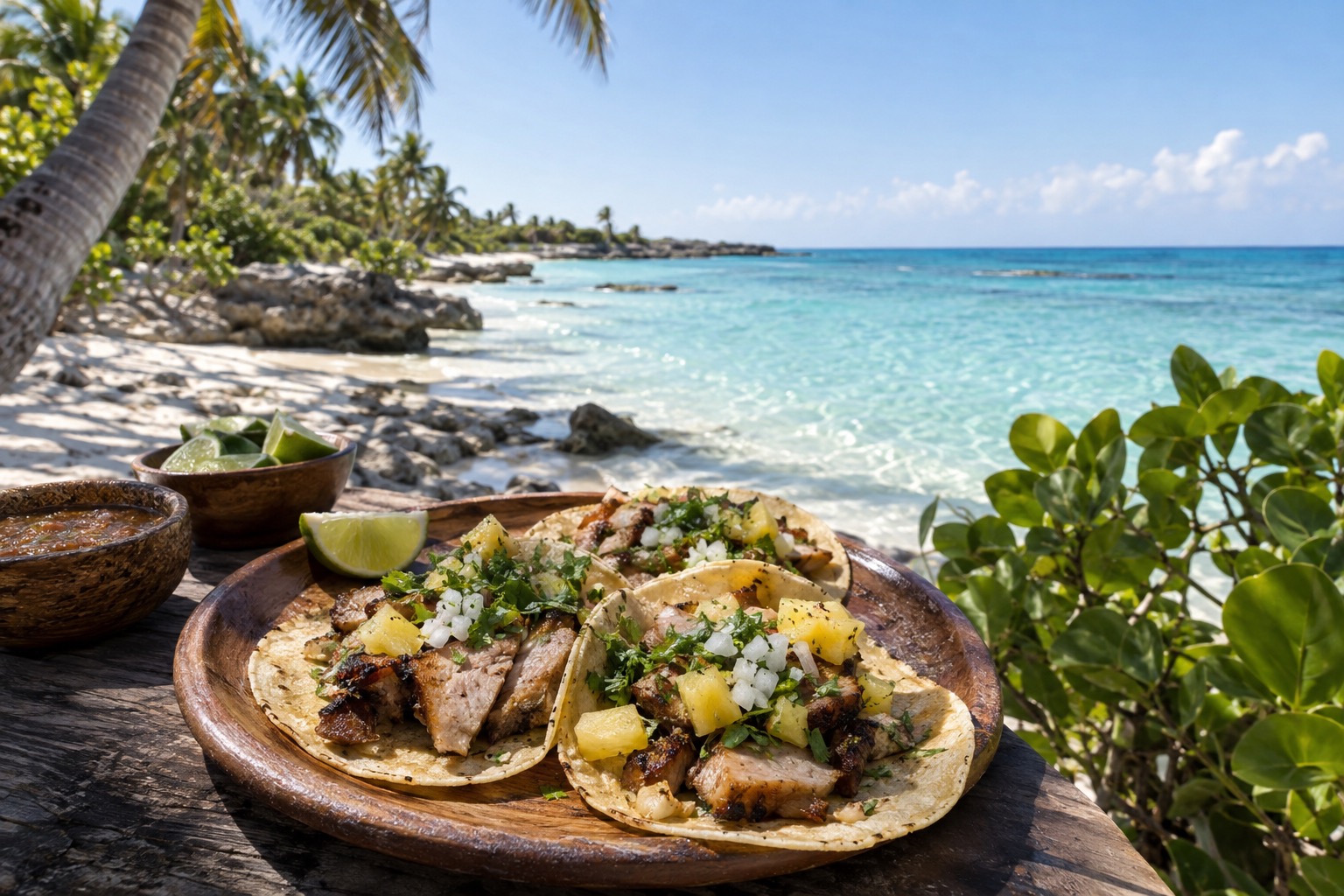
What is traditional Mexican food?
Traditional Mexican food is a system built on corn, beans and chili, so much so that UNESCO placed Mexican cuisine on its list of the world’s intangible cultural heritage in 2010. It is far more than tacos and burritos. It is a way of growing, cooking and eating that people have handed down for generations.
Corn is the center of it. Maize is soaked and cooked with lime in a process called nixtamalization, then ground into the dough for tortillas, tamales and a long list of other things. Farming methods such as the milpa, where corn, beans and squash grow together, and the chinampa, the raised garden beds of the old lake country, sit behind what lands on your plate.
Chili is the other thread, used less for pure heat than for flavor: smoky, fruity, bitter, sweet. Expect a salsa on the table at nearly every meal, and expect each region to answer differently. Oaxaca leans on moles and mezcal, the Yucatan on achiote and bitter orange, and the big cities on the all-day taco counter.
Mexican dishes to try in Mexico
The dishes to chase are tacos al pastor, mole, cochinita pibil and the everyday street snacks, each tied to a particular corner of the country. Order them where they belong and they taste like a different dish altogether.
Tacos al pastor and the taquería habit
Pork marinated in chili and achiote is stacked on a vertical spit and shaved onto small corn tortillas, then topped with pineapple, onion and cilantro. Watching the taquero carve is half the pleasure. The meat browns at the edges and the pineapple adds a sharp, sweet bite against the red chili.
Mexico City is the natural home of the habit, with taquerías open late and crowded with office workers, couples and families. Stand at the counter, order a few at a time, and add salsa from the little bowls. It suits anyone who likes to eat quickly and well, and it makes a fine late dinner.
Mole in Oaxaca and Puebla
Mole is not one sauce but a family of them, made from dried chilies, spices and often chocolate. Oaxaca and Puebla are its best-known homes. Some are deep brown and faintly bitter, others red, green or nearly black, usually poured over turkey or chicken and eaten with tortillas.
A sit-down lunch in a family restaurant is the right setting, since mole is a slow dish and tastes of long afternoons. Try more than one color if the menu offers a tasting plate. It suits travelers who like layered, complicated flavors rather than fire.
Cochinita pibil in the Yucatan
In the Yucatan, pork is marinated in bitter orange and achiote and cooked slowly in banana leaves until it falls apart. It is served in tacos or on bread, with pickled red onion and a little habanero salsa on the side. The color is a bright rusty orange and the flavor is tangy and earthy.
Locals treat it as a weekend and morning dish, so a market stall or a simple local spot is the best bet. Go easy on the habanero until you know how it hits.
Street food is part of daily life. Elotes are grilled corn with mayonnaise, cheese and chili, sold from carts at dusk. Tamales steam in big pots in the morning, quesadillas come off the griddle in markets, and chilaquiles, crisp tortillas simmered in salsa, are a classic breakfast. Follow the line of locals and you will rarely go wrong.
Is street food safe in Mexico?
Street food is a normal part of eating in Mexico, and the sensible approach is to choose busy stalls where food is cooked fresh in front of you. A crowd of locals is the best sign that the ingredients turn over quickly and the cook knows the job.
Water is the habit to adjust. Visitors generally drink bottled or purified water rather than tap water, and hotels and restaurants in tourist areas use purified water and ice. At a stall, a bottled drink or a hot dish removes most of the guesswork.
Ease in if your stomach is not used to chili. Start with a hot taco or a freshly grilled elote, take salsas in small amounts, and build up from there over a few days.
Tequila vs mezcal
Tequila is distilled from blue agave and takes its name from the town of Tequila in Jalisco, while mezcal can come from many species of agave and has Oaxaca as its best-known home. That difference in plant and place explains most of what is in the glass.
In practice, tequila tends to read as cleaner and brighter, good in a margarita or sipped neat. Mezcal is often smokier and more varied, and in Oaxaca it is poured in small cups with orange slices and a pinch of salt mixed with chili. Both reward slow sipping rather than shots.
A tasting at a bar or a producer lets you compare the two side by side. Start with the lighter spirit and move to the smokier one, and take water between pours. It suits anyone curious about how a single plant turns into so many flavors.
Day of the Dead food
Day of the Dead food is a set of offerings and family dishes laid out to welcome the dead home, most visible on November 1 and 2. UNESCO inscribed the tradition on its heritage list in 2008, and the food is at its heart.
In keeping with the customs of Mexico’s indigenous communities, families arrange flower petals, candles and offerings along the route from the cemetery to the shrine at home, and they cook the departed’s favorite dishes. On the ofrendas sit candles, marigolds (cempasúchil), pictures of the departed, sugar skulls, and pan de muerto. The air smells of copal, flowers and sweet bread.
Pan de muerto, a soft, lightly sweet loaf, shows up in bakeries around the season and goes well with hot chocolate. Travelers make their way to Oaxaca, Pátzcuaro and Mexico City, as well as other destinations, to watch the celebrations, and once darkness settles, families fill the cemeteries.
This is not a Mexican Halloween. Families hold this as a remembrance, joyful instead of frightening, and visitors are welcome if they remain respectful in cemeteries.
Good to know before you go
Stick to bottled or purified water, eat where the cooks are busy, and carry small bills for market stalls and taco counters. If you’re planning a coastal food trip, timing matters, since the Atlantic hurricane season can influence the weather on the Caribbean and Gulf coasts for part of the year. Come hungry, and let the locals’ lines guide your next meal.
Sources
- UNESCO, Intangible Cultural Heritage, « Traditional Mexican cuisine – ancestral, ongoing community culture, the Michoacan paradigm », inscrit en 2010 (5.COM), ich.unesco.org, checked September 29, 2026
- UNESCO, "Indigenous festivity dedicated to the dead", ich.unesco.org, checked September 29, 2026
To plan your stay
- Best Time to Visit Mexico: Weather by Region, Crowds, Hurricane Season and Festivals
- Where to Stay in Mexico: Riviera Maya, Los Cabos, Puerto Vallarta, Mexico City and All-Inclusive Areas
- Getting Around Mexico: Buses, the Tren Maya, Taxis and Driving Your Own Car
- Mexico Travel Tips: Dollars, Tourist Tax, Tipping, Tap Water, Driving and Safety by State