
Somewhere between the third browser tab of beachfront resorts and a map full of pins, almost every trip to Mexico stalls on the same question: Caribbean sand, desert coves, a jungle bay or a colonial capital? The short answer is that the region you choose shapes the trip more than the hotel does. Pick the coast or the city that matches the days you imagine, then narrow down to a neighborhood.
Where to stay in Mexico for the first time
First-timers usually do best on one of the well-trodden resort coasts, or in Mexico City, because everything there is set up for visitors and the choices are easy to compare. Each region has a distinct character, so the useful question is what you want your mornings to look like.
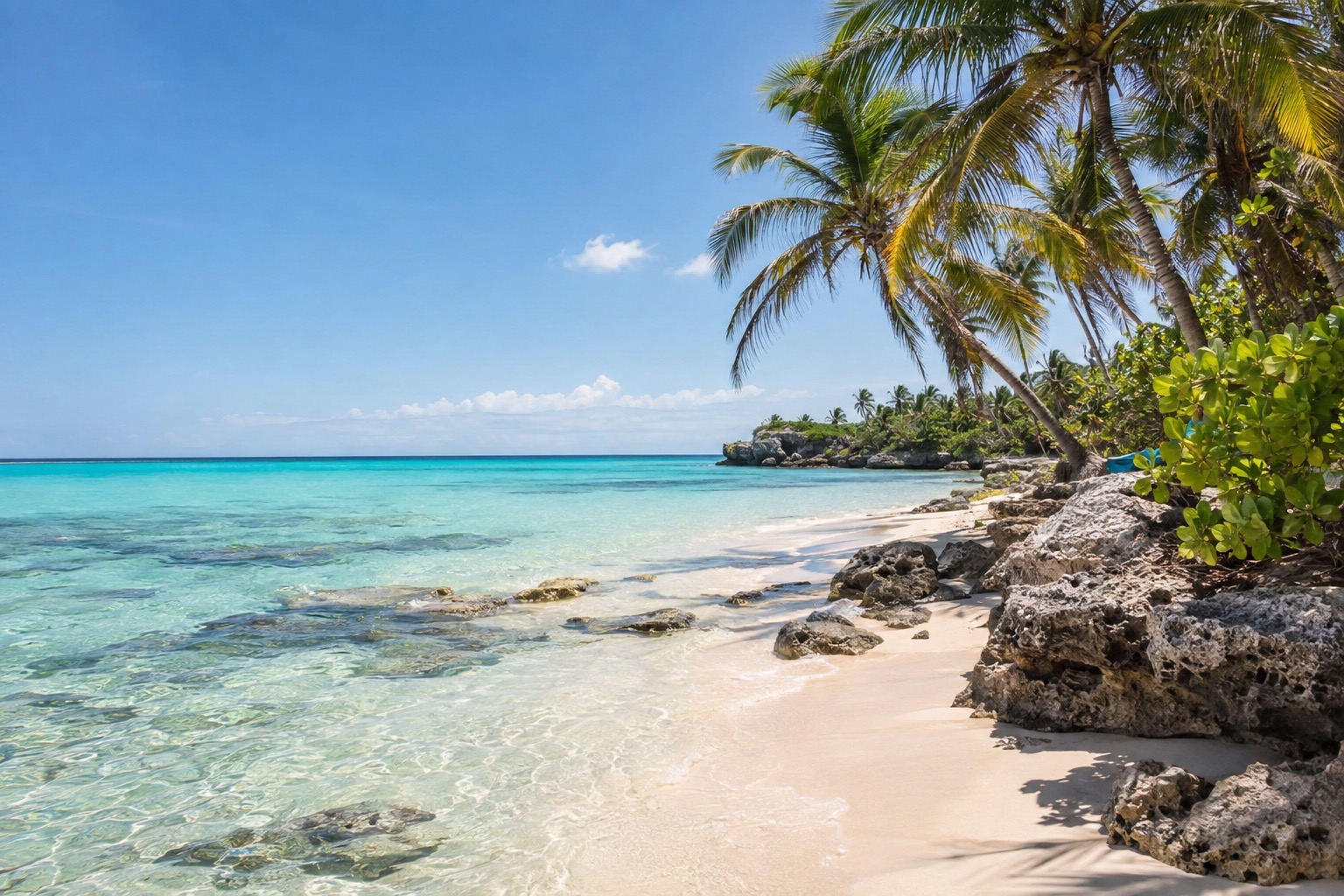
The Caribbean coast of Quintana Roo is the classic pick: white-sand beaches, cenotes and Maya ruins within reach, from Cancun down to Tulum. Where the desert meets the sea, Los Cabos offers sunsets and boat outings. Puerto Vallarta sits on a wide bay with jungle hills behind it. In the central highlands, beach days give way to colonial centers, museums, and food, while the nights stay cool.
Matching the region to the trip
If you want beach days with a ruin or a cenote swapped in now and then, the Caribbean coast fits. If you want dinners that become the whole point of the evening, Mexico City, Oaxaca or Guadalajara will feed you well. Beach towns such as Sayulita suit people who like a surfer-village feel over a big resort.
Safety levels differ a lot from state to state, and the U.S. State Department rates Quintana Roo, Baja California Sur, Mexico City and Nayarit Level 2. Some states carry higher ratings, so look up the state before you fall for a particular town. Guerrero, home to Acapulco and Zihuatanejo, is rated Level 4, and Jalisco and Guanajuato are rated Level 3, though the advisory describes no restrictions for government employees in Puerto Vallarta and Riviera Nayarit.
Where to stay in the Riviera Maya
For most visitors the best base in the Riviera Maya is Playa del Carmen, with Tulum as the choice for a slower, more bohemian stay. The coast runs between those two towns, and each sets a different pace for your days.
Playa del Carmen
Playa is the easy one. The pedestrian Quinta Avenida runs parallel to the beach, packed with taco counters, gelato shops, boutiques and bars, and you can eat well without ever calling a taxi. It is also the town where ferries leave for Cozumel, so island days are simple to add.
It suits couples, friends and families who like having restaurants at the door. Evenings are lively, so if you want silence, look at hotels a few blocks back from the avenue or toward the quieter edges of town.
Tulum
Tulum splits into the town, with its restaurants and shops along the highway, and the beach road, lined with boutique hotels tucked into palms. The beach side has the barefoot, yoga-and-mezcal mood, and the ruins on the cliff and nearby cenotes are close.
This area’s beaches, like other stretches along the Caribbean coast, can also receive sargassum, a kind of seaweed that comes ashore from Cancun southward through Playa del Carmen, Tulum, and Mahahual. The seaweed tends to be heaviest near June or July, then lets up during winter, but in certain years it stays plentiful throughout the calendar. If a clear shoreline matters to you, plan around that.
Cancun and the islands
Cancun’s Hotel Zone is a long strip of big resorts between the Caribbean and a lagoon, built for beach-and-pool vacations. Isla Mujeres and Cozumel are quieter options with a small-island feel, good for snorkeling and for leaving the car-and-resort routine behind. People from other countries who arrive in Quintana Roo must pay the Visitax fee, either online through visitax.gob.mx ahead of the trip or with cash at the airport before departure.
Where to stay in Los Cabos
In Los Cabos, choose Cabo San Lucas for nightlife and energy, or San José del Cabo for something calmer. Both towns hug the tip of the Baja California peninsula, and the resort corridor between them offers abundant beachfront rooms.
Cabo San Lucas
At this vibrant end, you’ll find a marina packed with boats, bars and restaurants that remain busy late, and the famous rock arch at the end of the land is reachable by water taxi or boat. Many travelers come for sportfishing, whale-watching in season and sunset cruises.
It suits groups and anyone who wants things to do after dark. Light sleepers should ask about rooms away from the marina and music.
San José del Cabo
San José has a tidy colonial plaza, art galleries and good restaurants, with a slower rhythm. It is a sound base for couples and for travelers who want a stroll through town after dinner.
No matter where you’re staying, remember that at many beaches here facing the Pacific, the waves are too rough to swim in. Resort pools and the calmer coves do the job, and the desert backdrop is the point. Baja California Sur is rated Level 2 by the State Department. The Atlantic sargassum belt does not extend to the Pacific-side resorts.
Where to stay in Puerto Vallarta
Puerto Vallarta’s Old Town and the Zona Romántica are the best places to stay if you want to walk to dinner, while Riviera Nayarit to the north suits those who want beach-town calm. Jungle hills rise behind the city, which curves around the Bay of Banderas.
Old Town and the Zona Romántica
Cobbled streets climb from the Malecón, the seafront promenade with its sculptures and sunset crowd, into a maze of restaurants, rooftop bars and galleries. South of the river, the Zona Romántica adds beach clubs, small hotels and a relaxed, friendly nightlife.
It suits travelers who want to leave the hotel on foot and who like a town with a real center. Streets can be steep, so wear sturdy sandals.
Riviera Nayarit
North of the city, towns such as Sayulita and Punta Mita offer surf lessons, boutique stays and low-key resorts. Sayulita is bright, casual and full of cafés, while Punta Mita is more polished and secluded.
The State Department advisory notes no restrictions for U.S. government employees in Puerto Vallarta, including neighboring Riviera Nayarit, even though Jalisco as a state is rated Level 3. Nayarit itself is Level 2.
Where to stay in Mexico City
In Mexico City, the neighborhoods of Roma, Condesa and the Centro Histórico are the usual choices, each with a different mood. The capital sits in the central highlands, so nights stay cool even when the days are warm.
Roma and Condesa
These two neighborhoods are tree-lined, walkable and packed with cafés, bakeries, bookstores and mezcalerías. Art Deco buildings line the streets around Parque México, where locals walk their dogs in the morning.
They suit first-timers who want a comfortable, food-focused base. From here you can head to the museums of Chapultepec or the historic center on short rides.
Centro Histórico
Staying near the Zócalo puts the cathedral, the Templo Mayor and the Palacio de Bellas Artes close at hand. Mornings are quiet and atmospheric, with the square filling up as the day goes on.
It suits travelers who prize history over nightlife. Mexico City is rated Level 2 by the State Department, and the State of Mexico, which surrounds it, is also Level 2.
Best all-inclusive areas in Mexico
For all-inclusive vacations, the top spots are the Cancun Hotel Zone, the stretch of the Riviera Maya from Playa del Carmen to Tulum, Los Cabos, and Riviera Nayarit, which sits north of Puerto Vallarta. All four have many resorts, and adults-only properties are common in each.
Usually, your lodging, meals, drinks, and non-motorized water sports are covered by an all-inclusive rate. Spa treatments, premium drinks, excursions and certain à la carte restaurants frequently come at an extra cost, and what is included varies by resort, so check what your rate covers before you compare.
Choosing among the four
The Cancun Hotel Zone and the Riviera Maya give you Caribbean water and easy access to ruins and cenotes. Los Cabos offers dramatic desert scenery and a sea that is often too rough for swimming at some beaches, so pools matter more. Riviera Nayarit has a quieter, jungle-and-surf feel.
Families often favor the Caribbean resorts with calm, wide beaches and kids’ clubs. Couples tend to look at adults-only properties in any of the four. At certain times of year, sargassum may wash up on Caribbean beaches, but that belt does not reach the Pacific resorts.
Good to know before you go
Carry some pesos for taxis, markets and tips, and keep valuables out of sight as you would in any big destination. The Atlantic hurricane season sets the pattern for the Caribbean and Gulf coasts, but the Pacific coast’s own season gets under way in mid-May. Mexico City’s altitude means evenings call for a layer, even in a warm month.
| Fee | Amount | Who pays |
|---|---|---|
| Visitax (Quintana Roo) | About 293 pesos (2.50 UMA) | Foreign visitors entering the state, except those entering through its southern border |
| Cruise passenger right | 5 US dollars | Cruise passengers, collected by the cruise line; proof of payment exempts them from Visitax |
Sources
- U.S. Department of State, Mexico Travel Advisory (main, level banner), travel.state.gov, read live via browser (protected by Cloudflare, direct fetching blocked with 403) on 29 September 2026
- U.S. Department of State, Mexico Travel Advisory, section "Risks in specific areas" / State of Guerrero, travel.state.gov, read live via browser on September 29, 2026
- U.S. Department of State, Mexico Travel Advisory, section "Risks in specific areas" / State of Baja California, travel.state.gov, read live via browser on September 29, 2026
- U.S. Department of State, Mexico Travel Advisory, section "Risks in specific areas" / State of Baja California Sur, travel.state.gov, read live via browser on September 29, 2026
- U.S. Department of State, Mexico Travel Advisory, section "Risks in specific areas" / State of Sonora, travel.state.gov, read live via browser on September 29, 2026
- U.S. Department of State, Mexico Travel Advisory, section "Risks in specific areas" / State of Michoacan, travel.state.gov, read live via browser on September 29, 2026
- U.S. Department of State, Mexico Travel Advisory, section "Risks in specific areas" / State of Quintana Roo, travel.state.gov, read live via browser on September 29, 2026
- U.S. Department of State, Mexico Travel Advisory, section "Risks in specific areas" / State of Mexico (Estado de Mexico), travel.state.gov, read live via browser on September 29, 2026
- U.S. Department of State, Mexico Travel Advisory (reissued May 29, 2026), section « Risks in specific areas », travel.state.gov/en/international-travel/travel-advisories/mexico.html, read via browser (Cloudflare blocks curl) on 29 September 2026
- Ley de Derechos del Estado de Quintana Roo, art. 51-Octies (official PDF from the Congreso de Quintana Roo, congresoqroo.gob.mx) ; UMA value : INEGI, Comunicado de prensa 1/26 "Unidad de Medida y Actualizacion (UMA)", January 8, 2026, inegi.org.mx, checked September 29, 2026
- Ley de Derechos del Estado de Quintana Roo, art. 51-Octies, congresoqroo.gob.mx, checked September 29, 2026
- Ley de Derechos del Estado de Quintana Roo, art. 51-Nonies, congresoqroo.gob.mx, checked September 29, 2026
- Portail officiel VISITAX, visitax.gob.mx/sitio, checked September 29, 2026
- University of South Florida, Optical Oceanography Lab, "Sargassum Watch System (SaWS)", optics.marine.usf.edu, checked September 29, 2026
To plan your stay
- Best Time to Visit Mexico: Weather by Region, Crowds, Hurricane Season and Festivals
- Things to Do in Mexico: Ruins, Beaches, Day of the Dead and Street Food
- Getting Around Mexico: Buses, the Tren Maya, Taxis and Driving Your Own Car
- Mexico Travel Tips: Dollars, Tourist Tax, Tipping, Tap Water, Driving and Safety by State