
In March, the morning light on the North Shore comes in low and gold over Waimea Bay, and the first garlic shrimp trucks around Kahuku are already filling the air with butter and smoke. With boards tucked beneath their arms, surfers head to the sand as winter’s final long swells keep rolling in. It is a month of warm days, a lingering surf season and a country road that moves at its own pace.
What is the weather like in the North Shore in March?
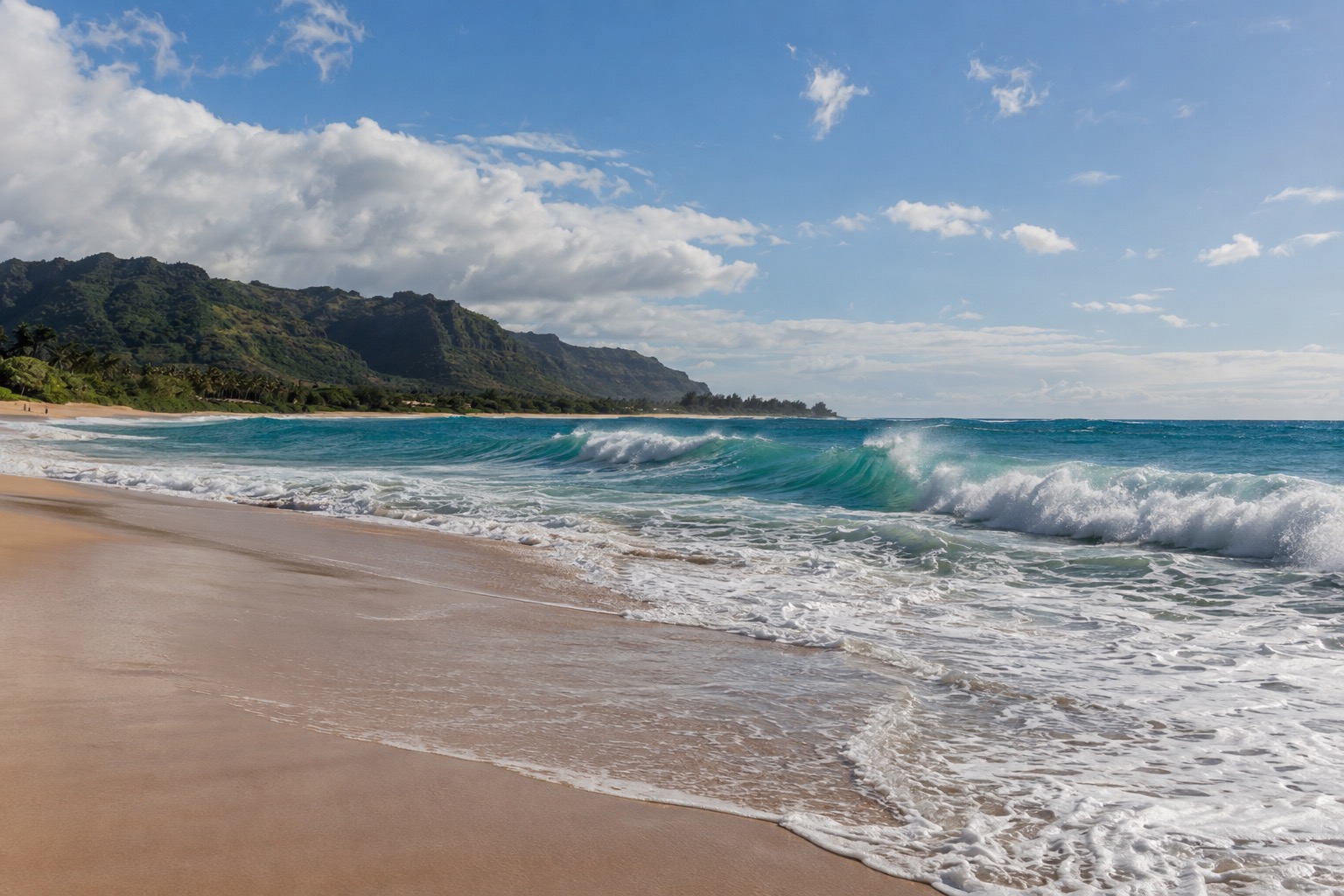
March on the North Shore is warm, green and a little unsettled, with sunny stretches broken by passing showers. March on the North Shore sits between winter and true spring.
| Month | Average high (°F) | Average low (°F) | Rain days | Sea (°F) |
|---|---|---|---|---|
| February | 78.6 | 62.2 | 8.3 | 75.5 |
| March | 79.4 | 63.7 | 11.1 | 75.4 |
| April | 81.1 | 65.4 | 10.4 | 75.9 |
Mornings are soft and a bit cool, pleasant for coffee on a porch or a walk along the sand before the sun climbs. By midday it is warm enough for shorts and a swimsuit, and the afternoon light turns the fields and the ocean a deep, saturated color.
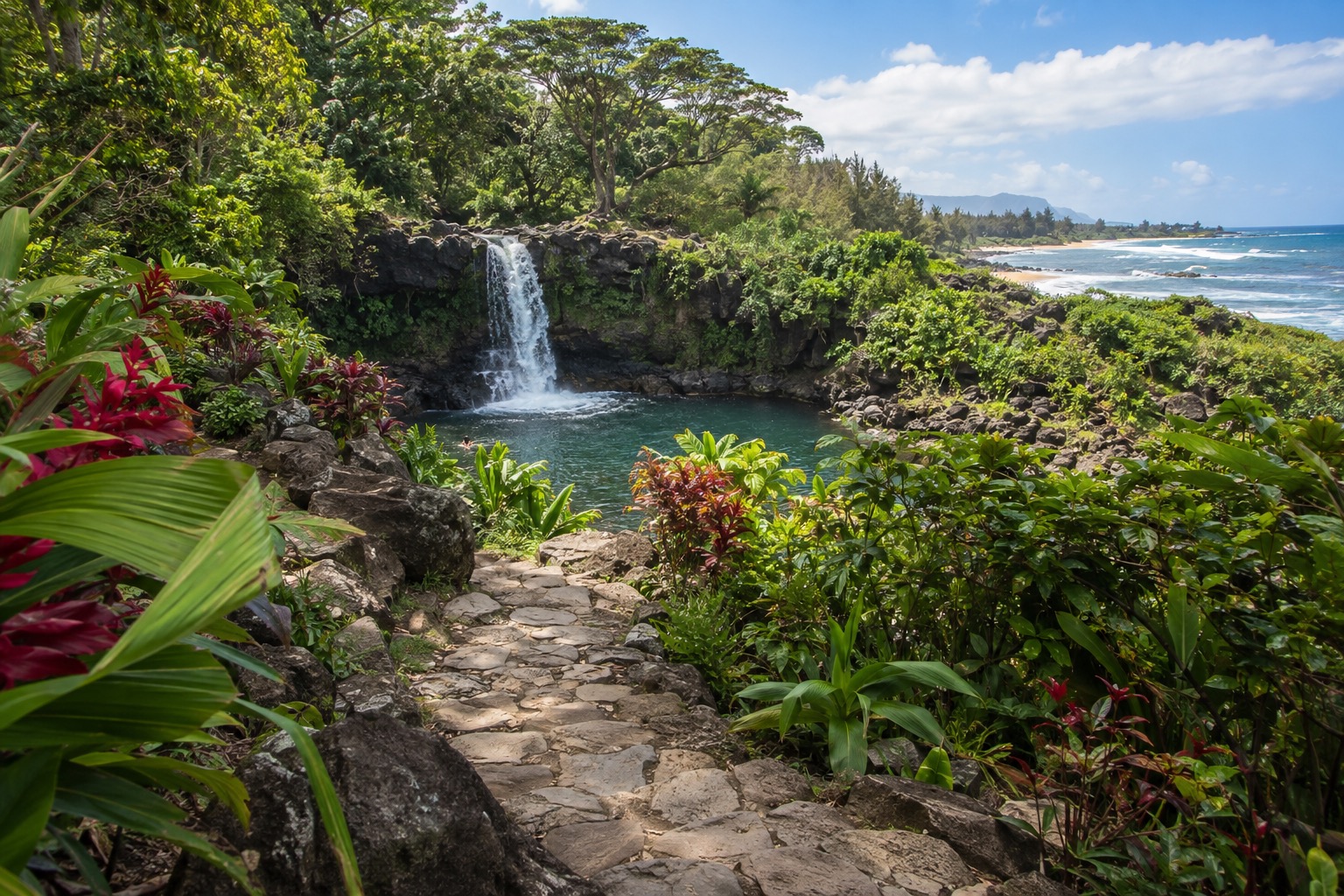
Rain comes mostly as short showers that blow in from the mountains and pass within minutes, often leaving a rainbow over the ridge. An all-day soaking is the exception, but a wetter March means you should expect to be caught out at least once. The month is greener than the summer, and the roadside pastures and waterfalls in the Koolau hills look their best.
Evenings stay mild, so a light layer is enough once the sun goes down, and you can eat outside at a food truck table without a jacket. Daylight lasts a little over twelve hours in the middle of the month, which leaves a full day for the beach and a golden sunset to finish it.
Can you swim in the North Shore in March?
Water this warm is comfortable for a long swim, but on the North Shore the waves, more than the temperature, decide whether you go in. The sea sits in the mid-70s according to the marine data, which feels pleasant after a minute or two.
Waves can hit thirty feet or higher during the big-wave months of November through February, and March comes at the end of that stretch.
Summer, from May to September, is the calm season and the one that suits beginners, so in March it makes sense to read the flags, ask the lifeguards and watch the waves for a few minutes before deciding. Families with small children and nervous swimmers will usually be happier on the days when the surf is down, or simply paddling at the shore. Bring a rash guard, reef shoes and a towel, and keep an eye on the shore break.
What to do in the North Shore in March
March is the end of the surf season, which makes it the best time to see the legendary breaks with a bit of life still in them. The contests of the Vans Triple Crown of Surfing belong to November and December, but the lineups stay busy in March, with local surfers, photographers and visitors lining the sand to watch the sets roll in. Stand well back from the water and give the surfers room.
The mood in the streets is unhurried. Roadside stands, surf shops and food trucks are open, the crowds are lighter than in the winter holidays, and there is time to talk to the person behind the counter. Green hills, damp air and the smell of salt and plumeria mark the month.
Haleiwa, the surf town
Haleiwa is the North Shore’s surf town and the natural base for a day. Getting there takes roughly sixty minutes by car from Waikiki when traffic cooperates, and the drive itself is half the fun, passing pineapple fields, sugar-cane remnants and peeks at the blue ocean.
Walk the main street past surf shops, art galleries, cafés and food trucks, and stop for shave ice when the sun comes out. Showers blow through quickly in March, so duck into a shop, wait five minutes and carry on. Go in the morning, before the lunch crowd fills the sidewalks, and park once rather than driving between stops.
Garlic shrimp around Kahuku
The North Shore’s trademark midday meal from roadside trucks is garlic shrimp, dished up near Kahuku and Haleiwa. Expect shrimp swimming in butter and garlic, served over two scoops of rice with a lemon wedge, usually eaten at a picnic table in the shade.
The trucks cluster along the highway, and the line at the best-known ones can be long at midday, so go a little early or late. Bring napkins and wet wipes, because this is a messy meal. Pair it with fresh coconut or a cold drink, and finish with shave ice from town.
Beaches and the coast road
Beyond the famous surf breaks, the coast road links a string of beaches that each have a different mood. Waimea Bay is about an hour and a quarter from Waikiki, and so is Turtle Bay Resort at the northeast end, where the shoreline turns rocky and quiet.
In March it is a good month for walking the sand, tide pools and a picnic, with the sea doing its dramatic work at a distance. Look for sea turtles resting on the beach, and keep a respectful distance because they are protected. Sunset Beach is a favorite for the evening light, when the sky turns orange over the water. When the sky is gray, the rainy-day answer is to browse the galleries and surf shops of Haleiwa, sit down to a long lunch, or drive the coast to watch the waves from a dry spot in the car.
A two-day itinerary for the North Shore in March
Day 1 starts early on the drive out from Waikiki, so you reach Haleiwa while the light is soft and the streets are quiet. Have a coffee and a pastry, wander the shops, and look into the galleries before the crowds arrive. By late morning, head up the coast to Waimea Bay to watch the swell and the surfers from the sand.
You eat a garlic shrimp plate at a picnic table, with lunch coming from a truck close to Kahuku. In the afternoon, stop at Ehukai Beach and then Sunset Beach, where the waves are most dramatic and the light turns golden. Stay for the sunset, then drive back with the sky still glowing. If it rains, stay in Haleiwa and spend the afternoon browsing.
Day 2 is slower, with a morning at Turtle Bay Resort at the quiet northeast end of the coast. Walk the shoreline, look at the rocks and tide pools, and swim only where the water looks gentle and the lifeguards say it is fine.
Midday is for a long lunch and shave ice in the shade, then a lazy afternoon on a beach you did not visit the day before. Finish with an early dinner at a local restaurant before the drive back. A wet afternoon is a good excuse for a café, a bookshop or a nap.
Is the North Shore busy in March?
March is moderately busy on the North Shore, busier than the quiet fall but calmer than the winter holiday weeks. Spring break brings mainland families and college groups, so beaches and parking near the famous surf spots fill up on sunny weekends.
The roads are the real bottleneck, since a single highway carries nearly everyone, and it slows to a crawl when the surf is good. Arrive early in the morning, avoid midday on weekends, and expect a line at the best-known food trucks. Weekdays are noticeably easier than Saturdays and Sundays.
Rooms and rental cars go first for the spring break weeks, so book those early. For the quieter weeks of the month, a little more time is enough. Restaurant tables in Haleiwa are usually easy to find outside the dinner rush, though popular spots fill up on weekend evenings. Check the state park notices for any reservation rules at the places you want to visit.
What to pack for the North Shore in March
Pack for warm days, short showers and a bit of sea spray, and keep the bag light.
- A light rain jacket, because showers blow through often
- Swimsuit and a rash guard for sun and waves
- Reef shoes for rocky entries and tide pools
- Mineral sunscreen and a hat for the strong midday sun
- A light layer for cooler evenings
- Sandals and closed shoes for walking and food trucks
Good to know before you go
March falls outside the official hurricane season, which runs from June 1 to November 30. The main practical issue is the single coast road, which gets congested, so plan to start early and park once. A rental car is the easiest way to move between beaches, and rooms and cars book up for spring break.
| Fee | Amount | Who pays |
|---|---|---|
| State transient accommodations tax | 11% | Guests staying in lodging |
| Oahu county tax | 3% | Guests staying in lodging |
The North Shore in March vs February and April
Going four weeks earlier puts you in the heart of the big-wave season, when the surf is most dramatic and the beaches are often too rough for swimming. February is a little drier, with fewer rain days, and the water is about the same temperature.
Moving to April brings slightly warmer air and a bit more sun, and the surf continues to ease as the season winds down. The water is a touch warmer, and the showers keep coming, though a little less often. Crowds ease after the spring break weeks, so rooms and tables are easier to find.
Choose February if the waves are the reason you are going. Choose April if you want gentler water and warmer afternoons. March suits those who want a bit of both, with the tail of the surf season and the first softer days.
Is March a good time to visit the North Shore?
Yes, March is a good time to visit, especially for travelers who want to see big surf without the full winter crowds. It suits surf watchers, food lovers and people who like green hills and warm days.
It is less ideal for anyone who wants guaranteed dry weather or a calm sea for swimming and snorkeling. Those travelers will do better in the summer months, when the water is quiet and the days are drier.
On arrival, drive to Haleiwa first for a coffee and a walk, then head up the coast to watch the waves at Waimea Bay. What makes March special here is the mix of a surf season that has not quite ended, green hills after the winter rains, and a shrimp truck plate eaten in the shade.
Sources
- NOAA NCEI, monthly normals 1991-2020, station USC00519603, checked September 8, 2026
- Open-Meteo Marine API, average 2015-2024, checked September 8, 2026
- sunrise-sunset.org, sunrise and sunset calculated for the 15th of the month, checked September 8, 2026
- Hawaii Tourism Authority, Go Hawaii, North Shore Oahu (gohawaii.com/islands/oahu/regions/north-shore), checked September 25, 2026
- Hawaii Tourism Authority, Go Hawaii ; HVCB, map Driving Times from Waikiki (edition 2010), checked September 25, 2026
- Hawaii Department of Taxation, Announcement 2025-03 ; City and County of Honolulu, OTAT FAQ, checked September 25, 2026
- NWS Honolulu / Central Pacific Hurricane Center, « 2026 Central Pacific Hurricane Season Outlook », weather.gov/hfo/hurricaneOutlook2026, checked September 24, 2026