
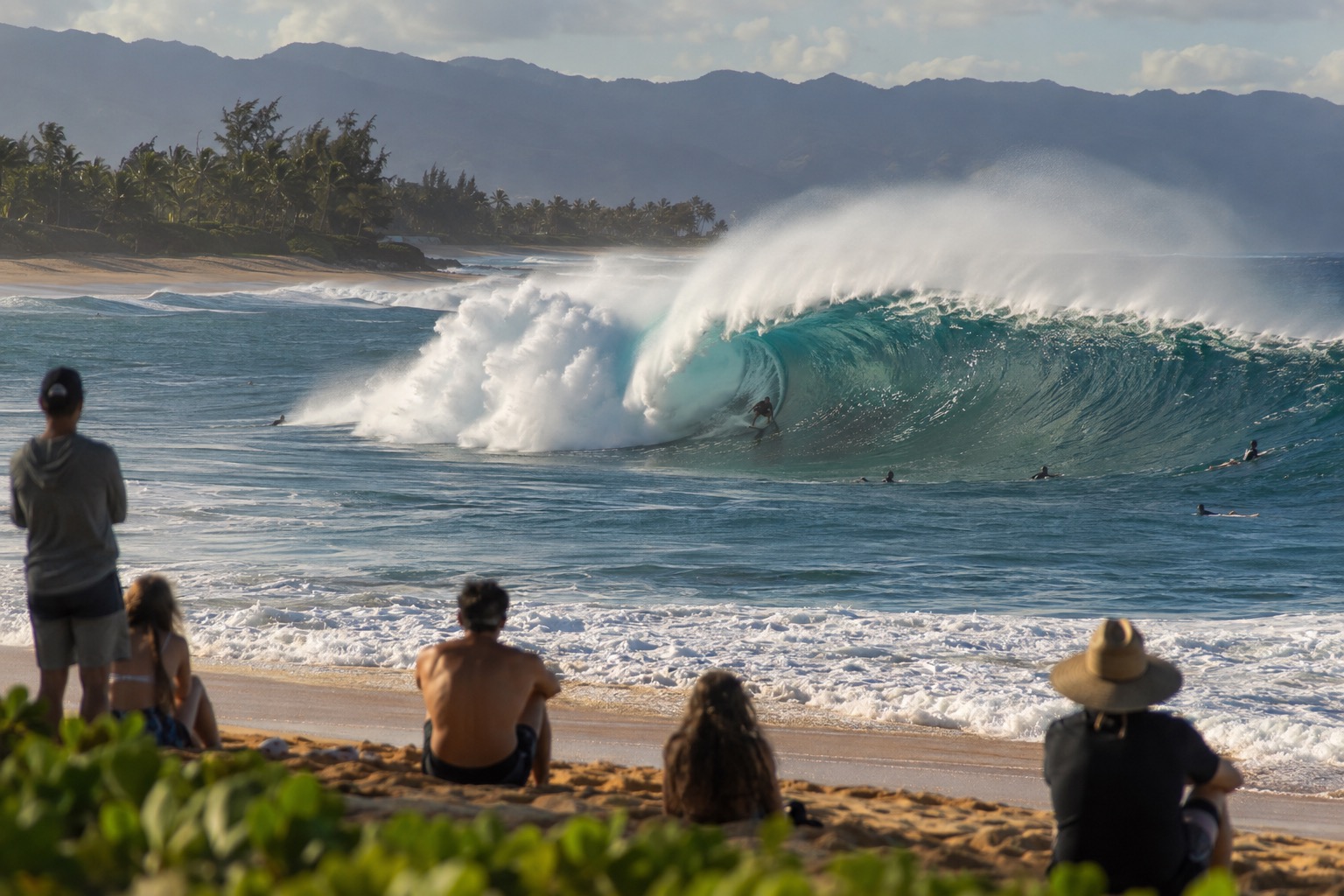
On a February morning, the road past Haleiwa fills with pickups carrying long boards, and the horizon off Ehukai Beach is a moving line of white. Spectators sit on the sand with coffee and shave ice, watching surfers paddle out toward waves that arrive in slow, heavy sets.
The North Shore of Oahu in February belongs to the winter swell, the roadside shrimp trucks and a mood of easy, salt-stained patience. February draws anyone planning a winter trip to watch the big waves, eat well and explore the coast.
What is the weather like in the North Shore in February?
February on the North Shore is warm without being hot, with mild days, comfortable nights and a few showers passing through. February here feels like a gentle handoff between the months on either side.
| Month | Average high (°F) | Average low (°F) | Rain days | Sea (°F) |
|---|---|---|---|---|
| January | 78.1 | 62.4 | 8.5 | 77.0 |
| February | 78.6 | 62.2 | 8.3 | 75.5 |
| March | 79.4 | 63.7 | 11.1 | 75.4 |
Mornings are fresh and bright, good for a walk on the sand in a light layer. By midday the sun is warm enough for shorts and a T-shirt, though the trade winds keep it from feeling heavy. Afternoon light turns golden early, since days are a little under twelve hours long, and sunsets over Sunset Beach and Waimea Bay are a big part of the evening routine.
Rain comes as short showers that sweep in from the mountains and are often followed by a rainbow. A heavy downpour is rare, with only about one day in the month bringing an inch or more. Some days turn gray and drizzly for a few hours, and the Koolau side of the range collects more cloud than the coast, so the clouds often clear by the time you reach the beach.
When the wind picks up near the water, you will want a sweater or a light jacket once evening arrives. Pack a rain shell that folds small and shoes that can get wet. Sunscreen still matters, because even a hazy winter sky lets plenty of sun through.
Can you swim in the North Shore in February?
The water is comfortable for a dip, but February is the wrong month for casual swimming at the famous beaches, because winter swell makes the surf powerful. The sea sits in the mid-70s, pleasant with a rash guard or after a few minutes of getting used to it.
Beach signs and lifeguards decide where the water is open, so follow them every time you step toward the surf.
Some days the swell drops and the water looks gentler, but never assume it. For families with small children and swimmers who feel uneasy, the sand, the tide pools along the edges and the view are the better choice.
Strong swimmers and surfers who know winter conditions will read the beach differently, and the lifeguard tower is the first stop. Bring a hat, a towel and water, and plan to spend more time on the shoreline than in the water.
What to do in the North Shore in February
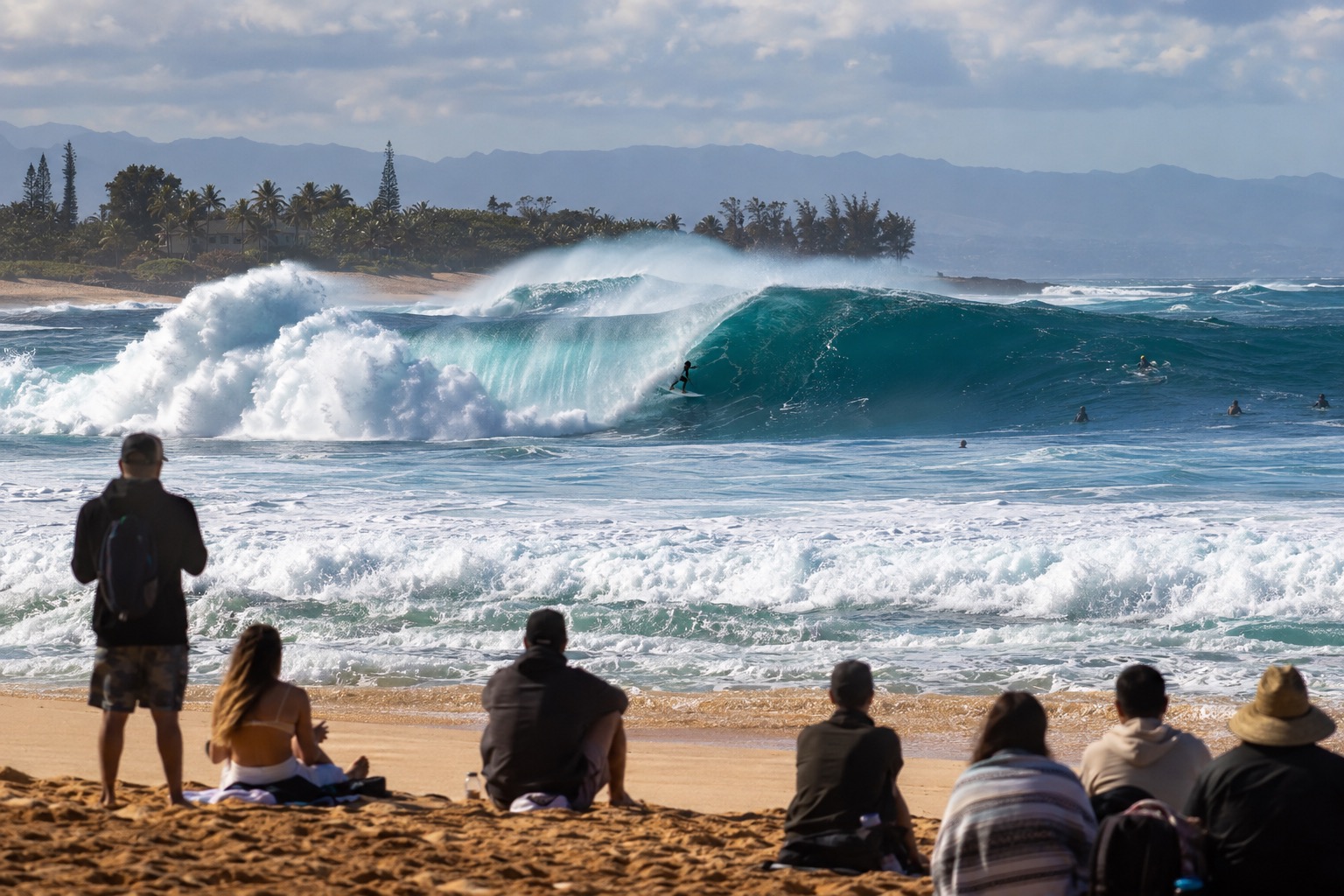
February is the heart of big-wave season, and watching it is the main event. The surf breaks line up along a few miles of coast, and each has a different character.
You can park, walk down to the sand and spend an hour watching surfers choose their wave, with the crowd gasping as a set rolls in. The Vans Triple Crown of Surfing wraps up in November and December, so February has the leftover buzz of surf culture without the contest crowds.
Watching the surf at Waimea, Ehukai and Sunset
Waimea Bay is a deep, round bowl where the biggest days draw hundreds to the sand and the rocks. Ehukai Beach, home of the Banzai Pipeline, is a short wave that breaks hard over a shallow reef, and watching from the beach gives a close, loud look at it. Sunset Beach is wide and open, with long lines of swell that peel across the bay.
The drive from Waikiki to Waimea Bay takes about an hour and 15 minutes with traffic permitting, so early starts help with parking. Mornings are often calmer on the wind side, and afternoons bring crowds and golden light. Bring binoculars if you have them, and keep a respectful distance from the waterline, since a big set can wash well up the sand.
Haleiwa town and garlic shrimp
Haleiwa is the North Shore’s surf town, about an hour from Waikiki, and it makes a natural base for the day. Surf shops, small galleries, food trucks and restaurants line the main road, and shave ice stands do steady business even in winter. It suits a slow wander between surf watching and lunch.
The coast’s trademark roadside midday meal is garlic shrimp plates sold from trucks in and around Kahuku and Haleiwa. They come buttery, garlicky and served with rice, and people eat them at picnic tables with napkins and no embarrassment. Pair a plate with a cold drink, then finish with shave ice before heading back to the beach.
Turtle Bay and the quieter north end
Farther along, Turtle Bay Resort sits at the northern tip, about an hour and 15 minutes from Waikiki. The coastline here is rocky and open, with walking paths, a restaurant terrace and wide views over a blustery sea. It is a good stop for a slower afternoon, a coffee or a sunset drink after a day of crowds at the surf breaks.
If you see a sea turtle on the sand or in the shallows, keep your distance and let it rest, since they are protected. The same goes for monk seals, which sometimes haul out on quiet stretches of beach. Treat the reef and the rocks with care, and do not climb on anything that looks like a stone platform or shrine.
Rainy hours are easy to use. Browse the shops and galleries in Haleiwa, linger over a long lunch or head to a café and wait for the next break in the clouds.
A two-day itinerary for the North Shore in February
Day 1. Start early from Waikiki and reach Haleiwa in about an hour, parking near the harbor before the lots fill. Walk the main street, look in the surf shops and grab coffee. Late morning, drive to Waimea Bay and watch the surf from the sand, then move to Ehukai Beach for the Pipeline view while the light is still clear.
Lunch is a garlic shrimp plate from a truck near Kahuku or Haleiwa, eaten at a picnic table. Later in the day, Sunset Beach is the spot to claim, with its broad stretch of sand and rolling swells inviting you to stay awhile. Sunset comes early enough that dinner can follow right after, in a Haleiwa restaurant or a casual spot along the road.
Day 2. Begin at the northern end with a coffee and a walk by Turtle Bay Resort, where the coast feels quieter. Spend the late morning on the rocky shore and the paths, looking out at the open sea. Lunch can be at the resort terrace or a food truck on the way back.
In the afternoon, return toward Haleiwa for shave ice, gallery browsing and a slow stroll at the harbor. If rain sets in, stay indoors among the shops and cafés until the showers pass, since most come and go quickly. Leave in time to be back before dark, when the road is busier with surf-day traffic.
Is the North Shore busy in February?
It is moderately busy, with a steady flow of winter visitors drawn by the surf, though it is calmer than the contest weeks of November and December. Parking along the road near the famous breaks fills quickly on big-swell days, and Haleiwa gets crowded around lunch.
Weekends bring day-trippers from Honolulu, and the road from town can back up in both directions. Weekdays are noticeably easier, with shorter lines at food trucks and more room at the beach. Mainland visitors on winter breaks and long weekends add to the mix, so rooms and rental cars are best booked early, especially around holiday weeks. Quieter stretches of the month leave more room to decide later.
Restaurant tables in Haleiwa are easiest at off-peak hours, and food trucks keep the lunch rush moving. If you plan a stay near the water, rooms with a view of the surf go first. Shuttle or rental car both work, but the coast road is a single main route, so build in extra time.
What to pack for the North Shore in February
Pack for warm days, breezy evenings and the odd shower, with a focus on comfort at the beach and on the road.
- A light rain jacket, since showers pass quickly but can soak you
- A sweater or light layer for cool, windy evenings
- Sandals and closed shoes that can get wet
- A hat and sunglasses for bright, reflective light at the beach
- Mineral sunscreen, because the sun is strong even on hazy days
- A rash guard for chilly water and sun protection
- Binoculars for watching surfers and, sometimes, whales offshore
Good to know before you go
February falls outside the official hurricane season, though winter brings big surf that shapes the whole coast. Driving is the easiest way to move around, and the coast road can slow on weekends, so start early and plan for parking. Staying here means paying a little extra in state and county taxes, and that just comes with the room.
| Fee | Amount | Who pays |
|---|---|---|
| State transient accommodations tax | 11% | Guests staying in lodging |
| Oahu county tax | 3% | Guests staying in lodging |
The North Shore in February vs January and March
Moving the trip earlier to January keeps the same big-wave season, with slightly warmer water and a bit more rain. The Triple Crown contests have just finished, so some of that surf buzz still lingers, and the holiday crowds thin out after the first days of the year.
Going later to March brings a few more showery days and a slight warm-up in the air, while the swell begins to ease toward spring. The big-wave months end with February, so March is a softer, more mixed month for the beaches. The coast gets a little quieter as winter fades, though spring breaks bring their own visitors.
Surf watchers should stay with February or go earlier, since the swell is still in full season. Travelers who want gentler beaches and are less interested in big waves may prefer later in spring or summer, when the water is calmer and suits beginners.
Is February a good time to visit the North Shore?
Yes, February is a very good time for travelers who want to watch big waves, eat well and enjoy a mild, breezy coast. It is less suited to families with small swimmers or anyone who wants a calm, easy beach day.
Surf lovers, photographers and food-minded travelers will find the most here, along with anyone happy to spend a day on the sand with a shrimp plate and a view. If your plans center on swimming or beginner surf lessons, summer is the better choice. On arrival, head first to Waimea Bay or Ehukai Beach to see what the swell is doing, then plan the rest of the day around it. What makes February special here is the sight of the winter swell rolling in under a bright sky, with surfers small against the water and the whole coast watching.
Sources
- NOAA NCEI, monthly normals 1991-2020, station USC00519603, checked September 8, 2026
- Open-Meteo Marine API, average 2015-2024, checked September 8, 2026
- sunrise-sunset.org, sunrise and sunset calculated for the 15th of the month, checked September 8, 2026
- Hawaii Tourism Authority, Go Hawaii, North Shore Oahu (gohawaii.com/islands/oahu/regions/north-shore), checked September 25, 2026
- Hawaii Tourism Authority, Go Hawaii ; HVCB, map Driving Times from Waikiki (edition 2010), checked September 25, 2026
- Hawaii Department of Taxation, Announcement 2025-03 ; City and County of Honolulu, OTAT FAQ, checked September 25, 2026
- NWS Honolulu / Central Pacific Hurricane Center, « 2026 Central Pacific Hurricane Season Outlook », weather.gov/hfo/hurricaneOutlook2026, checked September 24, 2026