
Early in the morning the beach at Waikiki belongs to outrigger paddlers, joggers on the Kalakaua sidewalk and surf instructors dragging longboards toward the break off Queen’s. By midday the sand is spread with towels, and by evening torches flare along the shore as the sun drops behind the Waianae range.
September here is the long, warm tail of summer, with the school-vacation rush behind it and the water still as soft as it gets all year. September in Waikiki suits anyone planning a stay, whether for the beach, the food or a slower pace.
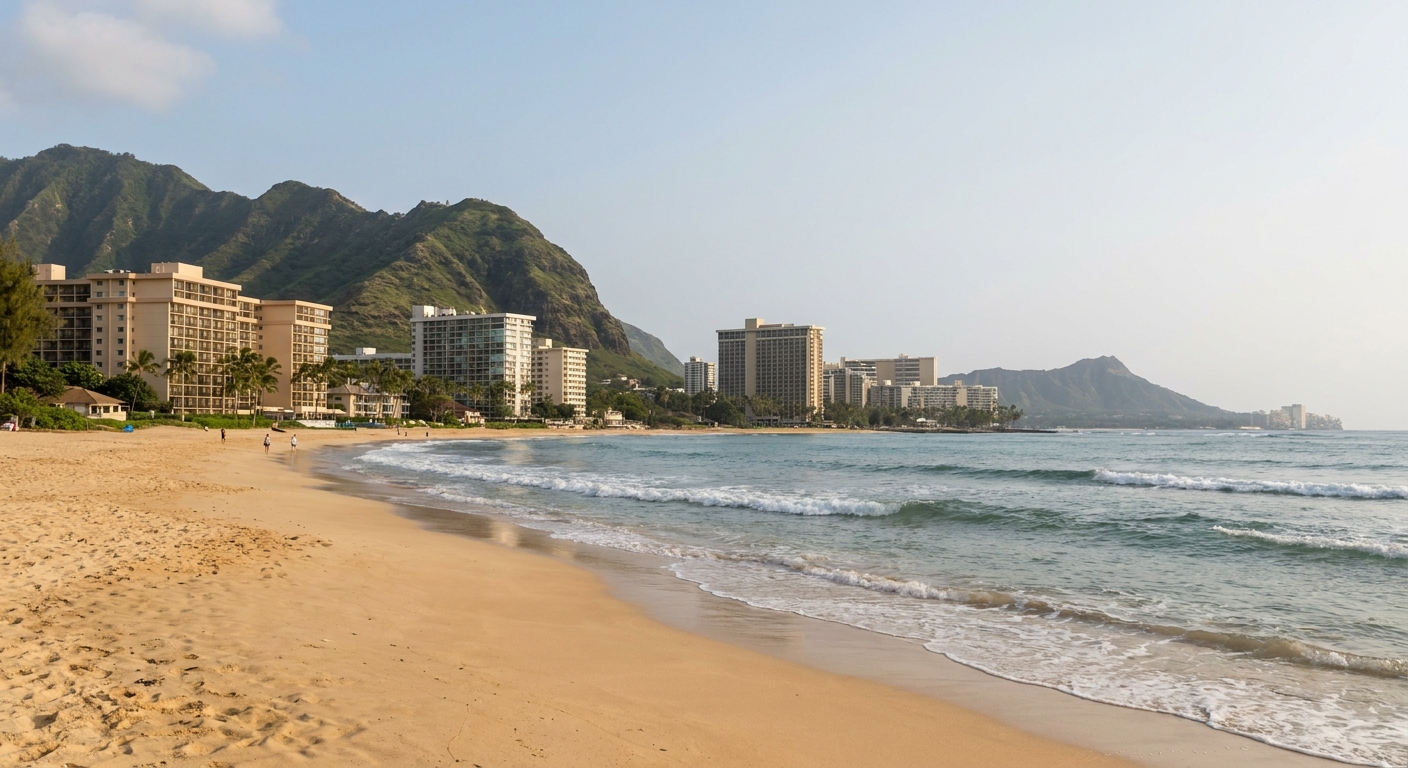
What is the weather like in Waikiki in September?
Waikiki in September brings heat, sunshine, and little rain, while trade winds make afternoons pleasant in the shade.
| Month | Average high (°F) | Average low (°F) | Rain days | Sea (°F) |
|---|---|---|---|---|
| August | 88.2 | 74.8 | 1.7 | 79.6 |
| September | 88.0 | 74.1 | 2.3 | 80.5 |
| October | 86.8 | 73.1 | 2.9 | 80.7 |
Mornings start soft and bright, and the sun is already strong by nine. Midday on the sand is the hottest stretch of the day, so many people retreat to a lanai, a shaded food court or the Honolulu Zoo’s tree-lined paths and return to the beach once the light turns golden. Evenings stay warm enough for shorts and sandals, and you can eat outside well after dark without a layer.
Most rain in Waikiki comes as short showers blowing in off the Koolau mountains that rise behind the city, and they usually clear out in a matter of minutes. Waikiki sits on the dry, leeward side of Oahu, so it is far sunnier than the windward coast near Kailua. A real wet day is unusual this month. If you drive up into Manoa Valley for a hike, expect more drizzle there than on the beach.
Pack for sun first: light cotton, a hat and sunglasses matter more than a rain jacket. The days are still long, with a little over twelve hours of daylight in mid-September, so there is time for a morning outing and a late swim. The sea runs a few degrees warmer than you might expect for the Pacific, which keeps water time pleasant from sunrise to dusk.
Can you swim in Waikiki in September?
Sure, you can take a long, leisurely swim because the ocean by Waikiki stays in the low 80s during September, marine records show.
Summer swells arrive from the south, so the waves along Waikiki’s shore can be small and rolling one day and noticeably bigger the next. That is why the beach has long been a place to learn surfing on gentle longboard waves, especially in front of Queen’s and Canoes.
Families often settle near the calmer corner by the Duke Kahanamoku Lagoon and the walled pools at Kuhio Beach, where the breakwater takes some of the push out of the water. Snorkelers can float over patches of reef near the Diamond Head end, with fish to see on a clear morning, though visibility changes from day to day.
Conditions shift, so check the flags and ask the lifeguards before going in. The Waikiki Aquarium puts out a calendar showing when box jellyfish are likely to arrive on Oahu’s south shore. Since they might show up whenever, follow the posted warnings and choose beaches with lifeguards. Pack a rash guard when your skin burns fast, plus a mask for watching the fish.
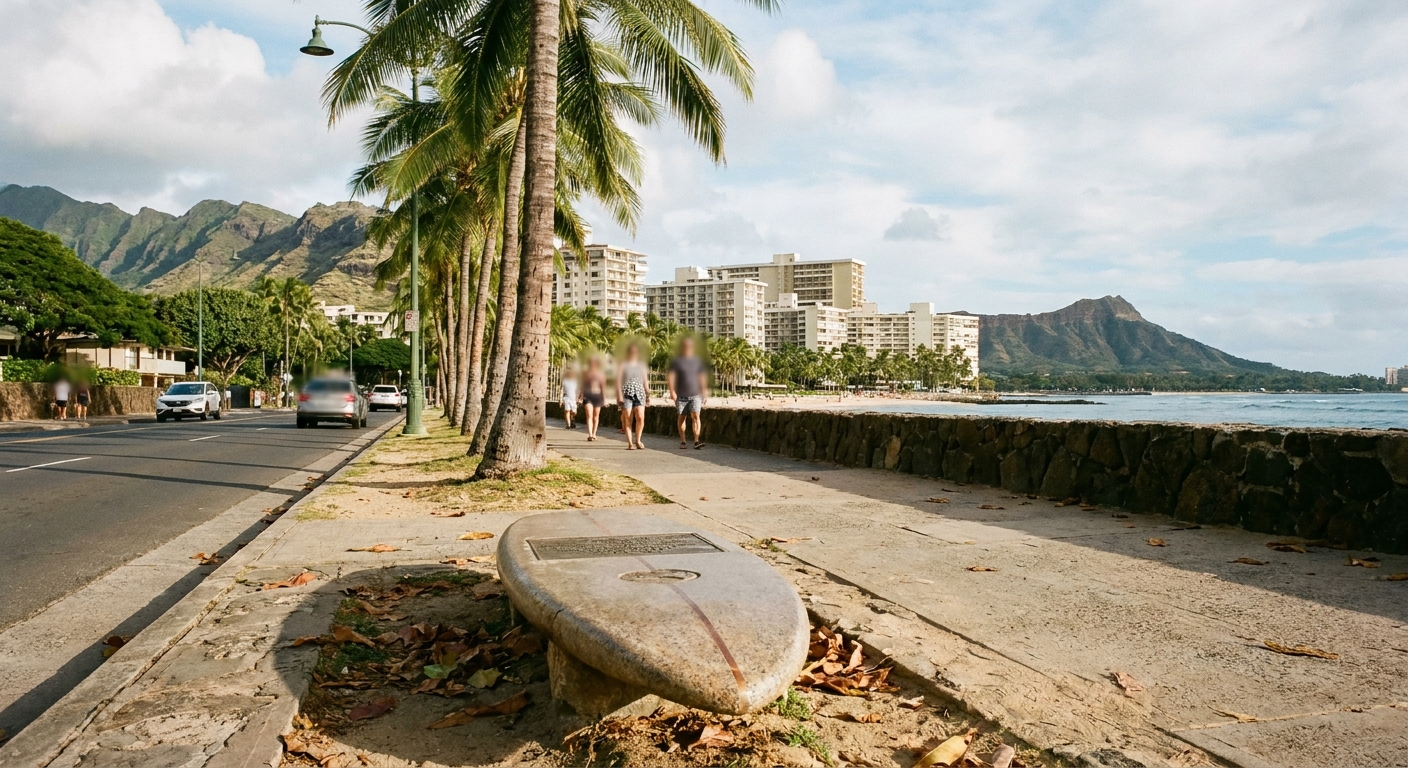
What to do in Waikiki in September
September is not a month of one big festival here. It is a month when Waikiki returns to its own rhythm: hula on the lawn at sunset, torch lighting along Kalakaua Avenue, and outrigger canoes sliding out through the surf.
The crowds thin after the summer peak, the ocean stays warm, and everything open in town feels a little less hurried. Local events and festivals do come and go in the fall, but the dates move, so the reliable pleasures are the daily ones.
On the water: surf, paddle and sail
A first surf lesson is the classic Waikiki morning, and September’s rolling south-shore swell suits beginners who want long, forgiving rides. Instructors work along the stretch between the Duke Kahanamoku statue and the Moana Surfrider, pushing students onto waves that run all the way in toward the sand.
For those who prefer to keep dry, outrigger canoe rides and catamaran sails depart from the beach facing the large hotels. A late-afternoon sail is a pleasant way to see Diamond Head from the water as the sky turns orange. Sunset sails are popular, so choose a time that suits you and expect a light breeze and a little spray.
Stand-up paddleboarders favor the quieter water near the Ala Wai harbor, and the warm sea makes falling in part of the fun. Wear a rash guard or a light shirt, because the sun reflects off the water and is stronger than it feels.
Diamond Head and the morning hike
The crater of Diamond Head, called Leahi by Hawaiians, rises at the end of Waikiki and gives the beach its postcard shape. The hike to the summit climbs steadily on switchbacks, tunnels and stairs, ending at a lookout over the coast, the city and the blue line of the Pacific. Start early, because the exposed trail heats up fast, and bring water and a hat.
Diamond Head State Monument requires a reservation for entry. Reserve ahead through the state’s system and plan your visit around the time slot you receive. The walk suits most people with moderate fitness and is best done before the sun climbs, with the reward of clear morning views toward Koko Head.
Evenings on Kalakaua Avenue
As the light fades, Kalakaua Avenue fills with strollers, street musicians and families heading to dinner. The open-air shopping plazas stay lively, and hula performances on the lawns and stages give the strip a local feel. Torches are lit along the beach walk at dusk, a nightly ritual that draws a crowd to the Kuhio Beach side.
For dinner, look for poke bowls, grilled fish, loco moco and plate lunch spots a few blocks back from the beach, where prices and portions both feel more local. Shave ice is the standard answer to a hot afternoon, topped with azuki beans or a scoop of ice cream if you like. Many bars and restaurants have open sides, so the trade winds keep the dining rooms comfortable.
Museums and indoor attractions fill the gaps in the day. The Waikiki Aquarium, near the Diamond Head end, shows reef life and publishes the box jellyfish calendar. The Honolulu Zoo and the nearby Kapiolani Park offer shade, picnic lawns and, on weekends, a crafts and art scene along the zoo fence.
A two-day itinerary for Waikiki in September
Day 1 begins at sunrise on the sand, when the beach is almost empty and the air is still cool. Take a short walk along the water toward Kuhio Beach, then have breakfast at a café with an open lanai. Spend the late morning on a first surf lesson or a long swim, then retreat to shade for lunch, perhaps a poke bowl or a plate lunch from a casual counter away from the main strip.
In the afternoon, when the heat peaks, step inside. The Waikiki Aquarium and the air-conditioned shops along Kalakaua are good for the hottest hours. Come back to the beach for the golden light, and take a catamaran sail or an outrigger ride as the sun sinks. Dinner and the torch lighting finish the day, with a stroll along the avenue afterward.
Day 2 is for the hike. Reserve a Diamond Head slot for the early morning, walk the trail before the heat builds, and follow it with a hearty breakfast and a swim to cool off. Spend the middle of the day in the shade at the Honolulu Zoo or under the banyan trees of Kapiolani Park, where the grass is cool and the breeze steady.
If the weather turns, showers rarely last long, so linger over a long lunch or visit a museum in downtown Honolulu, a short ride from the beach. Spend the evening at a hula show or a luau, then end with shave ice and a last walk beside the water as the sky darkens.
Is Waikiki busy in September?
Waikiki is moderately busy in September, quieter than the peak of summer but never empty.
Families have mostly gone home as the school year begins, which leaves more room on the sand and shorter waits at restaurants. Visitors who come now tend to be couples, honeymooners, travelers without school schedules and conference groups, and Labor Day weekend brings a short surge of mainland and local visitors. Midweek feels relaxed, while weekends and the evening dinner hour still draw crowds along Kalakaua.
Rooms are easier to find than in the summer weeks or around the winter holidays, though the best oceanfront ones still go early. As a habit, book early for holiday weekends like Labor Day and later for ordinary weeks, since the quieter stretches rarely sell out.
Rental cars are less pressed, but you hardly need one for Waikiki itself, since walking, buses and ride-hailing cover most trips. Restaurant tables at popular spots near the sunset hour are worth reserving, especially for beachfront places.
Diamond Head State Monument needs a reservation for entry, so make it before you arrive, particularly for early morning slots. Other popular outings on Oahu, like the USS Arizona Memorial and Hanauma Bay, also work on reservations, so plan them before the days fill up.
What to pack for Waikiki in September
Think light, breathable and ready for sun and the occasional shower. Waikiki is casual, so a single dressier outfit is plenty for dinner.
- Pack mineral sunscreen plus a hat, since even under overcast skies the sun burns strong.
- A rash guard, which protects your back while you swim, snorkel or learn to surf.
- Sturdy sandals or trail shoes for the Diamond Head hike.
- A light rain layer for the quick showers that pass over the mountains.
- A reusable water bottle, since mornings on the trail and afternoons on the sand are thirsty work.
- A snorkel mask if you want to look at fish near the reef.
Good to know before you go
September falls inside the Central Pacific hurricane season, which runs from June 1 to November 30, so keep an eye on forecasts as your trip approaches. Waikiki is easy to get around on foot, and buses and ride-hailing link it to the rest of Honolulu, so a rental car is optional unless you plan to leave town. Reserve Diamond Head first, then dinner for the evenings you care about most.
| Fee | Amount | Who pays |
|---|---|---|
| State transient accommodations tax | 11% | Hotel guests, on the room bill |
| Oahu county accommodations tax | 3% | Hotel guests, on the room bill |
Waikiki in September vs August and October
Moving the trip four weeks earlier puts you in August, which is a touch hotter at night and a little drier, with the summer family crowd still in town. The sea is a shade cooler than in September, and the beach is busier, with higher demand for rooms and tables. If you want the full summer energy and do not mind the crowd, August delivers it.
Come October, four weeks down the road, daytime temperatures dip a touch and rain arrives a little more often, yet it never lingers long. The water stays just as warm, and the beach feels calmer as the year turns toward autumn. Some travelers also find the evenings a little more comfortable, with the first hints of the wetter season on the way.
Choose August if school schedules tie you to summer, and September if you want the same warm water with more space. October suits flexible travelers who like a quieter mood and do not mind an occasional passing shower.
Is September a good time to visit Waikiki?
Yes, September is a very good time for Waikiki, especially for couples, beach lovers, first-time surfers and anyone who wants warm water without the summer crush.
It suits travelers who like long days outdoors, easy swims and relaxed dinners at open-air tables. It is less ideal if you want winter’s big-wave surf on the North Shore, cooler air for long hikes or the festive buzz of the holiday season. Anyone wary of storms should also know the hurricane season is under way, so watch the forecast.
On arrival, reserve your Diamond Head slot, then walk down to the beach at dusk to watch the torches light along the shore. In Waikiki, September brings warm water, gentle waves, and evenings without hurry, when the Pacific feels its most inviting.
Sources
- NOAA NCEI, monthly normals 1991-2020, station USC00519397, checked September 8, 2026
- Open-Meteo Marine API, average 2015-2024, checked September 8, 2026
- sunrise-sunset.org, sunrise and sunset calculated for the 15th of the month, checked September 8, 2026
- Hawaii Department of Taxation, Announcement 2025-03 ; City and County of Honolulu, OTAT FAQ, checked September 25, 2026
- Waikiki Aquarium, Box Jellyfish Calendar, checked September 25, 2026
- NWS Honolulu / Central Pacific Hurricane Center, « 2026 Central Pacific Hurricane Season Outlook », weather.gov/hfo/hurricaneOutlook2026, checked September 24, 2026