
Before sunrise on the Kona side, the smell of roasting coffee drifts out of small farm sheds while the first light turns the lava fields from black to bronze. Farther along the island, the night sky above Maunakea fills with stars and the glow of Kilauea shows red against the clouds. The Big Island is a place of volcanoes, waterfalls and quiet beaches, made for travelers who like to spend their days outdoors and still end them with a good meal.
What are the best things to do in the Big Island?
The best things to do here are the ones that put you face to face with the land itself: a living volcano, a mountain of stars, a black sand beach and a reef full of turtles.
- Walk the rim and the crater roads of Hawaii Volcanoes National Park, where Kilauea keeps the landscape changing.
- Step inside the Nahuku lava tube, a green fern forest ending in a cave carved by lava.
- Watch the sun go down from the slopes of Maunakea and stay for the stars.
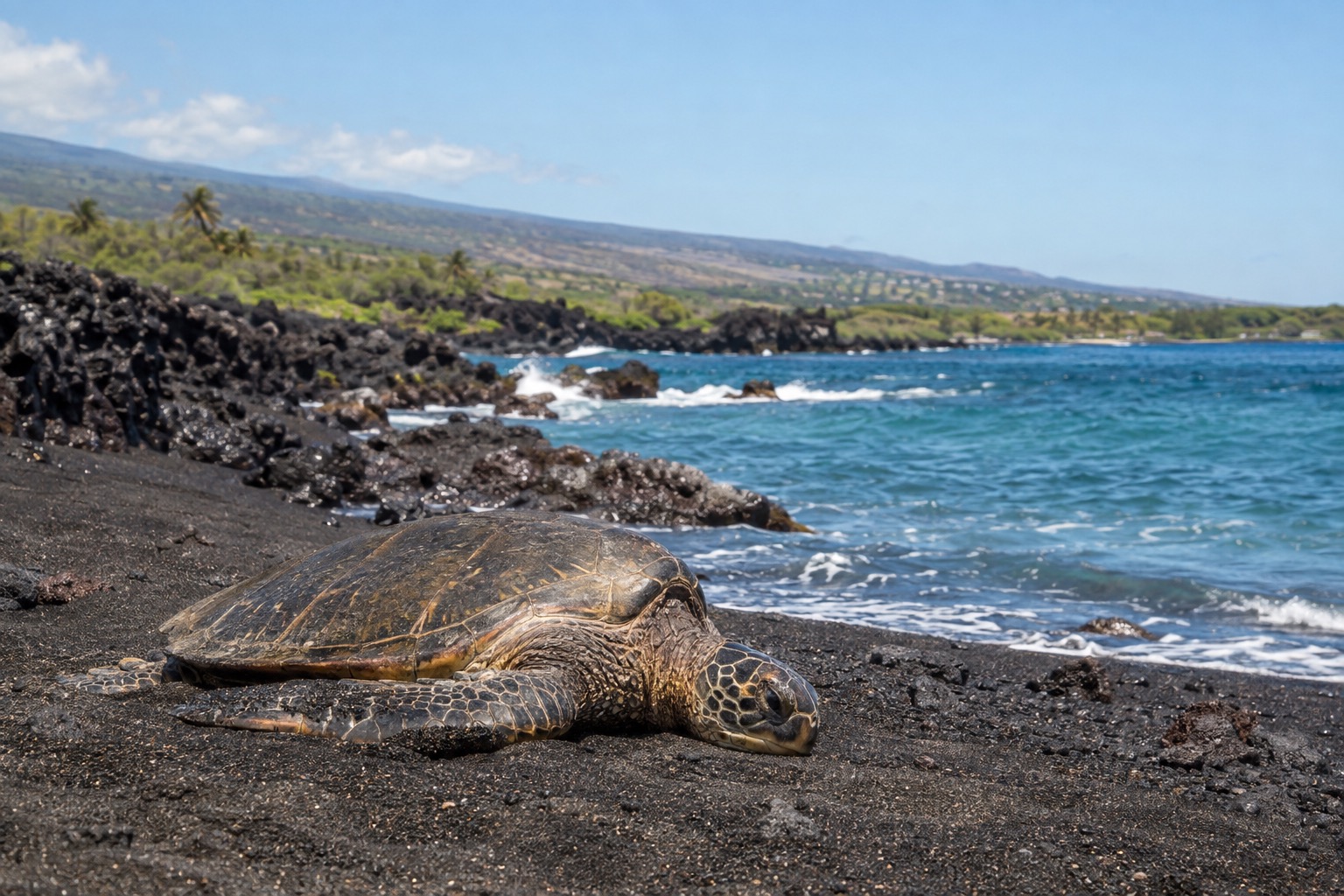
- Visit the black sand at Punaluu, where green sea turtles rest on the shore.
- Snorkel Kealakekua Bay, a favorite of reef fish and spinner dolphins.
- Stand beneath the waterfalls of Hilo, Akaka and Rainbow Falls among them.
- Taste Kona coffee on a working farm.
- Walk the quiet grounds of Puuhonua o Honaunau, the old place of refuge.
Sights and landmarks in the Big Island
Hawaii Volcanoes National Park
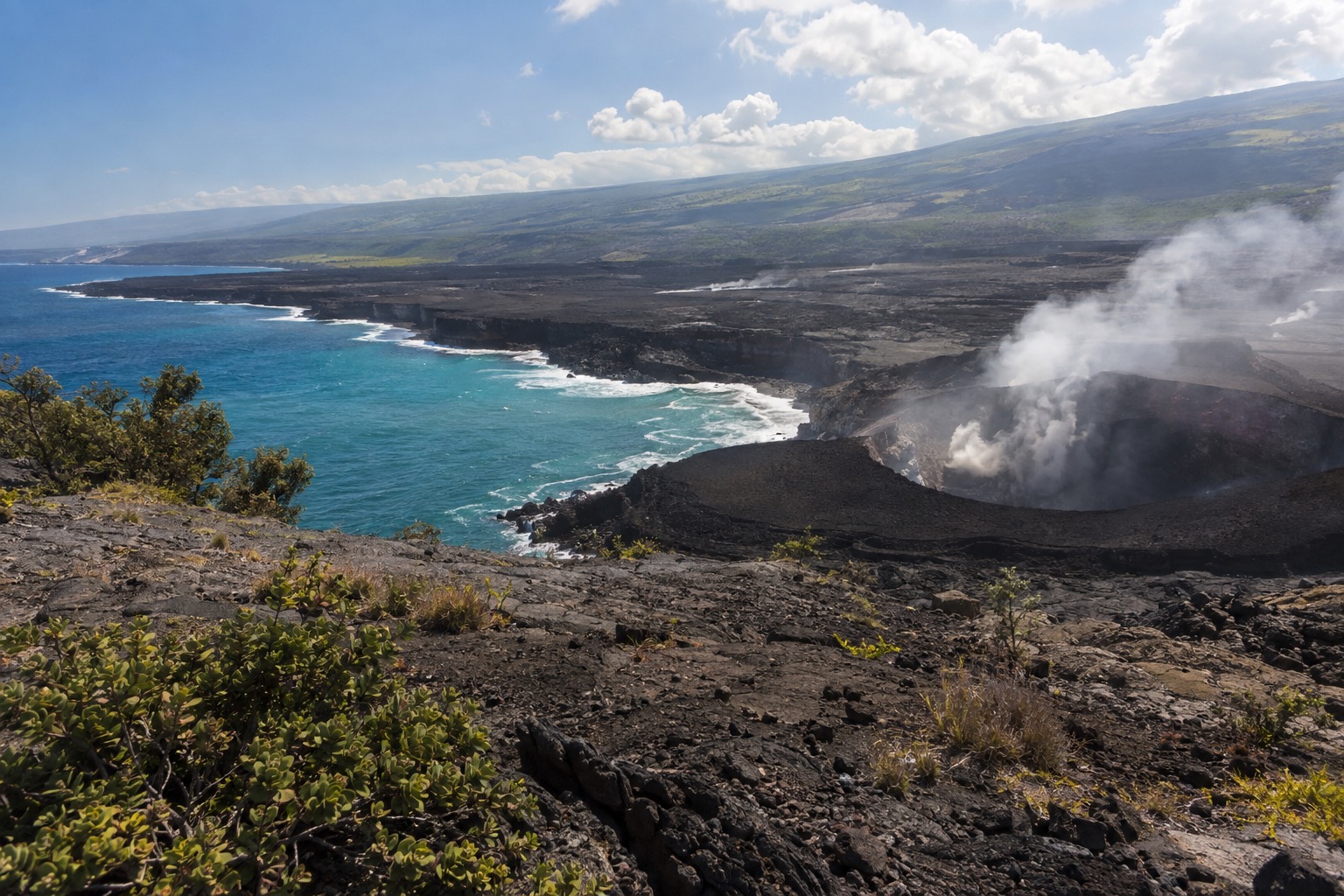
This is the headline act of the island, a huge park that stretches from the summit of Kilauea down to the sea. You can drive the rim, stop at steaming vents, and then follow Chain of Craters Road as it winds down through old flows to the coast. At night, the glow from the vents is the reason many people stay past dark.
From Hilo the park is a short drive on Highway 11. From Kailua-Kona it is a long haul of two hours or more, so many visitors make it an overnight. Kilauea is currently at a watch level with active glow from its vents, so the show can be good, but the park’s own updates tell you what is open.
The park is cool and often wet at the crater rim, so bring a layer and a rain jacket whatever the season. The Kahuku Unit, farther south, is quieter and has ranching relics and old Mauna Loa flows to hike.
Maunakea at dusk
The mountain rises far above the clouds, and the road up is a trip through changing climates, from pasture to bare cinder. At the visitor station partway up, people pause to let their bodies adjust, then continue toward the summit, where the observatories stand against the sky. Sunset here turns the cloud deck below into a pink sea.
Past the station, the road is only for four-wheel-drive vehicles, so many visitors join a tour that handles the driving and brings warm parkas. The air is thin and cold, and the stargazing afterward is among the clearest you will find anywhere. It is not a place for young children or anyone with heart or breathing trouble.
Places of history on the coast
Puuhonua o Honaunau was a sanctuary where people who broke the old laws could find forgiveness. Today you walk among carved wooden figures, a restored royal fishpond and a long stone wall, with the ocean slapping the lava shore. It is a calm, shaded place and rewards a slow visit.
Farther north, Puukohola Heiau stands on a dry hill above the sea, a temple tied to the unification of the islands under a single king. Close by, Kealakekua Bay marks where Captain Cook came ashore, and the white monument across the water is a landmark for kayakers and snorkelers.
| Site | Open | Admission |
|---|---|---|
| Puuhonua o Honaunau National Historical Park | Daily | $20.00 per private vehicle, $15.00 per motorcycle, $10.00 per person on foot or bicycle (16 and older) |
| Puukohola Heiau National Historic Site | Daily | Free |
| Nahuku (Thurston Lava Tube) lighting | 8 a.m. to 8 p.m. | Included with the park entrance |
| Kahuku Unit | 8 a.m. to 4 p.m., Thursday to Sunday | Free |
| Hawaii Volcanoes National Park | Open year round | $30.00 per private vehicle (up to 14 passengers) |
Beaches and outdoor things to do in the Big Island
Punaluu black sand beach
The sand here is jet black, ground from lava, and framed by coconut palms. Green sea turtles haul out onto the shore to rest, often lined up like boulders. It is one of the most photographed beaches on the island and rarely feels crowded.
Keep at least 10 feet from the turtles, which are protected as a threatened species. Taking sand home is prohibited by state law, so leave the black grains where they are. Swimming here depends on the surf, so look at the signs before getting in.
Hapuna and the Kohala coast
Hapuna is the long, golden-white crescent that people picture when they think of a Hawaii beach. The sand is broad, the backdrop is dry hills, and the sun is nearly guaranteed on this leeward side. In winter the waves can build and the shore break becomes strong, so read the posted warnings and the day’s surf and currents before you go in, and swim near a lifeguard only where one is on duty.
Visitors from outside Hawaii pay a per-person fee plus parking at the state recreation area. Nearby bays are smaller and quieter, and the lava rock shoreline holds tide pools worth a look.
Kealakekua Bay snorkeling
The water in the bay is clear, the coral is healthy and fish come in schools. Spinner dolphins often visit in the morning. The bay is protected as a historical park, so the rules are strict about who can paddle in.
Every vessel on the bay, kayaks and paddle boards included, needs a State Parks permit, and permitted vessels cannot land at the flat near the monument. Most visitors simply join a licensed boat tour, which takes care of the details and gets you to the best reef in the early hours.
More outdoor stops
Rainbow Falls in Hilo drops into a green pool and often shows a rainbow in the morning mist. Akaka Falls, a short loop walk through ferns and orchids, plunges more than 400 feet into a gorge. Both are quick stops and pair well with a Hilo day.
For a night outdoors, the park has two campgrounds. Namakanipaio sits among eucalyptus at cool elevation with drive-in sites, and Kulanaokuaiki is a quieter, simpler spot with no water and no fires.
Day trips in the Big Island
Volcanoes from Hilo
From Hilo, the park is about a 45 minute drive southwest on Highway 11, which makes it an easy day trip. You can see the crater rim, the steam vents and the lava tube, then drive Chain of Craters Road down to the sea and back up for the evening glow.
Start early so you have parking at the lava tube, which fills quickly, and stay for sunset when the glow is strongest. It suits nearly everyone, from older travelers to children, with only a few short walks needed.
Saddle Road across the island
The Daniel K. Inouye Highway, known as Saddle Road, climbs between Mauna Loa and Maunakea and links Hilo to the west side. The road has been rebuilt to modern standards, and the drive itself, through lava fields and high pasture, is part of the trip.
It is the route to Maunakea and a fast way to cross the island. Watch the weather, because clouds can drop onto the road without warning, and fill the tank before you start.
Kona to the volcano
From Kailua-Kona the park is a two to two and a half hour drive along Highway 11 through the south. The route passes coffee farms, black sand turnoffs and lava fields, so it fills the day even before you arrive.
The drive is long, so travelers staying in Kona often combine the park with Punaluu on the way back. Those who want sunset at the crater should plan for a late return.
What to eat in the Big Island
Eating here starts with coffee, grown on the slopes above Kona and served in farm tastings and small cafés. Under a state law due to take effect in mid 2027, blends using the Kona name will need at least half Kona coffee, so labels will become more honest.
Beyond coffee, look for poke at the grocery counters, plate lunches with rice and macaroni salad, and fresh fish grilled at harbor-side spots. Hilo’s farmers market is full of tropical fruit, local honey and flowers, and shave ice, topped with sweet syrups, is the afternoon treat.
Local beef from the upland ranches near Waimea appears on many menus, and bakeries sell malasadas, warm sugared doughnuts, that are worth a detour. Ask for a loco moco, rice topped with a hamburger patty, egg and gravy, if you want a true island breakfast.
Things to do in the Big Island at night
Nights on the Big Island are about the sky more than the bar scene. The best evening plan is stargazing, either from the mountain or from a dark beach, and watching the red glow over Kilauea.
In Kailua-Kona, the seafront along Alii Drive stays lively with open-air restaurants, live music and a few bars. Boats go out after dark to see manta rays gather near lights in the water, a favorite evening outing.
Resorts on the Kohala coast host luaus with music, hula and a buffet, and Hilo has quieter dinners and small music venues. Most of the island goes to bed early, so late nights are rare.
Things to do in the Big Island with kids
Children usually love the lava tube at Nahuku, a short walk through ferns into a cave tall enough to stand in. The walk is about a mile and a half round trip, and the tube is lit through the day and evening.
Turtle spotting at Punaluu is another hit, as long as they keep their distance. Tide pools on the Kohala coast and short falls walks at Akaka and Rainbow Falls keep little legs busy without long hikes.
Keep sun protection close, because the leeward beaches are bright and dry. Ocean conditions change with the season, so choose beaches with lifeguards. High elevations such as Maunakea are not good for small children, and the park rim can be cold and rainy.
Good to know before you go
A rental car is the way to see the island, since distances are long and public transit is limited. Most visitors fly into Kona or Hilo, and the two sides of the island feel like different worlds, dry and sunny on the west, green and rainy on the east. The Central Pacific hurricane season runs from June 1 to November 30.
| Fee | Amount | Who pays |
|---|---|---|
| State park entry (Akaka Falls, Hapuna Beach) | $5.00 per person | Visitors from outside Hawaii |
| State park parking | $10 per vehicle | Visitors from outside Hawaii |
| State hotel room tax | 11.00% | Guests of hotels and rentals |
| County hotel room tax | 3% | Guests of hotels and rentals |
| Visible general excise tax pass-through | 4.7120% | Customers of island businesses |
Sources
- Hawaii Department of Taxation, Tax Announcement No. 2025-03 (Transient Accommodations Tax Law Changes from 2025 Legislative Session), files.hawaii.gov/tax/news/announce/ann25-03.pdf, checked September 24, 2026
- County of Hawaii, Department of Finance, Transient Accommodations Tax (TAT) page, hawaiicounty.gov/departments/finance/transient-accommodations-tax-tat (live returned HTTP 403 on request, read via Internet Archive Wayback Machine snapshot dated August 14, 2026, same official content), checked September 25, 2026
- Hawaii Department of Taxation, County Surcharge on General Excise and Use Tax page, tax.hawaii.gov/geninfo/countysurcharge/, checked September 25, 2026
- Federal Aviation Administration, CY2024 Commercial Service Enplanements (xlsx), faa.gov/airports/planning_capacity/passenger_allcargo_stats/passenger/arp-cy2024-commercial-service-enplanements.xlsx, checked September 24, 2026
- National Park Service, "Fees & Passes", nps.gov/havo/planyourvisit/fees.htm, read September 25, 2026
- National Park Service, "NPS Geodiversity Atlas – Hawaiʻi Volcanoes National Park", nps.gov/articles/nps-geodiversity-atlas-hawai-i-volcanoes-national-park-hawai-i.htm, read September 25, 2026
- U.S. Geological Survey, Hawaiian Volcano Observatory, "Kīlauea Volcano Updates", usgs.gov/volcanoes/kilauea/volcano-updates, read September 24, 2026
- University of Hawaiʻi at Hilo, Center for Maunakea Stewardship, "Important Things to Know", hilo.hawaii.edu/maunakea/visitor-information/important-things-to-know, read September 25, 2026
- University of Hawaiʻi at Hilo, Center for Maunakea Stewardship, "Maunakea Visitor Information Station", hilo.hawaii.edu/maunakea/visitor-information/station, read September 25, 2026
- Hawaiʻi Department of Land and Natural Resources, Division of State Parks, "ʻAkaka Falls State Park", dlnr.hawaii.gov/dsp/parks/hawaii/akaka-falls-state-park/, read September 25, 2026
- National Park Service, "Fees & Passes", nps.gov/puho/planyourvisit/fees.htm, read September 25, 2026
- National Park Service, "History & Culture", nps.gov/puhe/learn/historyculture/index.htm, read September 25, 2026
- Hawaiʻi Department of Land and Natural Resources, Division of State Parks, "Kealakekua Bay State Historical Park", dlnr.hawaii.gov/dsp/parks/hawaii/kealakekua-bay-state-historical-park/, read September 25, 2026
- Hawaiʻi State Legislature, Session Laws of Hawaiʻi 2024, Act 198 (H.B. No. 2298), Section 1, data.capitol.hawaii.gov/sessions/sessionlaws/Years/SLH2024/SLH2024_Act198.pdf, read September 25, 2026
- Hawaiʻi State Legislature, Session Laws of Hawaiʻi 2024, Act 198 (H.B. No. 2298), Section 1-2, data.capitol.hawaii.gov/sessions/sessionlaws/Years/SLH2024/SLH2024_Act198.pdf, read September 25, 2026
- NOAA Fisheries, "Viewing Marine Wildlife in Hawaiʻi", fisheries.noaa.gov/pacific-islands/marine-life-viewing-guidelines/viewing-marine-wildlife-hawaii, read September 25, 2026
- Hawaiʻi State Legislature, S.B. No. 3032, S.D. 1, H.D. 2 (2026), Section 1, data.capitol.hawaii.gov/sessions/session2026/bills/SB3032_HD2_.pdf, read September 25, 2026
- Hawaiʻi Department of Land and Natural Resources, Division of State Parks, "New Fees Go Into Effect at Hawaiʻi State Parks", dlnr.hawaii.gov/dsp/announcements/new-fees-go-into-effect-at-hawaii-state-parks-on-friday-october-9/, read September 25, 2026
- NPS, Day Hike Nahuku (Thurston Lava Tube), https://www.nps.gov/havo/planyourvisit/day-hike-nahuku.htm, checked September 25, 2026
- NPS, Hawaii Volcanoes National Park expands hours and increases access to Kahuku Unit, https://www.nps.gov/havo/learn/news/20220523-nr-kahuku-hrs.htm, checked September 25, 2026
- NPS, Hike and Explore the Park's Kahuku Unit in Kau, https://www.nps.gov/havo/learn/news/hike-and-explore-kahuku.htm, checked September 25, 2026
- NPS, Camping, https://www.nps.gov/havo/planyourvisit/camp.htm, checked September 25, 2026
- NOAA Fisheries, "Green Turtle", fisheries.noaa.gov/species/green-turtle, read September 25, 2026
- National Park Service, "Fees & Passes", nps.gov/puhe/planyourvisit/fees.htm, read September 25, 2026
- National Park Service, "Drive Chain of Craters Road", nps.gov/havo/planyourvisit/ccr_tour.htm, read September 25, 2026
- Hawaiʻi Department of Land and Natural Resources, Division of State Parks, "Wailuku River State Park", dlnr.hawaii.gov/dsp/parks/hawaii/wailuku-river-state-park/, read September 25, 2026
- Hawaiʻi Department of Land and Natural Resources, Division of State Parks, "Hāpuna Beach State Recreation Area", dlnr.hawaii.gov/dsp/parks/hawaii/hapuna-beach-state-recreation-area/, read September 25, 2026
- NPS, Directions, https://www.nps.gov/havo/planyourvisit/directions.htm, checked September 25, 2026
- Hawaii Department of Transportation, New phase of Daniel K. Inouye Highway opens Oct. 10 2017, https://hidot.hawaii.gov/highways/new-phase-of-daniel-k-inouye-highway-opens-oct-10-2017/, checked September 25, 2026
- USGS, November 27-December 10, 2022 Eruption of Mauna Loa, https://www.usgs.gov/volcanoes/mauna-loa/science/november-27-december-10-2022-eruption-mauna-loa, checked September 25, 2026
- NOAA NCEI, monthly normals 1991-2020, station USW00021510
- NOAA NCEI, monthly normals 1991-2020, station USW00021504
- NOAA NCEI, monthly normals 1991-2020, station USC00511303
- NOAA NCEI, monthly normals 1991-2020, station USC00518422
- NWS Honolulu / Central Pacific Hurricane Center, « 2026 Central Pacific Hurricane Season Outlook », weather.gov/hfo/hurricaneOutlook2026, checked September 24, 2026