
Early on a March morning, the first sound at Ko Olina is often the soft slap of water on the lava-rock walls around the lagoons, and then the squeak of beach chairs being set out in a row. Offshore, a plume of spray sometimes gives away a humpback whale heading along the Waianae coast. March is the last stretch of the whale season on Oahu’s dry leeward corner, with warm afternoons, a calm-looking horizon and sunsets that start to slide later.
What is the weather like in Ko Olina in March?
March in Ko Olina is warm, sunny and mostly dry, with the occasional passing shower that rarely lasts long. It is the driest corner of Oahu, and the winter rains are fading by now.
| Month | Average high (°F) | Average low (°F) | Rain days | Sea (°F) |
|---|---|---|---|---|
| February | 80.9 | 65.1 | 2.5 | 76.3 |
| March | 81.6 | 66.0 | 2.4 | 76.4 |
| April | 83.6 | 67.7 | 1.3 | 77.1 |
Mornings are soft and a little cool, pleasant for coffee on a lanai in a T-shirt. By midday the sun feels strong, and the trade winds keep the afternoons comfortable rather than sticky. Evenings cool off enough that you may want a light layer for dinner outside, especially by the water after sunset.
Rain here comes as brief showers, often drifting over from the mountains behind the resort, and it usually clears within the hour. Rainy days are few, and a day that really pours is rare. The leeward corner is known as the island’s driest resort coast, which is why so many people choose it in winter when the windward side of Oahu is damp and gray.
The light is long and generous, with about twelve hours of daylight in the middle of the month, so you can fit a beach morning, a late lunch and a walk at sunset into one day. Bring sunglasses and plan on sunscreen even when clouds drift by. The sea stays swimmable in a way that surprises people used to a cold March at home.
Can you swim in Ko Olina in March?
Yes, the sea is warm enough for a long swim, and most people find it comfortable after the first minute. The Pacific off Ko Olina averages in the mid-70s in March, a shade cooler than a bathtub but far from bracing.
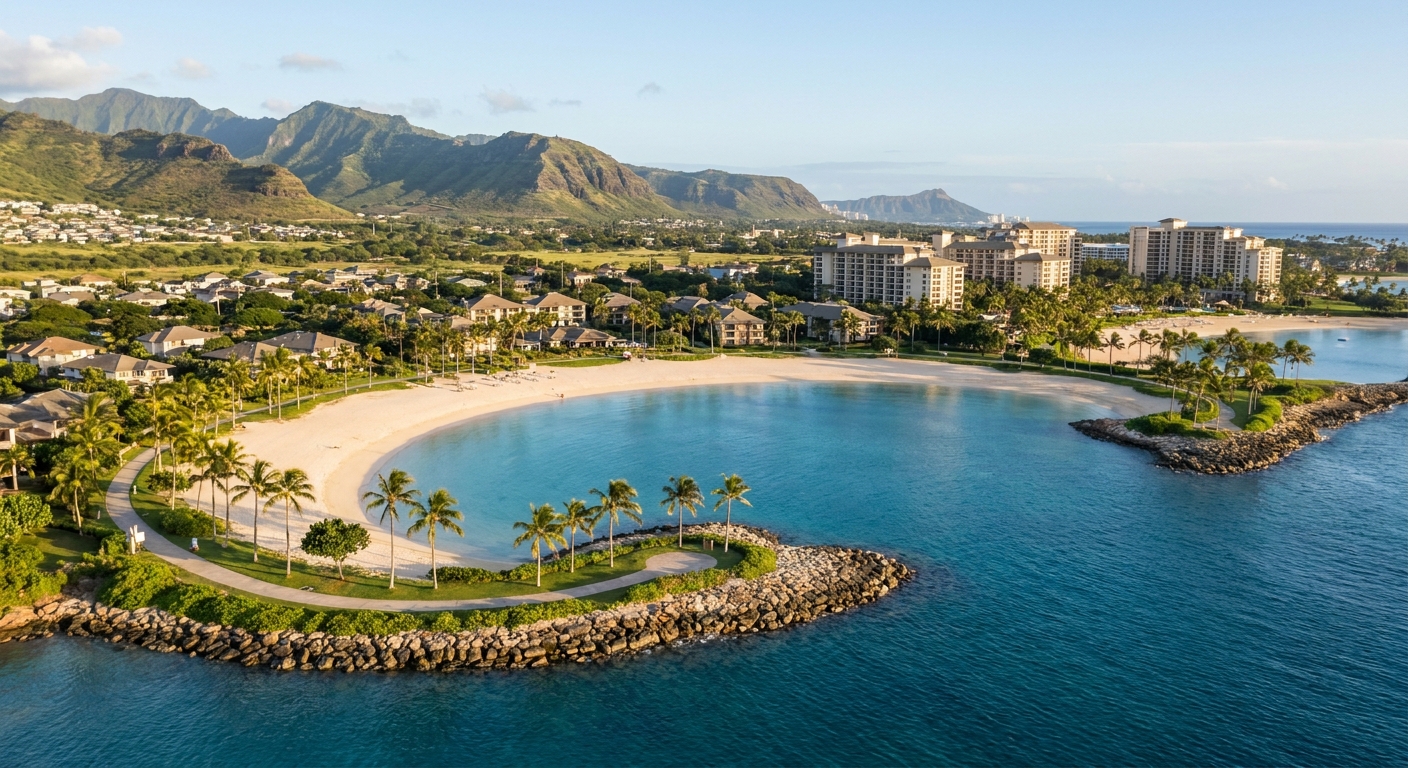
The resort is built around four man-made lagoons edged with rock breakwaters, and they usually stay gentle because the walls blunt the open-ocean swell. That makes them a natural choice for families with small children, for nervous swimmers and for anyone who wants to float and watch fish near the rocks. Snorkelers often drift along the lagoon edges with a mask and a rental fin set, though what you see changes from day to day.
Outside the lagoons, the open coast is another matter. Winter swell can still reach west-facing shores in March, so the ocean beyond the breakwaters may carry waves and currents that are not for casual swimmers.
Look at the beach signs, follow the flags, and ask the lifeguards before you go in. Bring a rash guard for long snorkeling sessions, since the March sun is strong, and a towel for the breeze when you step out.
What to do in Ko Olina in March
March brings the closing stretch of humpback whale season, the month’s biggest natural spectacle. Hawaii’s whale sightings usually span November through April, and since the peak falls between January and March, March remains a strong choice.
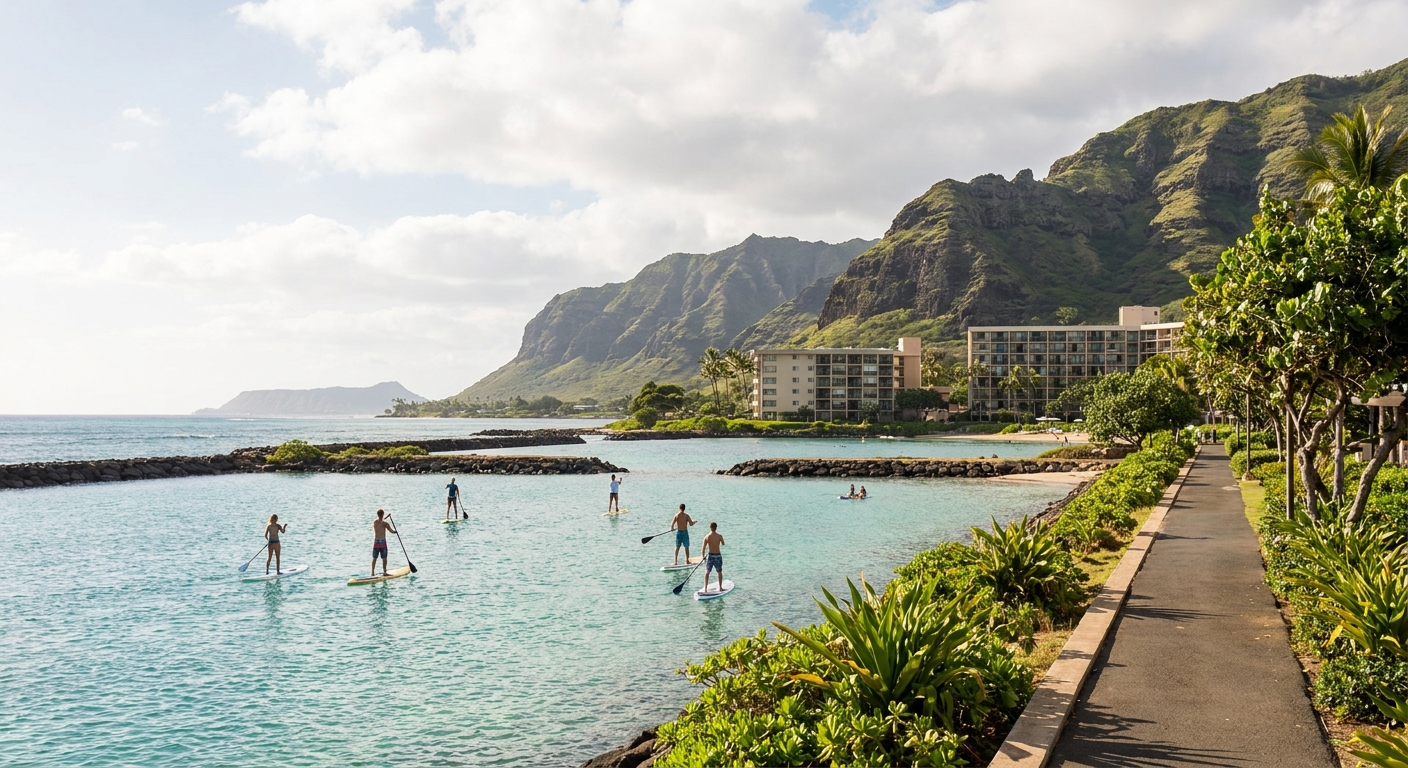
From a lagoon beach or a restaurant terrace you may spot blows, tail slaps or the occasional breach out past the reef. Boats must keep their distance, and the rule is no closer than 100 yards, which also applies to anyone paddling out.
March marks the end of the busy winter season, with spring break crowds arriving late in the month. Spring break families begin to show up late in the month, so the lagoon beaches fill with sandcastles and floats by midday.
Lagoon days and beach mornings
The four lagoons are the heart of a Ko Olina stay, and each has its own mood. Some are busier, with families, floats and kids splashing in the shallows. Others are quieter, with a long crescent of sand and a few snorkelers working the rocks. A good March habit is to claim a spot in the morning, when the water looks glassy and the shade is easy to find.
The walkway that links the lagoons is a pleasant stroll at any hour, and it passes small shops, a few cafés and the resort grounds. Public access to the beaches is part of the design, so you do not need to be a hotel guest to enjoy the sand. Pack a hat, because the midday sun is strong even in a cool breeze.
Sunset on the water
Ko Olina faces west, and that is the real show of the day. In March the sun drops toward the horizon in the evening, and the sky turns orange and pink over the water. Some evenings the clouds catch the color, and on a clear one you may watch the last light with a drink in hand.
Many visitors gather on the beach, on the grass near the lagoons or at an open-air restaurant for the moment the sun slips down. If whales are around, the last hour of light is also a good time to scan the horizon for spouts. Bring a light layer, since the breeze freshens as the sun goes.
Luaus, food and the evening scene
Dinner in Ko Olina often means a luau or a table by the water. A luau usually brings a buffet of kalua pork, poi, lomi salmon and haupia, along with hula and fire-knife dancing under the stars. The shows are a classic part of an Oahu trip, and March evenings are mild enough that you will not need more than a light layer.
For a lighter meal, look for fresh poke, grilled fish, shave ice and plate lunches from small spots in and around the resort. Coffee and a pastry on a quiet morning is a good way to start. Many people also drive a short way to the surrounding leeward towns for a casual local meal, something that feels a world away from the resort polish.
If you want to add a little more to the week, the hillsides and beaches along the Waianae coast reward a slow drive, and a day trip toward Honolulu or the North Shore is easy from the resort. Winter swell can still bring big waves to the North Shore in March, and watching surfers from the sand is a show of its own. Respect the water, keep a safe distance from monk seals and turtles resting on the beach, and stay off the reef.
A two-day itinerary for Ko Olina in March
Day 1 is for settling in around the lagoons. Start with an early walk along the shoreline path, when the air is cool and the water is quiet, then take a long swim in the lagoon that suits you best. Lunch can be a casual plate lunch or poke bowl near the water. In the afternoon, rest in the shade during the strongest sun, then return to the sand for the golden light.
Sunset is the anchor of the evening, so plan dinner around it. Many people eat at an open-air restaurant facing west, then stay for the afterglow. If a luau appeals, it makes a lively, festive end to the first day. If rain comes through, move to a covered restaurant or the shops along the walkway, and the shower will likely pass.
Day 2 is for stepping a little outside the resort. Spend the morning snorkeling in a lagoon or on a gentle paddle, then drive along the leeward coast to see a different beach or town. Lunch is a good time to try a local shave ice or a plate lunch away from the resort. If whales are in the mood, scan the horizon while you eat.
In the afternoon, head back for a slow hour by the water or a spa visit if the weather turns gray. Finish with a last sunset walk along the path, a quiet dinner and a look at the stars, which are often bright on this dry coast. Pack the car in the morning if you are leaving, so the last day stays relaxed.
Is Ko Olina busy in March?
Moderately, with a clear rise toward the end of the month as spring break brings families to the lagoons. Early March is calmer, with winter visitors still around and lots of space on the beach.
Rooms, rental cars and restaurant tables are easiest to find in the first weeks, and they tighten during the spring break stretch. As a habit, book early for the weeks when schools are off and later for the quieter ones. Dinner tables at the popular sunset spots fill first, so reserving ahead for those evenings is wise. Luaus also tend to sell out on busy nights.
The resort stays lively but never feels like a big-city crowd. The lagoons spread people out, and the walkway is wide enough that you can find a quiet corner. Weekdays are generally calmer than weekends, when local families also come out to enjoy the beaches. Mornings are the quietest time, and by late afternoon the sand is full of people waiting for the sunset.
What to pack for Ko Olina in March
Pack for warm days, cool evenings and a lot of time in the water.
- Two swimsuits, so one can dry while you wear the other.
- A rash guard, for long snorkeling sessions under strong sun.
- Mineral sunscreen and a hat, since the sun is strong even on cloudy days.
- A light sweater or wrap, for breezy evenings by the water.
- Bring sandals plus walking shoes, since you will want them for coast drives and the lagoon path.
- A small rain jacket, for the brief passing showers.
Good to know before you go
March falls outside the official hurricane season, which runs from June 1 to November 30. Getting around is easiest with a rental car, since the resort sits a good way from Honolulu, and rooms near the lagoons go first in the busy weeks. Resort stays carry taxes, listed here.
| Fee | Amount | Who pays |
|---|---|---|
| State transient accommodations tax | 11% | Guests staying at Ko Olina resorts |
| Oahu county transient accommodations tax | 3% | Guests staying at Ko Olina resorts |
Ko Olina in March vs February and April
Moving the trip a month earlier puts you in the heart of whale season, when sightings peak and the winter crowds are in full swing. The sea is about the same, and a few more showers can pass through. February suits travelers whose main goal is whale watching.
A month later, April is a little warmer and drier, and the sea edges up a degree. Whale season is nearly over, though a late straggler may still pass. Spring break traffic fades toward the end of the month, so the beaches feel a bit more relaxed.
If you want whales and a quieter beach, stay with early March. If you want the warmest water and the driest days, lean toward April. March is the balanced choice, with both whales and warm weather in the same week.
Is March a good time to visit Ko Olina?
Yes, especially for travelers who want sunshine, warm water and a calm resort base with a chance at whales. Families, couples and anyone escaping a cold mainland winter will find it easy to love.
Those who want big surf or a lively nightlife scene may prefer the North Shore or Waikiki. People who dislike spring break families might choose a quieter month. On arrival, the best first move is a swim in the lagoon and a walk to the water at sunset, which sets the pace for the rest of the stay.
What makes March special here is the mix of a fading whale season, a dry and sunny coast and long evenings that glow over the water. It feels like a small pause between winter and the busy summer, with the lagoons glittering and the horizon open.
Sources
- NOAA NCEI, monthly normals 1991-2020, station USW00022551, checked September 8, 2026
- Open-Meteo Marine API, average 2015-2024, checked September 8, 2026
- sunrise-sunset.org, sunrise and sunset calculated for the 15th of the month, checked September 8, 2026
- NOAA NCEI, normals 1991-2020, stations USW00022551 (Kalaeloa) and USC00519397 (Waikiki), via PLAN-HAWAII.md §1, checked September 24, 2026
- NOAA, Hawaiian Islands Humpback Whale National Marine Sanctuary, Responsible Recreation, checked September 25, 2026
- Hawaii Department of Taxation, Announcement 2025-03 ; City and County of Honolulu, OTAT FAQ, checked September 25, 2026
- NWS Honolulu / Central Pacific Hurricane Center, « 2026 Central Pacific Hurricane Season Outlook », weather.gov/hfo/hurricaneOutlook2026, checked September 24, 2026