
On a March morning in Wailea, the first thing you may notice is a plume of mist far out on the water, and then the slow arch of a humpback’s back between Maui and the island of Kahoolawe. Coffee is poured on lanai terraces, joggers pad along the shoreline path past the lava rock and the manicured gardens, and the sun climbs over Haleakala behind you. March is the tail end of the whale peak and one of the gentlest stretches of the year on Maui’s dry south coast.
What is the weather like in Wailea in March?
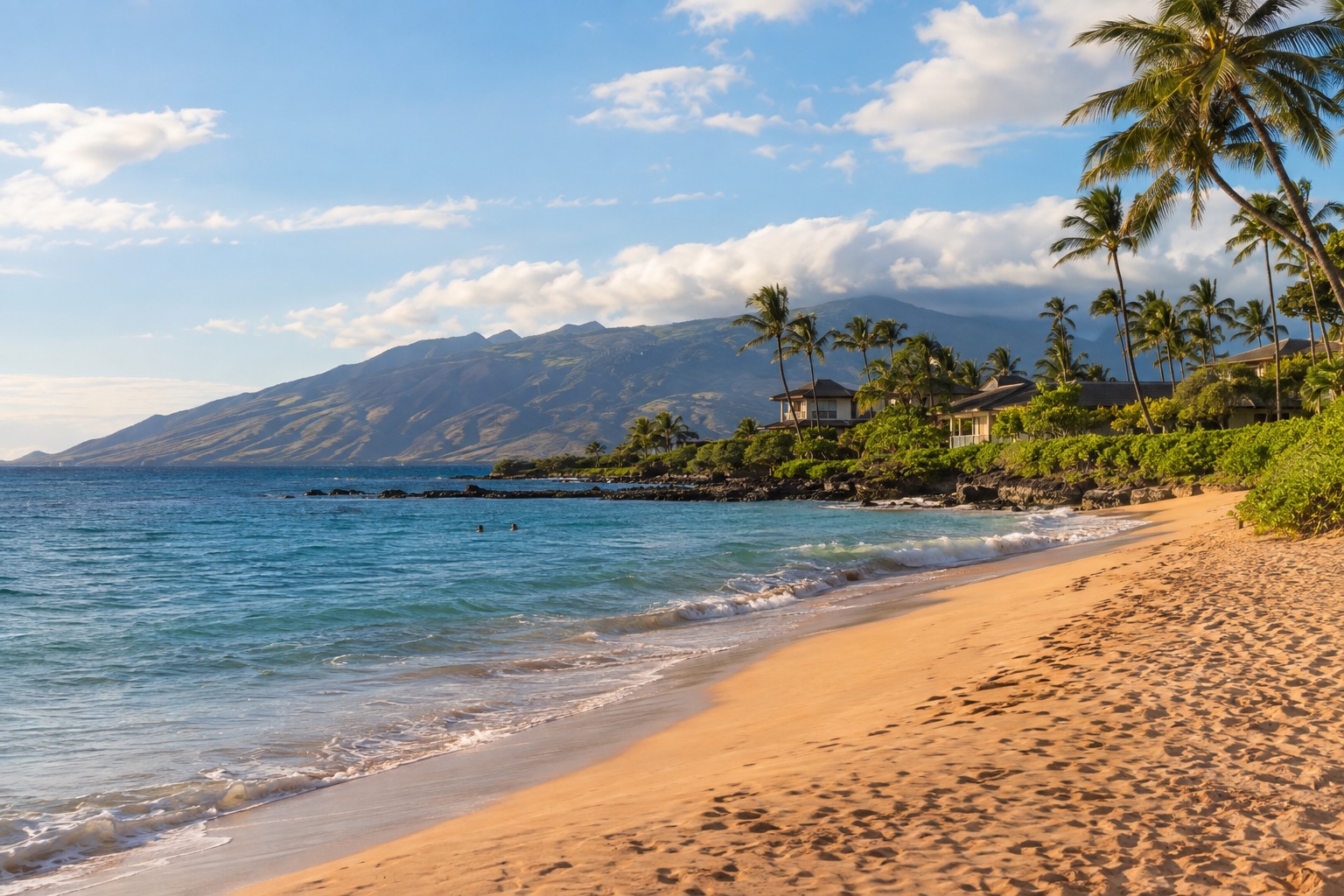
Wailea in March brings warmth, sunshine and little rain, plus a breeze light enough that afternoons on the sand stay comfortable.
| Month | Average high (°F) | Average low (°F) | Rain days | Sea (°F) |
|---|---|---|---|---|
| February | 79.9 | 63.0 | 2.8 | 76.5 |
| March | 81.2 | 63.5 | 3.1 | 76.2 |
| April | 83.1 | 64.5 | 1.7 | 76.6 |
Wailea sits on the leeward side of Haleakala, so the mountain wrings most of the trade-wind rain out of the clouds before they arrive. When showers do come in March, they tend to be brief, often passing through in the morning or overnight, and they leave the lava rocks steaming and the air smelling of wet earth. Total rainfall for the month is modest, and a gray day is the exception here.
Mornings start pleasantly cool, ideal for a walk on the coastal path or a coffee outside, and by midday the sun is strong enough that you will want a hat and sunscreen even when a breeze is blowing. Evenings cool off enough that a light layer feels good at an open-air dinner, though shorts and sandals still work for most people. The light is clear and golden late in the day, with about twelve hours of daylight to play with.
If you drive up the slopes of Haleakala or cross to the wetter windward side near Hana, expect cooler and cloudier conditions than the beach suggests. The summit especially is cold, so do not judge the weather higher up on Haleakala by the warm, sunny conditions at your Wailea resort.
Can you swim in Wailea in March?
Yes, the sea is warm enough for a long, comfortable swim, though a rinse in the shade afterward feels good when the breeze picks up.
Wailea’s beaches face west and south, and in winter months they often see gentler conditions than the north-facing shores of Maui, where big surf rolls in. Wailea Beach, Ulua Beach and Mokapu Beach are the swimming favorites, with soft golden sand and entry that is usually gradual.
Polo Beach at the southern end is a bit more exposed and can have stronger shore break on some days. Even so, waves change from day to day, so never assume a beach will be calm.
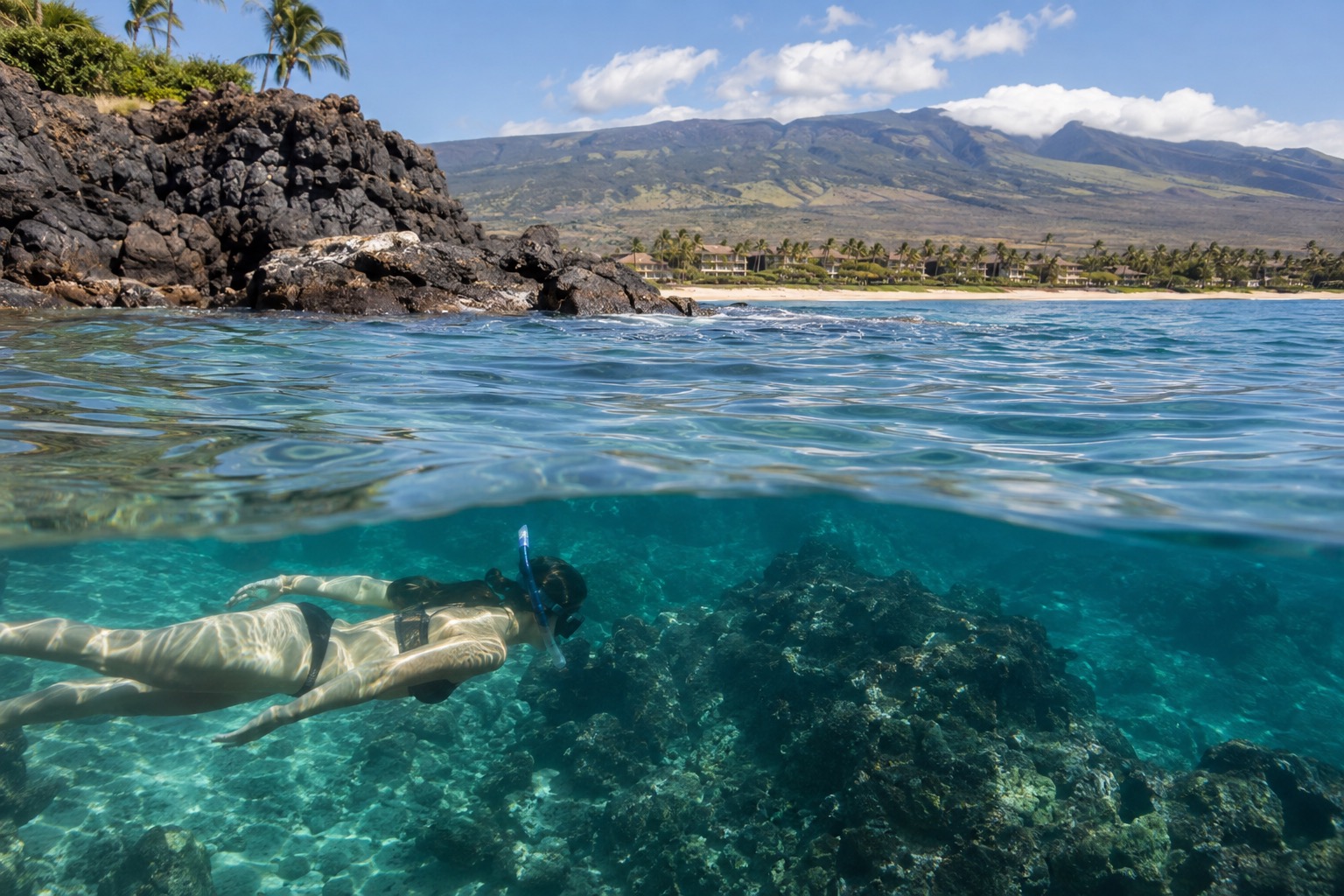
Snorkelers head to the rocky edges, such as the point between Ulua and Mokapu, where fish often gather over the reef. Keep your feet off the coral and never chase turtles, which are protected.
Read the beach signs, look at the flags and ask the lifeguard before you go in, particularly with children or if you are not a confident swimmer. Bring a rash guard if you burn easily, and a mask of your own if you plan to snorkel often.
What to do in Wailea in March
The headline of the month is the humpback whales. In Hawaii, these whales typically appear from November through April, and since the peak falls between January and March, you remain right in the heart of the season.
The channel off Wailea is one of their favorite nurseries, and mothers and calves often linger close to shore. You may see tail slaps, breaches and spouts from the beach itself, and boats must keep their distance, with a rule of no closer than 100 yards.
Whale watching from shore and sea
You do not need a boat to see whales in Wailea. The coastal path that links the resorts is a fine lookout, especially in the morning when the water is glassy and spouts are easy to spot.
Bring binoculars if you have them, and scan the horizon for a puff of mist before looking for the dark shape beneath it. Late morning and the hours before sunset are also productive, though sightings are always a chance, never a promise.
Tour boats leave from nearby harbors such as Maalaea and Lahaina, and some sail from the beach in front of the resorts. A morning departure usually means calmer water and less wind. Those prone to seasickness may prefer the shoreline path, which costs nothing and gives you a good chance of at least a distant sighting. Take a hat, polarized sunglasses and a long lens if you like to photograph.
The coastal path and the beaches
The shoreline walk connects the resorts and beaches of Wailea, passing lava points, small coves and the ruins of old stone walls. It is paved and gentle, which makes it a fine choice for families with strollers or anyone who wants a long stroll without a hike. Go at sunrise or late afternoon, when the light is soft and the heat is less intense.
Along the way, you can stop for a swim at Ulua or Wailea Beach, watch snorkelers from the rocks, or pause on a bench for a view of Molokini, the crescent-shaped islet offshore. The path is quiet in the early hours, with only a few walkers and the sound of waves on lava.
Shopping, golf and spa time
When you want a break from the sun, the open-air shops and galleries of Wailea offer a pleasant afternoon, with boutiques, art and a handful of restaurants overlooking the gardens. The resort golf courses draw players from across the mainland, and March weather suits an early tee time well, before the midday heat sets in.
Spas in the resorts are a rainy-day favorite, and a massage after a morning on the water is one of the quiet pleasures of the south coast. Dinner is often an outdoor affair, with fresh fish, poke, local greens and tropical drinks. Sunset hours tend to be lively on the terraces, so a reservation for dinner is a habit worth keeping.
Day trips are easy from here. Makena is a short drive south for a wilder beach scene, while upcountry Maui offers farms, lavender and cool air on the slope of Haleakala. The Haleakala sunrise requires a reservation, so plan it ahead rather than counting on a spot at the last minute. The road to Hana is a long day and is better kept for a separate outing than squeezed in alongside beach time.
A two-day itinerary for Wailea in March
Day 1 starts early along the coastal path, where the air feels cool and whales frequently appear in the glassy channel. Walk the stretch from Wailea Beach toward the southern coves, then stop for breakfast at a casual café with tropical fruit and local coffee. By late morning, settle on the sand at Wailea Beach or Ulua for a swim, keeping an eye on the flags and the lifeguard.
Midday is the time for shade, so head to a lunch spot at the open-air shops, then browse the galleries while the sun is at its strongest. In the afternoon, try snorkeling at the rocky edge of Ulua or Mokapu, or book a spa treatment. Finish at a beachfront restaurant for sunset, with fresh fish and a drink. If a shower rolls in, the shops and spa make an easy rain card.
Day 2 is for an outing beyond the resorts. Drive south toward Makena for a morning on a wilder beach, with a longer stretch of sand and a more rugged feel. Return for a late lunch, then take a slow afternoon by the pool or on a short whale-watching cruise if you did not go yesterday.
As evening approaches, choose a table with an ocean view for a final dinner, ideally one that you booked ahead. Sunset is a gentle, colorful affair, and whales sometimes show themselves in the last light. If rain appears, a long dinner and an evening of live music in a resort lounge keep the plan intact.
Is Wailea busy in March?
Yes, March is a busy month in Wailea, shaped by mainland spring breaks and the last weeks of the whale peak.
Families arrive during school breaks, which vary by state and fall across the month, so some weeks feel livelier than others. The beaches fill in the late morning, and the best spots near the resort entrances go early. Restaurants fill at sunset hours, and the popular ones are hard to enter without a reservation. Rental cars and rooms are easier to find in the weeks without a major break, but the popular ones go early.
As a habit, book rooms and cars well ahead for any week that overlaps a spring break, and a bit later for the quieter weeks. Tables at the better restaurants are worth securing as soon as you know your dates.
The Haleakala sunrise needs its own reservation, so plan that early rather than waiting until you arrive. Mornings on the beach and the coastal path are calmer than the afternoons, and a walk before breakfast is nearly always peaceful.
What to pack for Wailea in March
Pack for warm sun, cool evenings and a day or two of possible showers, and keep a bag ready for a cold summit if you plan to visit Haleakala.
- Mineral sunscreen and a hat, because the midday sun is strong even with a breeze.
- A light sweater or jacket for evenings on open-air terraces.
- A warm layer and long pants for the Haleakala summit, which is cold.
- A rash guard and your own snorkel mask for the reef edges.
- Binoculars for spotting whales from the coastal path.
- Bring both sandals and walking shoes, since you may stroll the shoreline path or head out on hikes.
Good to know before you go
March falls outside the official hurricane season, which runs from June 1 to November 30, and the main planning questions are crowds and reservations. A rental car is handy for Makena and upcountry outings, though the resort area itself is easy on foot. Resort stays carry Hawaii’s accommodations taxes, which are added to the room rate.
| Fee | Amount | Who pays |
|---|---|---|
| State transient accommodations tax | 11% | Guests of resort stays |
| Maui County accommodations tax | 3% | Guests of resort stays |
Wailea in March vs February and April
Moving a month earlier puts you in the heart of the whale peak, with a touch more rain and slightly cooler days. February can feel more crowded around the winter holiday tail and the presidents’ weekend, and the whales are often at their most active. The sea is nearly the same temperature, so swimming is similar.
Moving a month later brings warmer, drier days and fewer whales, as the season winds down by the end of April. Spring break crowds thin, and rooms become a little easier to find outside Easter week, which moves each year. The sea remains warm, and the sun is stronger, so sun protection matters even more.
If whales are your priority, choose February or early March. If you prefer drier beach days and a calmer pace, April is a good bet. March sits in the middle, with good odds on both whales and sunshine.
Is March a good time to visit Wailea?
Yes, March is a very good time for anyone who wants warm beach days, a real chance to see humpback whales, and sea that is usually gentle, though conditions change from day to day and beach to beach.
Beach lovers, couples, families on spring break and golfers will all find a lot to like. Those who dislike crowds or who want the lowest-key atmosphere may prefer a quieter month, and surfers looking for big waves should head to the north shores rather than the south coast. On arrival, book the Haleakala sunrise and a good dinner table first, then settle into a morning walk on the coastal path. What makes March special in Wailea is the meeting of two seasons: the last of the winter whales still arching offshore, and the first long, dry, sunlit days of spring settling over the lava points and golden sand.
Sources
- NOAA NCEI, monthly normals 1991-2020, station USC00515842, checked September 8, 2026
- Open-Meteo Marine API, average 2015-2024, checked September 8, 2026
- sunrise-sunset.org, sunrise and sunset calculated for the 15th of the month, checked September 8, 2026
- NOAA, Hawaiian Islands Humpback Whale National Marine Sanctuary, checked September 25, 2026
- Hawaii Department of Taxation, Announcement 2025-03 ; County of Maui, TAT Announcement 2021-01, checked September 25, 2026
- NWS Honolulu / Central Pacific Hurricane Center, « 2026 Central Pacific Hurricane Season Outlook », weather.gov/hfo/hurricaneOutlook2026, checked September 24, 2026