
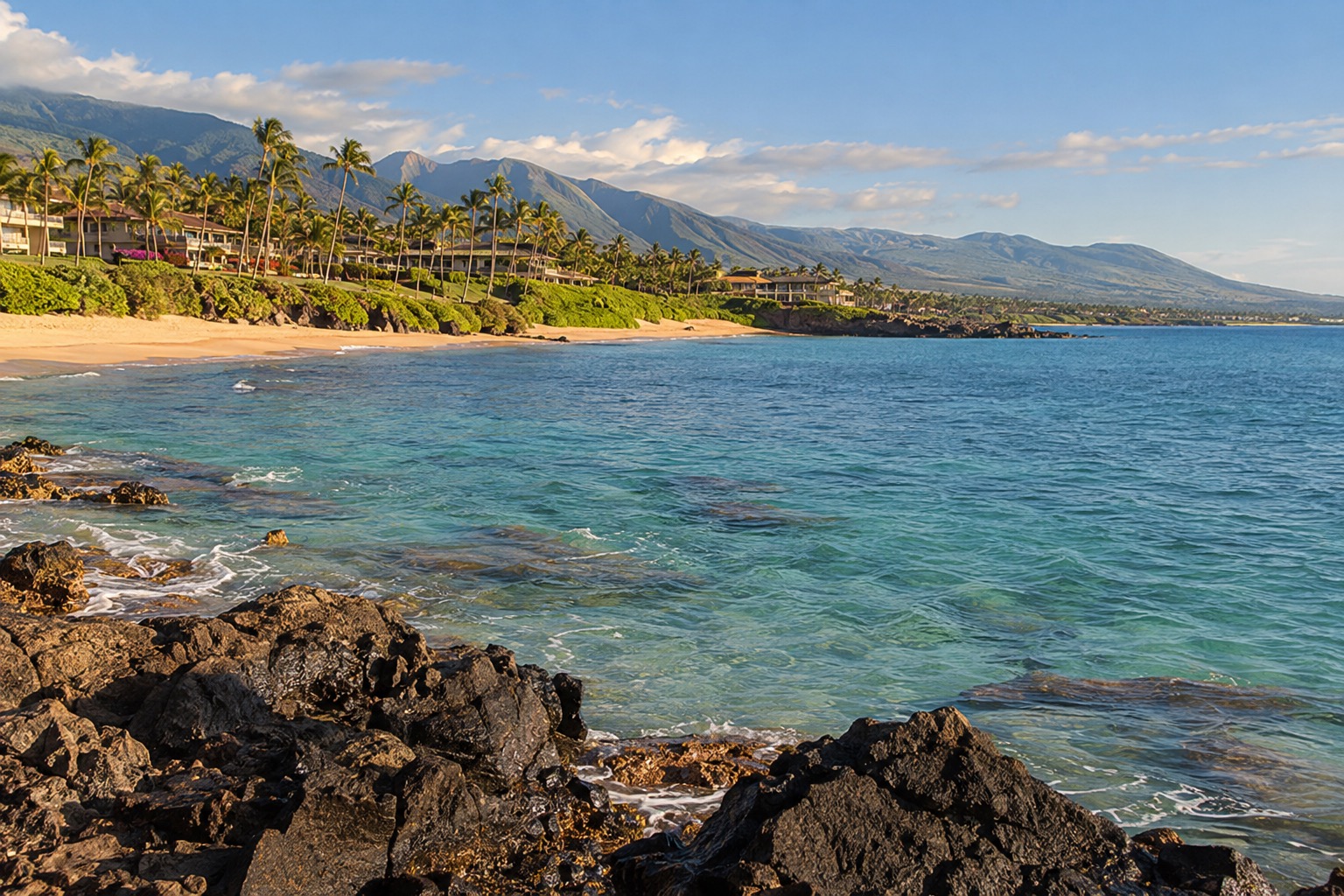
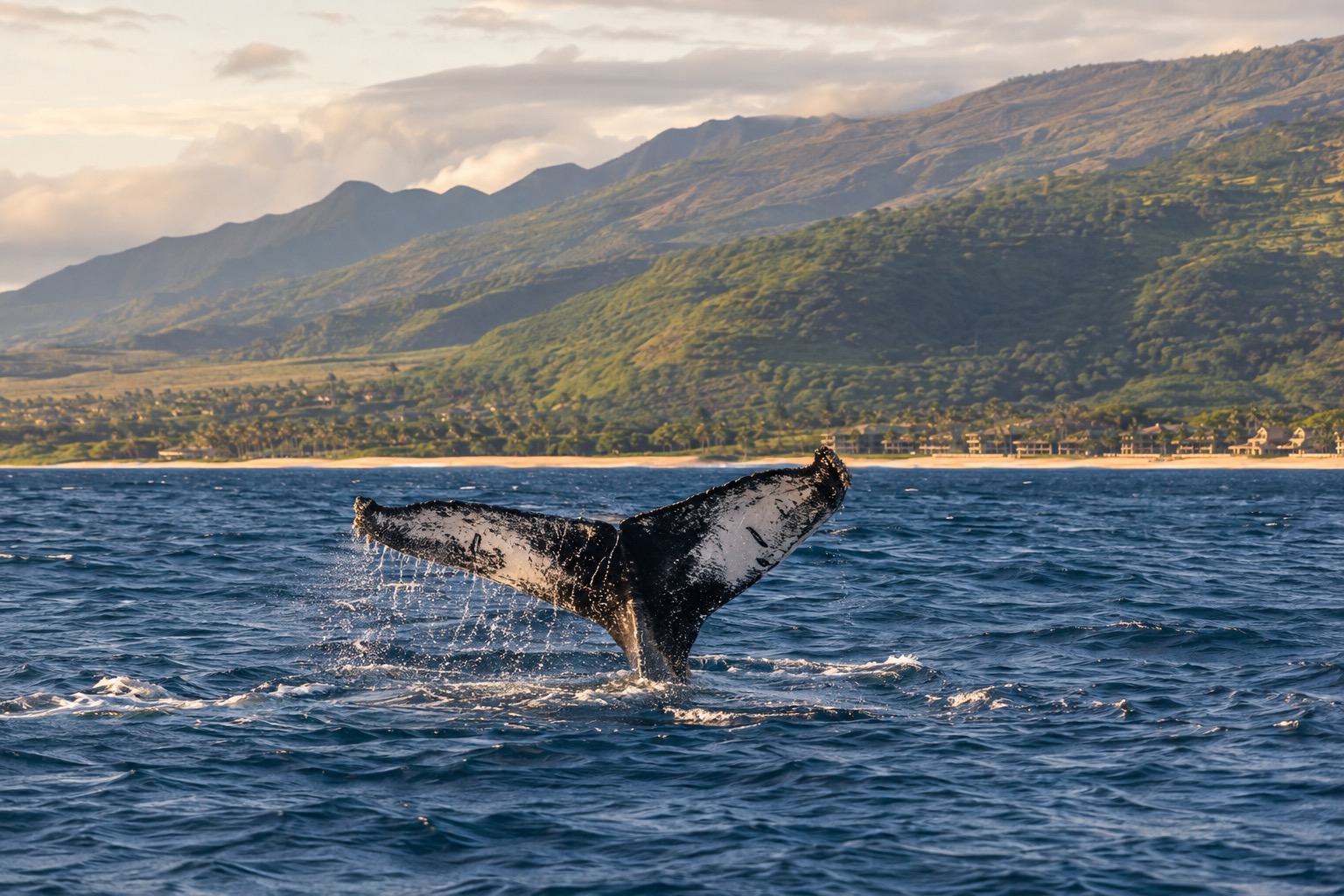
On a February morning in Wailea, a humpback tail slaps the water off Wailea Beach while joggers on the coastal path slow down to watch. The air is soft, the lava-rock walls are warm by mid-morning, and the island of Kahoolawe sits sharp on the horizon. This is whale month on South Maui, a time for sunny beach days, long walks along the shore and dinners on open-air terraces.
What is the weather like in Wailea in February?
February in Wailea is warm, sunny and mostly dry, with just enough cool air at night to make an evening outside feel good. Wailea sits on the leeward side of Maui, in the rain shadow of Haleakala, so the clouds that soak the windward coast mostly dry out before they get here.
| Month | Average high (°F) | Average low (°F) | Rain days | Sea (°F) |
|---|---|---|---|---|
| January | 80.1 | 63.5 | 3.2 | 77.5 |
| February | 79.9 | 63.0 | 2.8 | 76.5 |
| March | 81.2 | 63.5 | 3.1 | 76.2 |
Days are made for shorts and a hat. Mornings start fresh and clear, afternoons are bright and comfortable on the sand, and the sun is still strong enough to burn, so sunscreen goes on before the first walk. Daylight lasts a little over eleven hours in the middle of the month, which gives you a full beach day and a sunset dinner without rushing.
When rain comes, it is usually a brief passing shower carried in on the trade winds, often in the morning or overnight, and it rarely ruins a whole day. Heavy downpours are unusual here. If you drive toward the upcountry slopes or the Hana side, expect clouds and wetter weather than on the coast.
Evenings are mild but cooler than the days, so a light layer is welcome at an oceanfront table once the sun drops. The wind can pick up in the afternoon, which is part of why the water looks so sparkling and why the whales are easy to spot on clear, bright days.
Can you swim in Wailea in February?
Yes, the sea is comfortable for a swim, cooler than in summer but pleasant enough for most people to stay in for a good while, especially after a warm morning on the sand.
Wailea faces south and west, so in winter its beaches are usually gentler than the north-facing shores of Maui, which take the big winter swells. Even so, waves can build on some days, and shorebreak at beaches such as Wailea Beach and Ulua Beach can surprise swimmers.
Ulua and Mokapu, side by side, are a favorite for snorkeling when the water is clear, with rocky points on either end where fish gather. Polo Beach, at the quieter end of the resort strip, has a long sandy stretch good for walking.
Families and nervous swimmers should start at the edge, watch the water for a few minutes and ask a lifeguard where it is best that day. Follow the beach flags and the posted signs, and keep in mind that conditions change with the swell.
Bring a rash guard if you tend to feel the chill during a long snorkel, and listen for whale song if you put your head under, since the sound can carry in the water. If a whale surfaces near you, stay out of its way: the rule is no closer than 100 yards.
What to do in Wailea in February
The big event of the month is the whales. You can usually spot humpbacks in Hawaii between November and April, with the peak running January through March, which puts February squarely at the heart of it. The Maui channel between the island, Lanai and Molokai is one of the places they come to breed and raise calves, and you can often see spouts, breaches and fluke slaps from shore without any gear at all.
A good plan is to take a morning coffee to a bench or a low wall on the coastal path and simply watch the water. Look for a white puff of mist, then a dark back, then perhaps a tail. Binoculars help a lot. Many of the resorts along the strip have lawns and lanais with a clear view, and sunset is a lovely time to watch when the light turns the water gold.
A whale-watching cruise from South Maui
Boat trips run from Maalaea Harbor and from the beach in front of Wailea and Makena in whale season, and they put you on the water where the animals travel. Morning departures often have calmer seas and gentler wind, and many boats carry a naturalist who explains the behavior you are seeing, such as males competing around a female or a mother teaching a calf to surface.
Boats stay at a respectful distance, since the approach limit is 100 yards, and the animals decide how close the encounter becomes. You may see a lot, or you may see a few spouts far off, because wildlife is never a promise. Wear layers, bring a hat and sunglasses, and take a motion-sickness remedy if the sea makes you queasy.
The Wailea Beach Path and the shoreline
The paved coastal walk links the resorts, beaches and small shopping areas along the shoreline and is one of the most pleasant things to do here. It passes lava points, tide pools, native plants and little coves, and it is flat enough for almost anyone. Set out at first light, while it is still brisk and locals are running and walking their dogs, or wait until dusk, as the water glows beneath a burning sky.
There are places to stop for coffee, shave ice or a cold drink, and benches that seem to be placed exactly where a whale might appear. It suits couples, families with strollers and anyone who wants a gentle day. Bring water, sun protection and a camera, and keep to the path so the dune plants can hold on.
Snorkeling and beach days
February is a fine month to settle in at Ulua, Mokapu or Polo. The mornings are usually the best for snorkeling because the wind is lighter and the water is often clearer. Look for parrotfish, butterflyfish and, with luck, a green sea turtle grazing near the rocks. Never touch turtles or the reef, and keep a respectful distance from any animal that rests on the sand.
After the swim, the beach is a place to read, nap and watch the sky. Pack a cooler, a towel and a good umbrella, because shade is limited on some stretches. Families with small children may prefer the shallow edges and the lifeguard-staffed areas.
Food in Wailea runs from casual poke bowls and fish tacos to oceanfront dinners with tasting menus. Fresh local fish such as ono, mahimahi and ahi turn up on menus in grilled and raw preparations, and the cooler evenings make a sunset cocktail on a terrace very appealing. Upcountry farm stands and the farmers markets in nearby Kihei are good for tropical fruit, bread and coffee.
Golf, spa days and a morning at a cultural class, such as lei making or a hula lesson at a resort, fill the quieter hours. Whale season is also a good moment for a sunset sail, since the light is gentle and the sea often looks calm from a distance.
A two-day itinerary for Wailea in February
Day 1 starts at first light with coffee and a stroll along the coastal path, while the air stays cool and whale spouts stand out plainly over the still morning water. By mid-morning, move to Ulua and Mokapu for snorkeling while the wind is light. Take a long lunch at a casual spot near the shops, with fish tacos or a poke bowl, and rest in the shade through the warmest hours.
In the afternoon, take a whale-watching cruise or simply sit on a lawn with binoculars. Stay for sunset, which comes with a pink and orange sky over the water, then have dinner at an oceanfront restaurant. If the weather turns gray, a spa visit, a cooking or lei-making class, or a long lunch indoors is a pleasant rain plan.
Day 2 starts at Polo Beach, quieter and wider, for a morning swim or a long walk along the sand. Bring a book and stay until the sun feels strong. Eat lunch at a poolside grill or pick up sandwiches and fruit to take to the shore.
Later, drive a short way to the shops and galleries of nearby towns for a slow wander, then return for a golf round or a drink on a terrace as the light softens. Finish with a dinner of local fish, and if clouds roll in, a quiet evening at a resort lounge with live music makes a gentle ending.
Is Wailea busy in February?
Yes, February is a lively month in Wailea, with winter visitors from the mainland filling resorts and restaurants, especially around the long holiday weekends.
Presidents Day weekend and school midwinter breaks bring families, and whale season draws travelers who want sun while it is cold at home. The beaches are busiest late morning, the coastal path is full at sunset, and popular restaurants book up for the evening hours. The weeks outside the holiday weekends feel calmer, and weekdays are easier on the beach.
Book rooms and rental cars early if you are traveling around a holiday weekend, and a bit later if you are choosing a quieter stretch. Reserve dinner tables a few days ahead, and book whale-watching cruises and spa treatments early in your stay so you can adjust for the weather. Rates are often higher in peak winter weeks, and the resort strip is the more expensive part of the island. Day trips to places that require reservations, such as sunrise at Haleakala, are worth planning before you arrive, since slots fill well in advance.
What to pack for Wailea in February
Think light, sunny days and cool evenings, with a bit of extra gear for whale watching and the water.
- Swimsuits and a rash guard, since the sea is pleasant but a long snorkel can feel cool.
- Mineral sunscreen and a wide-brimmed hat, because the sun is strong even on mild days.
- A light sweater or jacket for breezy evenings and boat rides.
- Binoculars for spotting whales from the shore.
- For the coastal path, bring walking shoes along with sandals.
- A compact rain shell for the occasional shower.
Good to know before you go
February falls outside the official Central Pacific hurricane season, which runs from June 1 to November 30. Winter swell can still make some beaches rough, so check the signs and ask the lifeguards. A rental car helps for day trips, and booking your sunrise or boat outings first makes the rest of the plan easy. Resort stays carry the following taxes.
| Fee | Amount | Who pays |
|---|---|---|
| State transient accommodations tax | 11% | Guests at resort stays |
| Maui County transient accommodations tax | 3% | Guests at resort stays |
Wailea in February vs January and March
Moving the trip to January gives you slightly more rain and a touch warmer water, along with whales that are already in full season. The holiday crowds thin after the first weeks of the month, so the second half of January can feel relaxed, though rates and bookings can stay high through the long weekends.
March is a little warmer in the air and a bit cooler in the sea, with a steady chance of whales early in the month before they begin to thin out toward April. Spring break brings more families, so beaches and restaurants can feel busier again.
Choose February if you want the best mix of whale activity, mostly dry days and a calmer stretch between the holidays and spring break. Shift to January for the surest whale chances and to March for slightly warmer afternoons and a longer day.
Is February a good time to visit Wailea?
Yes, February is a very good time for travelers who want warm sun, mostly dry weather and a front-row seat for the whales.
It suits couples, families and anyone escaping winter, as well as walkers, snorkelers and people who like to sit on a terrace and watch the sea. It is less ideal for travelers who want hot, glassy water for long swims, or who hope to avoid the busiest weekends and higher rates.
On arrival, book your whale cruise and any park or sunrise reservations first, then settle into the coastal path and the beaches. What makes February in Wailea special is the sight of a humpback breaching against the blue of Kahoolawe, with a cool drink in hand and nowhere to be.
Sources
- NOAA NCEI, monthly normals 1991-2020, station USC00515842, checked September 8, 2026
- Open-Meteo Marine API, average 2015-2024, checked September 8, 2026
- sunrise-sunset.org, sunrise and sunset calculated for the 15th of the month, checked September 8, 2026
- NOAA, Hawaiian Islands Humpback Whale National Marine Sanctuary, checked September 25, 2026
- Hawaii Department of Taxation, Announcement 2025-03 ; County of Maui, TAT Announcement 2021-01, checked September 25, 2026
- NWS Honolulu / Central Pacific Hurricane Center, « 2026 Central Pacific Hurricane Season Outlook », weather.gov/hfo/hurricaneOutlook2026, checked September 24, 2026