
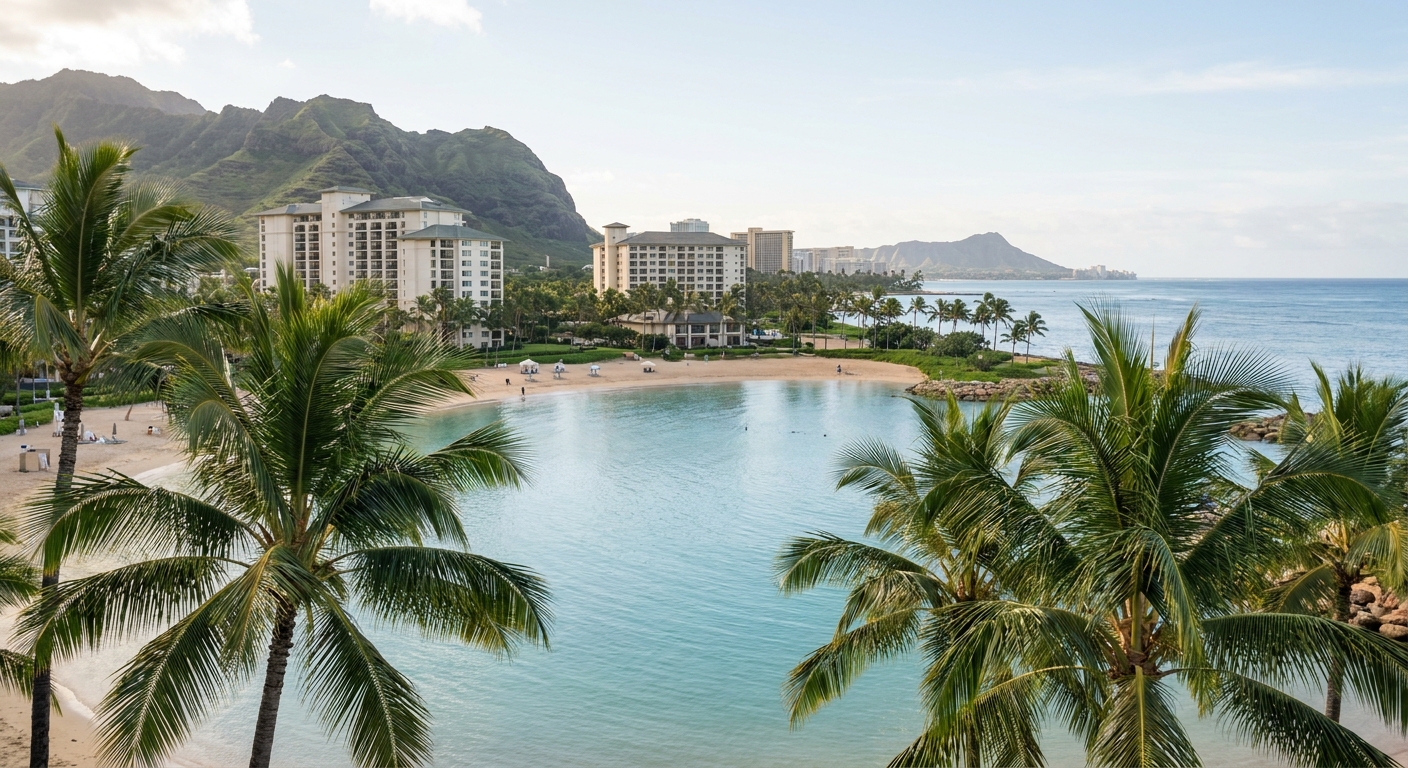
On a January morning at Ko Olina, the light comes up soft and gold over the Waianae Mountains, and the first people on the lagoon paths are walkers with coffee and a few early swimmers wading into the shallows. Out past the rocks, a spout of mist sometimes rises from the open water, a humpback whale passing the leeward coast. This is the sunniest, driest corner of Oahu in the winter months, and January here means whale watching, easy resort days and cool evenings by the water.
What is the weather like in Ko Olina in January?
January is warm, sunny and mostly dry here, with afternoons that feel like a mild summer day back on the mainland and evenings that call for a light layer.
| Month | Average high (°F) | Average low (°F) | Rain days | Sea (°F) |
|---|---|---|---|---|
| December | 82.1 | 66.9 | 2.8 | 78.4 |
| January | 80.9 | 64.7 | 2.8 | 77.6 |
| February | 80.9 | 65.1 | 2.5 | 76.3 |
Ko Olina sits on the leeward side of Oahu, in the island’s driest resort corner. The trade winds drop their rain on the windward coast and the mountains, and what is left over by the time the clouds reach the west shore is usually a brief shower that passes in minutes. The nearby airport records far less rain in January than Waikiki does, which is why this stretch of coast fills with winter visitors.
Mornings are cool and pleasant for a walk along the lagoon paths, and by midday the sun is strong enough to burn you even in winter. Afternoons are comfortable on a lounge chair or in the water. After sunset the air cools down fast, and a breeze off the ocean makes a sweater or light jacket welcome at an outdoor dinner.
Days are shorter than in summer, with about eleven hours of daylight in mid-January, so the sun sets early in the evening. Expect a gray, showery day now and then when a front passes, but it rarely lasts, and the sky often clears by the afternoon.
Can you swim in Ko Olina in January?
Yes, the ocean is warm enough for a comfortable swim, and the four man-made lagoons are where most families spend the day.
The lagoons are sheltered by rock breakwaters, so the water inside them is usually much gentler than the open ocean, which suits children, nervous swimmers and anyone who wants to snorkel without fighting waves. Small fish gather around the rocks at the edges, and a mask is all you need to look around. Winter is the season when big swells hit the north and west shores of Oahu, and while Ko Olina is more protected than most, conditions can still change from one day to the next.
Outside the lagoons, the open water can be rougher in January, with surf and currents, so stay inside the breakwaters unless you are an experienced ocean swimmer. Check the beach signs and follow the lifeguards each morning, since they decide what is safe that day. Bring a rash guard or a thin shirt if you plan to float for a long time, because the water feels cooler after an hour than it does on first entry.
What to do in Ko Olina in January
The big draw of the month is the whales. Humpbacks are generally seen in Hawaiian waters from November through April, peaking from January through March, and Ko Olina’s west-facing shoreline gives you a front-row seat. Many visitors simply sit at the water’s edge or on a resort lanai with binoculars, watching for blows, tail slaps and the occasional breach in the distance.
Boats must keep at least 100 yards from whales, and so should anyone in the water or on a paddleboard. Even from shore, a patient hour at sunrise or late afternoon is often rewarded, and the calm mornings make spotting easier than when the afternoon wind picks up.
A day on the lagoons
The four lagoons are the heart of Ko Olina, each with its own pocket of white sand, a grassy edge and a breakwater that keeps the water gentle. The first lagoon tends to feel quieter and a bit more local, while the ones in front of the resorts have more activity, with paddleboards, kayaks and children building sand castles from morning to late afternoon.
Plan on arriving in the morning, when the sun is gentle and parking and lounge spots are easiest to find. Bring a mask for the rocky edges, where small tropical fish often gather, and a hat for the midday glare. The walking path connects all the lagoons, so you can wander from one to the next and pick whichever feels right.
The lagoons suit families with small children, couples who want an easy morning and anyone recovering from a long flight from the mainland. They are less suited to people who want to surf or swim in real waves, for which you would head to another shore.
Sunset on the shoreline
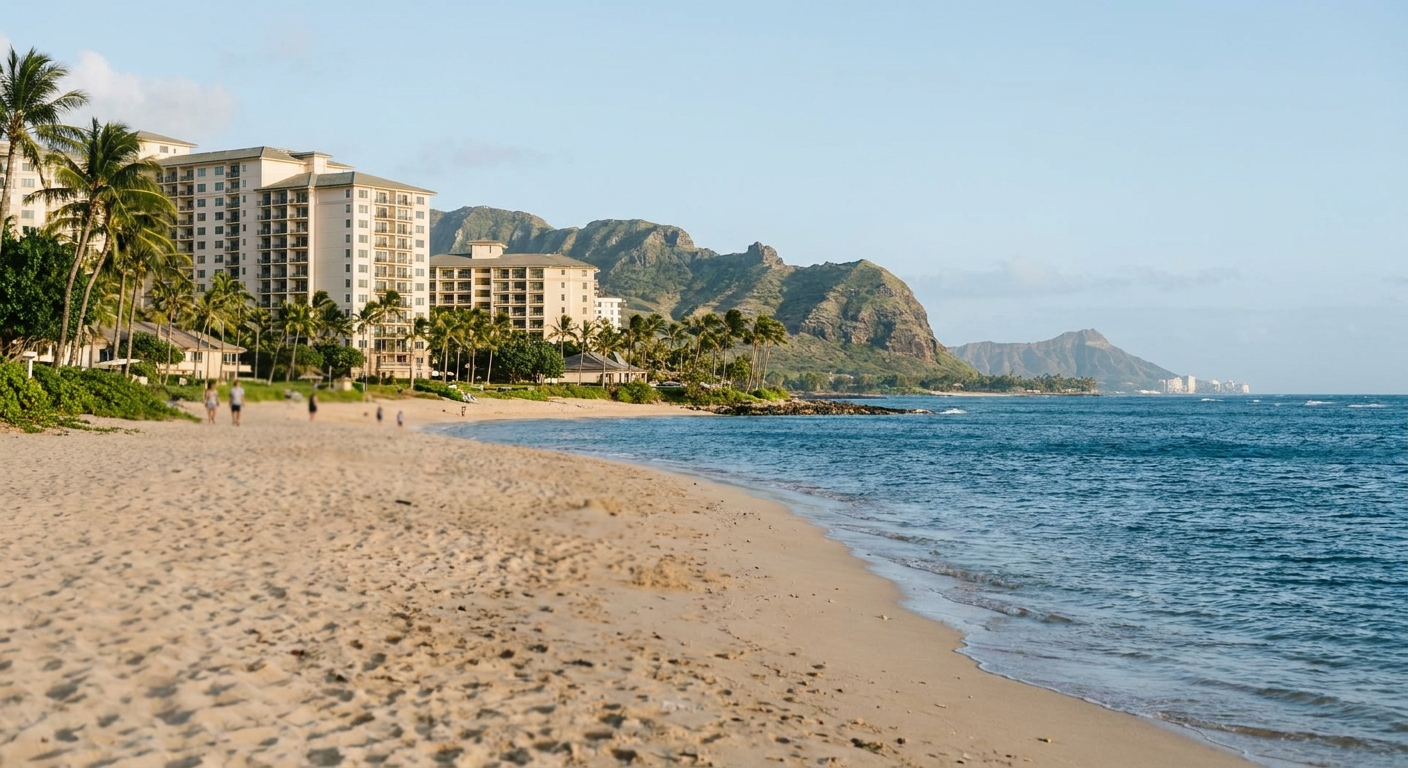
Ko Olina faces west, so every clear evening becomes a show. In January the sun drops into the ocean earlier than in summer, which means dinner can be timed around the light rather than the other way round. Walkers fill the paths along the water, and the sky often turns orange and pink over the horizon.
Some evenings, the air stays crisp enough that you want a light jacket by the time the last color fades. Resort restaurants set tables close to the water, and a few have live Hawaiian music, with slack key guitar and ukulele drifting across the lawns. In winter, a whale might even surface as the sun goes down, which makes the evening feel like a bonus.
A sunset walk suits just about everyone, from couples to families with tired kids. Arrive a little before the sun touches the water, and stay a while after, because the best color often comes in the minutes just after it disappears.
Food in January leans toward the comfort of the islands. Plate lunches, poke bowls, grilled fish and shave ice are everywhere on Oahu, and resort restaurants add seasonal specials. Eating outside after dark is pleasant, though the evening chill makes a warm drink or a shared dessert appealing.
A luau is one of the classic evenings here, with kalua pig, lomi salmon, haupia and hula dancers on a lawn near the water. Many visitors choose one night of the trip for a luau, and January’s cool, dry evenings are well suited to sitting outside.
Golf is another draw of the area, with a course sitting right by the resorts, and the mild winter days make a round more comfortable than in the heat of summer. Spa afternoons, paddleboarding and a long beach read fill out the rest of a relaxed vacation here.
A two-day itinerary for Ko Olina in January
Day 1. Start early with a walk along the lagoon path while the air is cool and the light is soft, keeping an eye on the horizon for whale spouts. Have breakfast at a resort café or a bakery counter, then spend the late morning in the first lagoon with a mask and a towel, when the water is usually gentlest and the sand is not yet crowded.
Take a long lunch in the shade, since the midday sun is the strongest of the day. In the afternoon, move to a second lagoon for a paddleboard or kayak session, or simply read by the water. Head to the shoreline before sunset, with dinner at a waterfront restaurant timed to the light, which fades early in January, with about eleven hours of daylight overall.
Day 2. Begin with another whale-watching session from the shore at sunrise, then book a morning on the golf course or a spa treatment if you want something indoors. A late brunch at a local plate-lunch spot or a casual café suits the pace of the day.
In the afternoon, take a drive or a short ride into the nearby towns for a bit of shopping and shave ice, then come back for an evening luau with music and hula under the stars. If a rare gray, showery day interrupts the plan, swap the beach hours for the spa, an indoor cultural show or a long lunch, and return to the lagoons when the sky clears.
Is Ko Olina busy in January?
Yes, especially in the first days of the month, when the winter holidays are still in full swing and many mainland families are on vacation.
After the first week or so, the crowds ease and the resort corner settles into a calmer rhythm, though winter remains a popular season because of the dry weather and the whales. Rooms and rental cars are easiest to find if you book early for the holiday weeks, while later in the month there is more breathing room and a little more flexibility.
Restaurant tables at the resorts fill up at dinnertime, particularly for sunset seatings and the luau nights, so reserving ahead is a good habit. Lagoon lounge chairs go early on busy days, and arriving in the morning helps. Other parts of Oahu, like popular hikes and sights, can also require reservations, so plan those before you arrive. Resort stays carry the state accommodations tax and the Oahu county tax, which is part of the final bill for any hotel night here.
What to pack for Ko Olina in January
Pack for warm days and cooler evenings, with sun protection at the top of the list.
- A light sweater or jacket, for breezy evenings by the water.
- Mineral sunscreen and a hat, because the winter sun is still strong at midday.
- A rash guard, for long hours floating in the lagoon.
- A mask and snorkel, for the rocky edges where small fish gather.
- Binoculars, for spotting humpback whales from the shore.
- A light rain shell, for the occasional passing shower.
Good to know before you go
January falls well outside the official Central Pacific hurricane season, which runs from June 1 to November 30. Winter is the season for bigger surf on the north and west shores of the island, so listen to the lifeguards and the beach signs. Renting a car helps if you want to explore beyond the resort, though many visitors stay close and use the walking paths between the lagoons.
| Fee | Amount | Who pays |
|---|---|---|
| State transient accommodations tax | 11% | Guests staying at Ko Olina resorts |
| Oahu county accommodations tax | 3% | Guests staying at Ko Olina resorts |
Ko Olina in January vs December and February
Moving the trip to December brings slightly warmer air and sea, and more rain, though the leeward coast stays mostly sunny. It also brings the peak of the holiday crowds, with lights, decorated resorts and fuller restaurants, and humpbacks are already showing up in the water.
February is a touch cooler in the sea, with a little less rain and the whale season still in full swing. The holiday rush is over, so the resort corner feels calmer, and the evenings are still crisp enough for a sweater by the water.
Families tied to school breaks may prefer December, while couples and anyone seeking a quieter stay might lean toward late January or February. For whale watching, January and February are the stronger bets, since the peak runs from January through March.
Is January a good time to visit Ko Olina?
Yes, particularly for travelers who want sunny, dry winter days, warm water in sheltered lagoons and a chance to see humpback whales.
It suits families who want protected swimming, couples after a relaxed resort break and anyone escaping a cold mainland winter. It is less ideal for surfers hoping for the island’s famous winter waves, which break on the north shore, or for anyone who wants a lively nightlife scene, since Ko Olina is quiet after dark.
On arrival, walk the lagoon path to get your bearings, then book a luau or a sunset dinner before the best tables are gone. Keep binoculars handy from the first morning, because a whale can appear at any hour. January here is a month of gold light on the water, spouts on the horizon and slow evenings by the sea.
Sources
- NOAA NCEI, monthly normals 1991-2020, station USW00022551, checked September 8, 2026
- Open-Meteo Marine API, average 2015-2024, checked September 8, 2026
- sunrise-sunset.org, sunrise and sunset calculated for the 15th of the month, checked September 8, 2026
- NOAA NCEI, normals 1991-2020, stations USW00022551 (Kalaeloa) and USC00519397 (Waikiki), via PLAN-HAWAII.md §1, checked September 24, 2026
- NOAA, Hawaiian Islands Humpback Whale National Marine Sanctuary, Responsible Recreation, checked September 25, 2026
- Hawaii Department of Taxation, Announcement 2025-03 ; City and County of Honolulu, OTAT FAQ, checked September 25, 2026
- NWS Honolulu / Central Pacific Hurricane Center, « 2026 Central Pacific Hurricane Season Outlook », weather.gov/hfo/hurricaneOutlook2026, checked September 24, 2026