
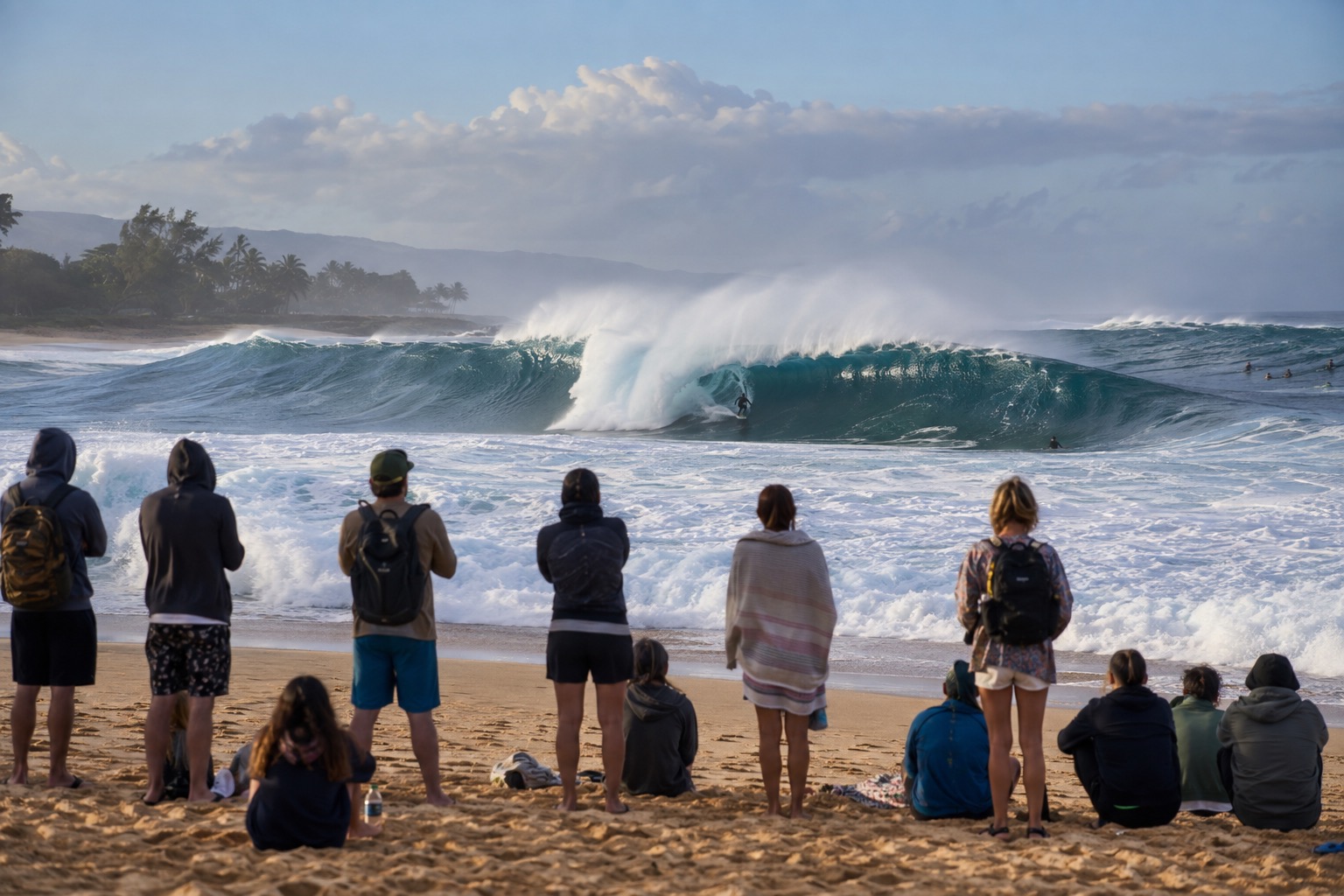
On a January morning, the line of cars along the Kamehameha Highway slows near Ehukai Beach, and people walk down to the sand just to watch. Sets of heavy swells stand up, hang for a second and fall with a thud you feel in your chest. Shrimp trucks smoke near Kahuku, surf shops in Haleiwa open their doors, and the North Shore settles into its big-wave season, a month for watching the ocean, eating well and walking long beaches.
What is the weather like in the North Shore in January?
January is warm and a little showery, with pleasant days, mild nights and rain that usually comes in short passes rather than all-day soaks.
| Month | Average high (°F) | Average low (°F) | Rain days | Sea (°F) |
|---|---|---|---|---|
| December | 78.8 | 64.7 | 11.3 | 77.8 |
| January | 78.1 | 62.4 | 8.5 | 77.0 |
| February | 78.6 | 62.2 | 8.3 | 75.5 |
Mornings start cool and fresh, a light layer is welcome on the beach before nine, and by late morning shorts and a T-shirt are enough. Afternoons are comfortable for walking the shoreline or wandering Haleiwa without the sun beating down. Daylight lasts a little under eleven hours in mid-January, so the evenings arrive early and the light turns golden over the water in the late afternoon.
Rain falls in quick showers carried by the trade winds, often with a rainbow behind them, and they tend to pass within the hour. A full inch in a day is rare. Because the North Shore faces the open Pacific and the Koolau mountains sit just behind it, clouds can settle on the hills while the coast stays bright, so it pays to look at the sky rather than cancel a plan.
Evenings are cool enough for a sweater or a light jacket, especially if you eat at a picnic table by a food truck. A rain shell is more useful than an umbrella in the wind. The sea stays pleasantly warm, though wind and spray make the shore feel cooler than the water.
Can you swim in the North Shore in January?
The water is warm enough for a swim, but January is the season when the sea decides, and on most North Shore beaches the waves are the main story.
This is the heart of the big-wave months, when swells can reach thirty feet or more. Waimea Bay, Ehukai Beach (the Banzai Pipeline) and Sunset Beach are the famous big-wave breaks, and in winter they are places to watch, not to wade into. Strong shore breaks and currents come with that kind of surf, so follow the flags, the signs and the lifeguards before putting a toe in the water.
Swimmers who want calmer conditions usually have better luck in summer, when the same beaches soften and suit beginners. In January, nervous swimmers and families with small children are happiest on the sand, walking the tide line, looking for shells and watching surfers from a safe distance.
Bring binoculars if you have them, a hat for the glare and a towel for the spray. If you do get in the water, ask a lifeguard what the day is like first.
What to do in the North Shore in January
The big event of the month is the ocean itself. Surf contests are a feature of the winter season here, and even without one running, crowds gather at Waimea Bay, Ehukai and Sunset to watch the sets roll in.
The Vans Triple Crown of Surfing is held in November and December, so by January the scene is quieter but the waves are still arriving. Watching is a pastime in itself: pick a spot on the sand, stay well back from the wash and let the rhythm of the sets sink in.
Haleiwa, the surf town
Haleiwa is the North Shore’s surf town, strung along a few blocks of surf shops, galleries, restaurants, food trucks and shave ice stands. It is about an hour from Waikiki by car, traffic permitting, and the best time to arrive is mid-morning, after the early surf crowd has headed out but before lunch fills the lots.
Walk the main street slowly, duck into a surf shop to look at the boards, and finish with a shave ice in the shade. On a showery January day the covered porches and shops make Haleiwa an easy place to wait out a squall. It suits couples, families and anyone who likes a relaxed afternoon with no fixed plan.
Garlic shrimp around Kahuku
Garlic shrimp plates sold from trucks around Kahuku and Haleiwa are the North Shore’s signature roadside lunch. Expect a paper plate of shrimp glossy with garlic butter, two scoops of rice and often a little salad. The cool January air makes the hot, buttery plates especially welcome.
Eat at the picnic tables beside the truck and keep napkins close, because the dish is gloriously messy. Trucks are scattered along the highway, so pick the one with a line of locals and a patient cook. It is a lunch for anyone who likes simple food eaten outdoors, and it pairs well with a shave ice afterward.
Beach walks and viewpoints
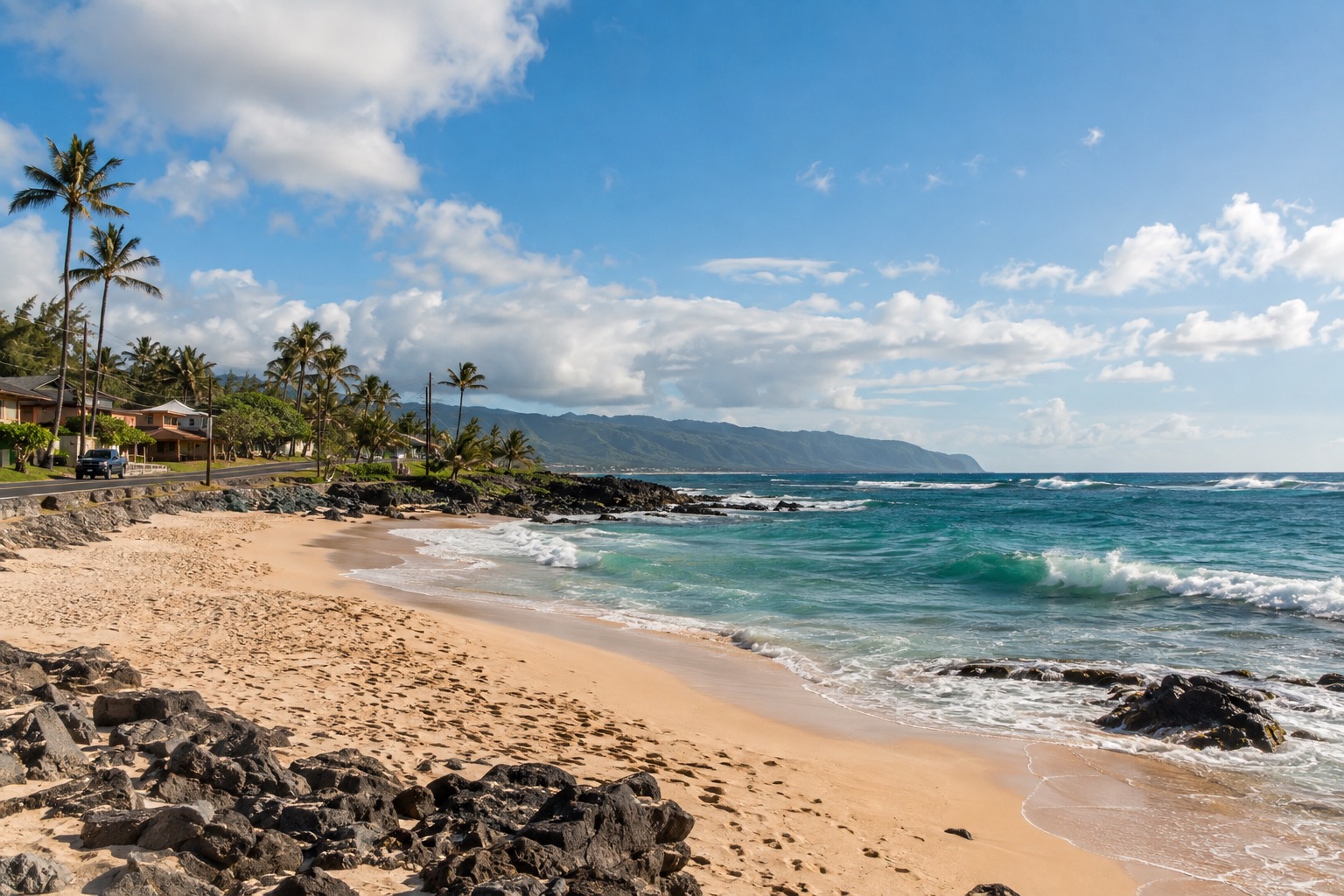
With the surf up, the best swimming-free outings are long walks along the sand. Waimea Bay, Ehukai Beach and Sunset Beach each have a different feel: Waimea is a deep bowl with a steep beach, Ehukai is lined with spectators facing the Pipeline, and Sunset stretches wide with room to wander. Stay back from the wet sand, since a large set can run far up the beach.
Late afternoon is the favorite hour, when the light slants low and the spray glows. Turtle Bay Resort, at the northern end, is about an hour and a quarter from Waikiki and offers a quieter stretch of coast to stroll. Bring a light jacket for when the sun drops.
A two-day itinerary for the North Shore in January
Day 1 begins early with the drive up from Waikiki, about an hour to Haleiwa. Park, walk the main street while the shops are opening and have a coffee or breakfast plate at a local café. By mid-morning head up the highway to Waimea Bay and walk the sand to watch the swell. Lunch is garlic shrimp from a truck near Kahuku, eaten at a picnic table.
In the afternoon, settle at Sunset Beach, where the beach is wide and the light turns gold well before dusk. Stay for the sunset, then eat dinner in Haleiwa before the drive back. If a heavy shower rolls in, shift to the galleries and surf shops in town, where there is plenty to browse under a roof.
Day 2 is for the northern end. Start at Ehukai Beach to watch the Banzai Pipeline in the cooler morning light, when the crowds are thinner. Continue to Turtle Bay Resort for a long coastal walk and a late breakfast or coffee. Midday is a good moment for a slow lunch, then a stop at a roadside fruit stand or shave ice shop along the highway.
Use the afternoon to wander the quieter stretches of beach, taking photos from a safe distance. If the weather turns gray, a long meal or a visit to a local gallery keeps the day easy. Aim to start the drive back before the evening traffic builds, with a last stop for dinner on the way.
Is the North Shore busy in January?
It is moderately busy, with visitors drawn by the big surf, but the crowds are of the watching kind rather than the beach-towel kind.
The early weeks of the month still carry some of the winter holiday visitors, and parking near Waimea Bay, Ehukai and Sunset can fill quickly on days with large swells. The highway slows as drivers pull over to look. Haleiwa gets lively around lunchtime, with lines at the popular trucks and shave ice stands, while early mornings and late afternoons are calmer.
For lodging and rental cars, book early if your dates fall in the holiday weeks and a little later for the quieter stretch toward the end of the month. Restaurant tables in Haleiwa are easiest in the early evening or at off-peak lunch hours. Stays carry the state and county accommodations taxes, which are covered further on. Arrive at the beaches early to find a space and enjoy the quieter hours.
What to pack for the North Shore in January
Pack for warm days, windy beaches and cool evenings, with a layer or two for showers and spray.
- A light rain shell, for the quick trade-wind showers.
- A sweater or light jacket, for evenings at the food trucks.
- Sandals and closed shoes, for sand and for walking around Haleiwa.
- Sunglasses and a hat, for the glare off the water.
- Binoculars, for watching surfers on the big sets.
- A swimsuit and towel, for the days the sea allows a dip.
Good to know before you go
January falls outside the official hurricane season, which runs from June 1 to November 30. The main weather concern here is the surf, so keep to the sand and heed the signs. A car makes the North Shore easy to explore, since the beaches, Haleiwa and the shrimp trucks are spread along one highway. Book lodging and a rental car first.
| Fee | Amount | Who pays |
|---|---|---|
| State transient accommodations tax | 11% | Guests staying in lodging |
| Oahu county tax | 3% | Guests staying in lodging |
The North Shore in January vs December and February
Moving the trip earlier to December brings a bit more rain and a slightly warmer sea, and the Vans Triple Crown of Surfing is held in both November and December, so contest energy runs higher. The holiday weeks also bring more visitors and more crowded roads and rooms.
Moving to February keeps the big-wave season going but the sea cools a little, and the rain eases slightly. The crowds tend to be quieter than in the holiday weeks, though the surf can still be large. Late February edges toward the end of the biggest waves.
Travelers chasing contests should lean toward December. Those who want big surf with a calmer pace and a lighter crowd will find January or February a good fit. If a warmer sea matters most, December is the better choice.
Is January a good time to visit the North Shore?
Yes, January is an excellent time for anyone who wants to watch the ocean in full force, and for travelers who enjoy food trucks, surf culture and relaxed beach walks more than swimming.
It suits couples, friends and families with older children who will happily watch waves for an hour. It is a weaker choice for anyone whose vacation depends on snorkeling or swimming, since the sea here is usually rough and conditions change from day to day and beach to beach, and they would be happier in summer. On arrival, head straight to a beach to watch the swell, then look for a shrimp truck. What makes January here memorable is the sound: the low boom of the sets, the shouts from the sand and the sizzle of garlic in a truck window, all under a sky that clears and clouds over in the same hour.
Sources
- NOAA NCEI, monthly normals 1991-2020, station USC00519603, checked September 8, 2026
- Open-Meteo Marine API, average 2015-2024, checked September 8, 2026
- sunrise-sunset.org, sunrise and sunset calculated for the 15th of the month, checked September 8, 2026
- Hawaii Tourism Authority, Go Hawaii, North Shore Oahu (gohawaii.com/islands/oahu/regions/north-shore), checked September 25, 2026
- Hawaii Tourism Authority, Go Hawaii ; HVCB, map Driving Times from Waikiki (edition 2010), checked September 25, 2026
- Hawaii Department of Taxation, Announcement 2025-03 ; City and County of Honolulu, OTAT FAQ, checked September 25, 2026
- NWS Honolulu / Central Pacific Hurricane Center, « 2026 Central Pacific Hurricane Season Outlook », weather.gov/hfo/hurricaneOutlook2026, checked September 24, 2026