
On an April morning in Hilo, the farmers market on Mamo Street is already crowded with orchid sellers and shoppers carrying bags of papayas and apple bananas, and the sky over Hilo Bay is half gray, half gold. Rain drifts through, then the sun returns and steam rises off the pavement. April is the month for the week of the Merrie Monarch hula festival, green waterfalls and slow days on the wet side of the Big Island.
What is the weather like in Hilo in April?
Warm, soft and wet: April in Hilo means comfortable temperatures in the upper 70s, and showers on most days that rarely last long. Hilo sits on the windward east coast, so the trade winds push moisture against the mountains and the town gets rain all year, with spring still on the damp side.
| Month | Average high (°F) | Average low (°F) | Rain days | Sea (°F) |
|---|---|---|---|---|
| March | 78.5 | 65.2 | 14.9 | 75.7 |
| April | 79.0 | 66.1 | 17.2 | 75.6 |
| May | 80.7 | 67.3 | 14.2 | 77.1 |
Rain here comes as passing showers, often at night and in the early morning, with stretches of bright sun between them. Some days turn gray and drizzly from breakfast to dinner, and a few bring a real downpour, though those are the exception. Mornings tend to be the clearest, so plan waterfalls and gardens early and keep the afternoon flexible.
Days are warm enough for a T-shirt and shorts, and evenings stay mild enough to eat outside under a covered lanai, with a light layer for the breeze off the bay. The days are long, with about twelve and a half hours of daylight in mid-April, and the light after a shower is soft and green. The sea is comfortable, and the water stays warm enough for a long swim off the black sand.
The higher you go, the cooler and wetter it gets. Drive up toward Volcanoes National Park and the air turns noticeably chilly and misty, so a rain jacket belongs in the daypack even when Hilo is sunny.
Can you swim in Hilo in April?
Yes, the water is warm enough for a long swim, comfortably so for most people, though the town’s shoreline is more about tide pools and lava rock than wide sandy beaches. Hilo faces the open ocean to the east, and the swell can be lively even in spring.
Along Banyan Drive, Coconut Island and Lili’uokalani Gardens, you find sheltered spots where locals swim and paddle, and families often wade in the calmer pockets. Keep in mind that the water is often murky after heavy rain, when runoff from streams washes into the bay. Black sand and pebbly beaches north and south of town can have strong shore break and currents, so watch the waves for a few minutes before you step in.
Nervous swimmers and young children do best in the sheltered spots, and snorkelers who want clear water will often have better luck on the dry Kona side. Bring water shoes for the rocky entries, a rash guard against the sun, and follow the beach signs and the lifeguards wherever they are posted, since they know that day’s conditions better than any guide.
What to do in Hilo in April
The big event is the Merrie Monarch Festival, the world-famous hula competition that usually fills the week after Easter. Easter moves every year, so the dates shift. Dancers from across the islands perform at the Edith Kanakaole Stadium, tickets are hard to come by, and the town hums with halau practicing, lei makers at work and a free craft fair and Hawaiian music in the days around it.
Even if you have no ticket, the festival changes the mood. Shops put out flowers, downtown fills with dancers and families in matching colors, and the television broadcast draws crowds to restaurants. It is a good moment to learn something about hula as a living tradition of storytelling, and to listen politely, since much of it is sacred.
Waterfalls and rainforest gardens
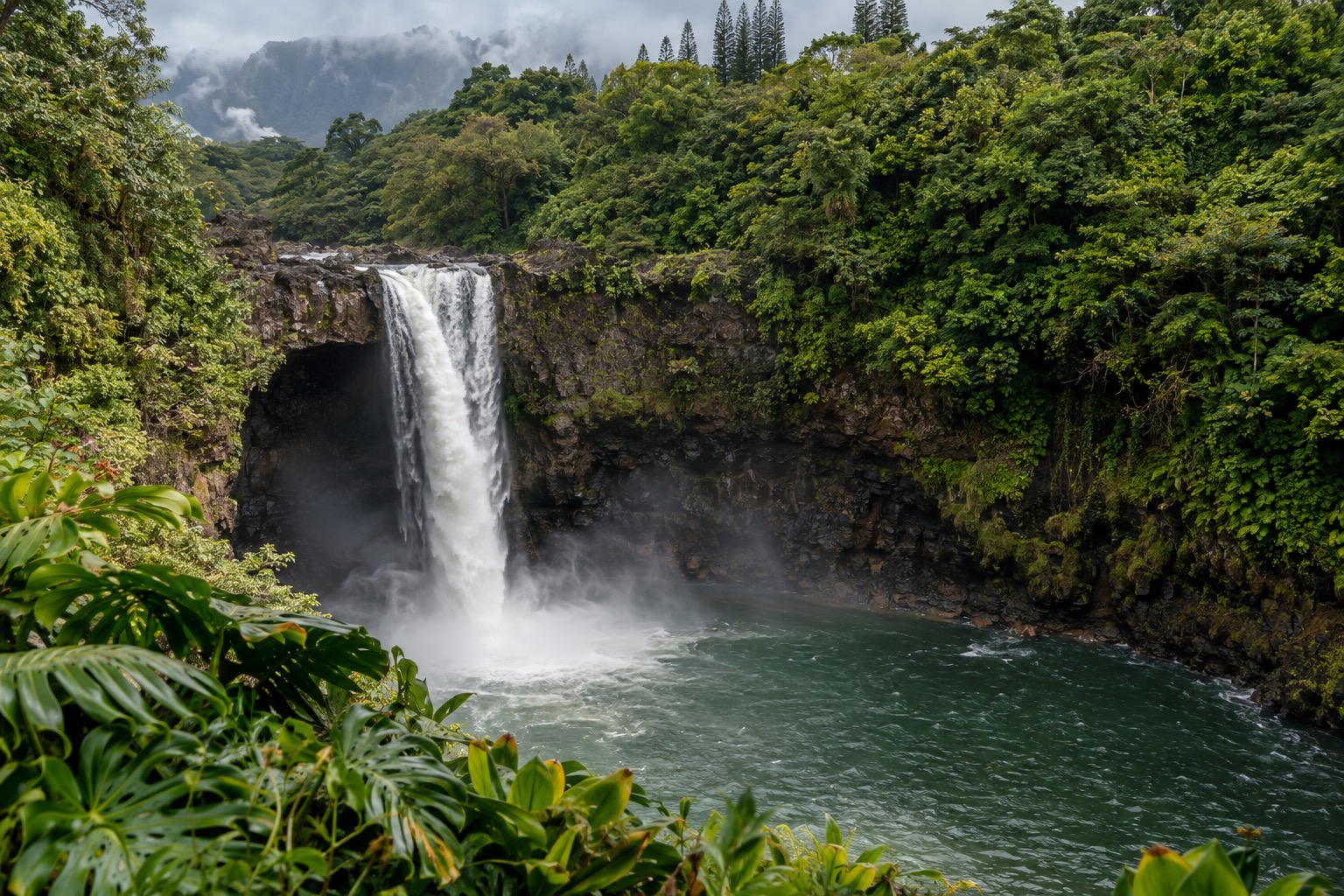
Rainbow Falls sits just a few minutes from downtown and runs full after the wet winter, with mist and, on sunny mornings, a rainbow in the spray. Farther up the Hamakua side, Akaka Falls State Park has a short paved loop through bamboo, ferns and wild orchids to a very tall waterfall, which makes an easy outing for most ages.
Go in the morning, when the light is better and the clouds have not yet settled in. Wear shoes with grip because the paths are slick, and bring a light jacket for the shade. A tropical botanical garden along the Hamakua coast makes a good companion stop if the weather is mixed, since the greenery looks its best under a soft sky.
Downtown Hilo, markets and food
Facing the bay, downtown Hilo is a compact grid of bookshops, galleries, bakeries and old wooden storefronts. The Hilo Farmers Market on Mamo Street is the heart of it, with stalls of tropical fruit, orchids, anthuriums, macadamia nuts, local honey and plate lunches. Saturday and Wednesday are the big days.
Try a bowl of saimin, a Hawaii noodle soup, fresh poke, a malasada, or shave ice with local syrups. Rain is a good excuse to browse the shops and the Pacific Tsunami Museum, whose stories of the waves that struck the town are a sober piece of local history.
Volcanoes National Park day trip
From Hilo, almost every traveler makes the day trip to Hawaii Volcanoes National Park, climbing into a cool, misty forest that leads to the edge of Kilauea’s summit caldera. You walk through steam vents, look across the crater floor and, on clear evenings, sometimes catch a glow after dark, though that is never guaranteed.
Dress in layers, since the summit area is cool and rainy, and bring something to eat. It is a long day, so it suits visitors who like to be outdoors, but families with small children may prefer to take it in two halves. Check the park’s official notices before you drive, as conditions and access can change.
Coastal drives and tide pools
North of town, the Onomea Scenic Drive winds through jungle above the sea, and south in Puna the coast has tide pools and rugged lava shoreline. These spots are for looking and wandering, not for casual swimming, and the surf can be strong. Many travelers prefer to simply sit with a snack and watch the waves.
Easter-week and festival crowds make roadside stops busier, so start early. Whichever way you head, bring a rain jacket and be ready to pull over when a shower sweeps through, since in Hilo the weather is part of the scenery.
A two-day itinerary for Hilo in April
Day 1 starts in the early morning at the Rainbow Falls overlook, when the light is soft and the crowds have not arrived. From there, head to Lili’uokalani Gardens and the Coconut Island footbridge for a gentle walk by the bay, then browse the farmers market for fruit and a bakery stop for breakfast.
Midday is for lunch downtown, with a plate lunch or a bowl of saimin, followed by a stroll through the galleries and bookshops. In the afternoon, drive the scenic road north to Akaka Falls and the garden stops along the coast. Sunset comes in the early evening, so end with dinner back in town and a quiet walk along Banyan Drive.
Day 2 is for Volcanoes National Park. Leave early, wear layers and take your time at the crater rim and the steam vents. Eat lunch at a cafe in the village near the entrance or from a packed lunch, and spend the afternoon on the park’s short walks through fern forest.
If you stay until dusk, you may see the crater glow after dark, a chance rather than a promise. Rain card for both days: the Pacific Tsunami Museum, the downtown shops and a long coffee or shave ice stop keep the day pleasant when the clouds close in.
Is Hilo busy in April?
It is moderately busy, with a strong spike during the week of the Merrie Monarch Festival, when hotels and restaurants fill and rental cars become harder to find. Outside that week, the town feels relaxed, since Hilo is a working town more than a resort.
Spring break and Easter bring mainland families to the island, and some of them make the Volcanoes day trip, so popular stops fill by midmorning. Book rooms and cars early for the festival week and for Easter, and a little later for the quieter weeks that follow. Restaurant tables downtown tighten up during the festival, so make dinner plans ahead on those evenings.
Cruise ships sometimes call at Hilo, which can briefly crowd the farmers market and downtown shops. Reservations are not required for the main spots in town, but check the official state and national park pages for any entry rules before you go, since they can change.
What to pack for Hilo in April
Pack for warm, damp days and cool, misty hills, and keep everything light enough to dry fast.
- A light rain jacket, because showers come most days and the park is cooler and wetter.
- Quick-dry shorts and T-shirts, for warm humid days.
- Shoes with good grip, for slick waterfall paths and lava rock.
- Water shoes, for rocky shoreline entries.
- A warm layer, for the summit of Volcanoes National Park in the evening.
- Mineral sunscreen and a hat, since the sun comes out between showers.
Good to know before you go
April falls before the Central Pacific hurricane season, which runs from June 1 to November 30. Plan for showers rather than storms, bring something waterproof for your phone and camera, and rent a car if you want to see waterfalls and the park, since distances on the Big Island are long. Accommodation taxes apply to your stay.
| Fee | Amount | Who pays |
|---|---|---|
| State Transient Accommodations Tax | 11.00% | Guests, on gross rental proceeds |
| County of Hawaii Transient Accommodations Tax | 3% | Guests, on taxable gross rental proceeds |
| General Excise Tax pass-on (max, county included) | 4.7120% | Customers, as a visible add-on by businesses |
Hilo in April vs March and May
Moving the trip to March means a slightly cooler and noticeably wetter month, with a few fewer rainy days but heavier downpours, and a sea about the same. It also means missing the Merrie Monarch week in most years, which suits travelers who prefer quiet streets and easier rooms.
May is warmer, with fewer rainy days, a little less rain overall and a sea a degree or two warmer, which makes it the better choice for swimming and waterfall hikes. The festival crowds are gone, the spring break wave has passed and the town settles down before the summer family weeks.
Choose April if the hula festival is the reason for the trip and you do not mind a damp day or two. Shift to May if you want more sun, easier logistics and warmer water, and to March if you prefer a quiet visit and do not mind the extra rain.
Is April a good time to visit Hilo?
Yes, for travelers who love culture, gardens and waterfalls and are happy to take a little rain with the green. It is a good month for hula fans, food lovers and anyone who likes a small town with real character.
Beach-focused travelers who want guaranteed sun should look to the dry Kona coast instead, perhaps combining it with a few days in Hilo. On arrival, start at the farmers market, pick up fruit and a rain jacket if you forgot one, and ask about the festival schedule while you are there. What makes April in Hilo memorable is the sound of chant and drum drifting from rehearsal halls, the smell of fresh flower lei and the rainforest at its greenest after the winter rains.
Sources
- NOAA NCEI, monthly normals 1991-2020, station USW00021504, checked September 8, 2026
- Open-Meteo Marine API, average 2015-2024, checked September 8, 2026
- sunrise-sunset.org, sunrise and sunset calculated for the 15th of the month, checked September 8, 2026
- Hawaii Department of Taxation, Tax Announcement No. 2025-03 (Transient Accommodations Tax Law Changes from 2025 Legislative Session), files.hawaii.gov/tax/news/announce/ann25-03.pdf, checked September 24, 2026
- County of Hawaii, Department of Finance, Transient Accommodations Tax (TAT) page, hawaiicounty.gov/departments/finance/transient-accommodations-tax-tat (live returned HTTP 403 on request, read via Internet Archive Wayback Machine snapshot dated August 14, 2026, same official content), checked September 25, 2026
- Hawaii Department of Taxation, County Surcharge on General Excise and Use Tax page, tax.hawaii.gov/geninfo/countysurcharge/, checked September 25, 2026
- NOAA NCEI, monthly normals 1991-2020, station USW00021510
- NOAA NCEI, monthly normals 1991-2020, station USC00511303
- NWS Honolulu / Central Pacific Hurricane Center, « 2026 Central Pacific Hurricane Season Outlook », weather.gov/hfo/hurricaneOutlook2026, checked September 24, 2026