
On a January morning in Kona, the first fishing boats slip out of Honokohau Harbor while the sun climbs over Hualalai and lights up the black lava fields. Coffee is brewing at the roadside stands, and out past the surf line a humpback may slap its tail on the water. It is a month of sunny leeward days, a warm sea and the quiet after the holiday rush, made for anyone who wants winter on the Big Island’s dry coast.
What is the weather like in Kona in January?
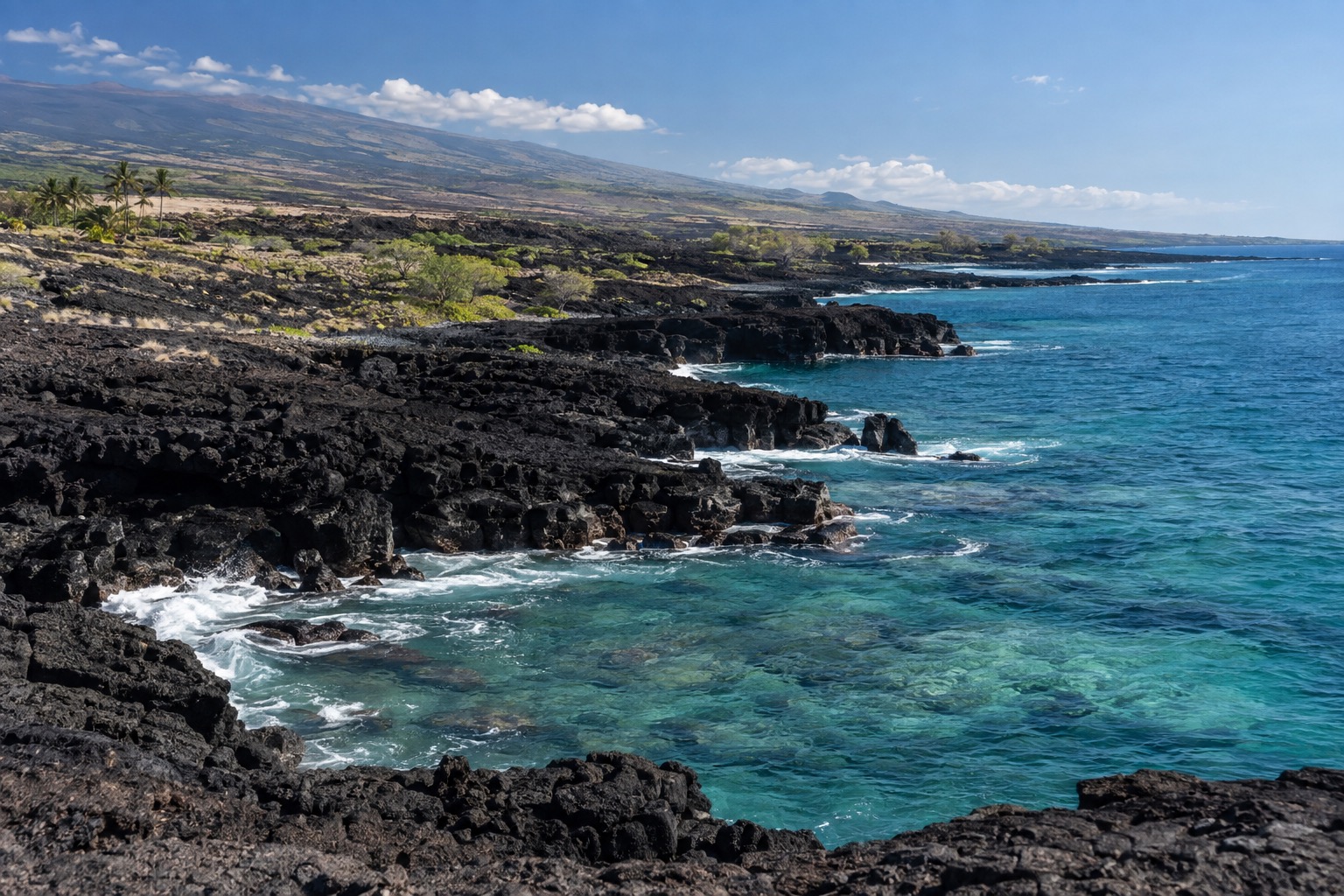
Kona in January is warm, sunny and mostly dry, with afternoons in the low 80s and soft evenings that call for a light layer.
| Month | Average high (°F) | Average low (°F) | Rain days | Sea (°F) |
|---|---|---|---|---|
| December | 82.3 | 70.0 | 1.6 | 79.3 |
| January | 81.4 | 68.6 | 1.8 | 78.1 |
| February | 81.5 | 68.4 | 1.5 | 77.9 |
The dry leeward coast is the reason. Mauna Loa and Hualalai shelter the west side from the trade winds, so clouds pile up on the other side of the island while the Kona coast stays bright. Mornings start clear and gentle, the sun is strong by ten, and afternoons are warm enough for shorts and a swim. Sunscreen matters even in winter.
Rain, when it comes, is a short passing shower, usually brief enough that you wait it out under a lanai roof with a cup of coffee. Hilo, on the windward side, gets far more rain in the same month, so a gray forecast for the island often means little on the Kona coast. Up the slopes toward the coffee farms, clouds drift in during the afternoon and the air feels cooler.
Evenings cool off pleasantly, comfortable for dinner outside on Alii Drive with a light sweater. Daylight lasts a little over eleven hours, so the sun sets early enough to make sunset a proper event before dinner. Up on Mauna Kea and at the Volcanoes crater rim, the air is much colder and wetter, so plan layers if you drive up.
Can you swim in Kona in January?
Yes, the sea is warm enough for a long swim or a snorkel without a wetsuit, though the water feels a touch cooler than it did in the fall.
Kona’s west-facing shore is usually the calmer side of the island in winter, while the north and west shores of other islands get the big surf. That said, swells can still wrap into some beaches, and conditions change from one day to the next. Look at the signs and flags on the sand, and talk to a lifeguard before you go in.
Kahaluu Beach Park is the classic snorkel spot, with turtles often grazing along the shore and a busy reef nearby. Magic Sands and the small coves along Alii Drive draw bodyboarders when the waves rise.
White Sand Beach and the long stretches farther north suit a calmer day on the sand. Keep off the reef, give turtles room, and bring a rash guard if you plan long hours in the water. During whale season you may hear singing underwater while you snorkel.
What to do in Kona in January
January is humpback whale season in Hawaii, and Kona’s calm leeward waters make it a good place to look for them. From a boat out of Honokohau Harbor, or simply from the lava rock at the edge of Alii Drive, you may see spouts, breaches and mothers with calves. Dolphins and manta rays also show up on tours, though sightings are never a promise.
The month is also the quiet stretch after the holidays, with the whole coast moving at a slower pace. Local farmers markets sell tropical fruit, fresh bread and flowers, and plates of poke and grilled fish fill the lunch tables along the water. Coffee is the local specialty, and cafés pour it strong and bright.
Snorkeling and ocean days
The warm, mostly gentle water along the coast is the main reason to be here. Kahaluu Beach Park is a short drive south of town and is a favorite for first-time snorkelers, with turtles often feeding in the shallows. Mornings tend to be calmest, before the afternoon wind and the crowds arrive.
Boat trips head north or south along the coast for snorkeling, dolphin watching and whale watching. Kayaks and stand-up paddleboards are common at the bay near Kealakekua, where the water is clear and the monument on the shore stands out. Choose a day when the water looks quiet, and follow the lifeguards and signs if anything looks rough.
Coffee country and farm stops
Up the slope above town, the Kona coffee belt is a green, cooler world of small farms with tasting rooms and shaded porches. You drive up from the coast, taste a cup or two, and often watch how the beans are dried and roasted. The cloud that drifts in during the afternoon makes mornings the better time to visit.
Small farms also sell macadamia nuts, honey and fresh fruit, and a lunch stop in Holualoa, an arty village of galleries and wooden storefronts, fits easily into the same loop. The pace is slow, so one or two stops are plenty. Bring a light jacket, since the higher air is cooler than at the shore.
Alii Drive and the old town
Alii Drive follows the waterfront, with Kailua Pier at its heart and the old royal grounds nearby. Shops, open-air restaurants and the small church of Mokuaikaua line the street. This is where the town gathers at the end of the day, when the heat eases and the sky turns orange over the water.
Walk the seawall in the late afternoon, then settle at a table by the water for fish and a cold drink. Street musicians and sunset watchers fill the sidewalks, and the walk is flat, easy and good for families. In January the light stays soft and golden until the sun drops, so it is a pleasant place to linger after dinner too.
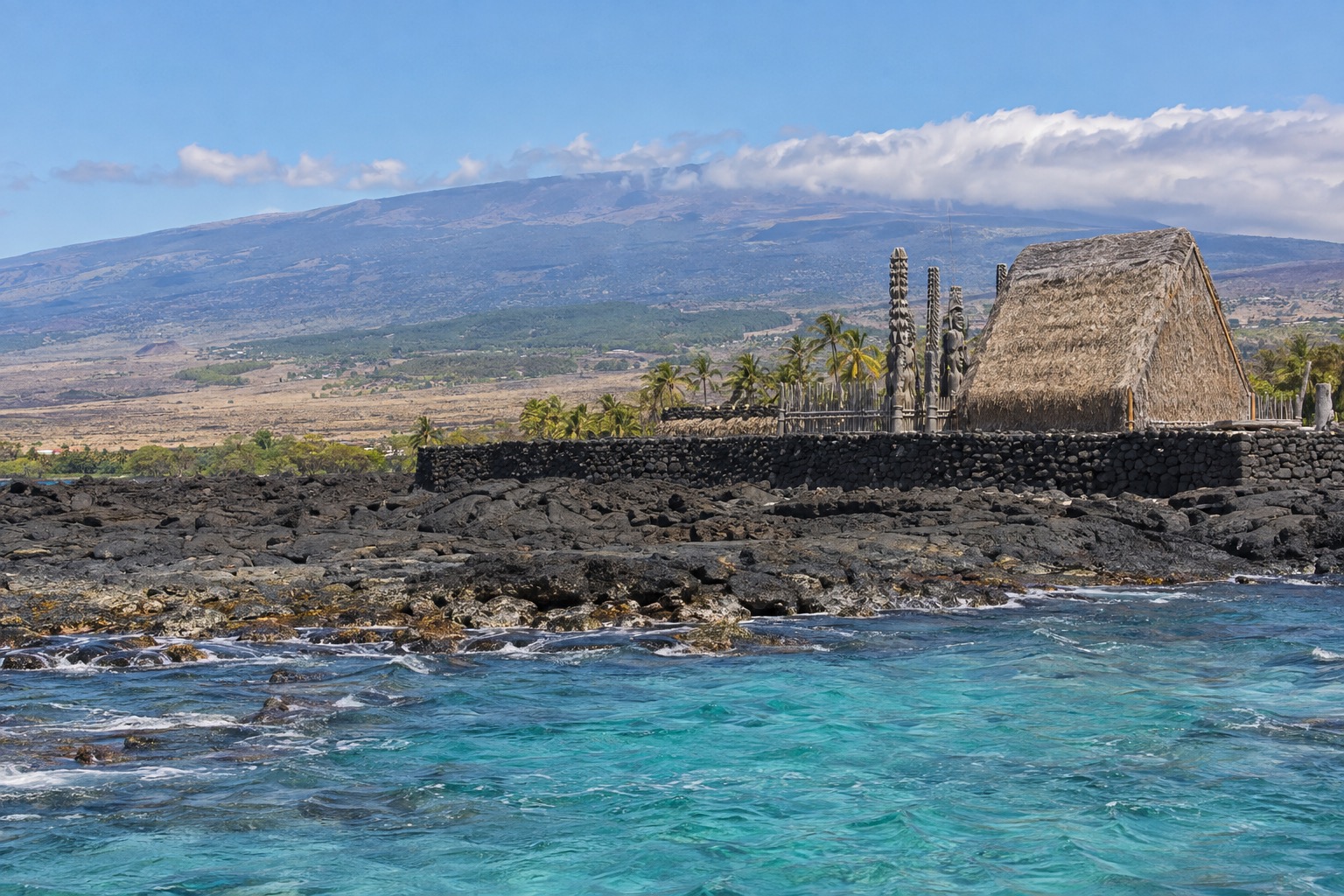
Beyond town, Pu’uhonua o Honaunau National Historical Park sits on a lava point south of Kona, with carved wooden figures, old stone walls and a quiet shoreline. Many visitors find it most peaceful in the morning, when the sea is calm and the light softens the black rock. Remember that the site is sacred to Native Hawaiians, so walk with respect and stay off the stones.
A two-day itinerary for Kona in January
Day 1 starts early at Kahaluu Beach Park, where the water is usually at its calmest before the wind picks up. Snorkel for an hour or two, then dry off and drive up the hill for the coffee farms and a lunch in Holualoa. The cooler air and the galleries make a nice break from the sun.
Return to town in the afternoon for a slow walk along Alii Drive and the seawall. Stop for shave ice or a cold drink, then claim a spot on the water to watch the sunset, which comes at an early hour in January. Dinner can be fresh fish at an open-air restaurant on the street.
Day 2 begins at the south end, with a morning at Pu’uhonua o Honaunau, when the shoreline is quiet. From there continue to Kealakekua Bay for a kayak or a boat trip, with a lunch of poke or plate lunch from a local counter. If a shower rolls in, step into a coffee tasting room or a gallery and wait it out.
Spend the afternoon on a boat tour for whales and dolphins, leaving from Honokohau Harbor, or rest on the sand at one of the pocket beaches. In the evening, the town’s casual restaurants and live-music spots are easy places to end the trip, and a short stroll in the cool air is all you need.
Is Kona busy in January?
It is busy in the first days of the month, then it calms down, with the holiday crowd leaving and the coast settling into a more relaxed rhythm.
Winter is high season in Hawaii, and mainland visitors escaping the cold keep hotels and condos reasonably full. Whale season adds to the draw, and boat tours can fill on clear days. Restaurant tables along Alii Drive are easiest to find early in the evening, and popular spots get busier at sunset.
As a habit, book rooms and rental cars early for the holiday weeks, and a bit later for the quieter stretch afterward. Whale-watching and snorkel cruises are worth reserving ahead, especially for weekends. Cruise ships sometimes anchor off Kailua Pier, which can make the waterfront livelier on those days.
What to pack for Kona in January
Pack for sun and sea, with one layer for cool evenings and the highlands.
- Swimsuit and rash guard, for long hours in the water.
- Mineral sunscreen and a hat, since the sun is strong even in winter.
- A light sweater or jacket, for evenings and the coffee belt.
- Reef shoes or water sandals, for rocky entries.
- A rain shell, for short passing showers.
- Binoculars, for spotting whales from shore.
Good to know before you go
January falls outside the official hurricane season, which runs from June 1 to November 30. A rental car is the easiest way to move between the beaches, the coffee farms and the southern sites, and lodging taxes are added to your bill.
| Fee | Amount | Who pays |
|---|---|---|
| State Transient Accommodations Tax | 11.00% | Guests, on lodging |
| County of Hawaii Transient Accommodations Tax | 3% | Guests, on lodging |
Kona in January vs December and February
Moving a trip to December brings a slightly warmer sea and air, and the holiday crowds that come with the end of the year. Rooms and cars are harder to find, and the mood is festive. Whale season is just getting started.
February feels very much like January, with a similar sea and mostly sunny days. Whales are still around, and the coast is often a bit calmer once the winter holiday travel has passed.
If you want a festive feel, choose December. If you want the whales with fewer crowds, January and February are both good, and the choice comes down to your calendar.
Is January a good time to visit Kona?
Yes, especially for travelers who want sun, a warm sea and a relaxed pace after the holidays.
Snorkelers, whale watchers, coffee lovers and families who like easy beach days will love it. Anyone chasing big surf or a very cool mountain retreat may prefer another island or a trip up the volcano slopes, and anyone who wants cold-weather festivities should look elsewhere.
On arrival, start with a snorkel morning at Kahaluu and a sunset walk on Alii Drive. January in Kona is a month of humpback spouts off the lava coast, warm water and golden evenings on the waterfront.
Sources
- NOAA NCEI, monthly normals 1991-2020, station USW00021510, checked September 8, 2026
- Open-Meteo Marine API, average 2015-2024, checked September 8, 2026
- sunrise-sunset.org, sunrise and sunset calculated for the 15th of the month, checked September 8, 2026
- Hawaii Department of Taxation, Tax Announcement No. 2025-03 (Transient Accommodations Tax Law Changes from 2025 Legislative Session), files.hawaii.gov/tax/news/announce/ann25-03.pdf, checked September 24, 2026
- County of Hawaii, Department of Finance, Transient Accommodations Tax (TAT) page, hawaiicounty.gov/departments/finance/transient-accommodations-tax-tat (live returned HTTP 403 on request, read via Internet Archive Wayback Machine snapshot dated August 14, 2026, same official content), checked September 25, 2026
- Hawaii Department of Taxation, County Surcharge on General Excise and Use Tax page, tax.hawaii.gov/geninfo/countysurcharge/, checked September 25, 2026
- NOAA NCEI, monthly normals 1991-2020, station USW00021504
- NOAA NCEI, monthly normals 1991-2020, station USC00511303
- NWS Honolulu / Central Pacific Hurricane Center, « 2026 Central Pacific Hurricane Season Outlook », weather.gov/hfo/hurricaneOutlook2026, checked September 24, 2026