
PORTO · DAY TRIPS · WHAT THE TRAINS REACH · WHAT THE ROADS COST
Porto keeps most of its day trips on rails. Regional lines leave the tiled hall of São Bento for a founding town, a cathedral city and a lagoon lined with striped beach houses, none of it requiring a rental car, a reservation or a departure time you have to defend. A fourth line runs east along the Douro into vineyard country. Past the rails the map changes: the stone villages of the Minho and the peaks of Peneda-Gerês are road country, and one day is not much to spend on them.
The order below follows what carries you, not by distance: the direct trains first, then the river line, then the days that want a car. Getting out of the city is rarely the problem. What decides these trips is how much daylight the return leg quietly takes back.
THE DAY TRIPS AT A GLANCE · FROM PORTO
Guimarães is the low-friction day: direct train, compact old town, back for dinner in Porto. The Douro line is the spectacular one, and the trip that repays a night rather than a day.
FOUR TRIPS BY TRAIN OR METRO · ONE THAT WANTS A NIGHT · GERÊS WANTS WHEELS
Go for: the river line east, terraces on one bank and water on the other, with somebody else doing the driving.
Think twice before: stacking Braga and Guimarães into a single day. The timetable allows it and leaves you with two hurried hours in each.
Rail and metro: CP and Metro do Porto · attraction hours and tickets: check the sites directly · full list at the end
On this page
- The easiest train out, and a walkable old townGuimarães by direct train
- Baroque Braga, and whether it pairs with GuimarãesBraga and the pairing question
- Canals in town, striped houses on the sandAveiro and Costa Nova
- Vineyard terraces from a train windowHow to get from Porto to Régua and Pinhão by train
- Stone villages, river towns, mountain trailsAmarante, the Minho and Peneda-Gerês
- A beach town at the end of the metro lineVila do Conde and Póvoa de Varzim: getting there by metro from Porto
Day trips from Porto: by train, bus or tour
Three directions, and they behave differently. Inland to the northeast sit Guimarães and Braga, each on its own branch out of the city, each compact enough to walk from the station. Aveiro is the outlier: it lies south, down the main line towards Lisbon, which is why many visitors pass it before realizing it counts as a day trip at all.
Upriver runs the Douro line, east along the water to Régua and Pinhão, the ride most people talk about afterwards. Northwest, the metro’s northern branch runs largely inland before ending at the coast towns of Vila do Conde and Póvoa de Varzim. Everything else, Amarante and the mountains included, is buses and roads.
Ticketing splits the same way. The metro and the urban rail zone run on the Andante card, while regional trains are bought at the counter or the machine before boarding. Which is which sits in Getting Around Portugal. If one day of the trip needs a car, read the rental briefing first, tolls and automatics included, and collect the keys on the morning you use them.
Guimarães: how to get there from Porto and what to see
The country’s origin story is filed in Guimarães, and.
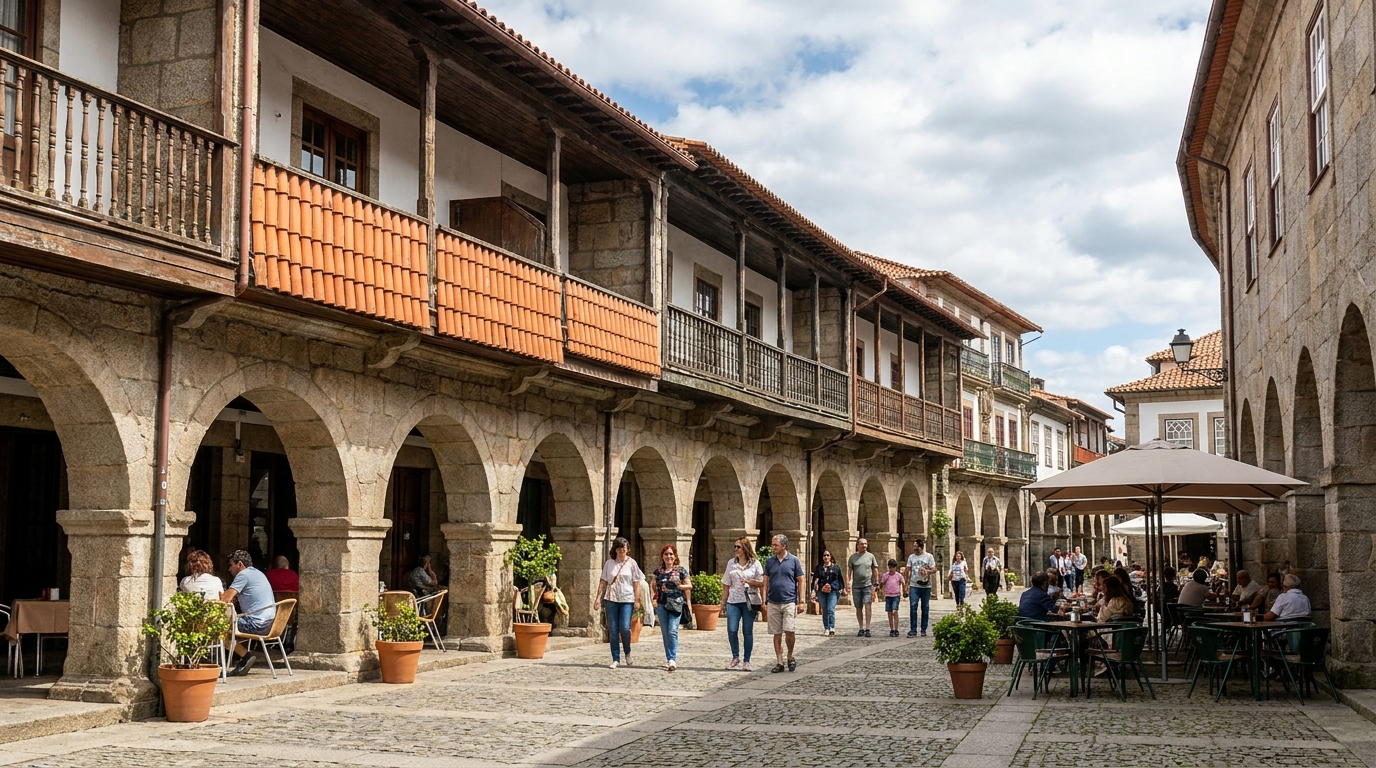
The town has never let anyone forget it: a castle on the ridge, a ducal palace below, arcaded squares with wooden balconies and tiled café fronts. The sights themselves are covered in our north region guide. What matters from Porto is the rail link, direct, with no transfer to negotiate and a short walk at the far end.
Reckon on roughly an hour and a quarter on scheduled services, spaced through the day rather than bunched at dawn. Take an early departure anyway. The arcades stay shaded and largely local until the coach groups roll in from the city, and the climb up to the castle is far kinder before the middle of a summer afternoon.
Opening hours and ticket prices for the castle, the palace and the Penha cable car shift from year to year, so confirm them with the sites rather than with any guide, ours included. Not your day if: you want landscape. This one is streets and worked granite, and it gives you nothing green until you ride up the hill.
Braga: the sanctuary stairway, and Braga and Guimarães in one day
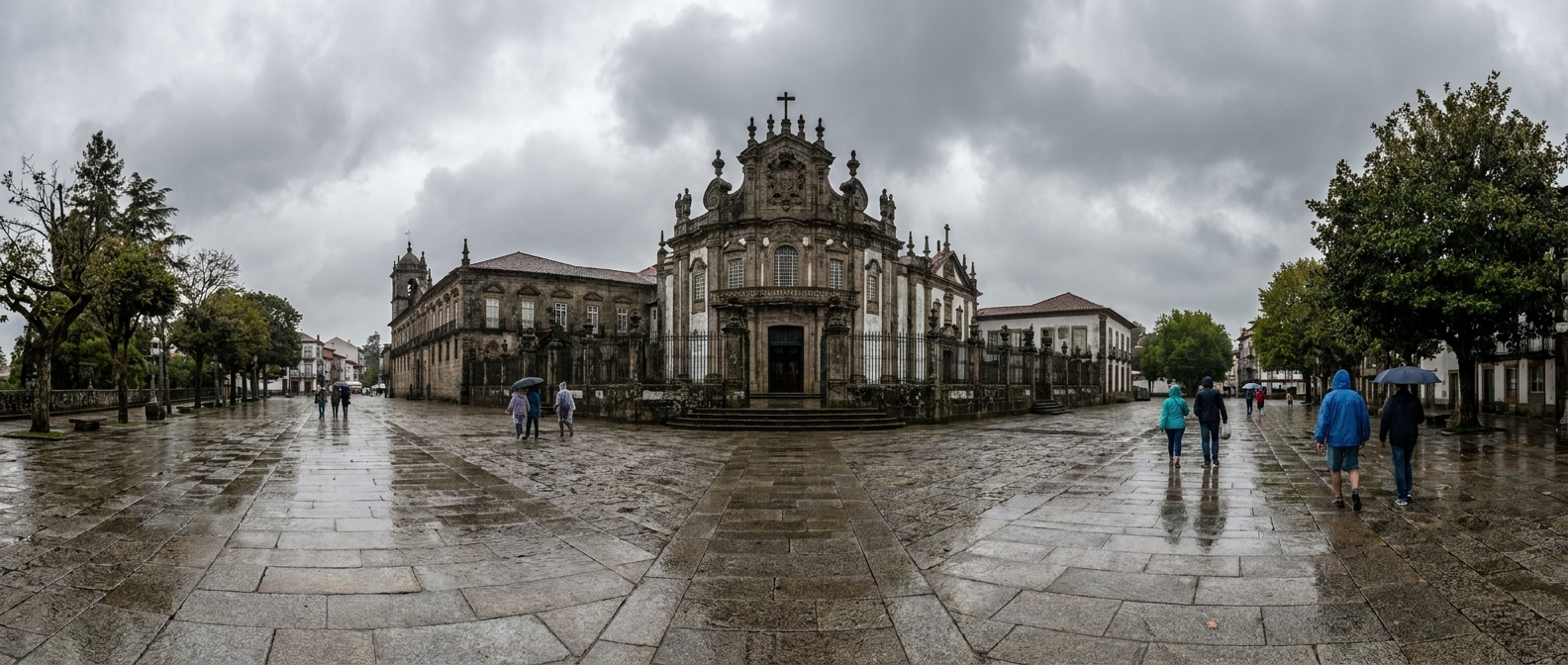
Braga runs on churches and students in roughly equal measure, and its headline sight sits outside the center. The Bom Jesus stairway climbs a wooded hill in landings, with a water-counterweighted funicular for anyone who would rather ride than walk. Getting up there means a city bus first, then the choice of steps or funicular. Schedules and fares for both change, so confirm on the day you go.
On the pairing question, our answer is no. The two towns are close, the connection exists, and doing both reduces each to its main square and a fast coffee. If one day is all there is, spend the morning in Guimarães, reach Braga’s cathedral quarter in the late afternoon and let the sanctuary go. Better still, give Braga its own outing and keep the hill in it.
Aveiro and Costa Nova: how to get there from Porto and what to see
Aveiro sits south of Porto on the line towards Lisbon, so this is the trip where you head away from the north to take it. Canals cut through the middle of town, worked by moliceiro boats that once hauled seaweed off the lagoon and now haul visitors. The pastry to order is ovos moles, sold in painted tins and small barrel shapes near the water.
The striped houses are not in Aveiro itself..
Costa Nova lies across the lagoon, a row of palheiros painted in bands of red, blue and green, fishing sheds before they were photographs. Buses link the two and the timetable decides how long you get there, so check the current schedule before you build an afternoon around it.
This is the flattest walking of the trips here, which makes it the gentlest with small children or a stiff knee, a calculation worked through in Portugal with kids. Not your day if: you came north for granite and gradients. Aveiro is tiles, water and flat light, closer in feel to the coast below it than to anything upriver.
How to get from Porto to Régua and Pinhão by train
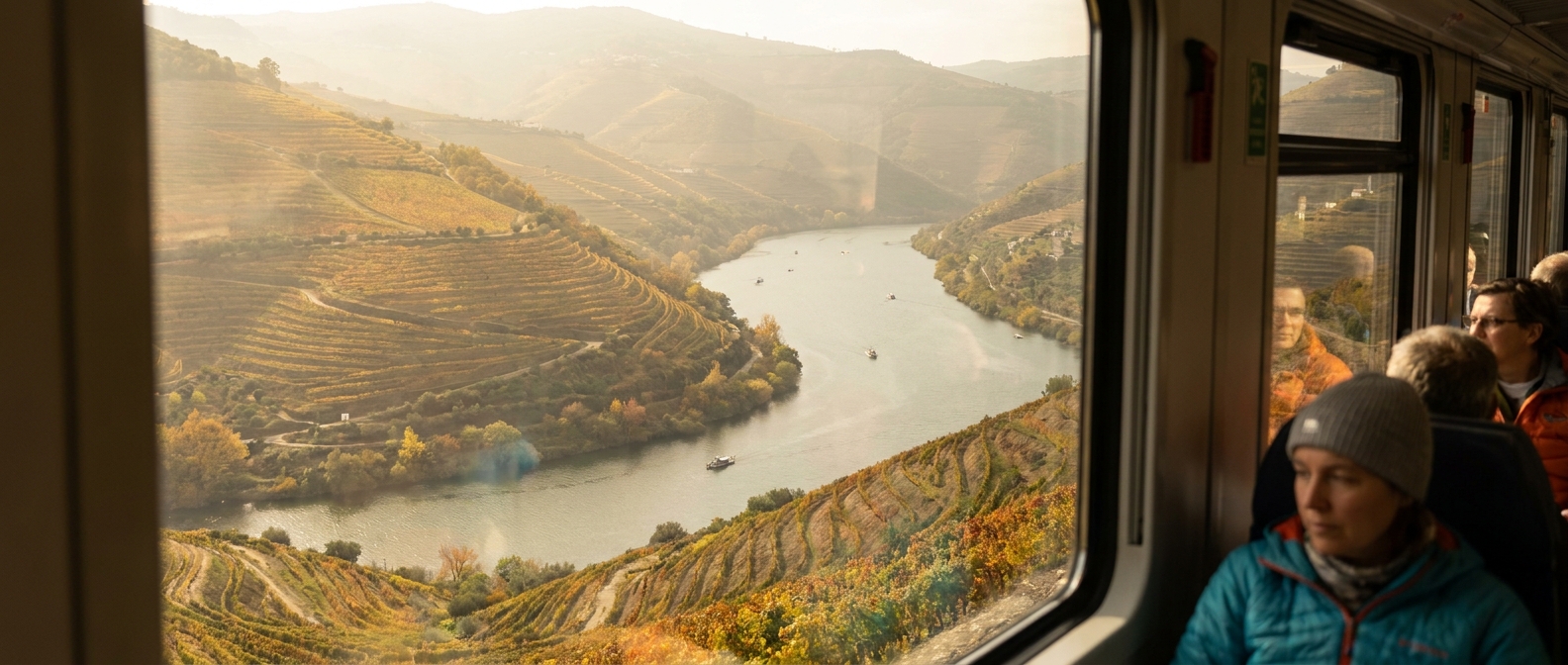
The line east follows the river, and for its last stretch the track runs beside the water with terraced vineyards stacked on the far bank. Régua is the working town of the wine trade, Pinhão the smaller stop with tiled panels on the station wall. Both can be reached and left again inside a day from Porto, and on this trip the ride outranks the destination.
A day buys you the window, an afternoon on foot and perhaps one long lunch by the river. What it cannot buy is the valley behind the valley: the quintas up the side roads, the light coming off the terraces at the end of the afternoon, the boat back downstream. That case is made in our Douro Valley guide, and in the harvest guide if you arrive in September.
None of which makes the day trip a waste. If Porto is a long weekend, take the train, watch the river do its work and come back for dinner in the city. If a spare night turns up later in the trip, move it upstream rather than spending it on a second departure from Porto.
Amarante and Peneda-Gerês: how to get there from Porto
Amarante sits inland on the Tâmega: a granite bridge, a church planted at its foot, and cake shops that take their conventual recipes seriously. Buses run from Porto and the ride is not long. What decides the day is the return, so check the operator’s current timetable rather than assuming a late departure exists.
Peneda-Gerês is the harder call and deserves a straight comparison. Buses do reach park villages such as Vila do Gerês and Campo do Gerês, generally with a change at Braga, which puts a timetable in charge of your afternoon. Organized tours from Porto absorb the driving and fix the stops. A rental car is the only version that has you at a trailhead at an hour of your choosing.
Whichever of the three you take, one day is thin for a park of that size, and our recommendation is a night in the villages instead of a return run (est., editorial). The same logic covers the rural Minho: markets, stone hamlets and the roads between them are a car proposition, described in the region guide and costed in Renting a Car in Portugal.
Day trips from Porto: Guimarães, Braga, Aveiro and the Douro
| Trip | Getting there | Book ahead? | Best for | Our verdict |
|---|---|---|---|---|
| Guimarães | Direct train · about 1h15 (est.) | No | Medieval streets on foot | Compact center, short walk from the station |
| Braga | Direct train · about 1h (est.) | No | Churches, students, the hillside sanctuary | Town plus stairway fills the day |
| Aveiro + Costa Nova | Train south, then bus across the lagoon | No · check bus times | Canals, painted palheiros, ovos moles | Two half days that fit together |
| Douro line | Train east to Régua or Pinhão | No · board early for a window | River scenery, wine towns | Best scenery, thinnest on time |
| Amarante · Peneda-Gerês | Bus, organized tour or rental car | Depends on the operator | River town, trails, stone villages | Roads reach what rails do not |
| Vila do Conde · Póvoa | Metro, northern line | No | Sand, aqueduct, fishing port | Half day, cold water, wind |
Vila do Conde and Póvoa de Varzim: getting there by metro from Porto
The metro’s northern branch runs mostly inland before finishing at the coast towns of Vila do Conde and Póvoa de Varzim: a river mouth, the long convent aqueduct, wide sand and a working fishing port. It takes the same Andante card as the airport run, though a ride this far crosses a different number of zones, so buy the title at the machine rather than reusing yesterday’s. The Atlantic here is cold in every month and the coast is often windy. Treat it as a half day.
The last word
Porto rewards staying put more than most cities its size. The cellars are one bridge away, the beach is at the end of a tram line, and the best hour of many days is the one spent on the bridge’s top level watching the light go. On a short visit, one trip out does more than three. Take the river line if the sky is behaving, Guimarães if it is not, since those arcades keep the rain off.
Build the city half of the stay with the ranked things to do and the neighborhood guide, or fold the lot into the seven-day route, which gives the Douro a bed rather than a return ticket. The wider north, Minho and plateau included, is a separate trip, and so is the city itself.
Sources & data for this guide
- Regional services from Porto to Guimarães, Braga and Aveiro, and the Douro line to Régua and Pinhão · CP Comboios de Portugal · checked Sep 14, 2026
- Northern metro line to Vila do Conde and Póvoa de Varzim, Andante card and zone titles · Metro do Porto · checked Sep 14, 2026
- Peneda-Gerês national park, village access and trails · ICNF (Portuguese nature and forest institute) · checked Sep 14, 2026
- Town and sight information for Guimarães, Braga, Aveiro, Costa Nova and Amarante · visitportugal.com (Turismo de Portugal) · checked Sep 14, 2026
- Editorial note: this page carries no opening hours, admission prices or exact journey times for attractions, because we hold no dated source for them and they change every season. Verify with the operator or the site before you travel.
- Editorial note: the order of the trips here follows the mode of transport, direct trains first and roads last, not distance or duration. Times marked (est.) are our estimates on scheduled services.