
ÉVORA · AUGUST · IPMA STATION 558
Évora spends August at 92.3°F in the afternoon and 60.8°F before dawn, and the gauge collects 0.24 inch of rain across the entire month. Those are the 1991-2020 normals from the Portuguese weather service, measured in the city itself rather than modeled. What the date buys you is light: on August 15 the sun sets at 8:27 pm, so the golden-age streets stay walkable long after a cooler month would have gone dark on you.
What it takes away is the middle of the day. Between noon and six the whitewashed walls throw the heat back at you, and the Roman temple platform has no shade at all. Treat August in Évora as two short days joined by a long indoor pause and the month is generous. Treat it as one continuous stretch of sightseeing and you will come home remembering the heat instead of the city.
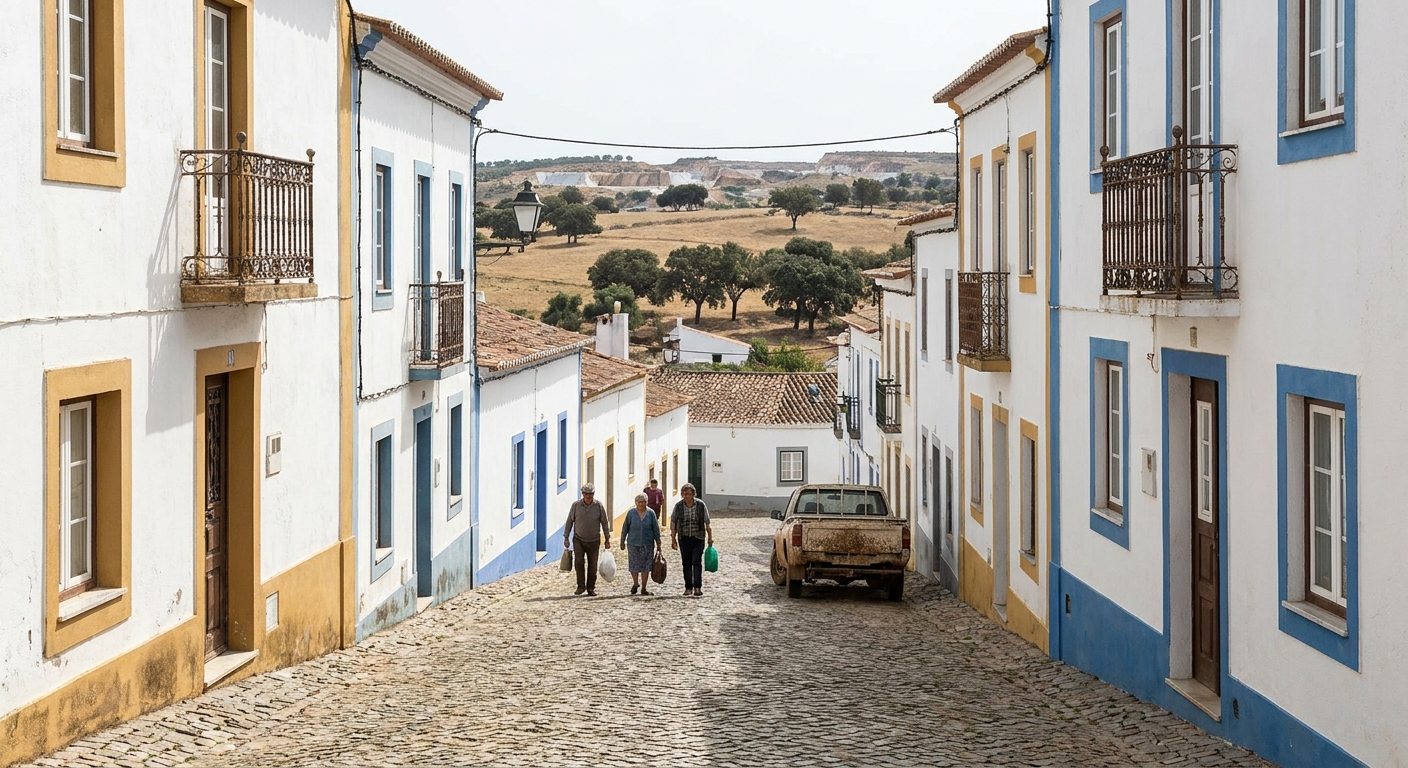
THE MONTH AT A GLANCE · ÉVORA IN AUGUST
August hands Évora its warmest afternoons, almost no rain and light until 8:27 pm: schedule the walking before 11 and after 7, and the month delivers.
AVG HIGH 92.3°F · 0.7 RAIN DAYS · SUNSET 8:27 PM · UNESCO CENTER ON FOOT
Go for: a near-dry calendar, long warm evenings under the Temple of Diana, and a whitewashed UNESCO center you can cross on foot in the cool hours.
Think twice before: booking a midday walking tour, or bringing anyone who struggles at 92.3°F on open stone with no cover.
Normals: IPMA station 558, 1991-2020 · Light: sunrise-sunset.org · Monuments: UNESCO file 361 · full sources at the end
On this page
- Évora weather in August92.3°F highs, 60.8°F lows, 0.24 inch of rain
- How hot it gets, and what to wearThe 31.5°F swing between night and afternoon
- Crowds and prices in AugustWhat we can document, and what we cannot
- Things to do in Évora in AugustTemple of Diana, the Cathedral, Os Loios, the wall
- A two-day plan for the heatTwo cool shifts, 7:30 am and 6:30 pm
- August vs July and SeptemberHow the three months compare on heat and rain
- Is August a good time to visit?Who should come, and who should shift to September
Every figure here comes from one thermometer, IPMA’s station 558 inside Évora at 247.6 m, plus a sunrise table for August 15. What the date does not change, the layout of the center and the country beyond the walls, lives on the city guide and in our Alentejo pages.
Évora weather in August: average highs, lows and rain days
| Évora, August (1991-2020 normals) | Value |
|---|---|
| Average high | 92.3°F (33.5°C) |
| Average low | 60.8°F (16.0°C) |
| Monthly precipitation | 0.24 in |
| Days with 1 mm (0.04 in) or more | 0.7 |
| Days with 10 mm (0.39 in) or more | 0.2 |
| Daylight, August 15 | 13 h 42 min |
| Sunrise / sunset, August 15 | 6:44 am / 8:27 pm |
The normals here are IPMA’s, the Instituto Português do Mar e da Atmosfera, station 558 at Évora, 247.6 m above sea level. That is a working thermometer in the city, not a grid cell averaged out of a reanalysis, and the distinction shows up in the overnight figure more than anywhere else. These readings describe inland Alentejo and nothing further: high ground in Portugal runs colder and far wetter, and any coast keeps its own weather. If your trip pairs Évora with a beach or a mountain trail, read those numbers separately before you pack.
Measurable rain is close to a rumor. IPMA counts 0.7 days reaching 1 mm (0.04 inch) in an average August and 0.2 days reaching 10 mm (0.39 inch): most Augusts get a single damp day, and a genuine soaking turns up about one August in five. Check the thresholds before comparing with an American table. US tables usually count days at 0.10 inch, so their figure comes out lower for identical weather. Pack for sun and dust, and keep the rain plan as insurance rather than as a scheduled afternoon.
Between the average low and the average high sits 31.5°F of daily swing. At 6:45 am the lanes are near 61°F and you will want sleeves. By 4 pm the same lane reads in the low nineties. So the bag holds a light layer you can carry all day, a wide hat, a bottle you refill, and shoes that handle worn cobbles, because the medieval street layout inside the walls is all narrow stone. Our Portugal packing guide takes it from there.
August 15 gives 13 hours 42 minutes of daylight, sunrise at 6:44 am and sunset at 8:27 pm in Lisbon time. Good walking runs until about 10:30 and starts again after 7, when the low sun catches the columns of the Roman temple and the whitewash turns orange. Dinner at 9 pm is ordinary in this part of Portugal, and in August it still feels like evening rather than night.
How warm is Évora in August?
The two numbers to carry are 92.3°F and 60.8°F. A monthly normal averages thirty Augusts, so individual afternoons climb above the first and the occasional night drops under the second. Dry air over the Alentejo plain explains the 31.5°F gap: the ground heats fast after 10 am and gives it all back within two hours of sunset. Compared with the humid American South at the same latitude, the heat is sharper at 3 pm and far kinder at midnight.
In practice, mornings need a shirt with sleeves that you will be carrying by nine. Afternoons need linen, a hat and shade discipline, because the temple platform, the cathedral forecourt and the wall circuit are all open ground with the sun overhead. By 9 pm the thermometer is falling toward that 60.8°F overnight figure, and the terraces fill accordingly.
On freezing nights, we found no frost count in the August normals to report either way, and an average low of 60.8°F leaves the question academic. There is also no swimming figure to give: Évora sits inland at 247.6 m, and we could not verify a water temperature anywhere near it. If you read one for the Alentejo coast elsewhere, check what it measures, since those tables usually average daily maxima and run a little warmer than a full 24-hour mean.
How busy is Évora in August? Crowds, prices and booking ahead
August is when Portugal, Spain and France take their holidays at the same time, and Évora, a standard day trip out of the capital, collects both the foreign visitors and the domestic ones. Where the month lands in the year’s price cycle, we cannot tell you with figures: we found no occupancy series and no monthly room-rate series for the city, so we crown no month expensive and none cheap.
Book the bed early regardless. The historic center is small, the 17th-century wall caps how many addresses sit inside it, and August concentrates demand on exactly those rooms. Six to eight weeks out is our own rule of thumb (est.) rather than a measurement, and it counts double for a weekend pair of nights. Trains and buses from Lisbon are the usual approach; our getting-around guide carries the services.
We could not verify a lodging-tax rate for Évora, so no percentage comes from us. If a per-night tourist tax applies to your property, Portuguese hotels normally collect it at the desk rather than folding it into the online total. Ask at booking and hold a line in the budget for it, the way our cost guide treats every charge nobody quotes up front.
One upgrade changes this month more than any other: a room inside the walls with air conditioning you control. The medieval grid puts every monument a few minutes from the next, so an address inside the ring makes the midday retreat cost five minutes rather than a drive around the 20th-century ring road. A cheaper bed outside the wall is perfectly fine in April. In a 92.3°F August it quietly costs you the two best hours of the day.
Things to do in Évora in August: the Temple of Diana, the Cathedral and the Vauban wall
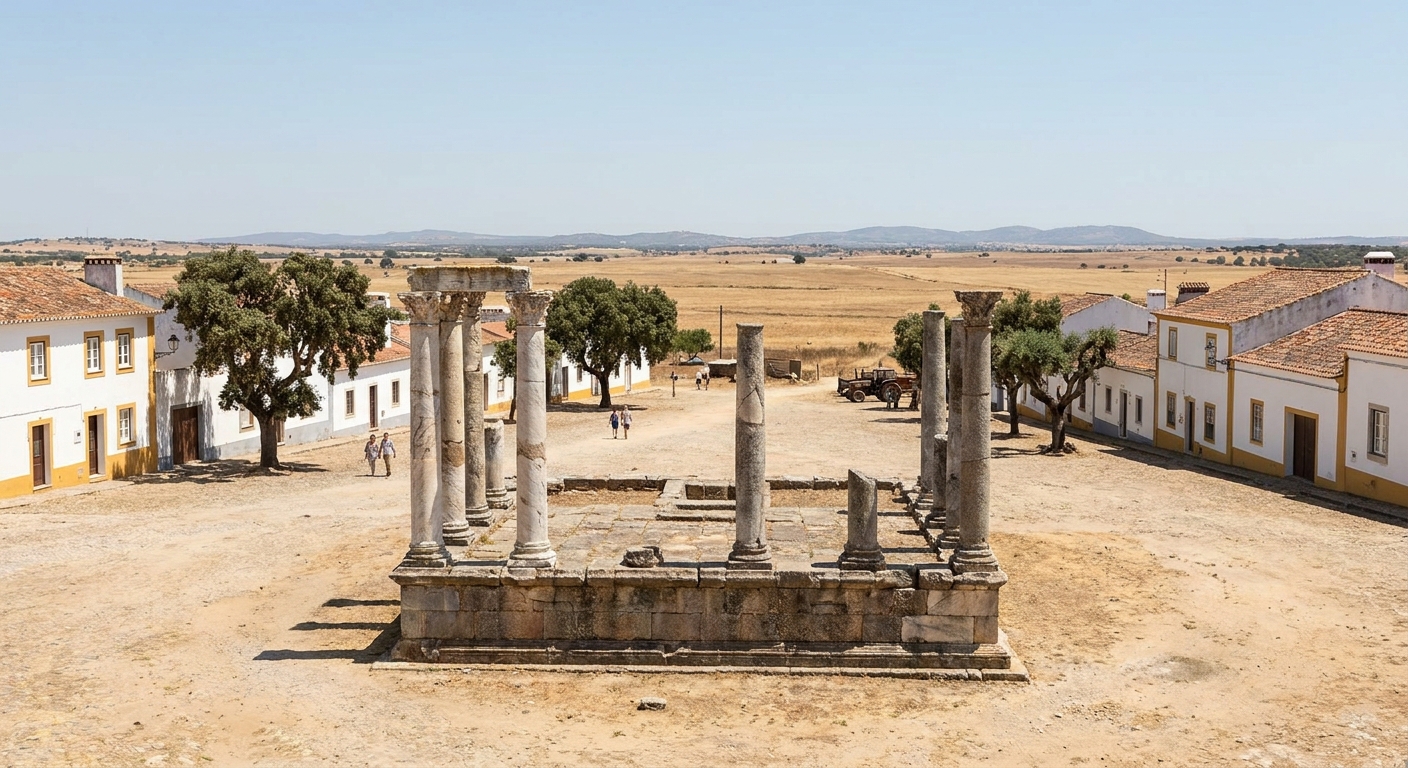
Two things August offers that September does not: an evening that stays warm and dry until late, and a calendar with 0.7 wet days instead of 3.6. Sunset at 8:27 pm buys a full second sightseeing shift once the heat breaks, and with 0.24 inch of rain expected across the whole month you can plan that shift days ahead without a fallback. The monuments themselves are indifferent to the season. The hours in which you can stand in front of them are not.
The historic center joined the UNESCO list in 1986, under criteria (ii) and (iv), for its whole fabric rather than one building. Start at the Temple of Diana: the city has been inhabited since the 2nd century BC, the Roman ruins still stand, and stretches of Roman wall reworked in the Visigothic period survive with them. The Cathedral was completed in the 13th century. The golden-age set runs from the Convent of Os Loios and its church of São João Evangelista to São Francisco and the Convent of St Claire.
Stone does not move with the calendar; air does. At 92.3°F the temple’s open platform is a 9 am or an 8 pm proposition and nothing between, while the narrow lanes between the low whitewashed houses hold shade for most of the day. The 17th-century Vauban-style wall, built to plans by the French engineer Nicolas de Langres, has open exposure and no trees, so walk it before the morning ends. Convent interiors are where the middle of an August day belongs.
Much of what makes the city singular is street-level and costs nothing: low whitewashed houses decorated with Dutch tiles and wrought-iron balconies, under tiled roofs and terraces, along a medieval street plan. UNESCO names two 16th-century patrician houses by hand, the Cordovil house and the house of Garcia de Resende, and you pass both on foot. The fortified Moorish gate and the remains of the Kasbah, left when Moorish rule ended in 1165, stand in the open as well.
Évora in August: a two-day itinerary
Day one runs on the two cool ends. Out by 7:30 while the streets are still near 61°F, coffee standing at a counter, then the Temple of Diana and the Cathedral before 10:30 while the light is still low on the granite. Lunch long, indoors, unhurried. From 1 to 5 pm, take the convents, the university buildings where the Jesuits taught from 1553, or a shuttered room and a nap, in descending order of ambition. Back out at 6:30 for the wall and the patrician houses, with sunset at 8:27 and dinner after it.
Day two goes wider: São Francisco, Os Loios and São João Evangelista in the morning block, the Cordovil house and Garcia de Resende’s on the walk between them, then an afternoon spent off your feet. If the sky does turn, you have hit the one August in five that delivers 10 mm or more, and the fix matches the heat fix: convent interiors, a two-hour lunch, and the wall circuit pushed to the evening, when 13 hours 42 minutes of daylight still leaves you room.
Évora in August vs July and September
| Normal (1991-2020) | July | August | September |
|---|---|---|---|
| Average high | 91.9°F | 92.3°F | 85.1°F |
| Average low | 60.1°F | 60.8°F | 58.3°F |
| Precipitation | 0.11 in | 0.24 in | 1.33 in |
| Days with 1 mm (0.04 in) or more | 0.6 | 0.7 | 3.6 |
Set side by side, July and August are near twins: 91.9°F against 92.3°F on the afternoon, 60.1°F against 60.8°F at night, 0.11 inch against 0.24 inch of rain. September breaks the pattern on all three counts. The afternoon average falls 7.2°F to 85.1°F, rainfall multiplies more than five times to 1.33 inches, and wet days climb from 0.7 to 3.6. We found no water temperature for any of the three, since the city sits well inland.
Shift four weeks later and you trade heat for weather: September‘s 85.1°F afternoon is the difference between walking at noon and hiding from it, at a cost of three extra damp days. Shift four weeks earlier and July gives a hair less heat, half the rain and nights 0.7°F cooler, with the same European holiday calendar filling the rooms. For a first visit with a movable date, that 7.2°F is worth more than the dry days it costs.
Is August a good time to visit Évora?
Yes, for travelers who will restructure the day. It suits anyone content to be out at 7:30 and again at 7, anyone who wants near-certain dry weather for a two-day walking trip, and anyone booking a room with shade and cold air for the middle. It suits nobody who plans to stroll at 2 pm, nobody heading into the open Alentejo countryside for long hours, and nobody shepherding small children across a 92.3°F stone square with no cover.
If the dates can move, move them to September. An 85.1°F afternoon reopens the hours between noon and four, and 1.33 inches spread across 3.6 wet days rarely takes a whole day off you. Those extra wet days are the price, and they buy back the middle of the day. Our country-wide month verdict sets the same trade against the coast and the north.
Of the three months around it, August alone puts the warmest afternoons, 0.24 inch of rain and light to 8:27 pm in the same week, so the evening shift is the one part of the day you can book in advance.
The last word
Decide the room before the itinerary: inside the wall, with shutters and cold air, turns 92.3°F from a problem into a scheduling question. And the city you will be walking survives in this shape for a reason worth knowing. Évora came through the 1755 earthquake mainly undamaged while the same shock flattened much of Lisbon, and UNESCO calls it the finest example of a city of the golden age of Portugal after that destruction. Its walls have been protected under national law since 1920. Set the alarm for 7 and go look at them before the stone warms up.
Sources & data for this guide
- August normals, rain-day counts and IPMA thresholds · IPMA (Instituto Português do Mar e da Atmosfera), 1991-2020 climate normals, station 558 Évora, altitude 247.6 m · checked Sep 24, 2026
- July and September normals used in the comparison · same IPMA 1991-2020 series, station 558 · checked Sep 24, 2026
- Daylight, sunrise and sunset for August 15 (calculated in UTC, converted to Europe/Lisbon) · sunrise-sunset.org · checked Sep 24, 2026
- 1986 inscription, Roman temple and wall, Cathedral, convents, patrician houses, Vauban wall, 1165, 1553, 1759, 1920 and the 1755 earthquake · UNESCO World Heritage Centre, file 361 · checked Sep 24, 2026
- We could not verify opening hours or admission prices for any Évora monument: UNESCO describes the property, it does not run visits. We also found no occupancy series, no monthly room-rate series and no lodging-tax rate, so we rank no month on price and give no percentage. Check operators and your property before you book.