
KINGSTON · AUGUST · 17.99° N
Kingston in August runs hot by day and barely cools at night. The 1991-2020 normals put the average high at 87.8°F and the low at 76.5°F. Rain shows up without taking over, with 3.66 inches spread across roughly nine wet days, and the sea stays warm at 86.6°F by its daily maxima. For a city-and-heritage trip, that is workable weather, provided you walk in the mornings and keep the midday for a roof and a cold drink.
Against its neighbors, August stands apart in the rain more than in the heat. July shares the same 87.8°F high with 6.4 wet days. September drops the high to 86.5°F but climbs to 12.9 wet days. Shifting your vacation four weeks in either direction moves your odds of a dry afternoon far more than it moves the thermometer.
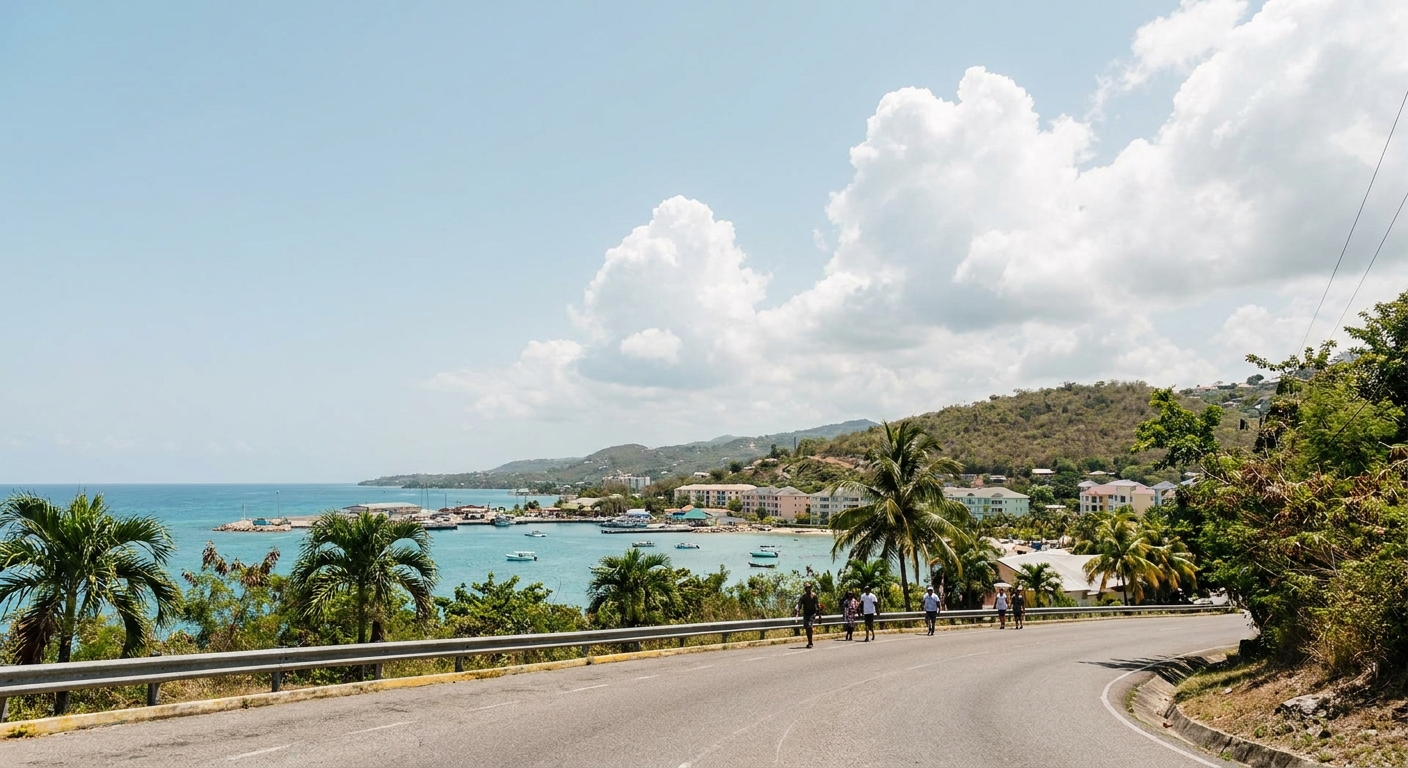
THE MONTH AT A GLANCE · KINGSTON IN AUGUST
August suits a Kingston heritage trip built on early starts, with 87.8°F highs, rain on about three days in ten and an 86.6°F sea for a late-day swim.
HOT NIGHTS · 3.66 IN OF RAIN · SEA 86.6°F · SOUTH-COAST GRID CELL
Go for: early-morning walks at Port Royal and National Heroes Park, light until 6:34 p.m., and warm water for an evening swim.
Think twice before: booking non-refundable, since August falls inside the Atlantic hurricane season, or planning long midday walks at 87.8°F.
Climate: Open-Meteo / ERA5 reanalysis · Sea: Open-Meteo Marine · Sites: Jamaica National Heritage Trust · full sources at the end
On this page
- Kingston weather in August87.8°F highs and 9.2 rain days
- Sea temperature in Kingston in August86.6°F off Kingston, by daily maxima
- Hotel prices and crowds in AugustHotel rates, lodging tax and the AC upgrade
- Things to do in Kingston in AugustPort Royal, National Heroes Park and the Ward Theatre
- Two-day Kingston itinerary for AugustTwo days around a 6:34 p.m. sunset
- August vs July or SeptemberRain days climb from 6.4 to 12.9
- Is August a good time to visit Kingston?Yes for heritage trips, July for drier days
Neighborhoods, safety and the case for Kingston as a base are covered in our Kingston guide. Fares and routes from home sit in flights from the US, and the whole-island calendar in the best time to visit Jamaica.
Kingston weather in August: average highs, lows and rain days
| Kingston in August | Normal |
|---|---|
| Average high | 87.8°F |
| Average low | 76.5°F |
| Precipitation | 3.66 in |
| Days with 0.10 in or more | 9.2 |
| Days with 1 in or more | 0.2 |
| Daylight on Aug 15 | 12 h 46 min |
| Sunrise / sunset, Aug 15 | 5:48 a.m. / 6:34 p.m. |
| Sea surface (mean of daily maxima) | 86.6°F |
Every figure here is an ERA5 model reanalysis from ECMWF, served by Open-Meteo and averaged over 1991-2020 for the grid cell at 17.997N, 76.7936W. It is a computed average for a patch of the map, with no airport thermometer behind it. The cell sits over Kingston itself, on the sheltered south coast, the island’s driest side, so it says little about the north-shore resort towns. For August it gives an average high of 87.8°F, an average low of 76.5°F and 3.66 inches of precipitation.
On 9.2 days of an average August the cell records at least 0.10 inch of rain, roughly three days in ten. Only 0.2 day reaches an inch or more, so a real downpour turns up about one August in five, and most wet days bring a shower you can wait out under cover. Pack a compact umbrella and keep a roofed fallback in each day’s plan, such as Holy Trinity Cathedral.
Between the 87.8°F high and the 76.5°F low sits a gap of just 11.3°F, so evenings stay warm and a sweater stays in the suitcase. Pack breathable cotton or linen, a hat and sunscreen for the walks, plus a light rain shell. A spare shirt in the day bag helps if you are still walking downtown by late morning.
On August 15 Kingston gets about 12 hours 46 minutes of daylight. Sunrise comes at 10:48 UTC and sunset at 23:34 UTC, or 5:48 a.m. and 6:34 p.m. on Jamaica’s clock, five hours behind UTC. Outdoor sightseeing fits best in the first hours after sunrise and again in the late afternoon, until the light goes around 6:34 p.m.
Can you swim in Kingston in August? Sea temperature
Open-Meteo’s Marine API puts the sea surface off Kingston at 86.6°F in August, averaged over 2015-2024. That number is the mean of daily maxima, the warmest reading of each day, so a 24-hour average would come out a shade cooler. The marine series also covers a different decade from the 1991-2020 air normals, and the two should be read as separate datasets.
In practice, water that warm brings no chill as you wade in and little cooling after a long swim. Against 87.8°F air, the sea feels only slightly fresher than the shore. Swim early or in the last hour of light, and bring a rash guard or reef-safe sunscreen for the glare off the water.
We found no wind or swell series for Kingston in August, so we give no wave height and no prevailing breeze. Check a marine forecast on the morning you plan to swim, and read our hurricane-season guide before you book. Beaches farther along the coast are named in our south coast guide.
How busy is Kingston in August? Crowds and prices
We found no occupancy series and no monthly hotel-rate data for Kingston, so we rank August neither cheap nor expensive against the rest of the year. On the weather calendar, the month sits between a drier July and a wetter September. The island-wide high and low seasons are set out in our best-time guide, and daily budgets in what a Jamaica trip costs.
Without rate data we cannot say how many weeks ahead August rooms fill. A flexible hotel booking and a refundable fare are the safer choice, so a tropical system in the forecast costs you a phone call instead of a deposit. Compare fares in our flights guide and arrange the ride into town with airport transfers.
We could not verify Kingston’s lodging-tax rate, so we give no percentage. Ask the hotel for an all-in nightly total before paying anything, and check whether taxes and service charges are included in the quoted rate or added on top.
If one upgrade gets your money in August, make it a room with reliable air conditioning. With lows averaging 76.5°F, nights bring no natural cool-down, and a fan alone sends you into the next 87.8°F day short on sleep. Spend the extra there before a view or a bigger room.
Things to do in Kingston in August
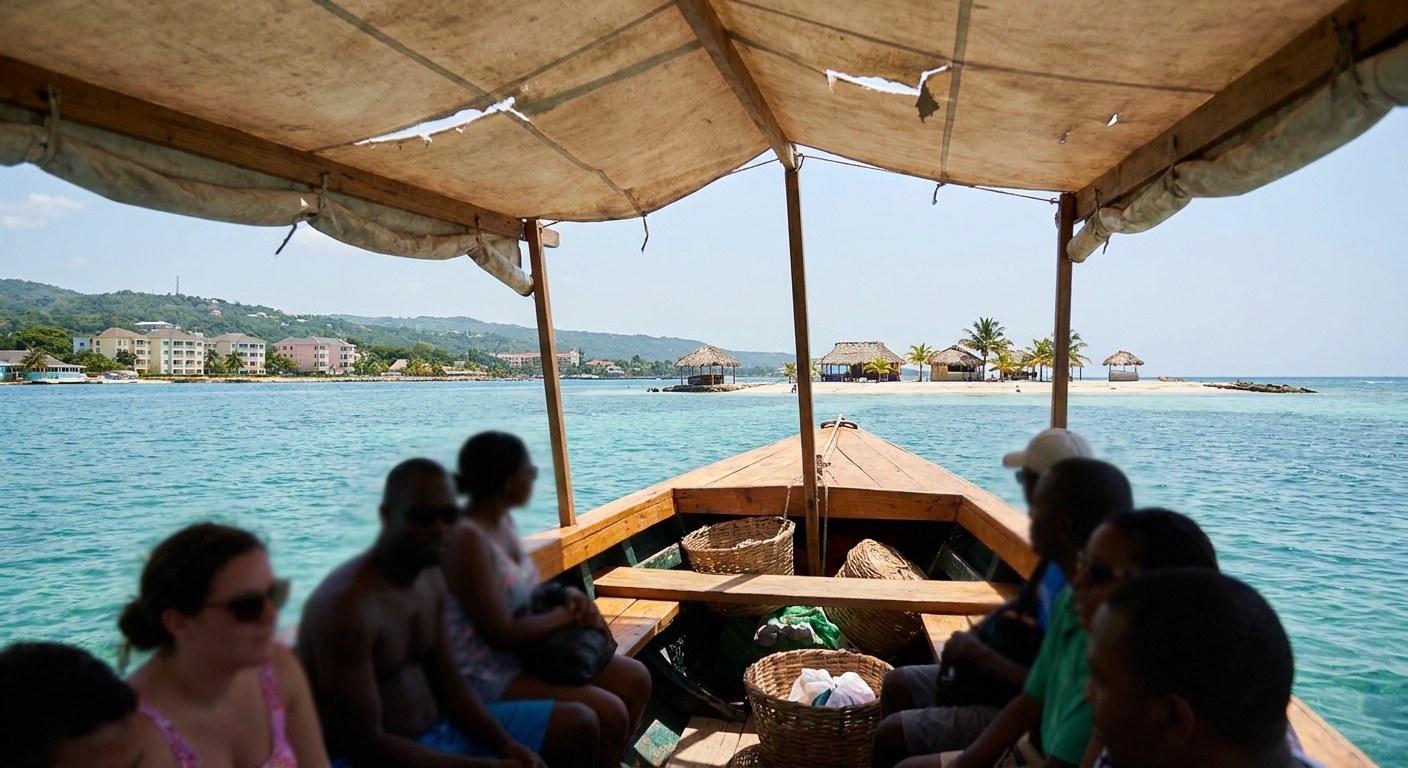
August’s 12 hours 46 minutes of daylight and 86.6°F sea let you split a day between a heritage morning and a swim before the 6:34 p.m. sunset. At 87.8°F, open-air monuments suit the early hours and roofed buildings the middle of the day. The Jamaica National Heritage Trust lists about forty heritage sites for Kingston alone, enough to fill the hot hours indoors.
Port Royal, once called “the richest and wickedest city in the world,” lost much of itself, including the original St. Peter’s Church, in the 1692 earthquake. Fort Charles, its first fort, dates from the late 1650s. National Heroes Park holds dated monuments, from Marcus Garvey’s (1964) to Nanny of the Maroons’ (dedicated October 14, 1999). Downtown, the Ward Theater, a 1912 gift from Colonel Charles Ward, stands on St. William Grant Park. The Institute of Jamaica dates from 1879, and Trench Town Culture Yard is one of the Central Housing Authority houses of 1940-1949. We found no hours or fees for any of them on a stable official page.
Fort Charles and the Heroes Park monuments look the same in any month. In August, what changes is the air around them: an 87.8°F sun over a shadeless lawn at noon, and a three-in-ten chance of a wet day. Put National Heroes Park and Port Royal in the morning, and keep Holy Trinity Cathedral, built in 1911 in the Byzantine-revival style, or Kingston Parish Church for the hours when rain or heat sends you inside.
We could not verify an admission fee or a free-entry policy at any Kingston site, so we call nothing free. Some sights cost nothing to see from the street: the Ward Theatre’s front from St. William Grant Park, the Jamaica Georgian house at 150 East Street, one of the few of its design left in the city, and Kingston Railway Station, built on a grand scale along the same lines.
Kingston in August: a two-day itinerary
Day one, downtown and the heroes. Head out soon after the 5:48 a.m. sunrise and start at National Heroes Park while the air is at its coolest, with the monuments to Norman Manley (dedicated September 16, 1972) and Alexander Bustamante (completed October 1979). By mid-morning, move downtown to Liberty Hall, the Kingston base of Marcus Garvey’s Universal Negro Improvement Association, then the Institute of Jamaica. Take lunch through the peak heat, walk St. William Grant Park in the late afternoon and finish before the 6:34 p.m. sunset. Confirm opening times locally, since we could not verify them.
Day two, Port Royal and Trench Town. Spend the morning at Port Royal around Fort Charles, the oldest of its forts, then give the afternoon to Trench Town Culture Yard. If the day turns wet, swap Port Royal for Holy Trinity Cathedral and Kingston Parish Church, erected around 1911 on the original church’s foundations, and move the forts to your driest morning. For rides between the stops, read getting around Jamaica and our safety guide.
Kingston in August vs July and September
| Normal | July | August | September |
|---|---|---|---|
| Average high | 87.8°F | 87.8°F | 86.5°F |
| Average low | 76.3°F | 76.5°F | 75.9°F |
| Precipitation | 2.82 in | 3.66 in | 5.28 in |
| Days with 0.10 in or more | 6.4 | 9.2 | 12.9 |
| Sea surface (daily maxima, 2015-2024) | 85.3°F | 86.6°F | 87.6°F |
Highs barely separate the three months: 87.8°F in July and August, 86.5°F in September. Lows run 76.3°F, 76.5°F and 75.9°F. Rainfall splits them, rising from 2.82 inches over 6.4 wet days in July to 3.66 inches over 9.2 in August and 5.28 inches over 12.9 in September. The sea warms across the run, from 85.3°F to 86.6°F to 87.6°F, by Open-Meteo’s marine daily-maxima average for 2015-2024.
Moving to July gives you 2.8 fewer wet days and 0.84 inch less rain for the same 87.8°F high, and costs 1.3°F of sea warmth. Moving to September adds 3.7 wet days and 1.62 inches of rain, in exchange for a high 1.3°F lower and a sea 1.0°F warmer. Each month has its own breakdown in Kingston in July and Kingston in September.
Is August a good time to visit Kingston?
Yes, for a city-and-heritage trip built around mornings: 9.2 wet days is moderate, the light lasts until 6:34 p.m., and the 86.6°F sea makes an evening swim easy. No, if your vacation depends on dry days or a non-refundable itinerary, since August sits inside the Atlantic hurricane season and September rains harder still.
If the answer is no, pick July. It keeps August’s 87.8°F high, cuts the wet days to 6.4 and the rainfall to 2.82 inches, and still offers an 85.3°F sea. For the island-wide picture, north coast included, see the best time to visit Jamaica.
Of July, August and September, only August pairs the 87.8°F midsummer high with a sea one degree under September’s 87.6°F.
The last word
Book Kingston in August if early starts and a flexible room suit you, and give every afternoon a roof. Save a slot for Edna Manley’s sculpture “Negro Aroused,” created in 1935 and now a declared national monument, and for Wesley Methodist Church, erected in 1825 and older than 150 East Street and the railway station. Confirm their visiting hours locally, since the Heritage Trust publishes none.
Sources & data for this guide
- August, July and September air normals, precipitation and rain days, 1991-2020 · Open-Meteo / ECMWF ERA5, grid cell 17.997N 76.7936W on the south coast, a model reanalysis rather than a station reading · checked Sep 24, 2026
- Sea surface temperature for July, August and September, mean of daily maxima 2015-2024 · Open-Meteo Marine API · checked Sep 24, 2026
- Daylight, sunrise and sunset on August 15, converted from UTC to Jamaica time (UTC-5) · sunrise-sunset.org · checked Sep 24, 2026
- Heritage sites, forts, earthquakes, churches, National Heroes Park monuments, Institute of Jamaica, Ward Theatre, Trench Town Culture Yard, Liberty Hall, Georgian buildings and “Negro Aroused” · Jamaica National Heritage Trust · checked Sep 24, 2026
- We found no opening hours, admission fees, lodging-tax rate or hotel-rate series on a stable official page, and no wind or swell series for August · check operators when you book.