
June and September are the best months for Corfu, with long sunny days, little rain and a sea you can swim in. May and October come next. Both have milder air, and October adds lower prices in exchange for more rain.
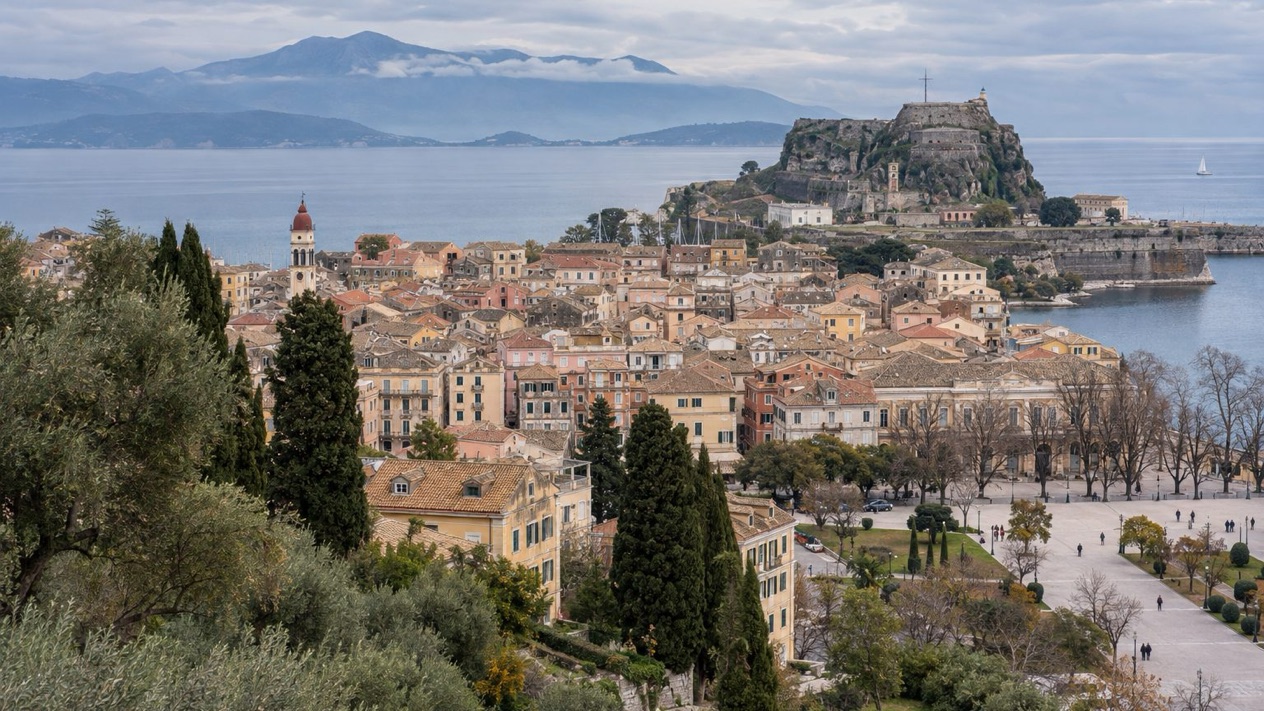
When is the best time to visit Corfu?
June and September each earn the top spot for different reasons. June is hot, with long, bright days. September feels like summer's last chapter. The first half of the month could pass for June, the heat has eased from its August peak, and the water is the warmest of any month outside high summer.
May and October are the next best. May is the first truly warm month, lovely for walking, though the sea is still cool. October stays warm enough for the beach and costs less, but it is one of the island's wetter months.
What is the weather like in Corfu month by month?
| Month | Average high | Average low | Sea | Rainfall | Sunshine per day |
|---|---|---|---|---|---|
| January | 57°F (14°C) | 42°F (6°C) | 60°F (16°C) | 5.0 in (126 mm) | 3.9 h |
| February | 57°F (14°C) | 43°F (6°C) | 59°F (15°C) | 4.7 in (120 mm) | 4.6 h |
| March | 61°F (16°C) | 46°F (8°C) | 59°F (15°C) | 3.7 in (94 mm) | 6.0 h |
| April | 67°F (19°C) | 51°F (11°C) | 61°F (16°C) | 2.4 in (61 mm) | 6.9 h |
| May | 76°F (24°C) | 58°F (15°C) | 66°F (19°C) | 1.4 in (36 mm) | 9.2 h |
| June | 84°F (29°C) | 65°F (18°C) | 72°F (22°C) | 0.8 in (21 mm) | 10.7 h |
| July | 89°F (32°C) | 69°F (21°C) | 75°F (24°C) | 0.4 in (11 mm) | 11.3 h |
| August | 90°F (32°C) | 70°F (21°C) | 78°F (26°C) | 0.9 in (23 mm) | 10.7 h |
| September | 82°F (28°C) | 65°F (18°C) | 76°F (24°C) | 3.5 in (89 mm) | 8.2 h |
| October | 74°F (24°C) | 58°F (15°C) | 72°F (22°C) | 4.8 in (122 mm) | 6.1 h |
| November | 66°F (19°C) | 52°F (11°C) | 68°F (20°C) | 7.4 in (188 mm) | 4.1 h |
| December | 60°F (15°C) | 46°F (8°C) | 63°F (17°C) | 7.0 in (177 mm) | 3.3 h |
Corfu's mountains give it more rain than other Greek islands, and nearly all of it falls between autumn and spring. Summers are close to dry.
Winter is cool and wet, with short days and limited sunshine.
Spring starts slowly. March stays mild, with little change until late in the month, when the sun shows up more often. April brings more sunshine, warmer days and less frequent rain, which makes it a fine month for hiking. May is when Corfu starts to feel like summer, though a breeze keeps the nights cool and the bravest swimmers are the ones heading into the sea. Through spring, plan on hiking boots and light layers more than swimsuits.
June brings summer proper. The air is hot, the days are long and rain becomes rare. Swimming season starts, though the water is still on the cool side.
July and August are the hottest, driest and sunniest stretch. July gets the most sunshine and August is the hottest month, with the warmest sea of the year. A hat, sunglasses and sunscreen are close to essential by day, and the nights run cooler than the days.
Fall begins as a continuation of summer. September is warm and settled, with the sea still warm, and the first rains arrive in the last days of the month. October still has beach days when the clouds stay away, but rain is frequent and skies can turn overcast quickly. Pack summer clothes for the day, a sweater for after sundown, and an umbrella with a light rain jacket. November turns wetter still.
When is Corfu busiest, and when is it quiet?
Corfu was the first Greek island to draw mass tourism, and it remains a hotspot through peak summer, when bars, restaurants, beaches and the sights of Corfu Town can all feel crowded.
October is shoulder season, with smaller crowds and more room to spread out, even on popular beaches. Corfu Town stays lively, so an evening among its bars and restaurants pairs easily with a quiet morning on a beach out of town.
Corfu is a year-round destination. A large local population keeps public transport running outside the summer season, though bus service is reduced in October. To reach out-of-the-way spots on your own schedule, rent a car.
When is it cheapest to go?
October. As shoulder season, it brings lower prices on flights and accommodation, and a fair chance of landing a better room for less. Evenings cool off enough that air conditioning isn't needed for a good night's sleep, which opens up simpler, less touristy places to stay, where AC is less common.
Is Corfu worth visiting in winter?
Yes, if the beach isn't the point. Winter suits wandering Corfu Town and eating well, since the island is known for its cooking, including portokalopita, the local orange pie. Music festivals, religious celebrations, gastronomic events and carnival festivities take place throughout the year, and Corfu's Easter customs follow in spring.
December is the hardest month to spend outside, and on the coldest winter nights the temperature can dip close to freezing. Pack real layers and a good rain jacket, and keep your schedule loose.
Which month is right for you?
- Beach swimmers: June through September. The water is warmest in August, so choose by how much heat you can take.
- Sightseers: May and October. Mild air makes walking through Corfu Town and the historic sites comfortable.
- Hikers: April through June, when rain is infrequent. Experienced walkers cover it in around ten days. You can also climb Mount Pandokrátor, the island's highest peak, crowned by a 17th-century monastery. Approach from the south via the village of Strinýlas, a popular walkers' base with buses from Corfu Town.
- Couples: September, for warm water, softer heat and settled weather early in the month.
- Families: September, when the sea is still warm after the peak of summer. June works too for families.
- Budget travelers: October. Lower costs and a still-warm sea make the rain a fair trade.
- People who hate crowds: October. Corfu Town stays busy, but the beaches have space. If you're here late in the month, Óhi Day on October 28 brings parades, folk dancing and speeches marking Greece's "No!" to Mussolini's 1940 ultimatum.
What should Americans know before going?
U.S. citizens can enter Greece without a visa for up to 90 days of tourism, and a passport should have at least three months of validity beyond your planned departure date. Greece is generally safe, though petty crime is common in popular tourist spots. Strikes and demonstrations can disrupt transportation, sometimes with little notice. Forest fires are common in the dry summer months and occasionally close roads.
If you plan to drive, Greek law requires a valid U.S. license, and insurance companies may require an international driver’s permit. Thieves target rental cars, so keep passports, valuables and luggage with you.
Sources
- roughguides.com (https://www.roughguides.com/articles/corfu-weather-october-travel-tips/), checked October 18, 2026
- accuweather.com (https://www.accuweather.com/en/gr/kerkyra/2-184656_1_al/august-weather/2-184656_1_al), checked October 18, 2026
- greeka.com (https://www.greeka.com/ionian/corfu/weather/), checked October 18, 2026
- holiday-weather.com (https://www.holiday-weather.com/corfu_town/averages/), checked October 18, 2026
- tui.co.uk (https://www.tui.co.uk/holidays/weather/europe/greece/corfu.html), checked October 18, 2026
- U.S. Department of State (https://travel.state.gov/content/travel/en/international-travel/International-Travel-Country-Information-Pages/Greece.html), checked October 15, 2026
- U.S. Department of State (https://travel.state.gov/content/tsg_aem/us/en/home/international-travel/travel-advisories/destination.grc.html), checked October 15, 2026
- Visit Greece (GNTO) (https://www.visitgreece.gr/en/islands/ionian-islands/corfu), checked October 15, 2026