
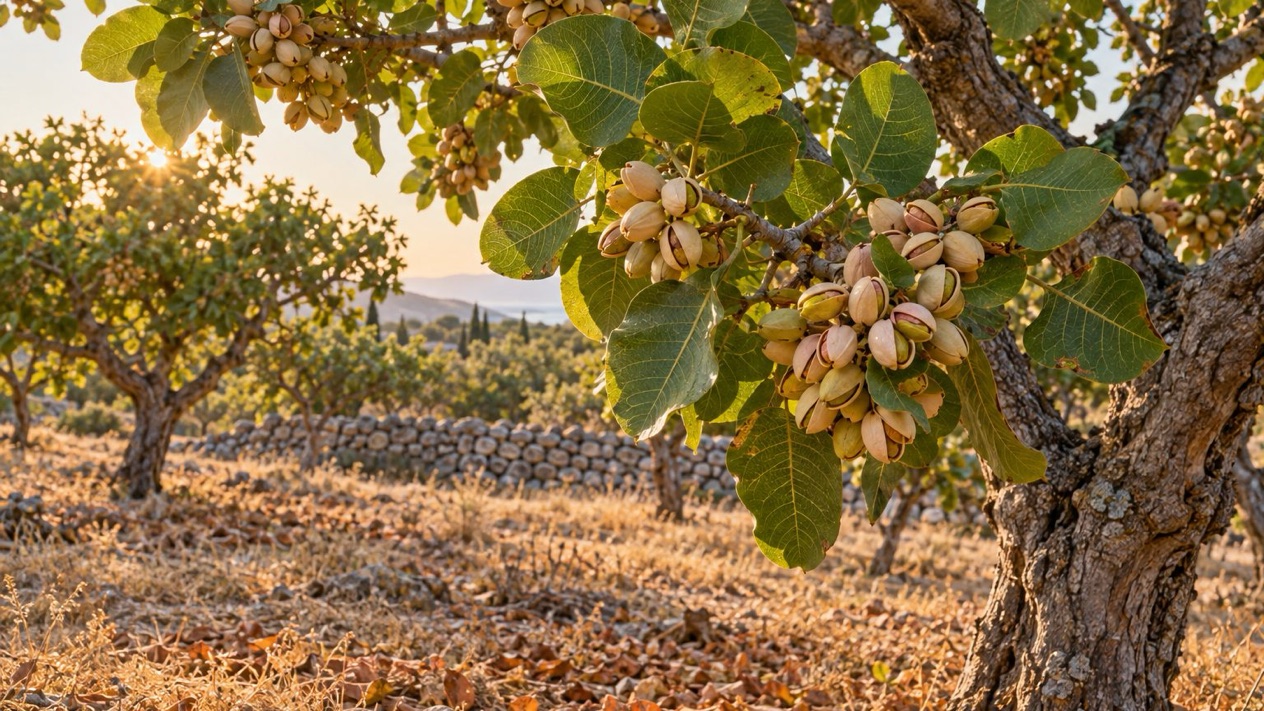
Aegina is the closest Greek island to Athens, and it still feels like an island. It has pistachio orchards at many turns, a harbor town with a 19th-century air, pine-clad hills and the fish tavernas that Athenians cross the water for on a free day. Most visitors come for a day trip, but the island rewards anyone who stays a few nights.
Where should you stay in Aegina?
The main places to stay are Aegina Town, Agia Marina, Perdika and Souvala. Each has a different feel, so choose the area before you choose a hotel.
Aegina Town
The main port is where the island's life happens. The waterfront is lined with cafes, ouzeries and seafood restaurants, each with a small grill out front and octopus cooking on it. The town is known for its elegant neoclassical buildings, and one street back runs Aphaias Street, the busy main market street. Most hotels are within walking distance of the ferry, so the town suits first-timers and anyone arriving without a car.
Stay as close to the port as you can. The Hotel Rastoni sits on an old pistachio farm at the edge of town, a 5-minute walk from the beach. At the Danae Hotel and the Hotel Klonos next door, you can step out the door and into the sea. The Plaza Hotel, on the edge of town toward the Temple of Apollo, has spacious rooms, and some have balconies overlooking Karnagio beach. For a quieter street, Pantazis Studios is one street from the sea in a residential area full of pistachio trees. It is just over half a mile (1 km) from the port, which is a long way to drag luggage in the heat, so plan on a ride.
Agia Marina
Agia Marina, on the east side of the island, is Aegina's most popular seaside resort, with plenty of tavernas and a sandy beach. It is a good base for seeing Athens without sleeping in the city: in summer, the fast boat to Piraeus takes less than half an hour. Ferries from Hydra and Spetses also land here. The catch is that Agia Marina is 10 miles (16 km) by road from the town port.
The Hotel Karyatides is known for its owner, Sophia, a warm host and a great source of island information. The Hotel Panorama and the Argo Hotel next door sit right on the sea, with rock platforms and steps into the water that make the Aegean feel like your own pool. Both have restaurants on the water.
Perdika
Perdika, on the southwest coast, looks like a village from the Cyclades, with whitewashed houses, flower-lined steps and fish tavernas by the water. It is the choice for travelers who want quiet. For a splurge, the LaLiBay Resort & Spa is an adults-only 5-star property with a private beach, two pools and a hot tub. Perdika is 7.5 miles (12 km) from the main port, and no passenger ferries call there, so you arrive by bus, taxi, rental car or bike.
Souvala
Souvala is a small harbor on the north coast, a short ride from the main port. It has its own ferry service to Piraeus, which makes it a practical alternative to the busier town.
What are the best things to do in Aegina?
Start at the harbor. A horse-drawn carriage makes a slow loop past the white chapel of Agios Nikolaos, the brightly painted fishing caiques and the fish market, and it is a painless way to get your bearings. Some of those caiques double as floating greengrocers, a sight you will not find anywhere else in Greece. The fish market has almost as many tavernas as stalls, so remember it for lunch.
Facing the town, walk left along the waterfront to Kolona, where a single column of the Temple of Apollo still stands on a small hill over the port. Aegina was once a major power and, for a time, Athens' main rival. The museum on the site is small enough for a quick visit, and the real pleasure is the view of ferries coming and going. Entrance fees change, so check the current price before you go.
The island's most famous ancient site is the Temple of Aphaia, from around 500 BC. Its well-preserved columns were raised before the Parthenon, and they stand among the pines on a slope above the bay of Agia Marina. Down below the temple you'll find a cafe where the furniture is made from ancient columns and stones that came from the site.
Paleohora, in the hills in the middle of the island, was the capital for centuries, built inland so the islanders could stay out of sight of pirates. Today the steep hillside is scattered with small Byzantine churches in various states of restoration. The climb is especially lovely in spring, when wildflowers cover the slope. Nearby, the Monastery of Agios Nektarios draws Orthodox pilgrims to the tomb of Greece's first modern saint, the patron saint of Aegina, with an enormous new church beside it. Cover your knees and shoulders to go in.
With more time, visit the Christos Kapralos Museum, the old studio of one of Greece's best-known sculptors, just outside the main town. Facing the house across the way, a bronze likeness of his mother gazes toward the sea. The former home of Nikos Kazantzakis, who wrote Zorba the Greek on the island, is very close by.
Evenings start at the waterfront. At golden hour the harbor fills with soft light, and the small white church out in the water glows against it. From early July to the end of September, Cine Akrogiali is one of three open-air cinemas on the island, and you may catch an English-language film with Greek subtitles. For music, Panta Pei plays live rembetika on weekends, as do several other spots in town. Unlike most islands, Aegina keeps some nightlife going in the off-season, and in summer the discos and beach bars take over.
What are the best beaches in Aegina?
Aegina's beaches are pleasant rather than dramatic, and for many visitors that is plenty. Many visitors find the nicest swimming from the rocks under the pines, just outside Agia Marina and Aegina Town.
Kolona Beach
Kolona Beach is the town's own beach, a walk from most hotels just before the Temple of Apollo. It is a roomy sandy stretch with clear water, and it rarely gets crowded, so it is ideal for a swim between sights.
Agia Marina Beach
Agia Marina Beach is the most popular on the island and has a blue flag. Fine sand and a gentle slope into the water make it a natural choice for families with children. There are sun beds, umbrellas, space for towels and water sports, and the clear water is good for snorkeling. In summer it gets crowded.
Marathonas
Marathonas is a sandy beach with shallow water about 4 miles (6 km) south of the town port. Part of it has sun loungers and part is left free for towels. It is easy with kids, and La Palma, a friendly beachside cafe, serves food all day, from breakfast to biftekia, the Greek take on a burger.
Perdika and Moni
Perdika has no proper beach. People swim off a concrete platform with a ladder at the end of the port, and the water is very clean, so a swim pairs easily with a fish lunch. In summer, boats make the 10-minute crossing from Perdika to Moni, a small uninhabited island with blue-green water, a beach that is partly sandy and mostly rocky, and a forest climbing the hill behind it. Peacocks, deer and mountain goats live there, and they are curious enough to come right up to you.
Portes and Souvala
For quiet, head to Portes, a small beach with a little harbor on the far side of the island from the town. Drive or take a taxi or water taxi, and arrange your pick-up before you go. Souvala's beach is semi-touristy, and its thermal springs are believed to help with skin conditions.
What should you eat in Aegina?
Look for the small grills with octopus on them. Waterfront restaurants serve grilled octopus and fried squid, and signs along the harbor advertise the day's special of sea-urchin salad. The back-street places mostly serve Greek customers, which is a good sign. Pick a waterfront taverna with more Greeks than empty seats.
Around the covered fish market, where fresh fish and local produce are sold every day, two small fish restaurants stand out: Mezedopoleio To Steki, known for its grilled squid, and Geladakis, on a covered street that stays shady in summer. The restaurants on P. Irioti Street, one street up from the port, are also worth trying. Kappos Etsi, right behind the harbor cafes, belongs to Dimitris Kappos, a chef from Aegina who gives traditional dishes a modern spin, with a good wine list to match. Flisvos, on the road out past the town, serves affordable fresh fish with sea views. In Perdika, Remezzo's gets strong reviews, and in Agia Marina, Thymari has drawn a loyal summer following for almost 30 years.
Then there are the pistachios. Vendors hand out free samples, and the pistachio butter and pistachio ice cream are worth tracking down. Buy at least two bags, because one tends to disappear on the boat.
How many days do you need in Aegina?
One day covers the town and one major sight, but at a brisk pace. Three days lets you slow down, swim, and reach Perdika, Moni and Agia Marina.
Day 1: Aegina Town
Arrive in the morning and take the carriage loop to get oriented. Walk out to Kolona for the column and a swim. Have lunch by the fish market, spend the afternoon on Aphaias Street, and pick up pistachios on the dock. Stay for sunset over the harbor, then have dinner at Kappos Etsi or a grill by the water.
Day 2: Monastery, Paleohora and Aphaia
Head out early, before the sun is high. Stop at the monastery on the road toward Agia Marina, and go up to Paleohora for the hillside churches. Continue to the Temple of Aphaia, just before Agia Marina, when the light softens. Finish with a long swim at Agia Marina Beach and dinner by the sea.
Day 3: Perdika and Moni
Drive or ride south to Perdika, stopping at Marathonas on the way if the kids want sand. Have lunch in the village and, in summer, take the boat to Moni for the afternoon. Back in town, catch live music at Panta Pei if it is a weekend.
How do you get to Aegina and around?
Aegina has no airport. Fly into Athens International Airport, Eleftherios Venizelos, then go to the port of Piraeus, about 28 miles (45 km) away. By road from the airport to Piraeus, the trip can take 60 to 90 minutes depending on traffic.
Saronic ferries leave from Gate E8, close to the Piraeus metro and train station. Crossings run all year. The Flying Dolphin hydrofoil carries foot passengers and takes about 40 minutes; it is quicker but noticeably less comfortable. Conventional ferries take about an hour or a little longer and carry cars, motorbikes and campers. Most boats arrive at Aegina Town, the island's main port. Agia Marina and Souvala have fewer departures, mainly in high season.
If you are bringing a car, book ahead, especially for a Friday afternoon out and a Sunday evening back. Without a car, boats run so often that you can usually just turn up at Piraeus and take the next one.
Once on the island:
- Buses: three lines leave from the station opposite the port, serving Agia Marina, the Temple of Aphaia, Perdika, Marathonas and Souvala. Buy tickets at the station or on the bus. Timetables are available at the bus station in Aegina Town, and destination names on the buses are written in Greek. Buses are infrequent, so they are a poor fit for a tight day trip.
- Cars, scooters and quads: rental offices near the harbor, including Giakas Rental right next to the port, put the small beaches and hill villages within easy reach.
- Taxis: they line up to the left of the port, with set prices for many destinations posted at the front of the queue. For Aphaia on a day trip, negotiate a round trip with a wait at the site. Drivers will haggle, especially in the off-season.
- Water taxis: they go straight to the beaches and can also take you to the mainland or neighboring islands. Negotiate the price, and book your return at the start if you are heading to a remote beach.
What should Americans know before going to Aegina?
U.S. citizens can enter Greece without a visa for up to 90 days, and passports should have at least three months of validity beyond your planned departure date. The U.S. State Department calls Greece generally safe, but pickpocketing and purse-snatching are common at popular tourist sites and on public transportation, especially the Athens metro. To rent a car, Greek law requires a valid U.S. driver's license, and insurance companies may require an international driver’s permit. Transportation strikes can interrupt seaports and ferries, and forest fires are common in the dry summer months and occasionally close roads. Thieves in Greece seek out and break into rental cars to steal passports, valuables and luggage, so it's wise to take those things with you rather than leave them in a parked car.
Sources
- greektravel.com (https://www.greektravel.com/greekislands/aegina/day-trip.html), checked October 18, 2026
- taniatravelstories.com (https://www.taniatravelstories.com/en/post/aegina-island-a-complete-travel-guide), checked October 18, 2026
- meganstarr.com (https://www.meganstarr.com/things-to-do-in-aegina-greece/), checked October 18, 2026
- greeka.com (https://www.greeka.com/saronic/aegina/), checked October 18, 2026
- discovergreece.com (https://www.discovergreece.com/attica/aegina), checked October 18, 2026
- U.S. Department of State (https://travel.state.gov/content/travel/en/international-travel/International-Travel-Country-Information-Pages/Greece.html), checked October 15, 2026
- Visit Greece (GNTO) (https://www.visitgreece.gr/en/islands/saronic-islands/aegina), checked October 15, 2026
- U.S. Department of State (https://travel.state.gov/content/tsg_aem/us/en/home/international-travel/travel-advisories/destination.grc.html), checked October 15, 2026
- Hellenic Ministry of Culture, Odysseus (http://odysseus.culture.gr/h/1/eh155.jsp?obj_id=3255), checked October 15, 2026
- Hellenic Ministry of Culture, Odysseus (http://odysseus.culture.gr/h/3/eh355.jsp?obj_id=2452), checked October 15, 2026
All our pages
Things to do
- Aegina Pistachios: Fistiki Fest, Island Sweets and How to Get There
- The Temple of Aphaia on Aegina: Hilltop Ruins, Munich Sculptures and Getting There from Piraeus