
Walk out of a Yokohama station in the morning and the city is already moving: commuters streaming through the gates, steam rising from a bakery counter, ships’ horns drifting in from the bay. A few stops away, the lanterns of Chinatown glow red and gold over streets that smell of sesame oil and steamed buns. Yokohama is a big port city rather than a single neighborhood, so choosing where to sleep means choosing which of these moods you want to wake up in.
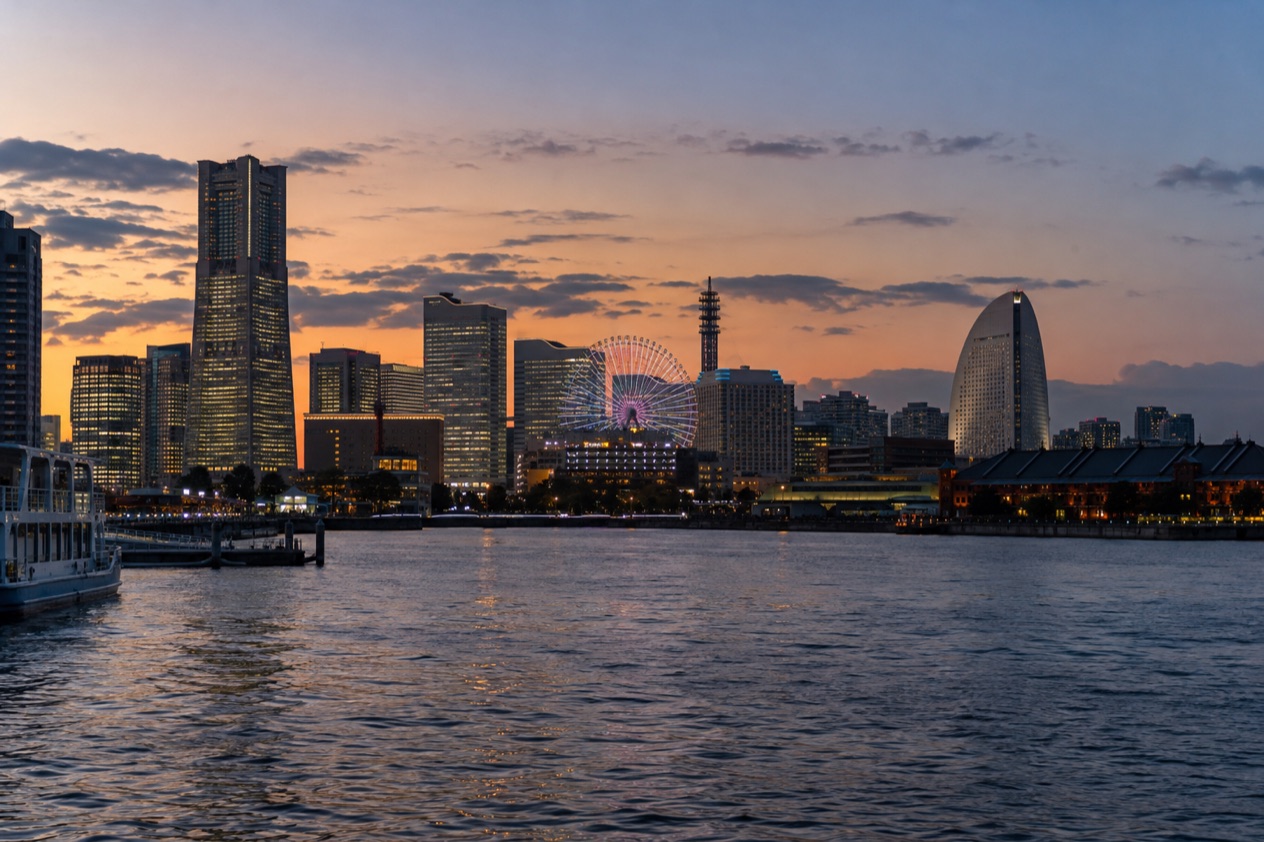
What is the best area to stay in Yokohama?
For a first visit, the area around Yokohama Station is the best base, because it is the main hub of the city and sits more centrally than the bullet train stop. Travelers who care most about food and atmosphere in the evening will do better in Chinatown. Anyone arriving or leaving by long-distance Shinkansen may prefer Shin-Yokohama, and anyone who likes browsing shops and strolling at an unhurried pace should look at Motomachi.
By kind of trip, the picture is simple. For sightseeing across the bay and into Tokyo, the big station is the anchor, since JR trains and several private railway lines run from central Tokyo to Yokohama Station in about an hour.
For families, the best base is the one that spares you the most transfers with luggage and children, and that again points to a major station. For nightlife and late dinners, Chinatown puts hundreds of restaurants outside your door. For a budget-minded stay built around trains, a base at a station that serves your route matters more than a view.
The areas differ less in distance than in character. Yokohama Station is a city within the city, where two million passengers pass through every day and the surrounding blocks are filled with department stores, underground arcades and long corridors of restaurants. Shin-Yokohama feels like a transit point, organized around the Shinkansen.
Chinatown is a neighborhood you stay in for its own sake, loud and fragrant and lit at night. Motomachi is a shopping district with a gentler rhythm, and the brewery grounds of Kirin Beer Village lie north of it.
Yokohama sits on the western coast of Tokyo Bay, directly south of Tokyo, and it is the second largest city in Japan. That position shapes every decision about where to sleep.
Travelers treat it as a base from which Tokyo is within reach, while others treat it as a destination with its own port history, which began when the harbor officially opened on June 2, 1859. Which of those two trips you are planning is the first question to answer before you look at a single room.
Think also about how you arrive. If your first night follows a long flight into Haneda, the area near Yokohama Station suits you, since the Keikyu train line links the two in about 20 minutes.
If you are coming in from Kyoto or Osaka on a Nozomi, the stop at Shin-Yokohama puts you in the city without a change of trains. If you are coming from Narita, the Narita Express and shuttle buses serve Yokohama Station. Each of those arrivals tilts the choice toward a different neighborhood.
Finally, decide how much of your time you want to spend in the neighborhood itself. A stay at a station is a stay built around movement: you leave in the morning, you come back at night. A stay in Chinatown or Motomachi is built around wandering out for breakfast, a second walk after lunch and a late dinner without boarding anything. Neither is better. They simply suit different days.
The best areas to stay in Yokohama
Yokohama Station area
This is the area for travelers who want everything within reach of a platform. Yokohama Station is a major station with two million passengers daily, and the district around it is a dense mix of shopping buildings, arcades and restaurants that keep going well into the evening. It suits first-time visitors, families moving with luggage, and anyone planning day trips in several directions.
Getting around is the real reason to sleep here. Travelers from central Tokyo can take a JR train or one of several private railway lines to Yokohama Station in about an hour.
From Haneda Airport, the Keikyu line makes the trip in 20 minutes, and a shuttle bus covers the same trip in 30 minutes. From Narita Airport, the Narita Express and shuttle buses take roughly an hour and a half. That range of connections is what makes the station area a sensible first night or last night.
The trade-off is atmosphere. This is a working hub, not a postcard, so expect crowds of commuters at the gates and a city feel rather than a harbor feel. A good tip is to pick your room by which exit and which line you will use most, since a big station can take a few minutes to cross inside and the exit you choose shapes your whole stay.
Shin-Yokohama
Shin-Yokohama is the stop of the Tokaido Shinkansen in Yokohama, and it is the base for travelers whose trip is built around the bullet train. The Nozomi stops here, with a ride of 1 hour 25 minutes from Nagoya.
From Kyoto and Osaka the ride takes 2 hours. From Hiroshima it is 3 hours 40 minutes. For anyone connecting Yokohama with western Japan, those times make this district a natural overnight stop before an early departure.
The character here is that of a transit district, so it works best for travelers who care about the train more than about the neighborhood. It is less central than Yokohama Station, which is worth knowing if your plans center on the waterfront, Chinatown or dinners in town. Expect to take a train to reach those places rather than stepping out into them.
A tip for planning: if you will arrive from the west and leave toward Tokyo, or the other way round, an early or late Shinkansen is the reason to sleep here. If you are staying several nights to explore the city, a base at Yokohama Station or one of the harbor neighborhoods will give you more to walk out into.
Chinatown
Chinatown is where Yokohama feels most like itself in the evening. The district has about 300 restaurants, and the streets fill with the smell of steamed buns, dumplings, roast meats and sweet sesame desserts. Painted gates mark the entrances, and the lanterns come on as the light fades. It suits couples, food-focused travelers and groups who want a dinner decision to be as simple as picking a door.
A stay here gives you the neighborhood after the day trippers have gone, and a breakfast that can be as simple as a bun and tea from a street counter. The kind of lodging you find depends on what is available at the time of your visit, so look at the room first and the location second. Check that the street is the kind you want at night, since a lively food district stays lively.
As a tip, use your first evening to wander without a plan and choose a restaurant by the line and the aroma. Come back for a second dinner of a different style, since the range inside the district is wide enough to eat well on several nights without repeating a dish.
Motomachi
Motomachi is a shopping district with a slower pace than the station area. It suits travelers who like browsing boutiques, stopping for coffee and ending the day without a crowd of commuters. It is a place for couples and for visitors on a second or third trip who already know the main sights and want a quieter base.
One draw close to it is the Kirin Beer Village brewery, which lies north of the district. That is the kind of detour a Motomachi stay makes natural, since it is a short plan rather than a day of travel.
For a tip, treat Motomachi as a place to rest between busy days. Spend a morning on the shopping streets, take the brewery tasting in the afternoon and keep an evening free for a dinner in nearby Chinatown. The city’s harbor history, which began with the port opening in 1859, is part of the setting here, and the area rewards unhurried walking.
Yokohama areas compared
| Area | Best for | Feel | Connections and nearby |
|---|---|---|---|
| Yokohama Station | First visits, families, day trips | Major hub with shops and restaurants | JR and private lines from central Tokyo, Keikyu line to Haneda, Narita Express and shuttle buses |
| Shin-Yokohama | Shinkansen travelers | Transit district | Nozomi Shinkansen from Nagoya, Kyoto, Osaka and Hiroshima |
| Chinatown | Food lovers, evenings out | Lantern-lit streets full of restaurants | Hundreds of restaurants in the district itself |
| Motomachi | Shoppers, return visitors | Slower shopping district | Kirin Beer Village brewery with free tasting lies north of the district |
The first trade-off is between a station and a street. A station gives you trains, luggage handling by the gate and the shortest transfer when you land. A street gives you a morning walk to breakfast and an evening without boarding anything. In Yokohama the station hotels belong to Yokohama Station and Shin-Yokohama, while Chinatown and Motomachi are the places where the street itself is the draw.
The second trade-off is between the old harbor town and the new transport city. Chinatown and Motomachi carry the memory of a port that opened in 1859 and a mix of cultures that came with it.
Yokohama Station and Shin-Yokohama are about movement, and they are the place to stay when the schedule matters more than the scenery. The city even has a twin in the U.S., San Diego, linked since 1957, a reminder that Yokohama has long looked outward.
A third trade-off concerns the trip’s length. For a night or two, a station base saves time.
For a stay of several nights, a neighborhood with its own food and shopping gives the days a shape, and you will likely use trains less often. If you are splitting your nights, one night near the Shinkansen or the airport link and the rest in Chinatown or Motomachi is a plan that works with the geography.
Finally, think about who is traveling. Families benefit from the broad choice of restaurants around the big station and the short chain of transfers. Couples and friends often prefer the lanterns of Chinatown. Solo travelers can choose according to the trip: a station for a schedule, a district for a mood. Whatever you choose, Yokohama is close enough to Tokyo that a base here works for both cities.
How to choose your hotel in Yokohama
Start with the station you will use most. Yokohama Station is more central than Shin-Yokohama, so a room near it keeps the city within reach, while a room near Shin-Yokohama is a room built around the bullet train. If your days will be spent in the harbor districts, Chinatown and Motomachi, then the best hotel is the one in the neighborhood you will return to each night.
Then decide on the style of stay. A standard hotel gives you a private room, a front desk and the flexibility to come and go. A business hotel is a plain room built for a night or two.
A capsule hotel is a compact sleeping pod, a Japanese invention for travelers who need a bed and nothing more. A guesthouse is a smaller, more personal place. Each has a different purpose, and the right one depends on how much time you will actually spend in the room.
If you want to experience Japanese hospitality, the ryokan is the model to know. Ryokan are traditional Japanese inns, believed to have emerged in the 8th century, and they typically feature tatami floors, futons, private baths (sometimes outdoor), yukata, a kaiseki dinner and a traditional Japanese breakfast. A kaiseki dinner is a multi-course meal of small seasonal dishes. In a ryokan, the evening meal and the morning meal are part of the stay.
A related option is the Heritage Stay, where visitors can take part in cultural activities such as tea ceremony, calligraphy and wearing traditional Japanese clothing. Reservations for Heritage Stays are required and can often be made through the property’s website or by phone. These stays are about the experience as much as the bed, so they suit travelers who want a night to feel like a visit to another world.
Think about luggage and mobility. A station base reduces the number of steps between the platform and the room, which matters for families with strollers and for anyone with heavy bags. Whatever the room, look at how you will reach it from the station you arrive at, since the airport links, the Keikyu line from Haneda and the Narita Express from Narita, all end at Yokohama Station.
A last question is what you want from the morning. If you want to step out for a bun and tea in Chinatown, sleep there. If you want a coffee and a stroll past boutiques, sleep in Motomachi. If you want to be on a train within minutes, sleep at the station. The best hotel is the one that fits the first hour of your day, since that sets the mood for everything that follows.
Good to know before you go
Getting into the city from the airports is straightforward on paper. From Haneda, the Keikyu line and a shuttle bus both reach Yokohama Station, and from Narita the Narita Express and shuttle buses do the same.
From central Tokyo, JR and private lines bring you to the same station. Western Japan arrives at Shin-Yokohama on the Nozomi. Plan your first night around the station you will reach, and the rest of the city opens from there.
Sources
- Japan National Tourism Organization, Yokohama (https://www.japan.travel/en/destinations/kanto/kanagawa/yokohama-and-around/), checked October 11, 2026
- Wikipedia, Yokohama (https://en.wikipedia.org/wiki/Yokohama), checked October 11, 2026
- Wikivoyage, Yokohama (https://en.wikivoyage.org/wiki/Yokohama), checked October 11, 2026
- Japan National Tourism Organization, ryokan stays, what is included, etiquette (https://www.japan.travel/en/guide/japanese-ryokan/), checked October 11, 2026
- Japan National Tourism Organization, heritage stays (https://www.japan.travel/en/heritage-stays/), checked October 11, 2026